Relic Dictionary ©
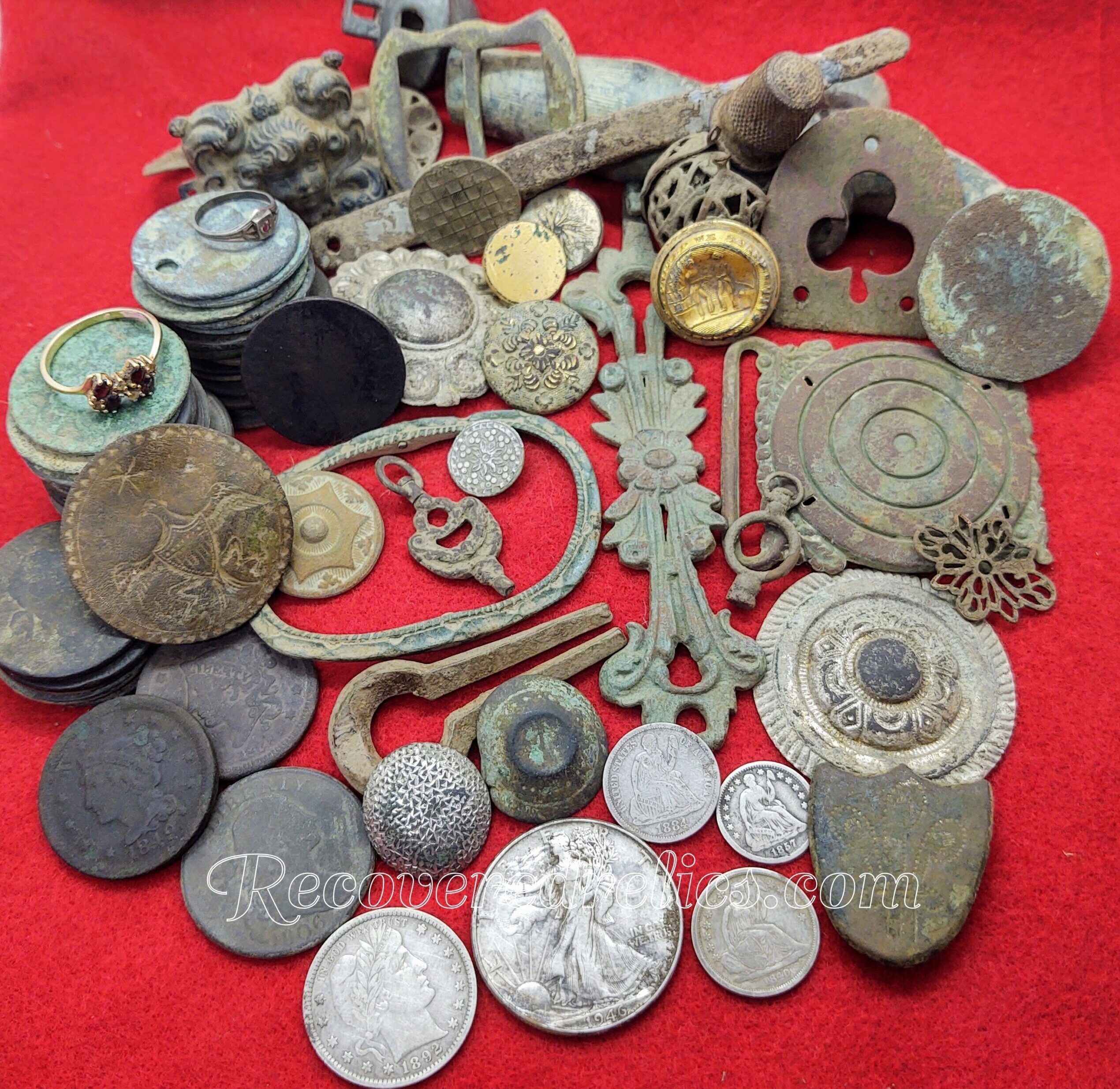
This Relic Dictionary is designed to be a resource for both new and experienced detectorists. Many of the items we find with our metal detectors are not always easily identified right off the bat. Relics recovered from the ground can sometimes be challenging to identify due to corrosion, tarnish, and other environmental damage that has occurred. Sometimes it takes a little research and closer examination to learn and identify what an item is exactly, what its purpose was, and the age and origin of the item. I know that whenever I find an item with my detector I always want to be able to identify it and call it by it’s proper name. I like to know as much as possible about the history behind the items I find. Sometimes we find an item and we don’t know what it is. This can happen to even the most experienced of detectorists. I created this Relic Dictionary so that folks, especially those that are new to the hobby, will have an online resource they can use to help them correctly identify their metal detecting finds. All of the items pictured in the dictionary are dug finds, unless otherwise noted. At the moment, this Relic Dictionary is still a work in progress. I will be adding more items, info., and photos over the upcoming weeks so please check back regularly. It is my hope to create a thorough and detailed catalog of the most common and the not so common finds we discover with our metal detectors. – Lisa Stanco
This Relic Dictionary wouldn’t be possible without the support of several wonderful detectorists who contributed photos of their finds. I would like to thank Sharon Long Harrison, Laura Kucharczyk, Jeff Pelletier, Michael Souza, Jay Verburg, Dave Wise, and Todd (CT Todd) Yerks for their support with this project.
Bells
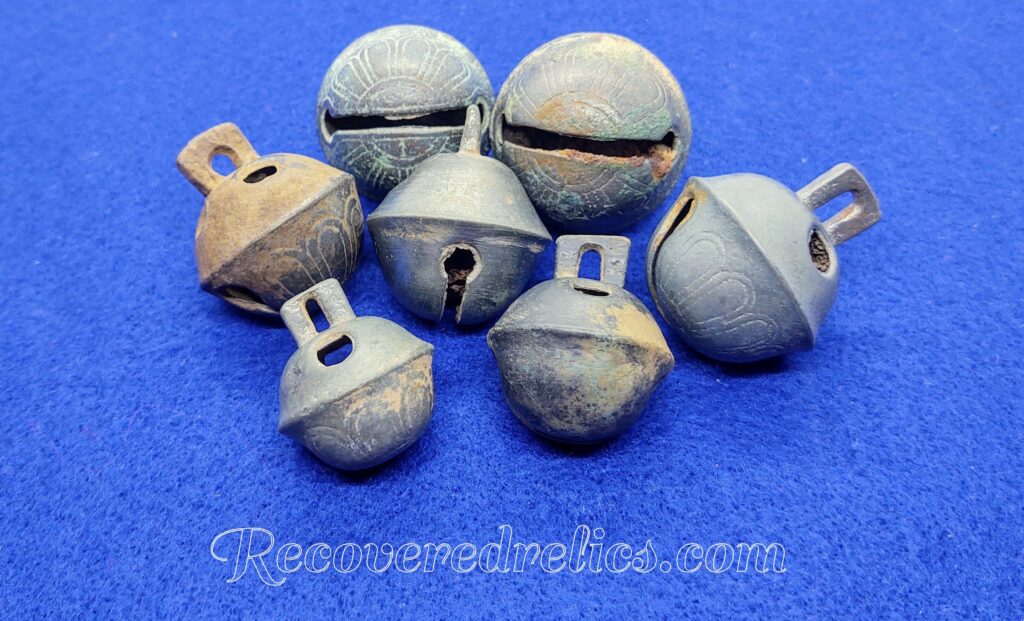
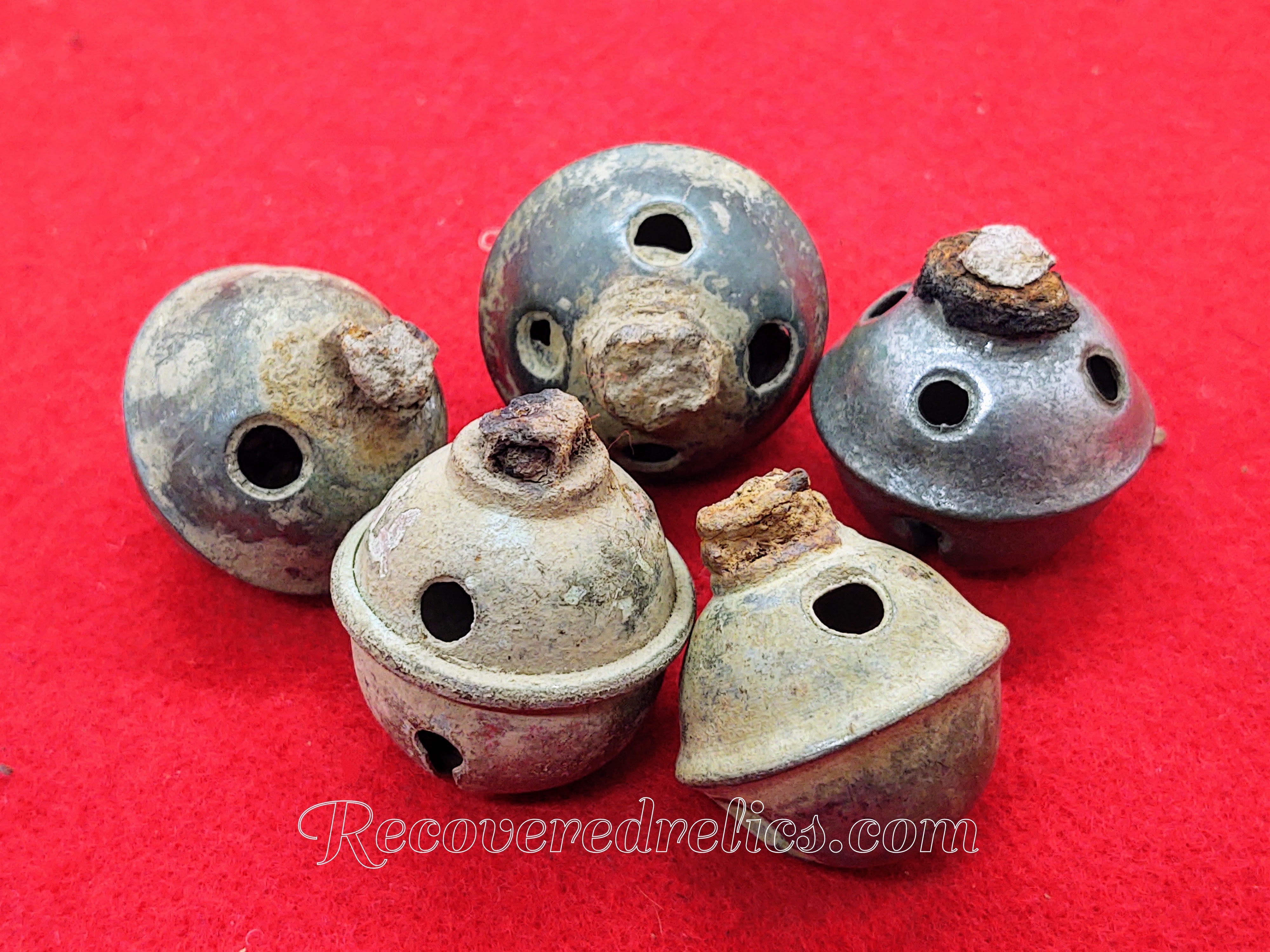
Crotal or Rumbler Bell– Spherical, hollow, enclosed bells with one or more slits. They have a loose pellet or rumbler inside them which produces the sound when the bell is moved or shaken. By the traditional definition crotal bells technically aren’t bells at all but rather rattles. Crotal bells vary in age. The earliest crotal bells found in England date to the beginning of the 13th century. Here in the United States the great majority of crotal bells we find date to the late 18th to mid 19th century. Crotal bells may be either plain or decorated. Decorations may be applied to both the upper and lower hemispheres, or to just the lower hemisphere. Bells that are decorated only on their lower hemisphere tend to date from the late 18th century to the mid 19th century. Those with no decoration also usually date to this period too. There are of course exceptions. Maker’s marks can help you to better determine the age of your crotal bell.
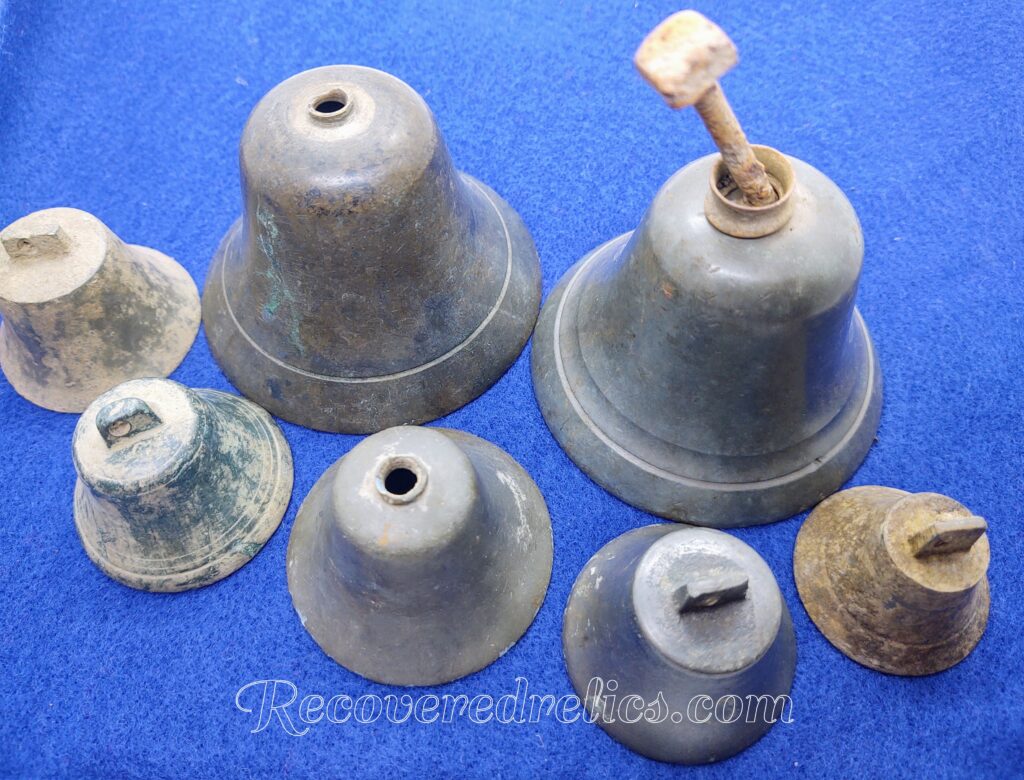
Open Mouth Bells– An open bell is sounded when one or more clappers hanging inside or outside the bell strike the surface of the bell. Open mouth bells that are used on horses typically have a circular cross section and look like the classic “liberty” bell. Bells that are square or rectangular in cross section can certainly be used on horses, but are more often worn by cattle, sheep or goats.
Hand Bells- Open mouth bells with circular cross sections that have handles or a hole located at the top where a handle would have been. This type of bell is designed to be rung by hand. Hand bells were popular during the mid 19th century and early 20th century.
Conestoga Style- Loose open-mouth bells are often mistakenly referred to as Conestoga bells. The key part of what makes a Conestoga bell a Conestoga bell is that the bell itself is attached to a metal bracket that arches above the collar of the horse. Open mouth bells with circular cross sections and bases between the size of one and a half to three inches in diameter were often selected to be Conestoga bells. This style bell was also used on neck and body straps, saddles, and on the shafts and poles of wagons. Conestoga bells were used from the late 18th century to the early 19th century.
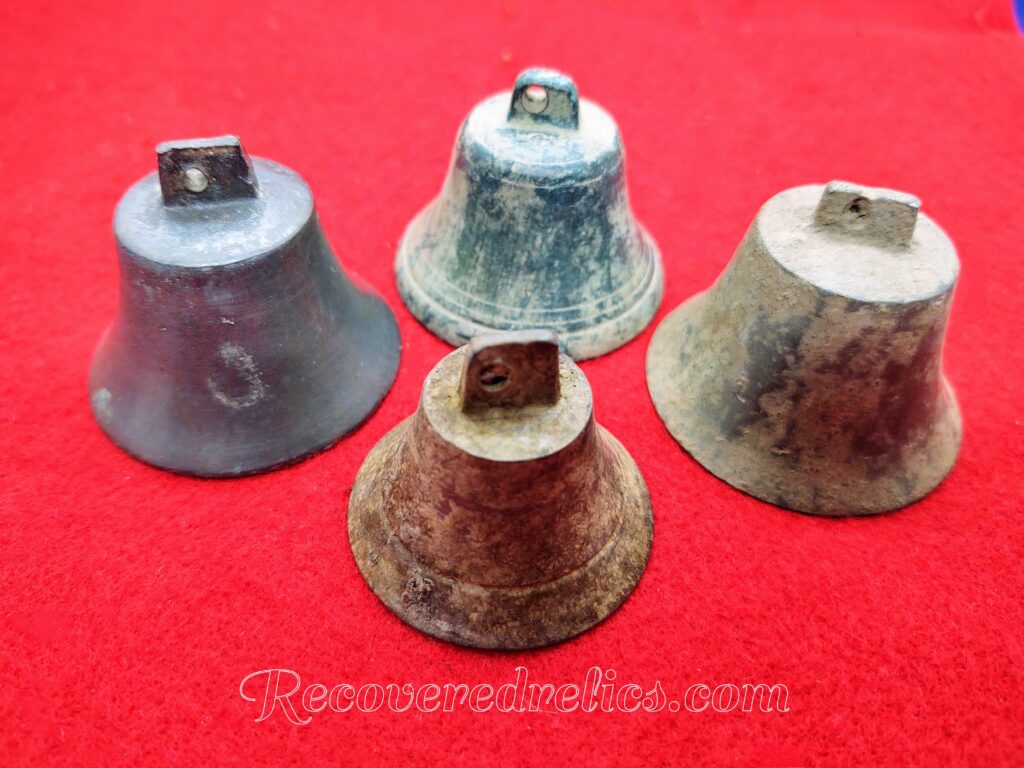
Sleigh Bells– Around the middle of the 1850’s manufactures designed sleigh bells that could be attached using rivets or screws. These look similar to your traditional crotal style bell. They are hollow, spherical shaped enclosed bells with pellets inside them. The major difference is the attachment piece at the top of the bell.
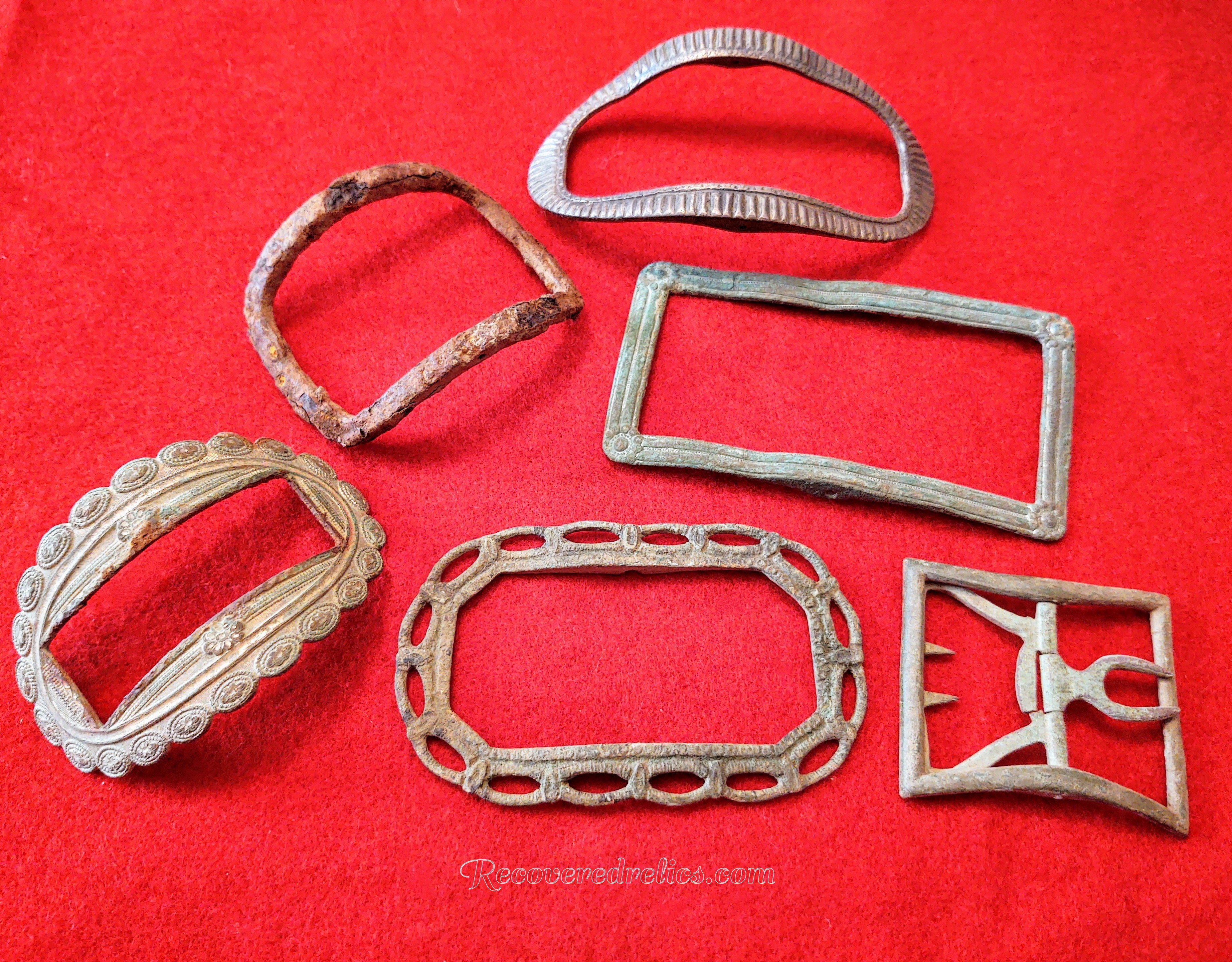
Buckles
Baldric Buckles– Buckles used on baldrics were typically double framed style buckles with center bars. A baldric is a broad belt or strap used to carry a sword or another piece of equipment such as bugle. Baldrics were traditionally worn over ones right shoulder and reached down to the opposite hip. The amount of buckles that were used on any given baldric varies. Some had more buckles than others depending on the design. There were typically at least one heavy, large sized buckle attached to the main strap and several smaller sized buckles used hold the sword or piece of equipment securely in place. Baldric buckles fall within the clothing category.
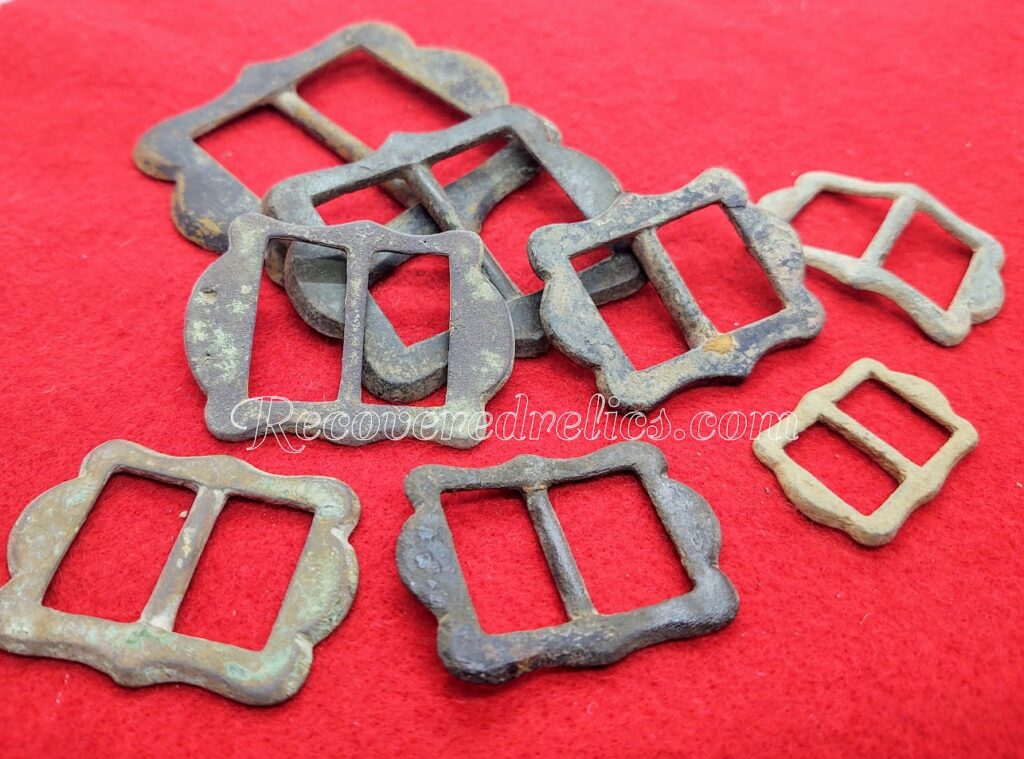
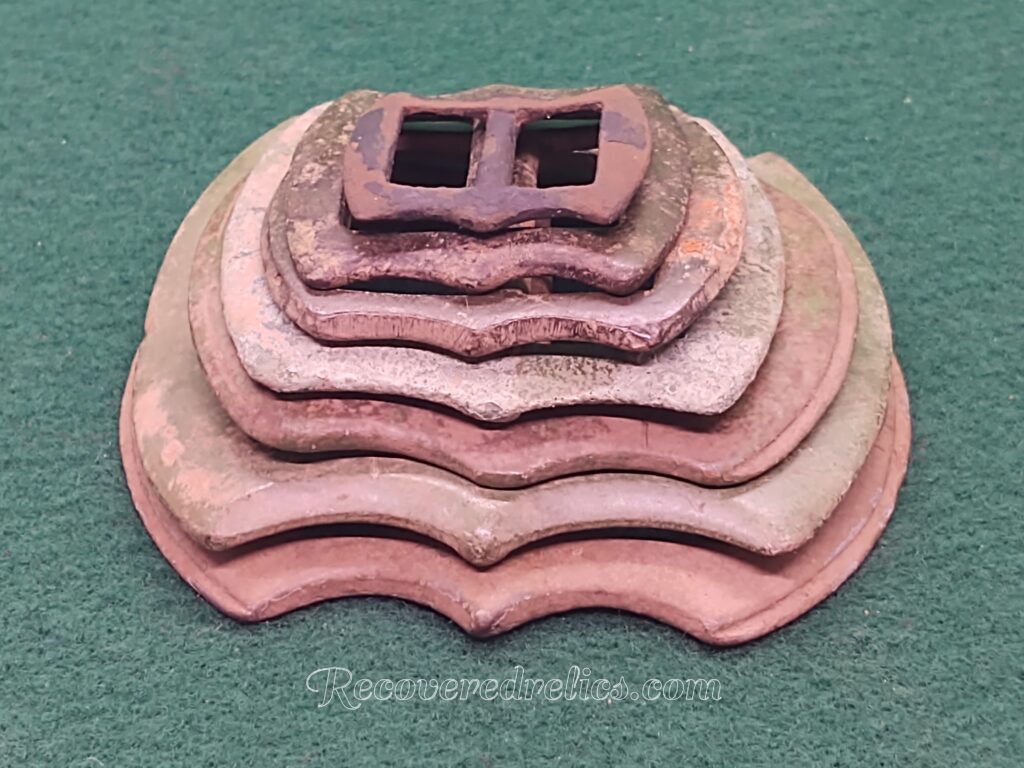
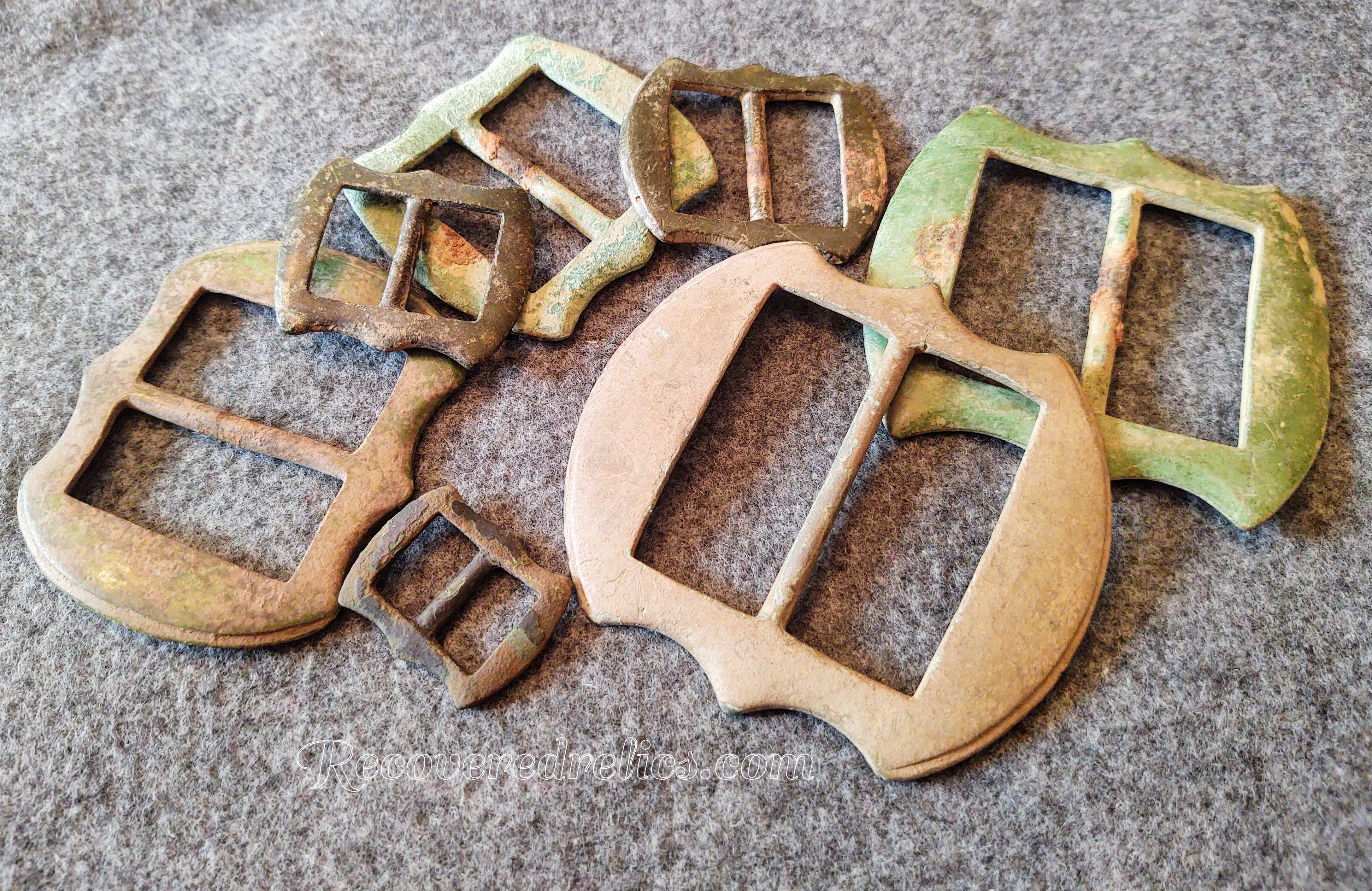
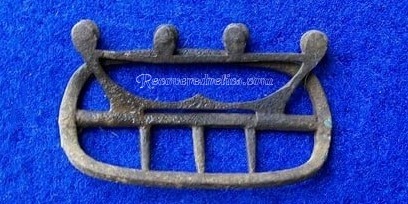
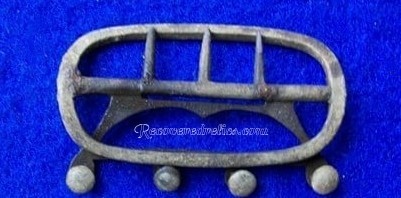
Batwing Buckles– This style buckle is double framed with a center crossbar. The two vertical sides of the frame that are parallel with the center bar are convex. They curve outward. The other two sides of the frame each have two concave curves which in turn form three points on each side. Picture a bats wings and how it curves inward multiple times and forms points. The frame of the batwing buckle is similar in design to the shape of a bats wings. These buckles are a bit of a mystery. We don’t have any concrete information regarding how these buckles were used or their age or origin. The great majority of these recovered buckles have been found in North East states primarily New York, Connecticut, and Massachusetts.
I am collecting data regarding these buckles so if you have dug one or have an undug example I would greatly appreciate it if you could complete the online survey at https://my.forms.app/form/60c6b22c064c3505fa5440d6
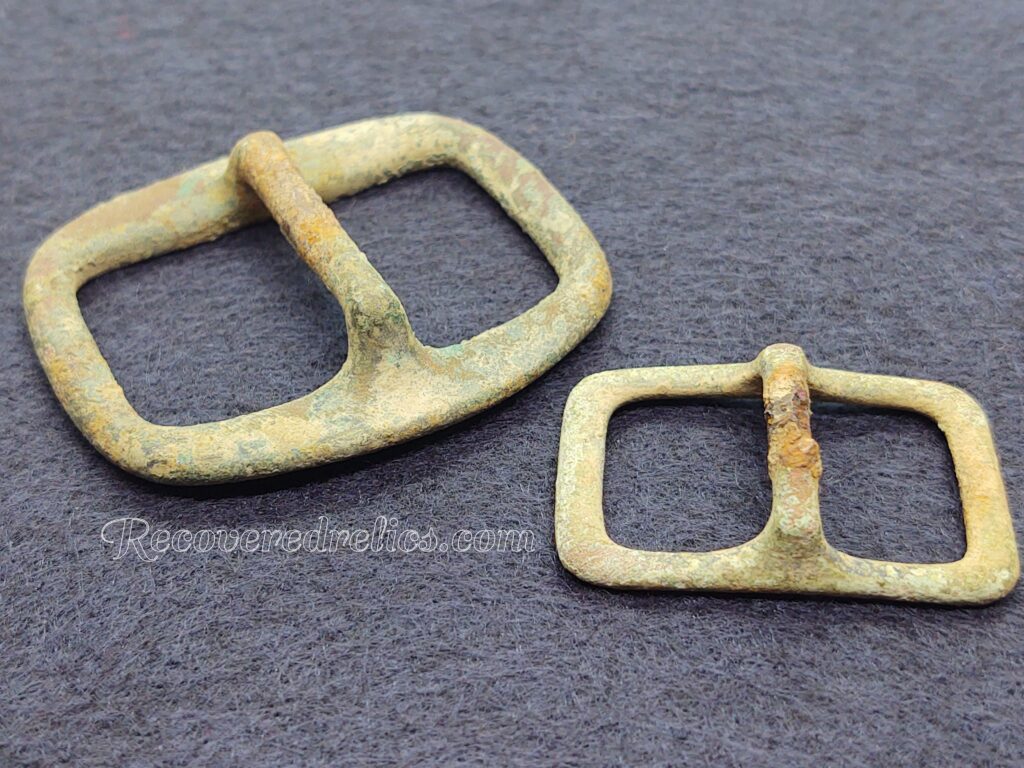
Breeching Dee Buckle (Horse Related)– A cast one piece buckle consiting of three distinct elements, a “D” shaped loop, a central rectangular opening, and a long bar. This style buckle is used to connect the breeching (strap around the horse’s hindquarters) to the breeching straps or shafts of a carriage. It serves as an anchor point and is a crucial component of the harness braking system and securing holdbacks which prevents the carriage from running up on the horse paticularly on downward slopes.


Charles Benedict Heart Shaped Suspender Buckle– Charles Benedict of Waterbury, Connecticut, patented this suspender buckle design on October 22, 1850. The buckle features a distinct die-struck, heart-shaped brass or copper-alloy frame. This style suspender buckle was extremely popular during the 1850’s and 1860’s. It utilized a built-in wire swivel system designed to grip and easily unclip from the woven suspender straps worn by men of the era. This style suspender buckles are often mistaken for Civil War insignia. It was a patented hardware design produced for civilians. However, when the Civil War broke out in 1861, many enlisted men and officers wore these commercial, off the shelf suspenders as a standard part of their uniform.

Center Bar Buckles (Horse Related)– This type of buckle features a centrally located connector bar. Center bar buckles are typically rectangular or square shaped. A pin is attached to the center bar and helps to secure the buckle in place.
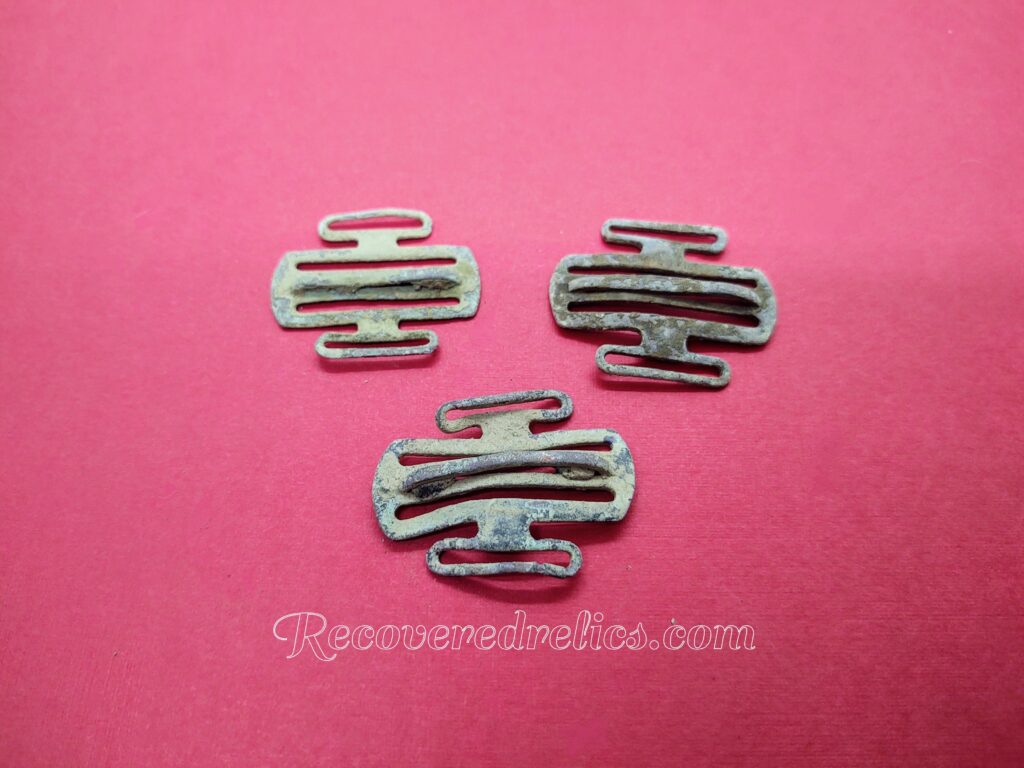
CH Guyoyt Suspender Adjuster Buckles– Charles Guyot from Paris, France invented this particular form of suspenders strap adjuster. He patented several versions. Historians believe that these adjuster suspender clasps were manufactured in the early 1900’s.

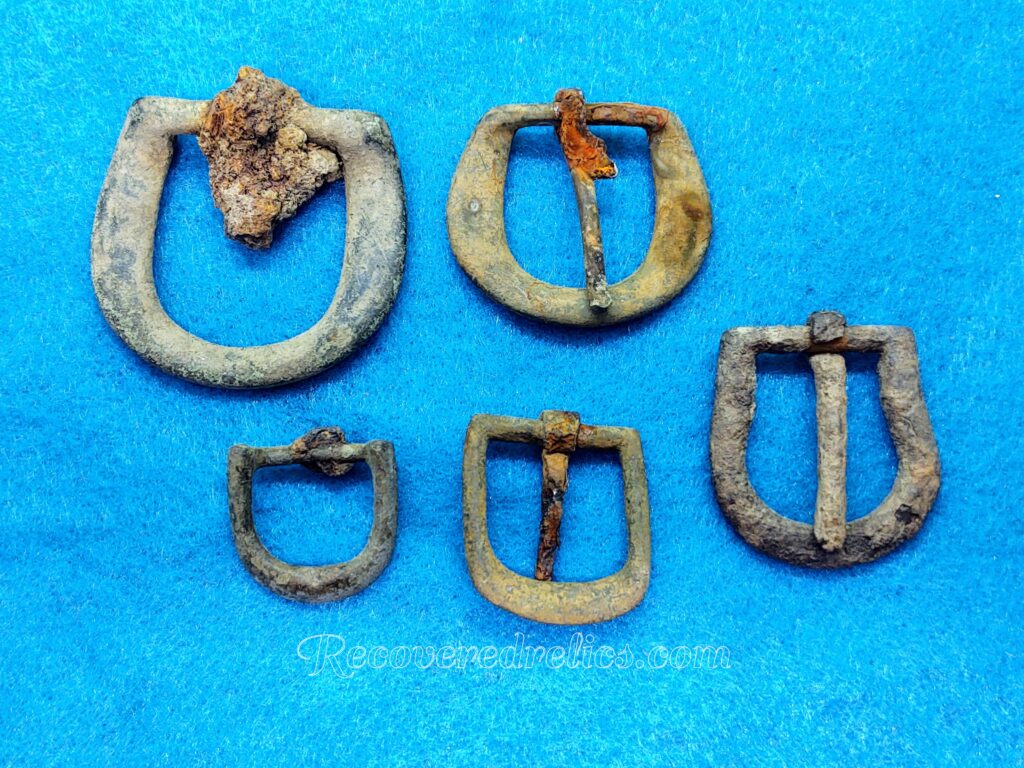
D-Shaped Single Framed Buckles (Horse Related)– D Shaped buckles are common metal detecting finds. These utilitarian buckles are simple in design and are quite versatile and practical. The D Shaped style buckle frame has been around for centuries. This style buckle was often used on horse harnesses or other horse related equipment.
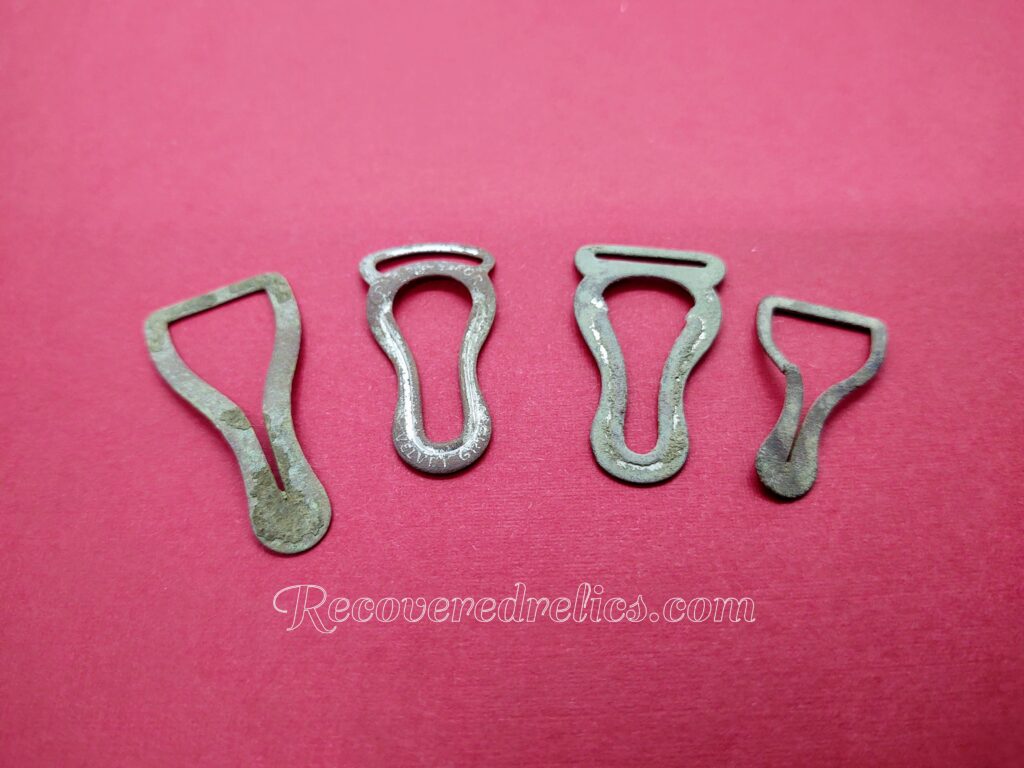
Hose, Stocking, or Sock Support /Garter Buckles– This style buckle or clasp is typically used as support for hose, stockings, or socks and is attached to a cloth strap or fabric piece that is worn around or on ones leg. Men, women, and children made use this style buckle or clasp during the 19th and 20th century in order to hold up and support their stockings or socks.
Knee Buckles– Knee buckles were used to hold ones breeches in place below or above the knee and to hold up ones stockings. On knee buckles, the pin is generally positioned between the short sides of the frame so that the buckle can be oriented vertically. Knee buckles were worn exclusively by men. Men began using knee buckles along with buttons after the year 1735. By the year 1750 knee buckles were a common everyday item used to fasten men’s breeches.
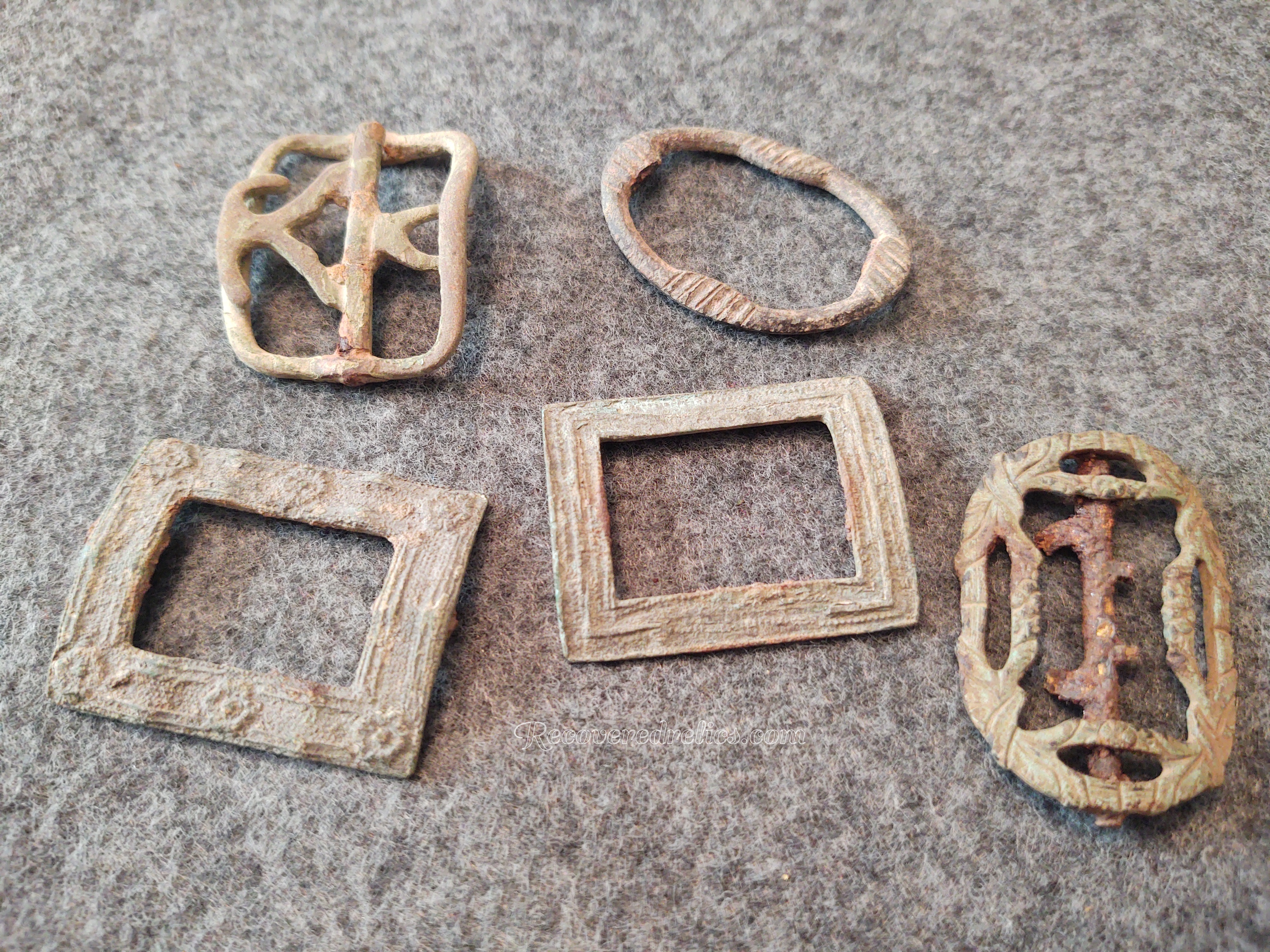
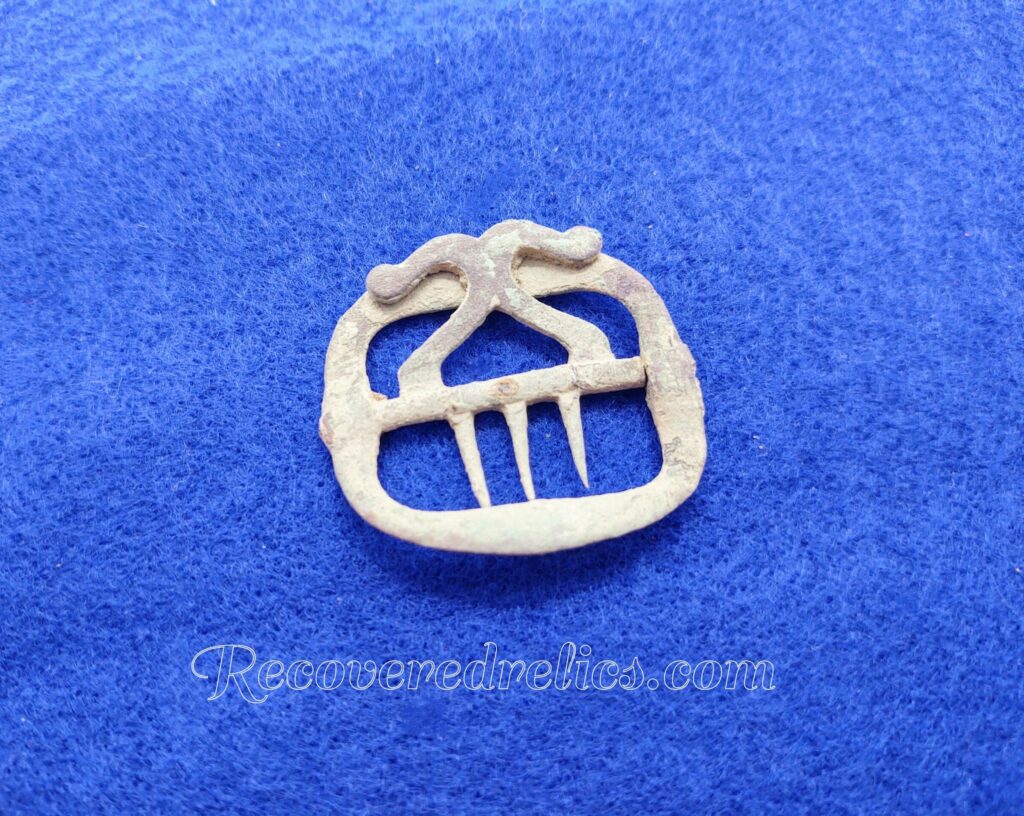
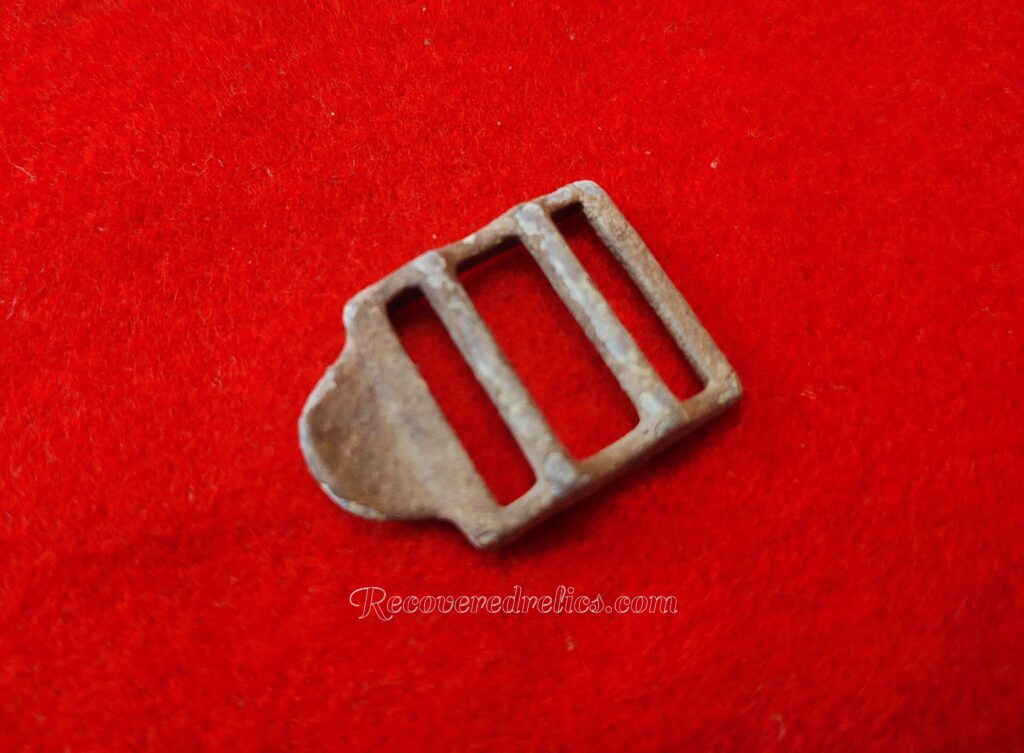
Ladder Buckles– This style buckle was commonly used on saddle bags. They make great bag fasteners because they are designed to hold under tension and easily release by lifting the front tab. This style buckle also allows for one to easily adjust the length of their straps. This style buckle is still manufactured today.
Neck Stock Buckle– A neck stock buckle is a buckle that fastens a stock. A stock is a piece of cloth designed to wrap around one’s neck. Stock buckles are worn at the back of ones neck, to hold in place stock or scarf. They were worn by men beginning around the year 1720 and remained in style until the end of the 18th century. Stock buckles can be plain or more elaborate in design. Many included designs with gems or pastes. Their frame is typically rectangular or oblong. There are one piece neck stock buckles and also two piece neck stock buckles. They can be easily distinguished from other kinds of buckles by the studs on the end of the chape. These studs were designed to fit into holes on one end of the stock. Stock buckles were typically worn with formal attire.
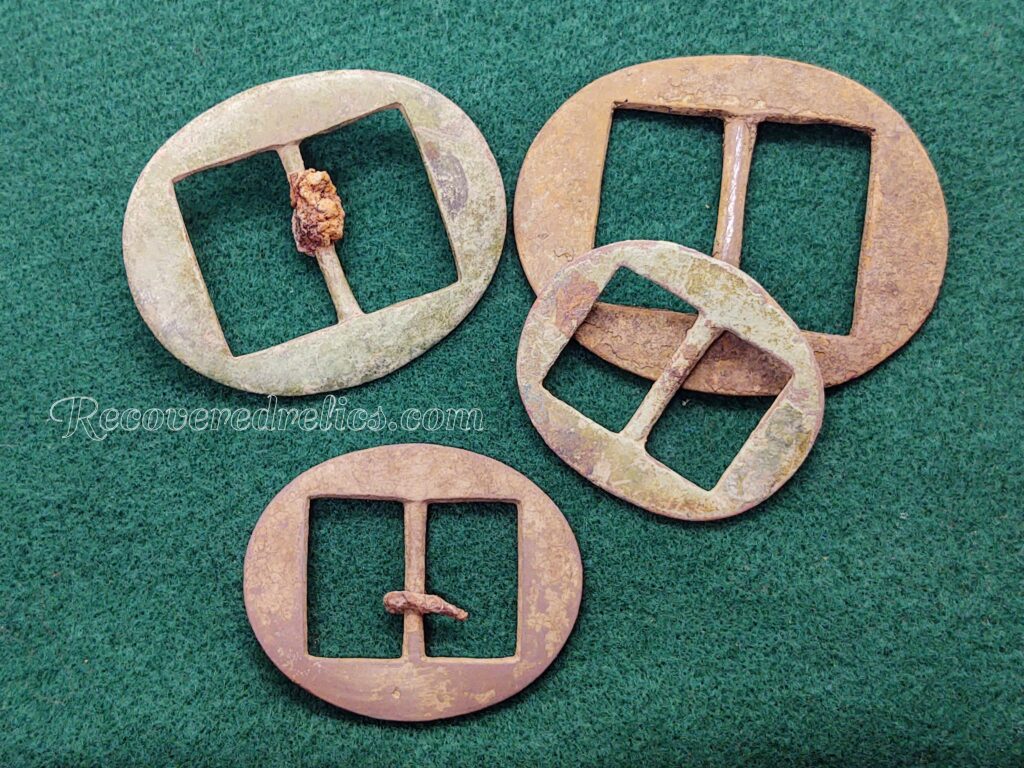
Oval Shaped Buckles (Horse Related) – Flat, oval shaped style buckles were commonly used on horse harnesses or other horse related equipment during the 1800’s. This style buckle has a centrally located bar. A pin would have been attached to the bar and was used to help secure the buckle in place.
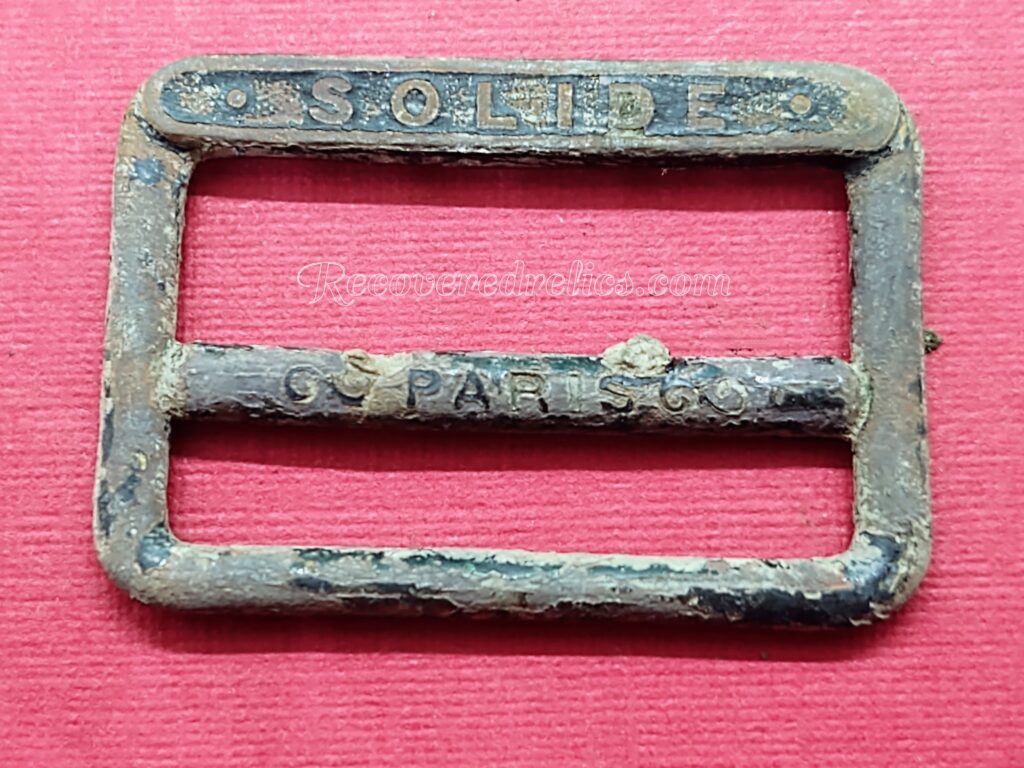
Paris Solide Waistcoat Buckle– Historians believe these commonly recovered buckles date to the late 19th century and early 20th century. This type of buckle was used to provide tension adjustment on the rear straps of men’s waistcoats or vests in order to provide a smooth closed front behind the jacket opening. An intact example was found on the back of a suit waistcoat made by James Neal, of Cambridge, England which dated to 1906. The example pictured is of just the frame.

Pin Terminal Single Frame Buckles– The buckle’s pin is attached to one side of the frame. This style buckle is usually square or rectangular in shape. This style buckle is still used today.
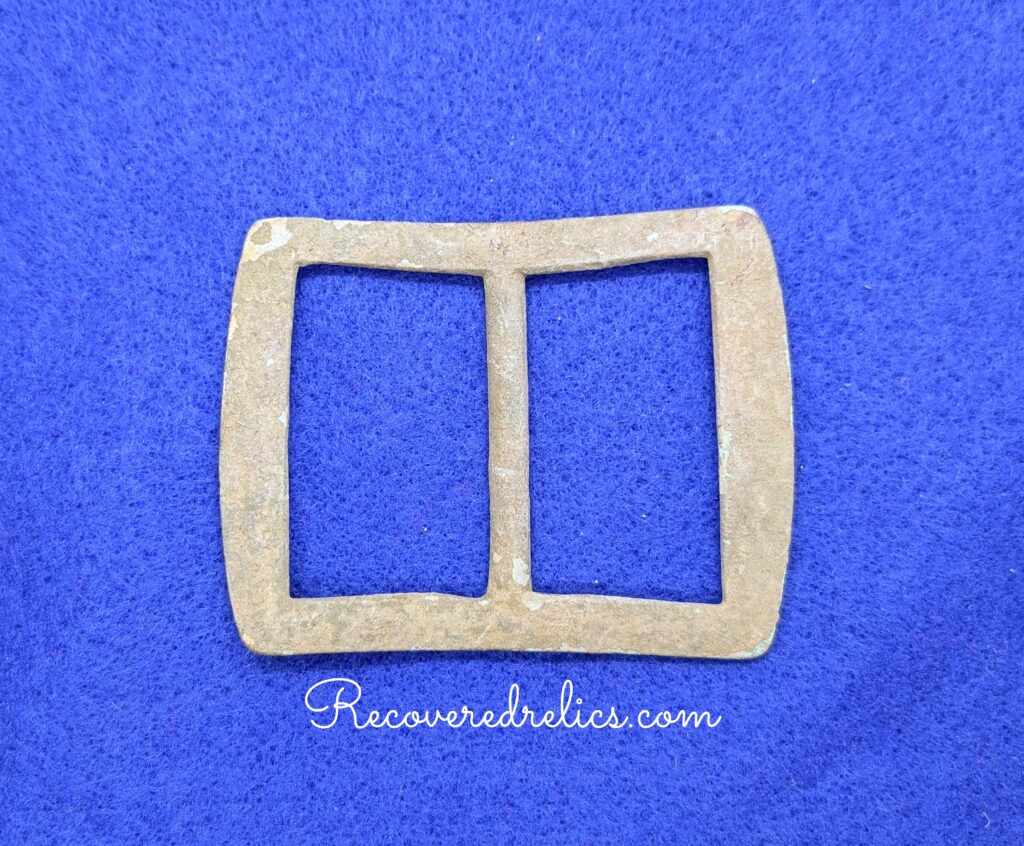
Rectangular Double Framed Center Bar Buckle– The frame is plain with essentially straight sides and only slightly rounded corners. This style buckle has two equal rectangular openings separated by a central bar. This type of buckle is commonly identified as a utilitarian buckle or harness/ general strap buckle. Plain double loop rectangular buckles, like the one pictured, are hard to narrowly date or determine precise age.
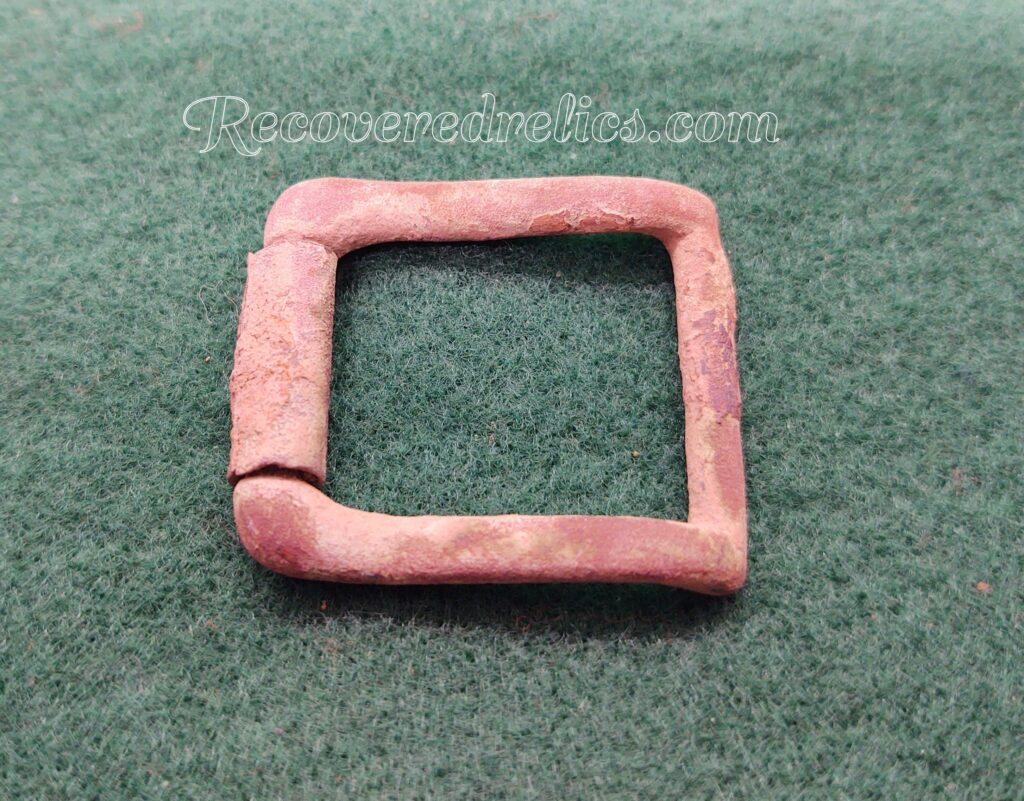
Roller Buckles– This type of buckle has a cylinder shaped roller attached to one end of the buckle. The roller allows heavy duty straps and belts to slide through the buckle easily and also helps to protect the strap from wearing. Traditionally, roller buckles were more often used on horse tack and equipment straps than on waist belts. Today you can find roller buckles on belts, handbags, purses, and briefcases.
Sash Buckles or Pins– This type of buckle or pin was used to secure a sash at a lady’s hip. During the end of the 19th century it became popular for women to wear a sash over the shoulder and across their bosom or around the waist.

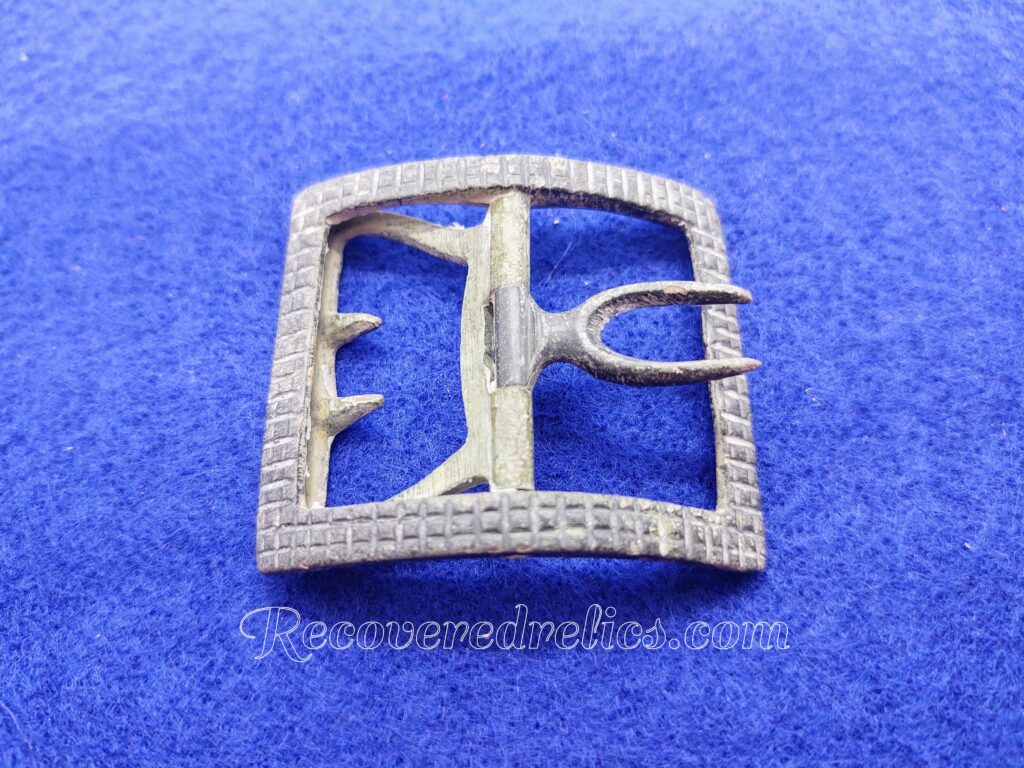
Shoe Buckles– Colonial shoe buckles first came into fashion around the middle of the 17th century. Their function was to fasten together ones shoe. The design of shoes worn by the colonists was such that ties or buckles were necessary in order to secure a shoe in place on ones foot. Shoe buckles helped to ensure that a person’s shoes remained firmly on their feet as they moved.
Slider or Sliding Buckles- Slider buckles allow the length of the straps to be adjusted by feeding the strap through the slots. Slider buckles can have a moveable or fixed center pin and come in a variety of different sizes. Small sized slider buckles were often used on undergarments. Larger sized sliders were often used on suspenders or overalls.
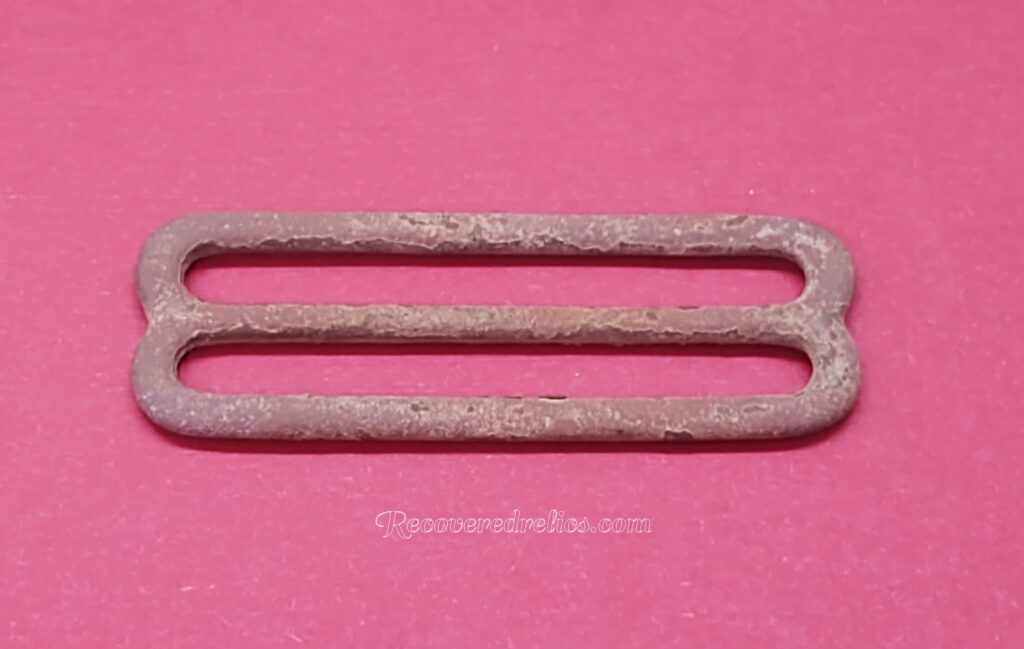
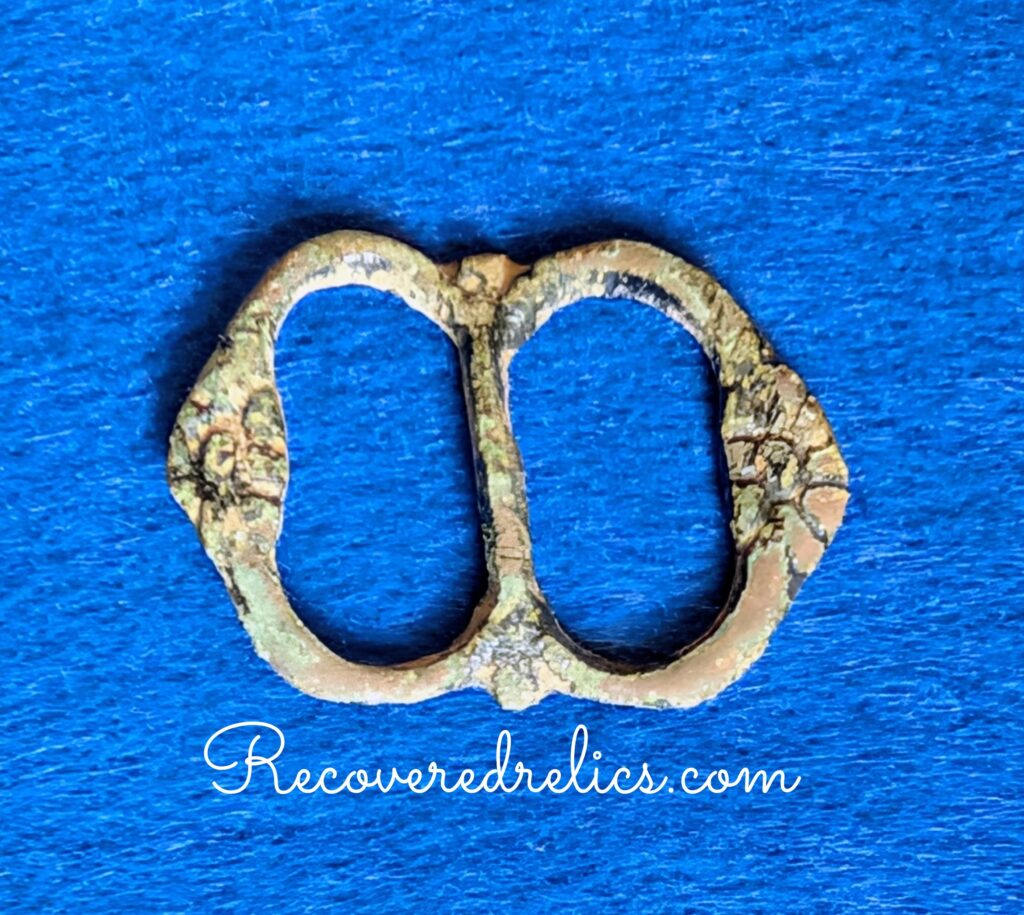
Spectacle Buckles– Spectacle buckles are a type of double looped buckles with oval loops. They are known as “spectacle” buckles due to their double loop, oval frame which resembles a pair of spectacles or eyeglasses. This buckle style first emerged in the middle of the 14th century. The height of their popularity was between the years 1450 to 1650. They were made from a range of materials, from plain copper alloy and iron to more expensive options like silver, pewter, or those decorated with paste jewels. These buckles served a functional purpose for securing straps but were also ornamental in design. Many examples feature decorative elements such as stylized floral designs, trefoils, and engraved patterns.
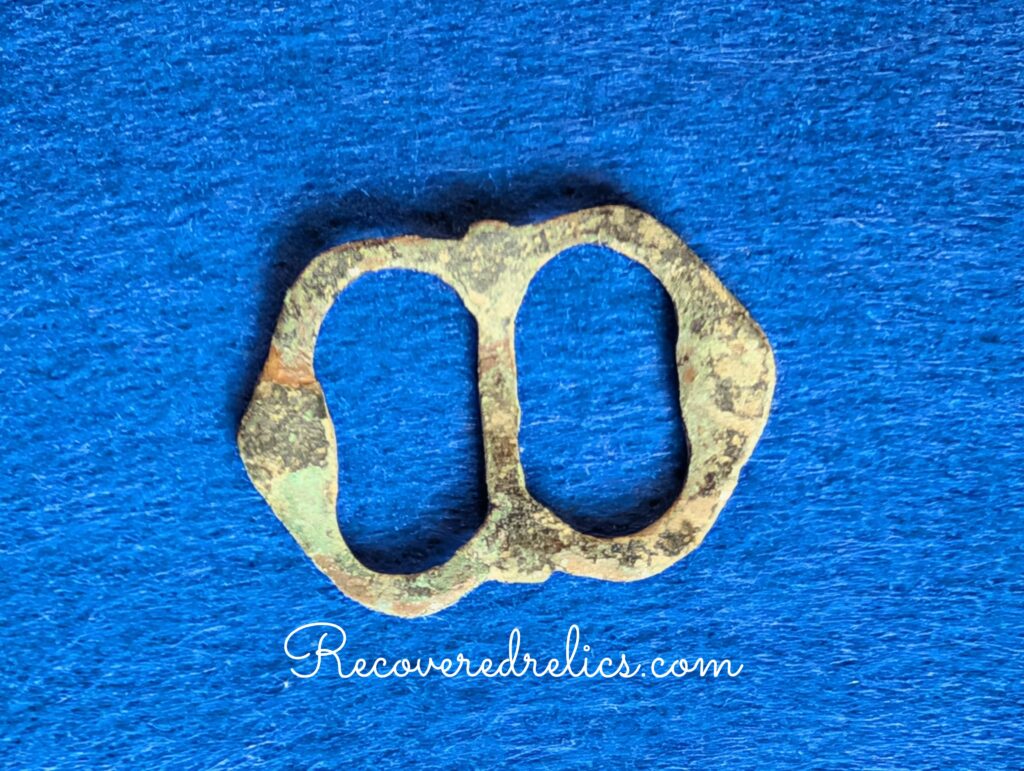
Spur Buckle-17th and 18th century spur buckles are small buckles, often ranging from 20 mm to 25 mm, and were predominantly cast from copper alloy. Spur buckles primarily featuring double-loop frames with a central bar. These fastening devices were used to secure riding spurs to leather boots. In the early 1600’s, spur buckles often mirrored civilian fashion, frequently appearing as trapezoidal or asymmetrical double-loop frames. As the 17th century progressed, the fashion of wearing spurs as everyday outdoor apparel by society’s elites fueled a surge in the production of smaller, often highly decorated buckles with molded knobs or intricate floral detailing, By the 1700s, the design of spur buckles began to adopt the geometric curves and bright-cut metalworking techniques seen in mainstream 18th-century shoe buckles. Spur buckles can be distinguished from other small buckles through specific manufacturing markers, such as iron spindles and their integrated hook attachments.

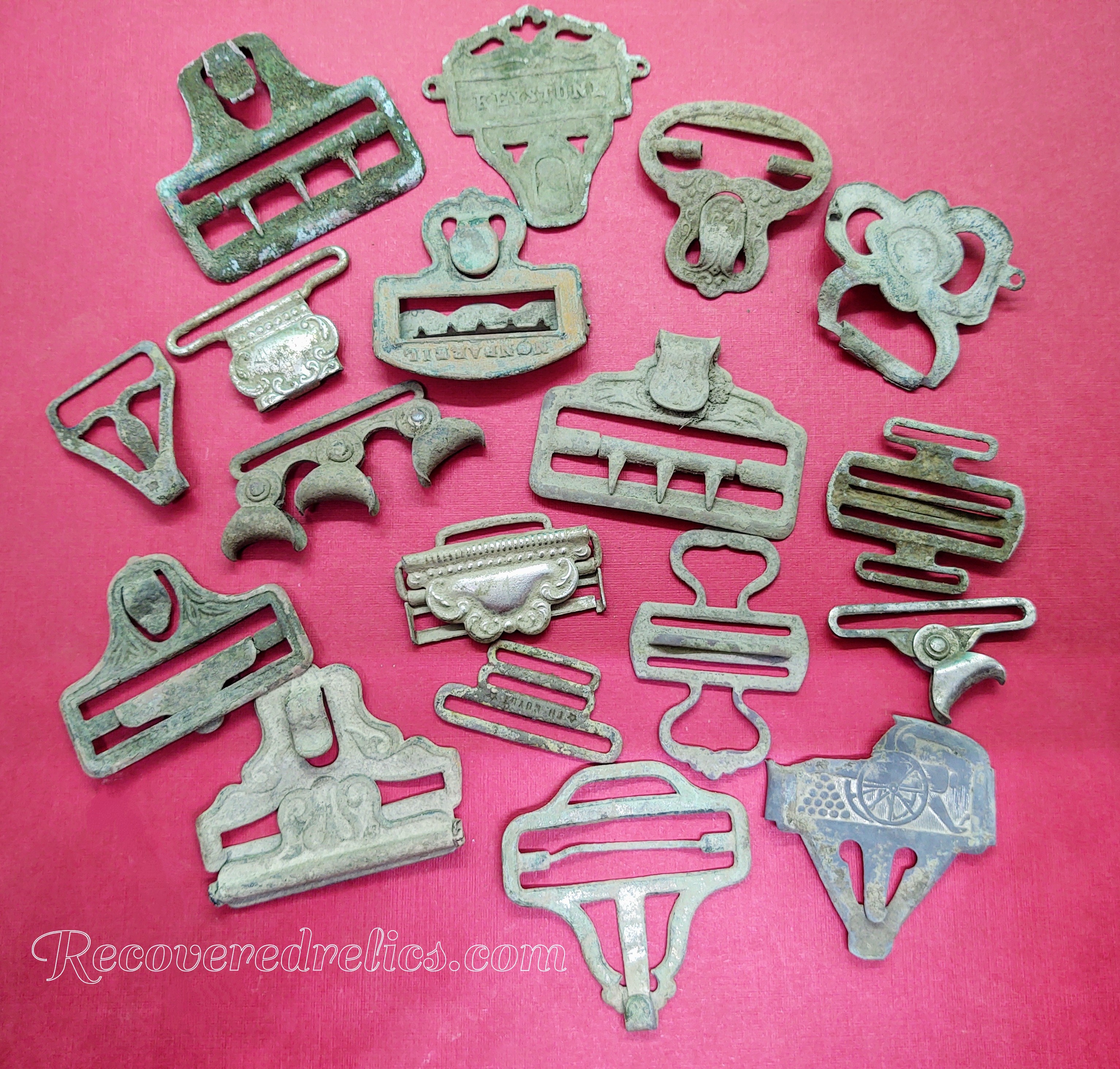
Suspender Buckles/ Clips– Suspenders or braces are narrow straps that are worn over the shoulders and attached to the front and back of pants to keep them from falling down. These body supporting garments were born out of practicality. High cut trousers were fashionable in the mid 19th century and early 20th century. This style pants made wearing a belt impractical. Buckles were used to secure the suspenders in place. There is a wide variety of different types of suspender attachments. The design of suspenders and their buckles underwent many changes over the 19th and 20th centuries. Modifications to improve the buckles designs were constantly being made. Suspender buckles are a commonly found item by detectorist due to their great popularity over a vast period of time.
Trapezoidal Buckle– A trapezoidal buckle is a fastener with a four-sided frame shaped like a trapezoid, having sides that angle inward or outward, and commonly featuring a central bar and a pin. Trapezoidal buckle first appeared around the 14th century but reached their peak in popularity during the mid-to-late 17th century to early 18th century.

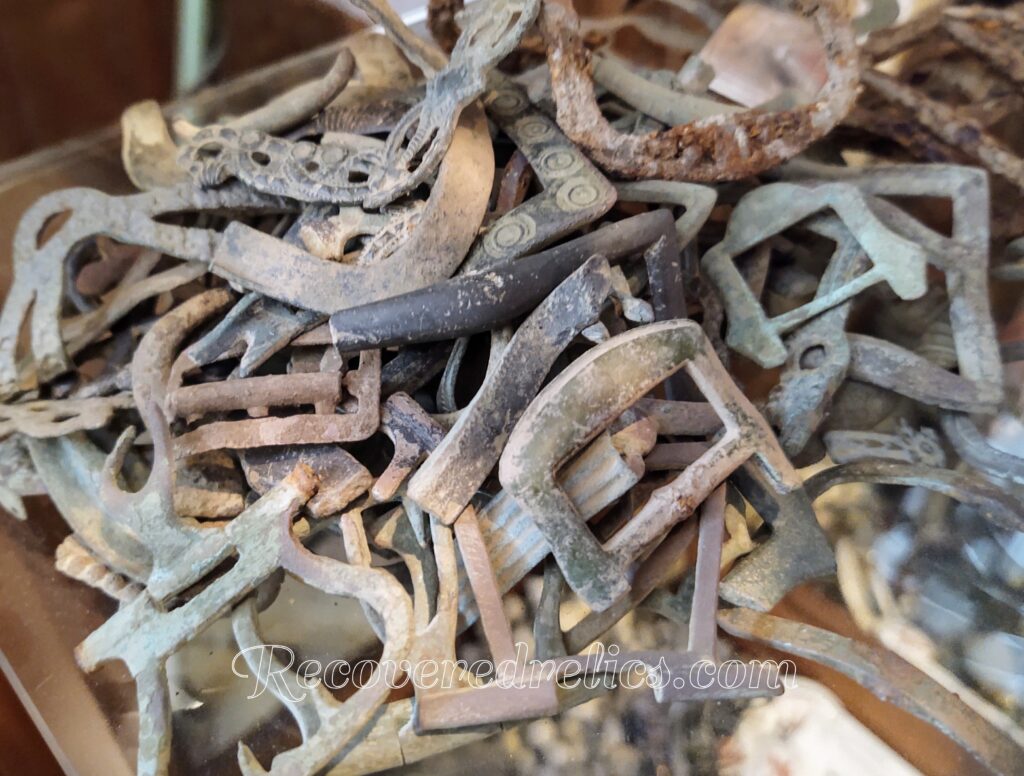
Buckle Fragments– We often find broken bits and pieces of buckles. Between the 17th and 18th centuries buckles had diverse roles and were used on shoes, breeches, harnesses, stocks, girdles, garters, hats, boots, swords, and spurs. Something as mundane as buckle fragment is still a piece of history and can often tell us something about the particular area where it was found.
Buttons
Albany Citizens Corps NY State Seal Two Piece Button- A two-piece button featuring the New York State Seal, an eagle over a shield, with the initials “ACC” above the federal-style eagle is an antique uniform button belonging to the historic Albany Citizens Corps. The Albany Citizens Corps was a prominent 19th century volunteer militia and reserve unit in New York. During the 1800’s, volunteer militia units like the ACC were highly prestigious citizen-soldier organizations. They served dual purposes as social clubs for prominent citizens and rapid-response state militia units for parades, public security, and local emergencies.


Alpha Shank– This shank is shaped like the Greek letter Alpha. It is like an Omega style shank, but without the typical Omega feet. Alpha shanks were typically made of copper alloy.
Occasionally they were made of iron. Alpha shanks on buttons were most common during the late 18th century, between the years 1770 to 1800. By the early 19th century, this shank style began to be replaced by other fastening methods such as the Omega shank.
Artillery Corps U. S. Federal or State Militia One Piece Button– The “Eagle on Cannon” design dates in age from 1808 to the 1830’s. These flat, one-piece brass or pewter buttons were initially produced in England and used by both federal and state militia artillery units. The emblem typically displays a calling eagle with upraised wings over a cannon, sitting on an elevated piece of ground. There are multiple variations.

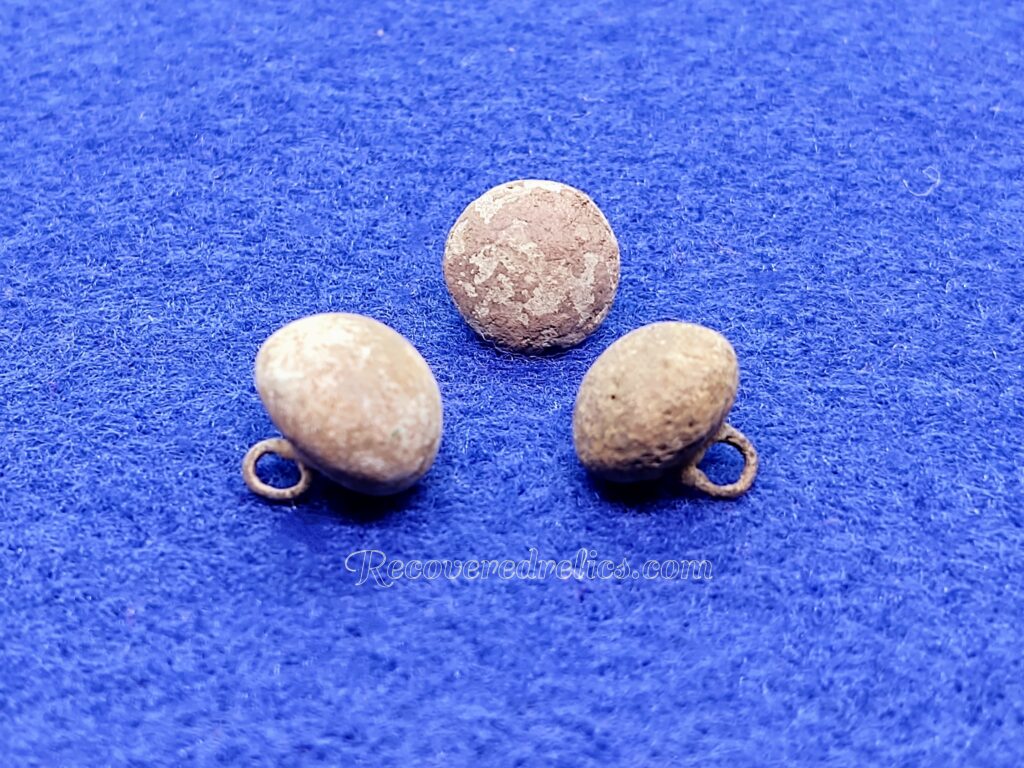
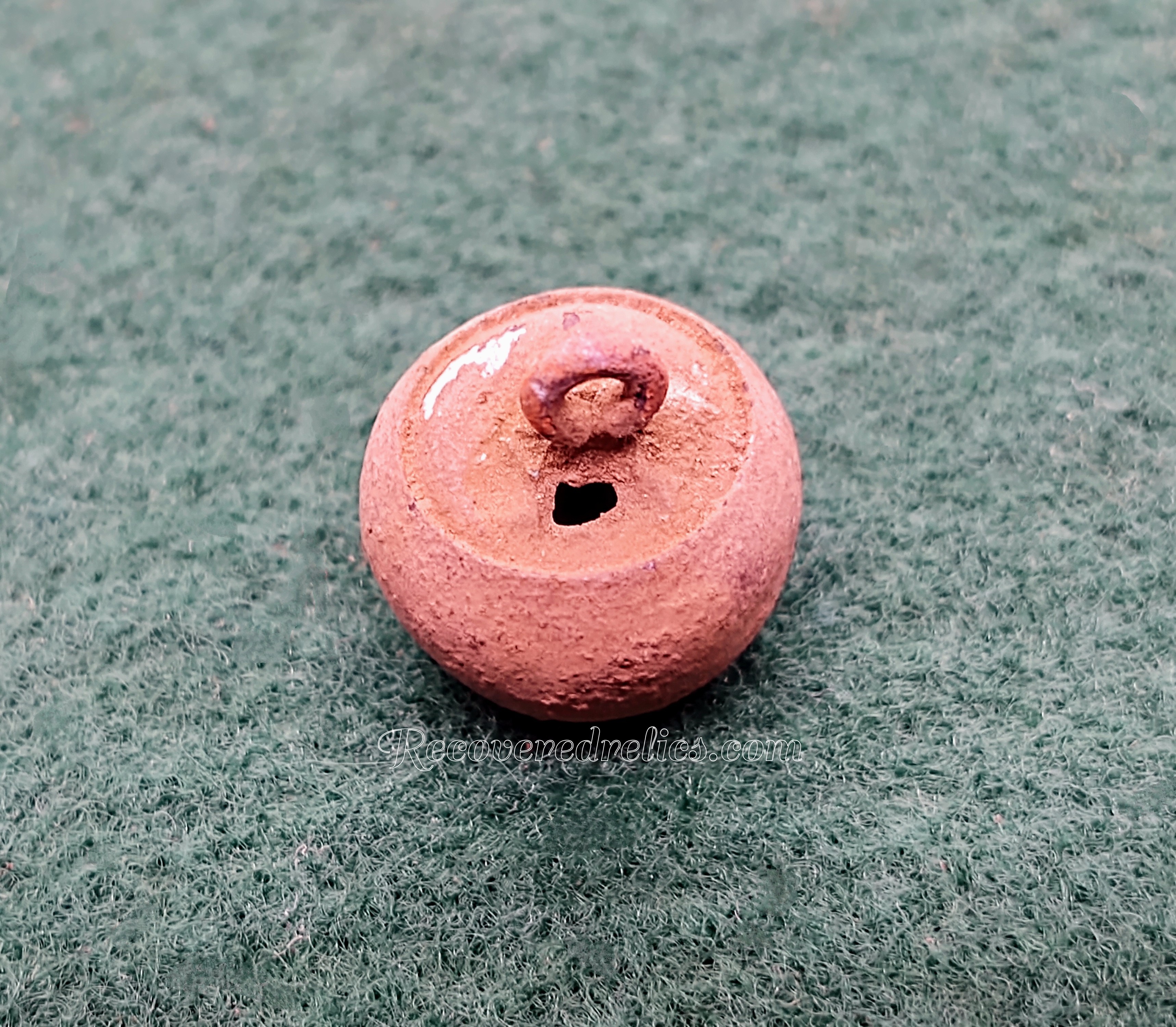
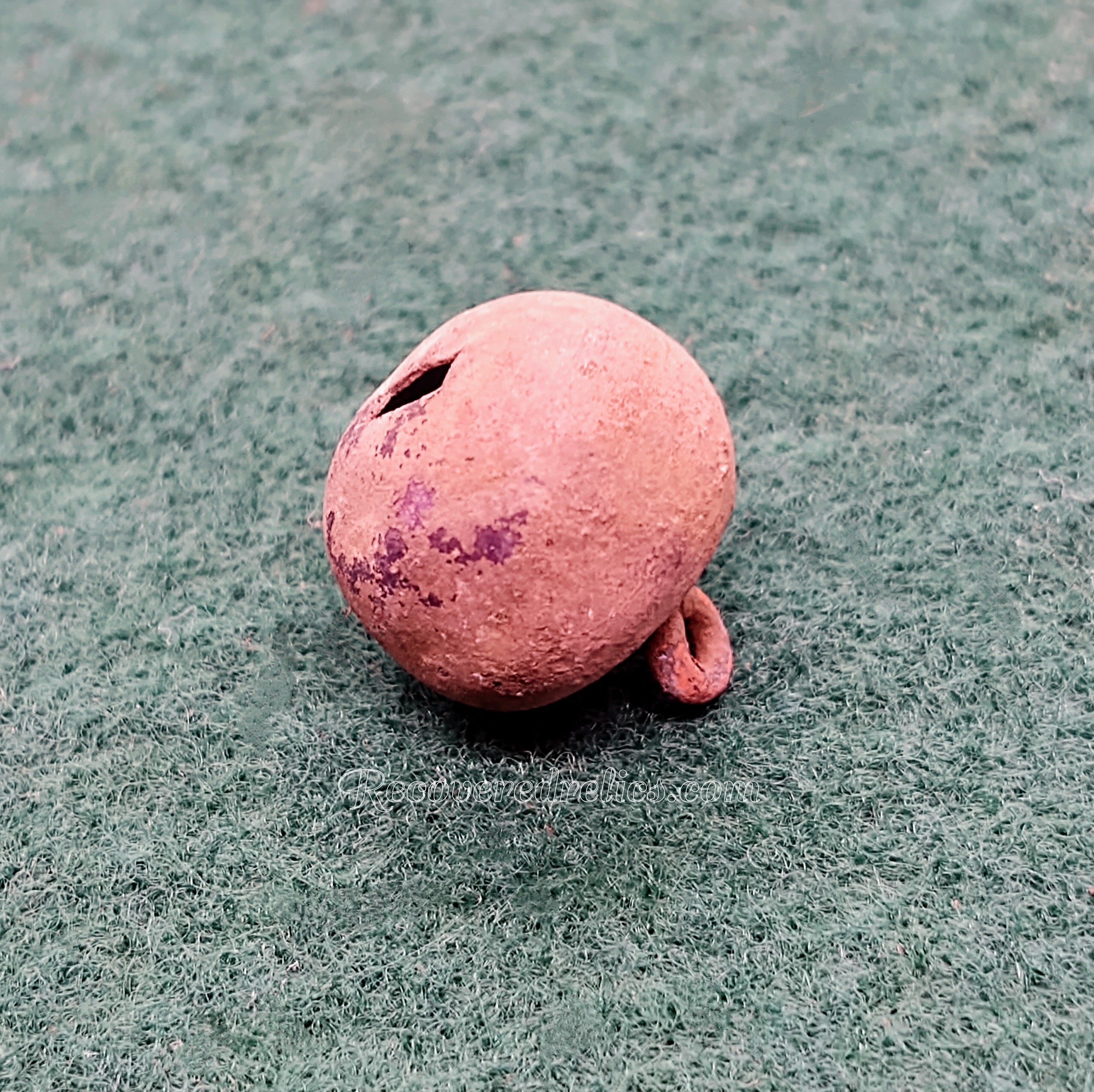
Ball Buttons– Late 17th century and 18th century buttons. Hollow ball shaped buttons with no air escape holes. They resemble small doublet buttons of the 1575-1660 period.

Bar Buttons– Bar buttons feature multiple parallel running lines or bars. These linear accents were decorative motifs. It is a classic minimalist styling choice used to add texture and visual interest without relying on complex patterns. These bar-like lines on buttons were typically created using techniques like engraving, stamping, or debossing. This decorative design was popular on civilian buttons in the 1700’s and during the 1800’s.


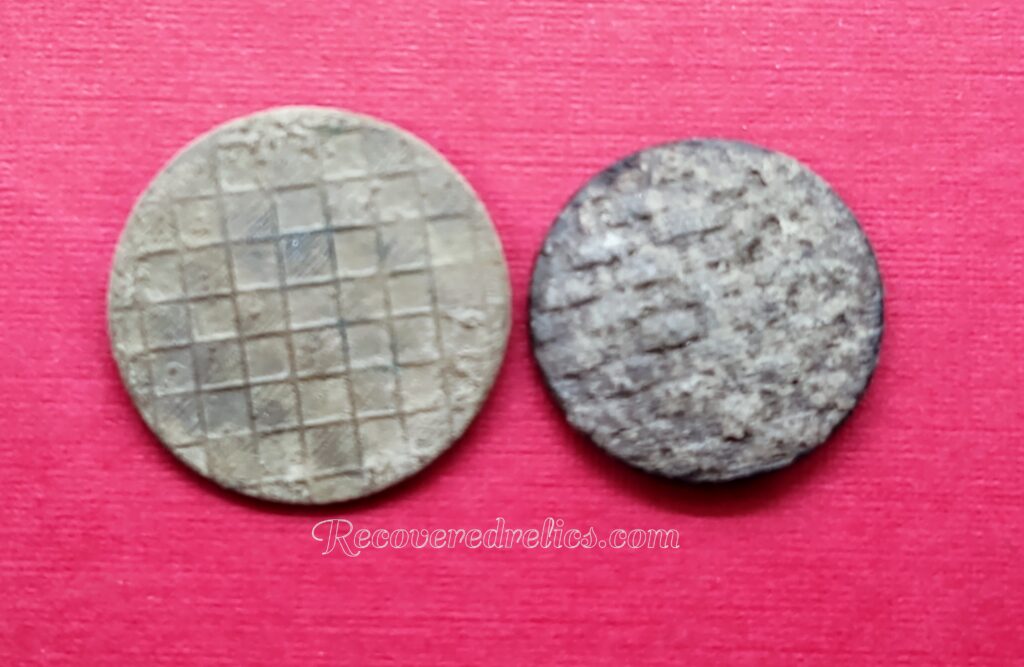
Basket Weave Buttons– A basket weave motif is reminiscent of a woven basket. The design creates a checkered board effect. Basket weave designs first emerged on cloth embroidered buttons or Dorset buttons. Traditionally speaking a basket weave is a plain weave with 2 or more yarns woven together, side by side, in a checkered pattern. Stamped or cast metal buttons with basket weave designs mimic popular thread buttons.
Blow Hole or Vent Hole Buttons– 18th century buttons. Comprised of two pieces. The two button halves were soldered together. The holes in the back of the button served to vent air during the soldering process.
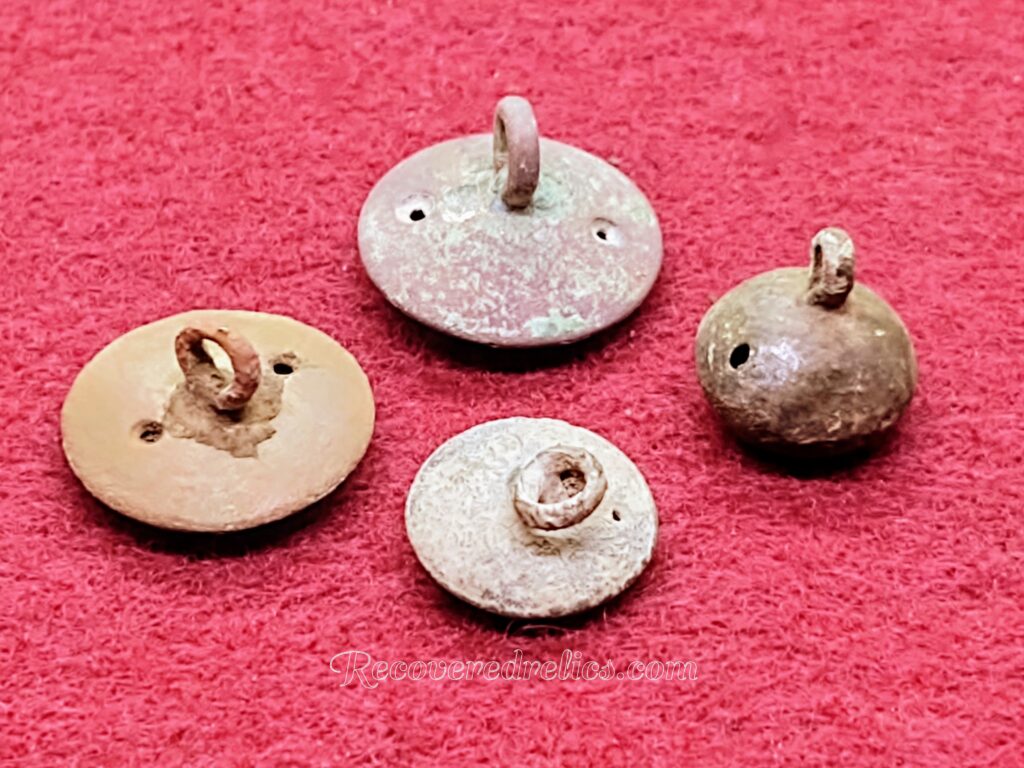

Brass Buttons– Brass was widely used for buttons due to its durability and corrosion resistance. Brass is primarily made from copper and zinc, with variations in content. When in the ground, brass buttons often develop verdigris, a thick, bluish-green patina resulting from the copper reacting with moisture and soil acids.
British General Service Uniform Button-The British General Service button was introduced in 1902 to standardize uniforms. It features the Royal Coat of Arms with a lion on the left and unicorn on the right, and a supporting a central shield, accompanied by the royal motto “Dieu et mon droit” which means “God and my right”. The crown sitting at the top of the coat of arms indicates the specific era of the button. A Tudor crown or King’s crown was used from 1902 through 1952, spanning the reigns of Edward VII, George V, and George VI. A St. Edward’s or Queen’s crown was used from 1953 onward during the reign of Queen Elizabeth II. The Tudor crown was reintroduced following the accession of King Charles III.


British Royal Artillery Uniform Button– Early variants featured three left facing cannons stacked vertically along with three piles of cannonballs. In 1802, the design transitioned to three cannons stacked beneath a crown. Later versions circa 1840’s also incorporated the “Ubique” scroll. By 1872, the regiment simplified the design to a single cannon.


Bullet Buttons– This style button is a two piece nearly spherical button. These buttons were referred to as “Bullet Buttons” during the period of the War of 1812. This style button was also worn by civilians after the war ended. Bullet buttons date from around 1812 to 1830.

Campaign Buttons– Campaign buttons were made to publicize candidates for governmental office. Originally, they were made for presidential candidates only. Early political campaign buttons were sewn on buttons. They were actual clothing buttons, and their function was just as important as displaying support for a candidate. Pictured are campaign buttons from the 1840 presidential election between Democratic President Martin Van Buren and Whig candidate William Henry Harrison. The 1840 presidential campaign introduced some of the earliest mass-produced clothing buttons, fundamentally transforming how candidates reached voters.
Log Cabin Buttons– The Whig Party relied on heavily stylized imagery to portray Harrison as a simple, frontier-dwelling man of the people. William Henry Harrison used the log cabin as a symbol to portray himself as a humble, rustic “man of the people”. Ironically, this iconic emblem originated as an insult from his political opponents.
Campaign Buttons Continued…
The 1840 political campaign button pictured depicting an eagle clutching a key perched on a safe with a female figure was issued to support incumbent Democratic President Martin Van Buren. This imagery was a direct attack on the Whig Party’s William Henry Harrison and their “Log Cabin and Hard Cider” campaign. The female figure representing Liberty or Justice next to the “safety” vault was meant to convey that the Democratic approach was the true guardian of the nation’s wealth and liberty. The safe symbolized the secure storage of government funds, while the American eagle stood for national strength.


Cast Eye Shank– The shank is cast as an integral part of the button’s body. Buttons with this type of shank are typically made of pewter and one-piece, flat disc buttons. The mold seam is typically visible on the back of the button. This style shank was common on pewter buttons dating from the mid-17th century – 18th century.
Center Boss One Piece Button– Buttons with a center boss or a raised, central decorative hub. This style button was popular during the 19th century. They also often feature floral patterns or stylized decorative elements.


Center Debossed Button– This style button features an indented or recessed central area. Button manufacturers used dies to stamp or strike the convex face of a metal disc, which pushed the center design below the surrounding surface, creating the debossed or indented effect.
Color vs Colour Backmarks– Backmarks with colour, spelled with the letter u, almost exclusively points to British made buttons. Color without the letter u is the American spelling, championed by Noah Webster’s 1806 and 1828 American dictionaries. Buttons marked with this spelling were typically manufactured in the United States.


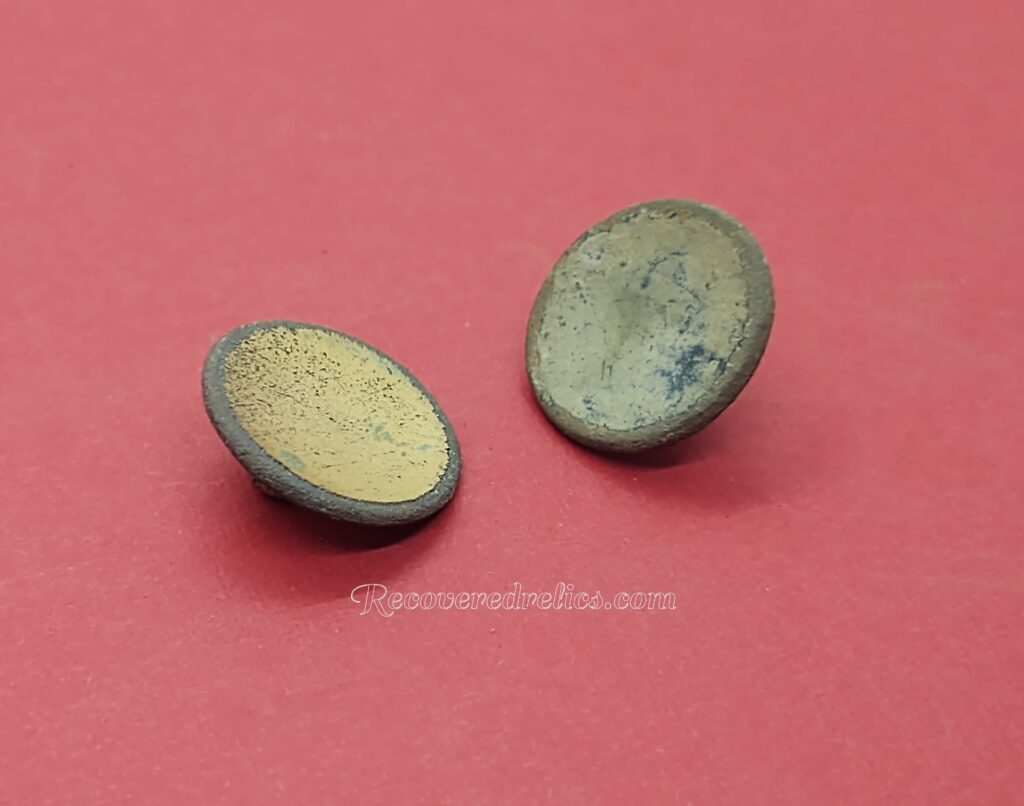
Concave One Piece Buttons– The discs on these one piece shank style buttons have a slight inward curve. These concave or dish shaped buttons are classically simple.
Cone with Wire Eye Shank– A cone shank with an embedded wire eye is generally found on tombac or copper alloy one-piece flat disc buttons. This style shank was utilized on buttons manufactured during the 18th century and early 19th century.

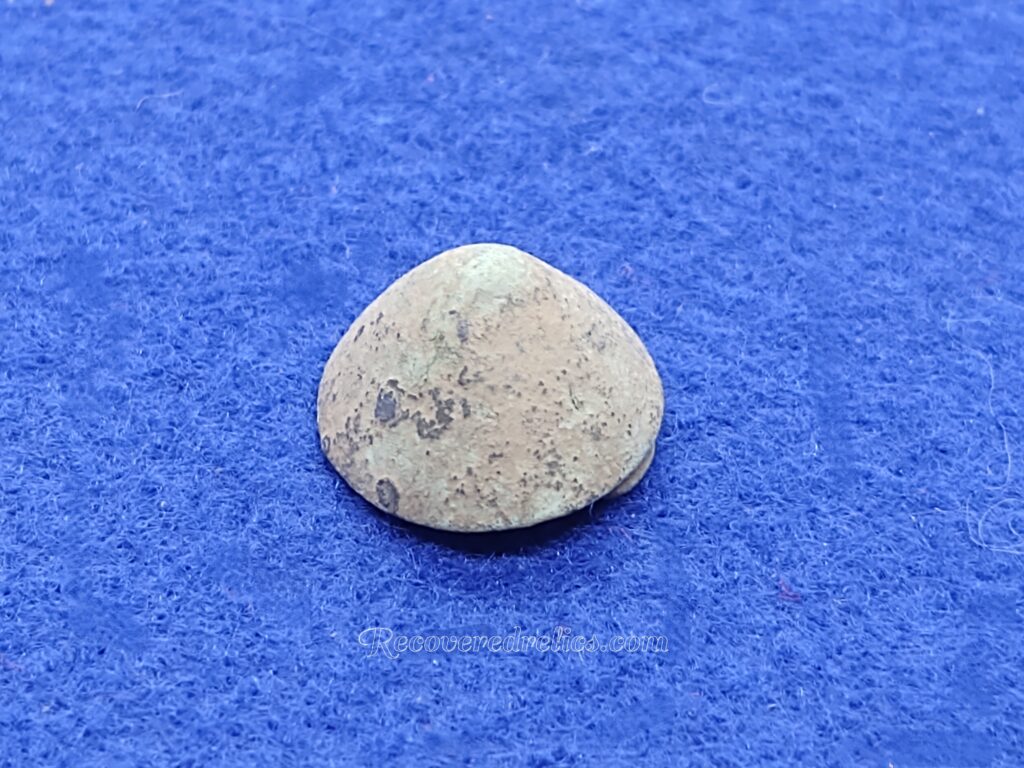
Conical Buttons – This late 18th century/ early 19th century style button is shaped like a cone. It’s alpha wire shank is flux joined to the back of the button.
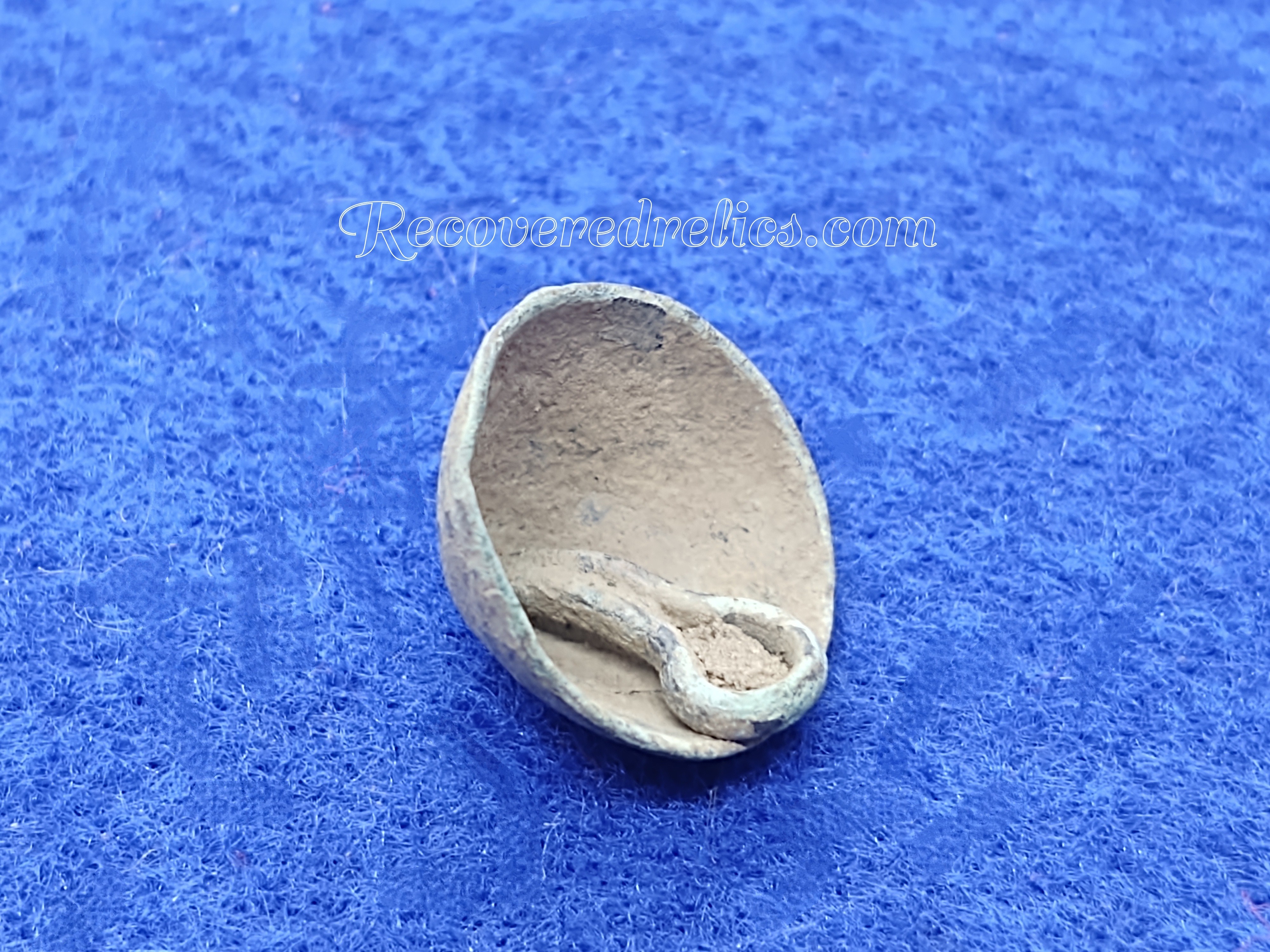
Convex One Piece Buttons– Convex one piece buttons are first cut from a flat circular shaped piece of metal often referred to as blanks. The convexity is given to them during the production process. After being annealed the blanks are made convex by a blow from a stamp.
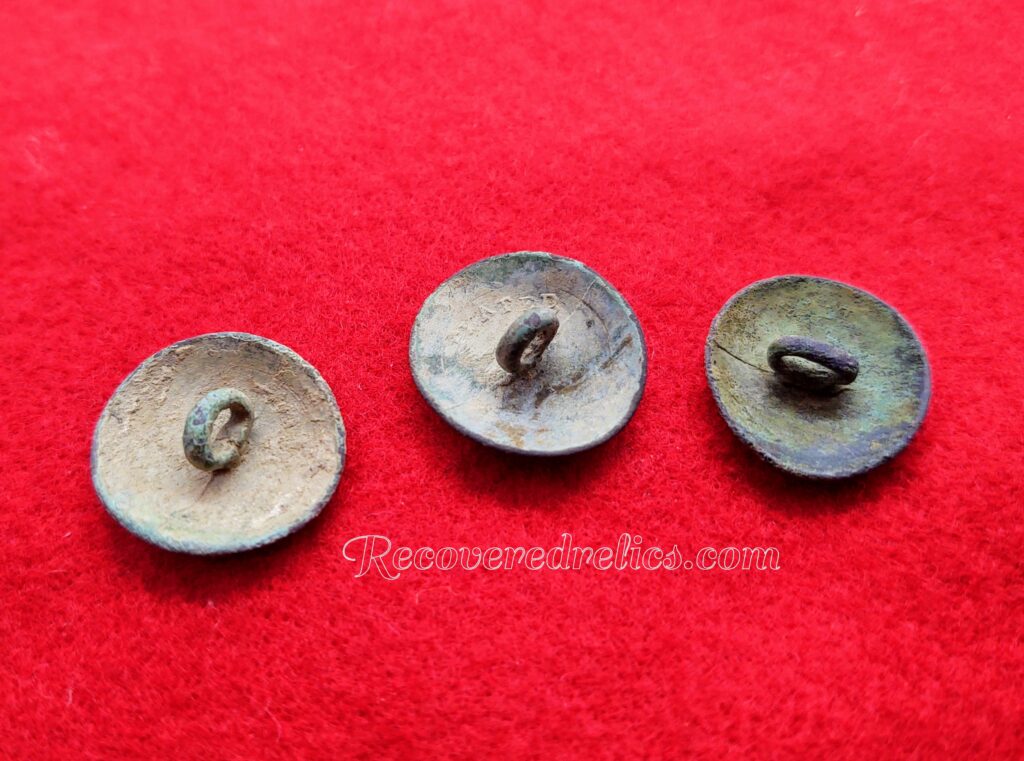

Crown Icon Backmark– Beginning around the year 1800, button manufactures began stamping icons, such as crowns on the back of the buttons they produced. It is believed that the stylized crown icon was used to symbolize superior or royal quality. The emblem often accompanied quality assurance text like Treble Gilt or Standard Coulor. Buttons with crown icon backmarks are typically of British origin. Between 1800 and the 1820’s, the United States lacked the mass-production capabilities required to meet demand for brass buttons. Millions of buttons were manufactured in industrial hubs like Birmingham, England, and shipped across the Atlantic to the United States. Detectorists in the U.S. commonly find buttons with crown icon backmarks.

D. Evans (Attleboro, Massachusetts)– D. Evans & Co. was a prominent American button manufacturer operating from 1848 to 1945. Daniel Evans gained control of the R & W Robinson button manufacturing company of Attleboro, Massachusetts after bankruptcy. The company continued to specialize in high-quality military, militia, and uniform buttons. D Evans continued to use old Robinson backmarks for several years after acquiring the company which makes it difficult to precisely date Rosinson/ Evans buttons. Evans made Alabama Volunteer Corps buttons with Robinson backmarks as late as 1860. To further confuse, Evans also used his own backmarks over a long period of time. In 1850 Evans introduced the highly recognizable “D. EVANS & CO. ATTLEBORO or ATTELBORO MASS” stamping backmarks. He used these backmark into the 1860’s. As the company expanded, they transitioned to North Attleboro, Massachusetts. Buttons with the D. EVANS & CO. * NO. ATTLEBORO, MASS. backmark generally date in age from the 1870s into the early 20th Century.

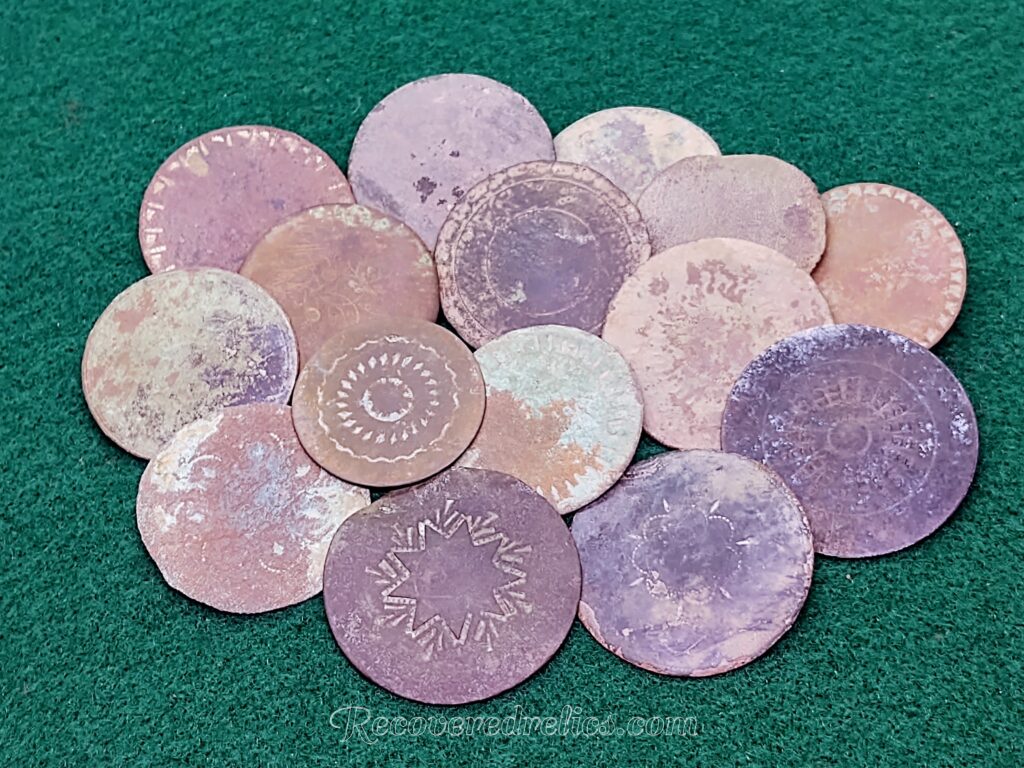
Dandy Buttons (One Piece)– “Dandy Button” is a slang term used by detectorists to describe large (30mm in diameter or larger), often decorative, generally brass flat buttons that were popular during the late 18th century. This type of button was used by civilians and would have been sewn onto the colonists’ dressier more elegant attire rather than their work clothes.
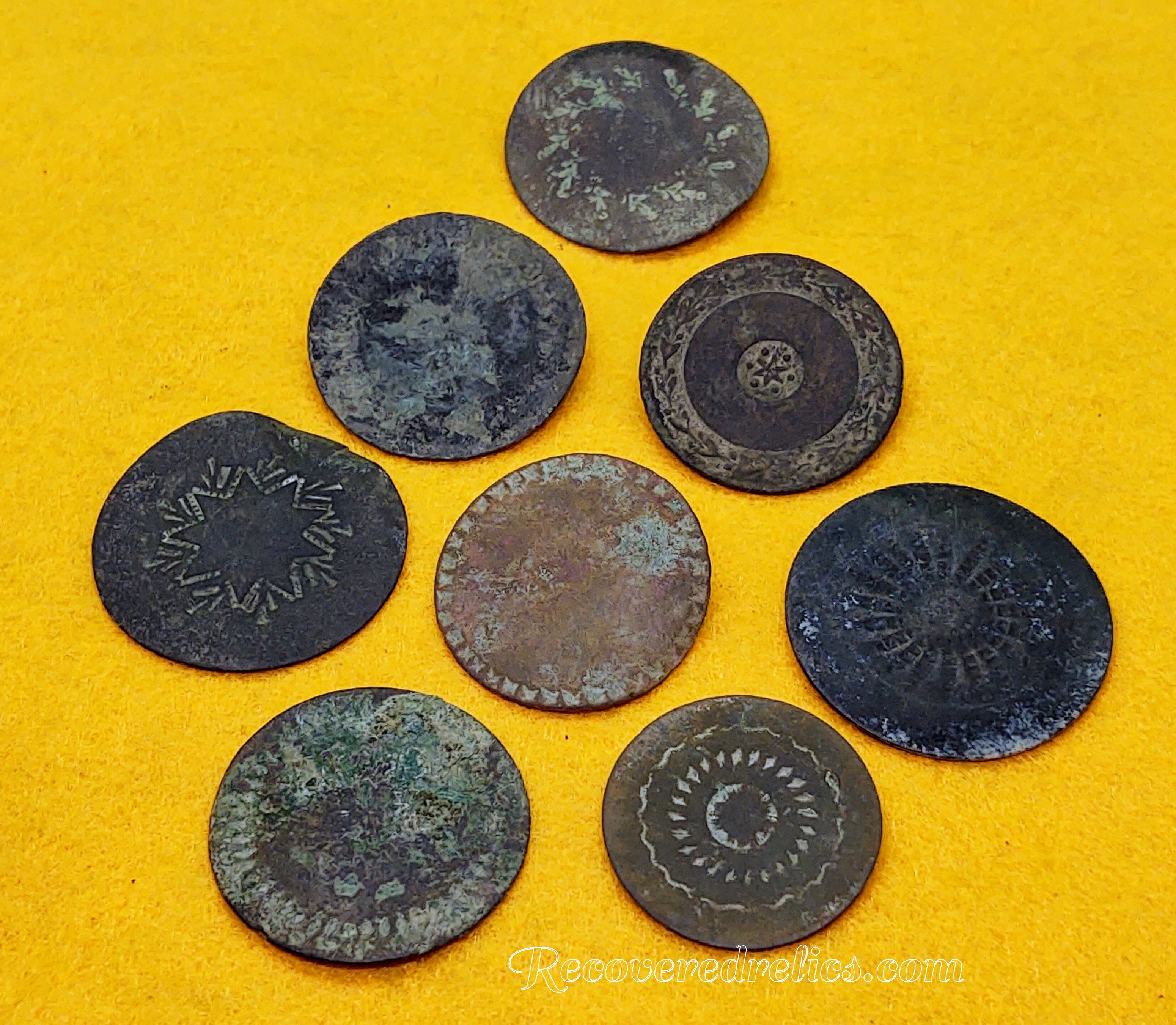
Decorative Civilian One Piece Flat Buttons– Designs or decoration on buttons were popular and added character. Brass and copper buttons could be stamped, engraved, chased, or die struck without losing strength or breaking. The majority of 18th century designs on buttons were either cast or hand cut by an engraver. This changed with the introduction of machine stamping around the year 1770. This new machine stamping technology produced button faster and was less expensive.


Drilled Eye Shank– Unlike wire-loop shanks that are soldered onto the back, drilled shanks are molded or cast as a continuous part of the button body. A hole is drilled directly through the solid extension that was cast on the back of a button to create the sewing loop. You can find drilled eye shanks on pewter, copper alloy, and tombac buttons. A button with a drilled, integral shank is typically very old, often dating to the 18th century (1700’s) or early 19th century (1800 to 1820’s).

Eagle “A” Button– A historical United States military uniform button. These buttons usually feature a “spread eagle” holding an olive branch in one talon and arrows in the other, with a shield in the center containing the letter. The “A” inside the shield on the eagle’s chest stands for Artillery and identifies the wearer’s specific US Army branch of service. Eagle “letter” buttons were primarily used by the U.S. Army during the 19th century, particularly from the 1820s through the Civil War era.


Eagle “C” Button– These branch specific buttons were issued with the letter “C” embossed on the eagle’s shield to denote Cavalry service during the 19th century. They were made in various sizes, such as coat and cuff buttons.
Eagle “D” Button– Eagle “D” buttons featuring an eagle standing over a shield containing the letter “D” were used by the U.S. Army’s Dragoon regiments between roughly 1833 and 1855. They represent a transitional period in military history, bridging the gap between early American military forces and the later specialized Cavalry of the Civil War. In 1855, the Dragoons were reorganized, and by the Civil War (1861–1865), they were consolidated into the general Cavalry regiments, which used Eagle “C” buttons.
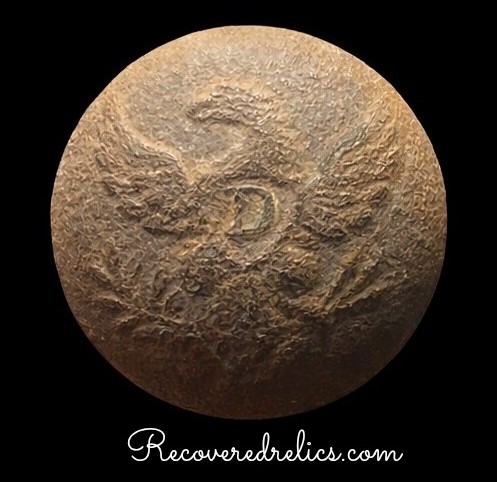

Eagle “I” Button– Eagle letter “I” buttons featuring an eagle and shield with the letter “I” for Infantry, were primarily used on US Army uniforms from the 1830’s through the Civil War era.
Eagle “R” Button– Eagle “R” buttons are US military uniform button designed for officers of the Rifleman units and were generally manufactured between the years 1821 and the late 1850’s. The “R” (Rifleman) and “D” (Dragoon) buttons were officially consolidated into “C” (Cavalry) buttons in the year 1859, marking the end of the “R” eagle button era.


Eagle Icon Backmark– In the early 1800’s the United States relied heavily on British manufacturers for uniform and civilian buttons. The War of 1812 created anti-British sentiment amongst Americans. It has been suggested that British makers cleverly stamped the American eagle icon onto the back of their flat brass buttons to appeal to American buyers. Some individuals have suggested that the eagle icon backmark instead indicates that these one-piece flat buttons were rather made in America. Given what we know about transatlantic trade and button manufacturing from this time period, as well as the fact that many of these eagle icon buttons have been found in England and Canada by metal detectorists, it is much more plausible that these one piece buttons with the eagle icon backmark were British-made pieces intended for the American market.

Embedded Wire Shank– A wire eye shank is embedded in a metal hump on back of the button. These shanks are generally iron or copper alloy wire. Unlike fully cast pewter shanks which can break, embedded wire shanks were considered more durable. This style shank is usually found on pewter buttons and is typical of hard white pewter buttons. Hard white pewter buttons are 19th-century American-made buttons produced from a, hardened pewter alloy or high tin content. Hard white pewter buttons were primarily manufactured in Connecticut, between 1800 and the 1830’s.


Fire Department (FD) Button– Two-piece brass buttons on Fire Department (FD) uniforms date back to around the mid 1800’s. These buttons were introduced as a durable and decorative upgrade to the older one-piece cast buttons used previously. The design on the button pictured features a raised “F.D.” center surrounded by a civic laurel wreath. These buttons were manufactured in a larger size for jackets and smaller size for sleeves, pocket flaps, or uniform hats.
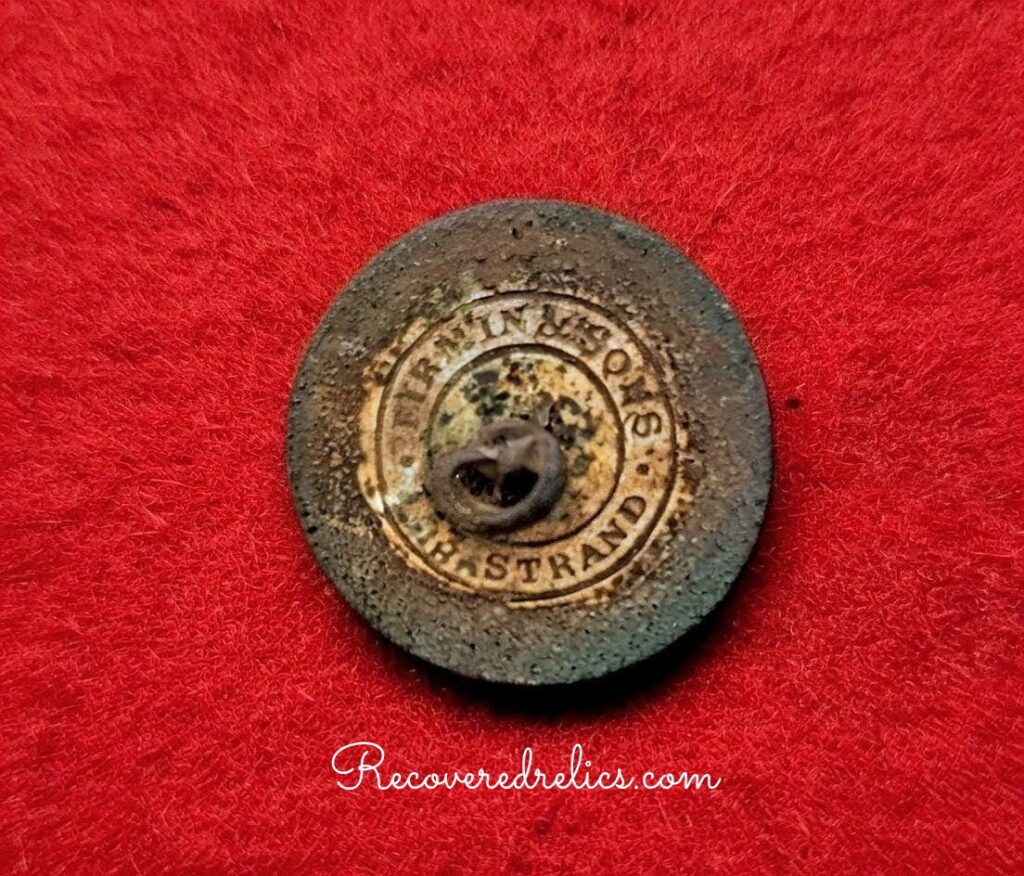
Firmin & Sons (London, England)– Founded in 1655, Firmin & Sons is one of the oldest established manufacturing companies in the UK, historically serving as the royal button makers for every British monarch since George II. They are known for producing military, naval, and aristocratic livery buttons. Because the company operated under several different family partnerships, frequently updated their company name, and relocated to multiple properties in London, England, the die-stamped backmarks on the reverse side of their buttons serve as an incredibly accurate diagnostic tool for dating the age of each button.

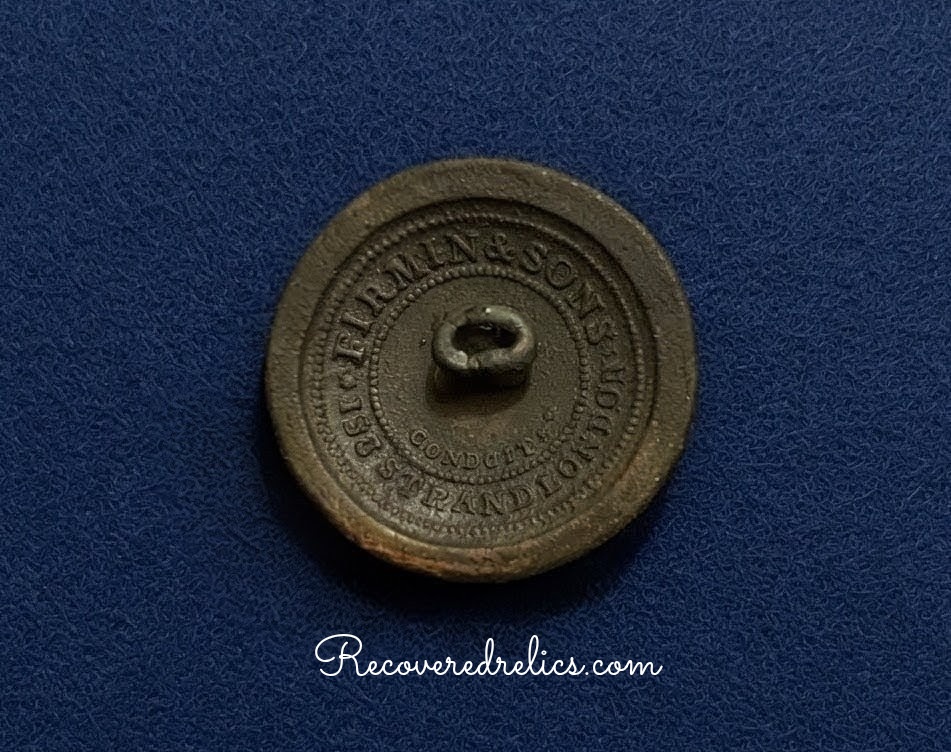
Firmin and Sons Backmarks Timeline:
1770s – 1790s: Marked simply as Samuel Firmin.
1794 – 1812: Stamped as Firmin & Westall, operating at 153 The Strand.
1812 – 1824: Stamped as Firmin & Langdale, typically displaying a “Strand” address.
1824 – 1836: Marked as Firmin & Sons or Firmin at 153 Strand.
1837 – 1838: A very brief 18-month window stamped R. Firmin & King (Robert Firmin & William King).
1839 – 1849: Stamped as P & S Firmin (Philip and Samuel Firmin), often incorporating a “13 Conduit St” or “Strand” address.
1850 – 1875: Stamped Firmin & Sons with address variations including 153 Strand & 13 Conduit St.
1875 – 1894: Stamped Firmin & Sons 153 Strand London (the Conduit St. location was phased out).
1894 – 1899: Stamped with the address 47 Warwick St. London or 108-109 St. Martin’s Lane.
1905 – 1915: Backmarks during this period explicitly feature St. Martin’s Lane.
1915 – 1968: Stamped with the Cork Street London address, which served as their sole London headquarters during this window.
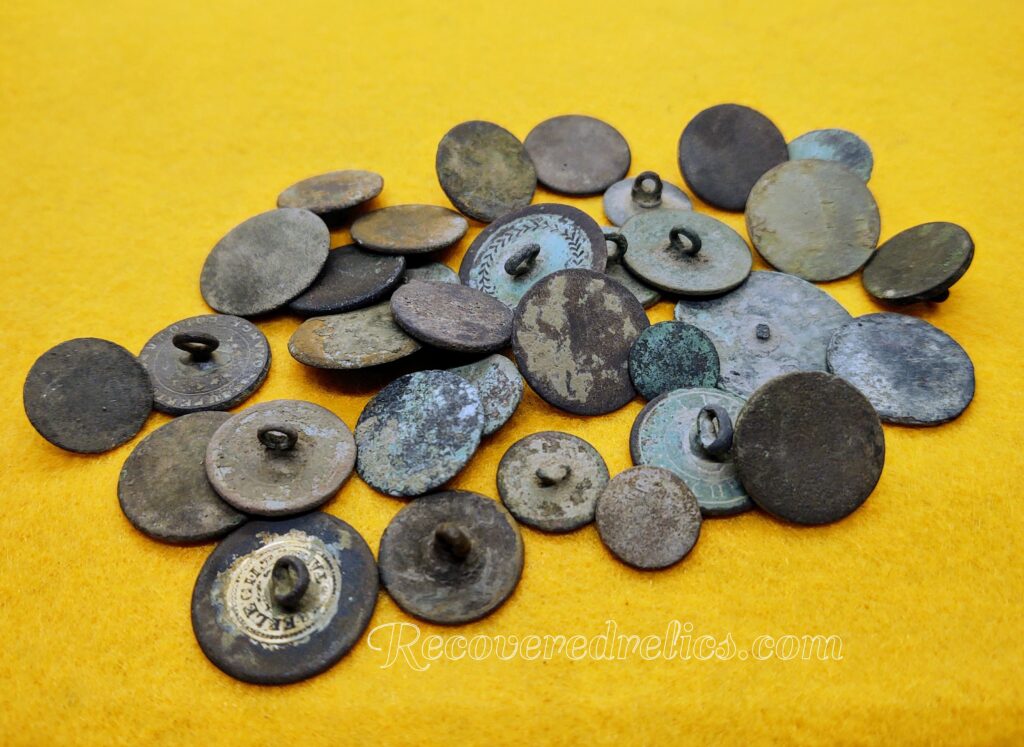
Flat Button (One Piece Button) (Flat Disc Buttons)– These brass buttons are flat discs with shanks. The shanks were either cast as part of the button or soldered onto the back. The cast or molded variety are made by pouring melted metal into a mold. The shank is formed as an integral part of the button. Sometimes the hole in the shank was drilled. The struck variety has a wire eye or loop shank that was usually fastened by brazing. Buttons such as these were particularly popular in the second half of the eighteenth century through the early nineteenth century.
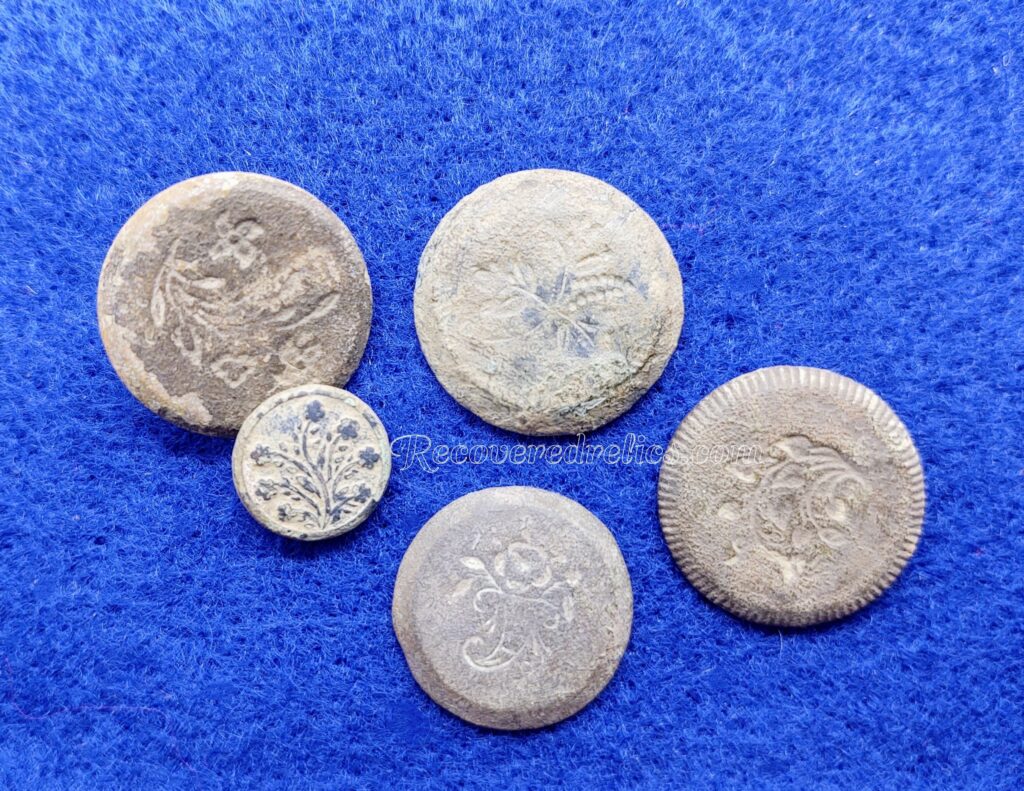
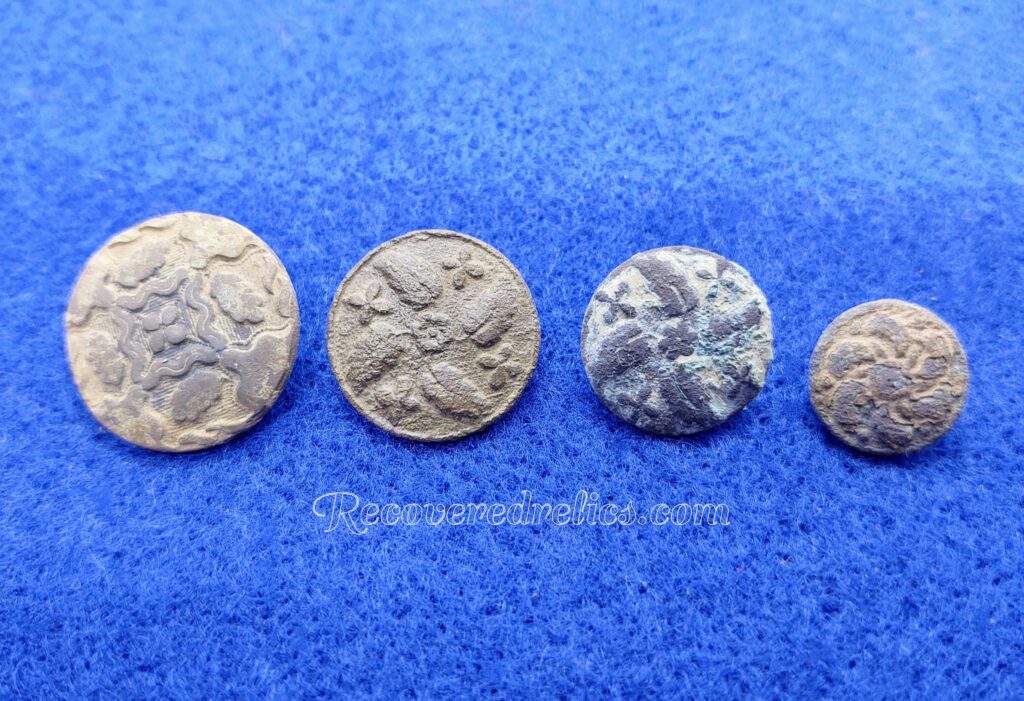
Floral Designs– Designs were generally engraved, chased, or die stamped on one piece brass buttons. Delicate and elaborate floral patterns appear more frequently on one piece buttons manufactured after 1830.

Fouled Anchor Buttons– A fouled anchor is a classic nautical insignia featuring an anchor with its own rope or cable wrapped around it. The fouled anchor is an iconic naval symbol. Military and maritime buttons featuring this design were widely used across different branches and eras. The symbol is predominantly associated with the U.S. Navy and Marines, the Merchant Marine, and the British Royal Navy. The Fouled anchor symbol has been used by the British Admiralty since the late 16th century. The British Royal Navy adopted the design in the mid-18th century. The US military adopted the fouled anchor on uniform buttons beginning in the year 1802. There is a vast variety of designs with varying cable orientations. Many examples also feature other symbols such eagles or stars alongside the fouled anchor.

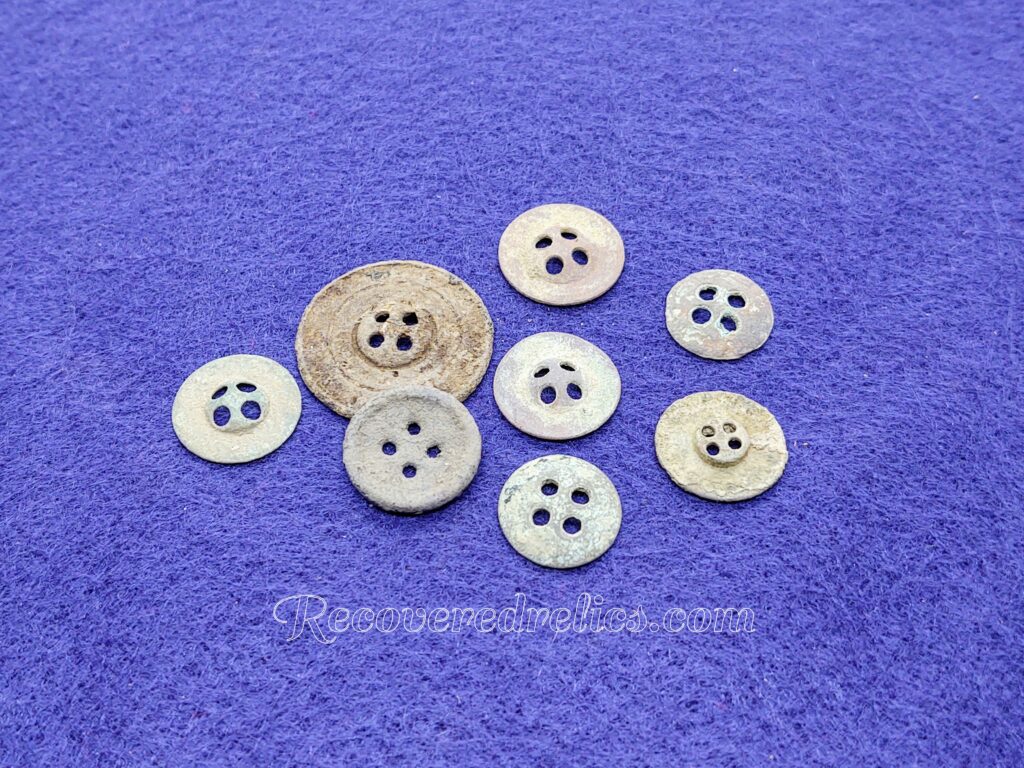
Four Hole Metal Sewn-through Buttons– Sewn-through buttons typically have 2, 4, or 5 holes. Four hole metal sewn through buttons were popular in the 19th century. Sewn through style buttons were commonly used on underwear. There are several advertisements dating from the end of the 19th century and beginning of the 20th century which show four hole metal buttons being advertised as trouser buttons. They were sewn on trousers and used with suspenders. A four hole button would provide a much stronger hold than a shank button for ones suspender tabs. Four hole buttons are also sometimes referred to as brace buttons since they were used with suspenders.

General Service Eagle Button– A standard United States Army uniform button utilized from the year 1854 to 1902. The buttons feature a spread eagle clutching a shield and often with an olive branch and arrows. In 1854 the US Army formally adopted standardized convex brass buttons featuring an eagle holding a shield for all enlisted personnel. During the Civil War era these buttons were mass produced in various sizes (coat, vest, and cuff). The buttons is representative of the US Goverment rather than a specific regiment or branch.
Geometric Designs– Geometric patterns are motifs or designs depicting abstract, non-representational shapes such as lines, circles, ellipses, triangles, rectangles, and polygons. They provide a sense of visual harmony and order. The symmetrical and repetitive nature of these patterns is aesthetically pleasing. Geometric patterns or motifs on one piece buttons were popular during the 19th century.

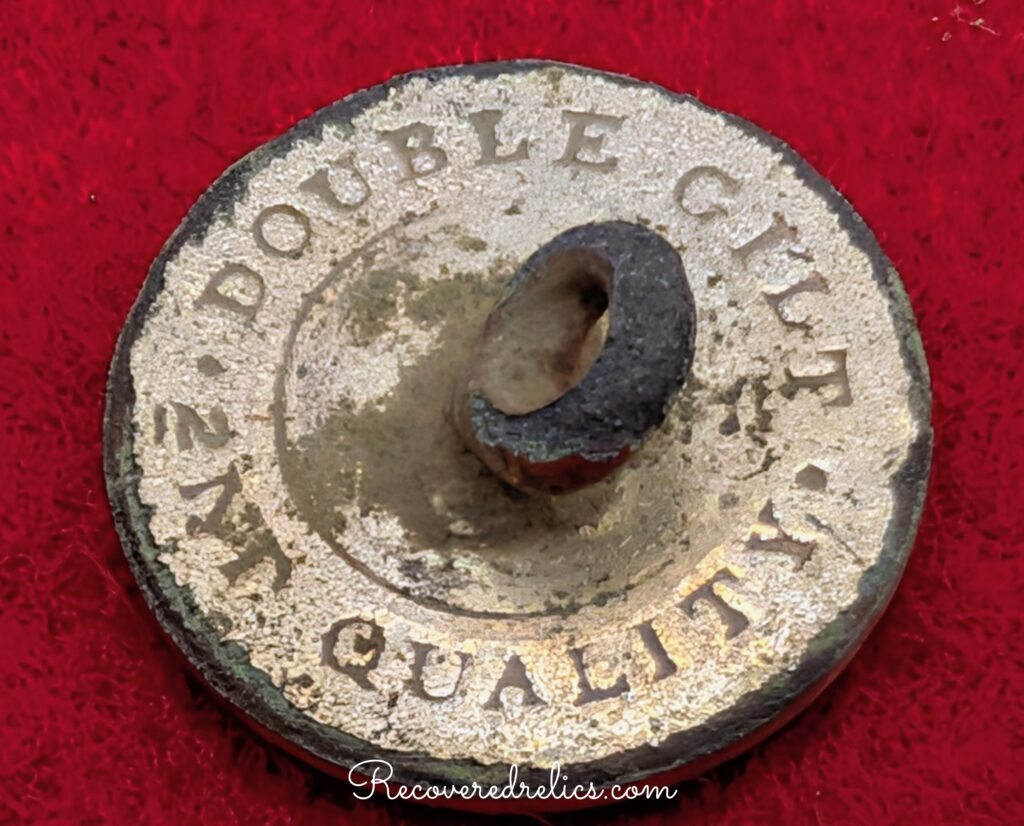
Gilt Backmarks– English button manufactures began stamping Gilt, Double Gilt, and Treble Gilt on the reverse side of a metal flat buttons to denote the quality of the gold plating. These markings were heavily used between 1790 and 1840 and helped consumers verify the quality of the gold gilt applied to each button. The Metal Button Act of 1796 was passed by the British Parliament to prevent manufacturers from using deceptive terms on buttons which had little to no actual gold plating. To legally use the backmark word “Gilt,” the button was required to have a specific legal minimum of gold applied, at least 1/96th of an ounce per gross of 1-inch buttons. Marks like “Double Gilt” or “Treble Gilt” were stamped to show the buyer that the button had twice or three times the legal minimum of gold plating.

Gold Gilt One Piece Buttons– This style buttons began to emerge during the first half of the 18th century. Gold gilt was often applied to one-piece buttons. Buttons could be plated or gilded without losing strength or breaking. Gilding was one of the most common surface treatments used on buttons during the end of the 18th century and the beginning of 19th century. A gilt button has a very thin layer of precious metal covering it. A great many of the once gilded buttons we find no longer have any gilt left on them. The late 18th century (c. 1790) to the mid-19th century (c. 1850) is often referred to as the “Golden Age” of buttons. This era is defined by the transition of buttons from basic fasteners into intricate, mass-produced works of art. Highly polished, gold-coated brass buttons became a major fashion staple.

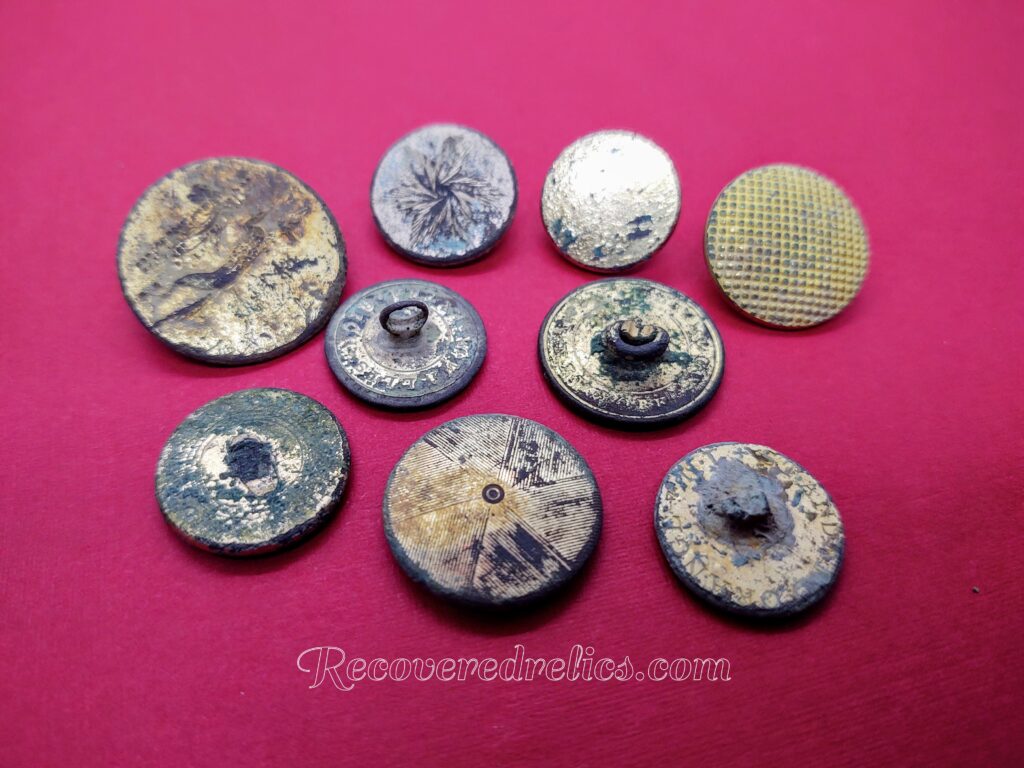

Great Seal Eagle US Army General Service Button– The US Army Great Seal Eagle button features an eagle with outstretched wings holding arrows and an olive branch, with a shield on its chest and an “E Pluribus Unum” scroll in its beak. The design was adopted in the year 1902.
Hammond, Turner & Dickinson (Birmingham, England)-Hammond, Turner & Dickinson manufactured buttons in Birmingham, England, between the years 1790 and 1823. The firm originally operated as Hammond & Co. prior to 1790. In 1823, the partnership shifted, and buttons were stamped under the name Hammond, Turner & Sons. Hammond, Turner & Sons are well known for producing large volumes of military, naval, and livery buttons.


Iron Flat Buttons– Iron is a heavy, malleable, and highly magnetic metal. It rusts easily when exposed to moisture and oxygen. Metal flat buttons were rarely made entirely of iron because it was prone to rust. Instead, Iron was primarily used for button shanks or in more recent times for the backside of two piece buttons. The button faces were typically made from more durable alloys like brass, pewter, or copper.

Jewel Button– Jewel button is a term used to describe metal buttons having one stone in the center. While the center was often referred to as a stone, it was typically made of molded glass or pieces of glass. The molded glass centers were frequently flat or domed. Jewel buttons range slightly in size. They are usually attached via a shank which helped to preserve the design on the front. The button pictured has a smooth dark emerald or forest green disc with a glossy finish and scalloped or ridged metal frame.


Laurel Wreath Decorative Backmark– Both U.S. and British button manufactures stamped decorative laurel wreath designs on the backside of the buttons they produced during the 19th century. The laurel wreath is an enduring symbol of victory, triumph, achievement, and status. The symbolism of the laurel wreath stems from ancient Greek and Roman traditions, where victorious commanders and elite achievers were crowned with actual laurel leaves.
Leavenworth & Kendrick (Waterbury, Connecticut)-Leavenworth & Kendrick was a prominent gilt and brass button manufacturing firm based in Waterbury, Connecticut that operated from 1829 -1833. The firm was co-founded by Mark Leavenworth and Green Kendrick. They primarily manufactured “rich gold” gilt brass buttons, which were widely used on civilian clothing, naval uniforms, and military garments during the Jacksonian era. After the partnership dissolved, the founders branched out and Kendrick went on to form Kendrick & Co. and later Ives, Kendrick & Co. during the 1830’s, which continued producing ornate, gold-plated brass fashion buttons.

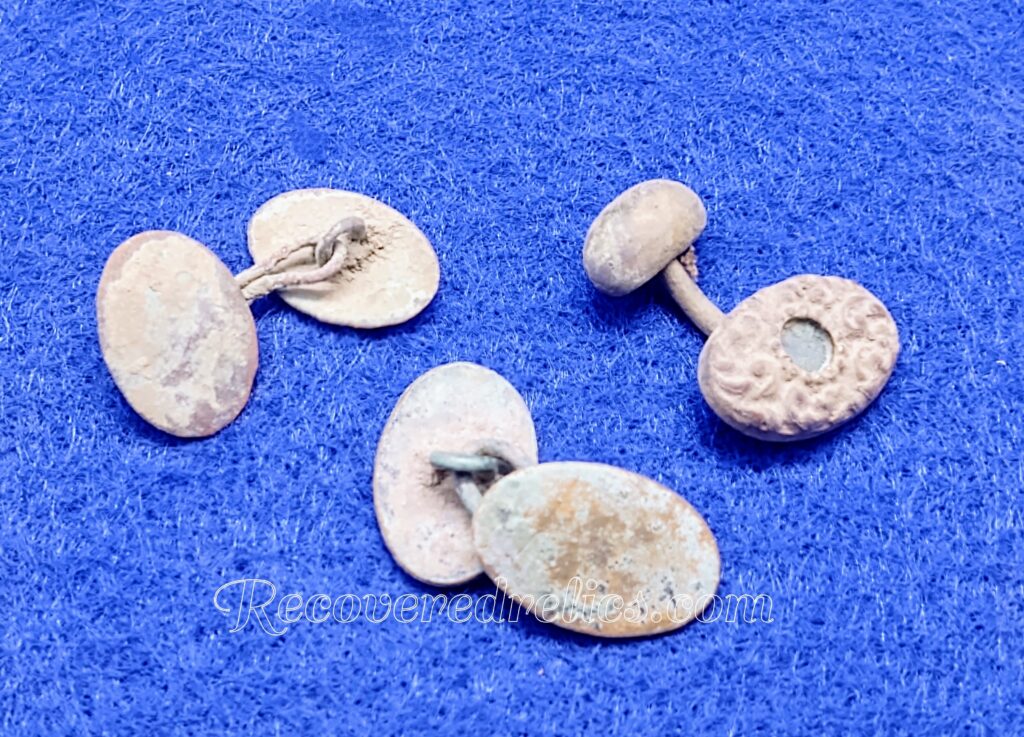
Linked Buttons or Cufflinks– A pair of buttons attached by a thin metal chain link or toggle. Cufflinks are used to secure the cuffs of ones shirt together. During the 18th century, linked buttons were not just worn around ones cuffs though. Historic paintings from the time period illustrate that linked buttons were also worn by men at the neckline and waistline. Kendrick continued making buttons throughout the 1830s under Kendrick & Co.
Lion Icon Backmark– Beginning around the year 1800, British button manufactures began stamping icons on the backside of the buttons they produced. These backmark icons served as a manufacturer’s branding mark or quality guarantee. Many buttons have been discovered with rampant lion or an animal crest icon backmarks. These buttons often also have quality assurance marks on them which was a popular trend from 1800 to 1830.


Livery Buttons: The term livery can be identified as a design often a uniform, ornament, symbol, or insignia that designates ownership or affiliation. These 19th century buttons have intriguing designs rooted in the histories of noble and respected families. Identifying livery buttons can be extremely difficult since often the same crests were shared by many families.
London Backmark– In the second half of the 18th century, British metal button manufacturers began branding their products to distinguish themselves in a booming market. Before this, most metal buttons were either plain or lacked identifying stamps. Die stamping became the standard method for producing buttons and inscribing these reverse marks, a technique used for military, livery, and fashionable civilian clothing buttons. The London backmark indicates British manufacturing and is often paired with quality assurance markings. The inclusion of “London” was used to promote high-end craftsmanship, much like “Sheffield” or “Birmingham” stamps. Millions of these buttons were manufactured in the U.K. for both the European and American markets. Buttons with these backmarks generally date in age from the late 18th century, circa 1790, to the early 1840’s.


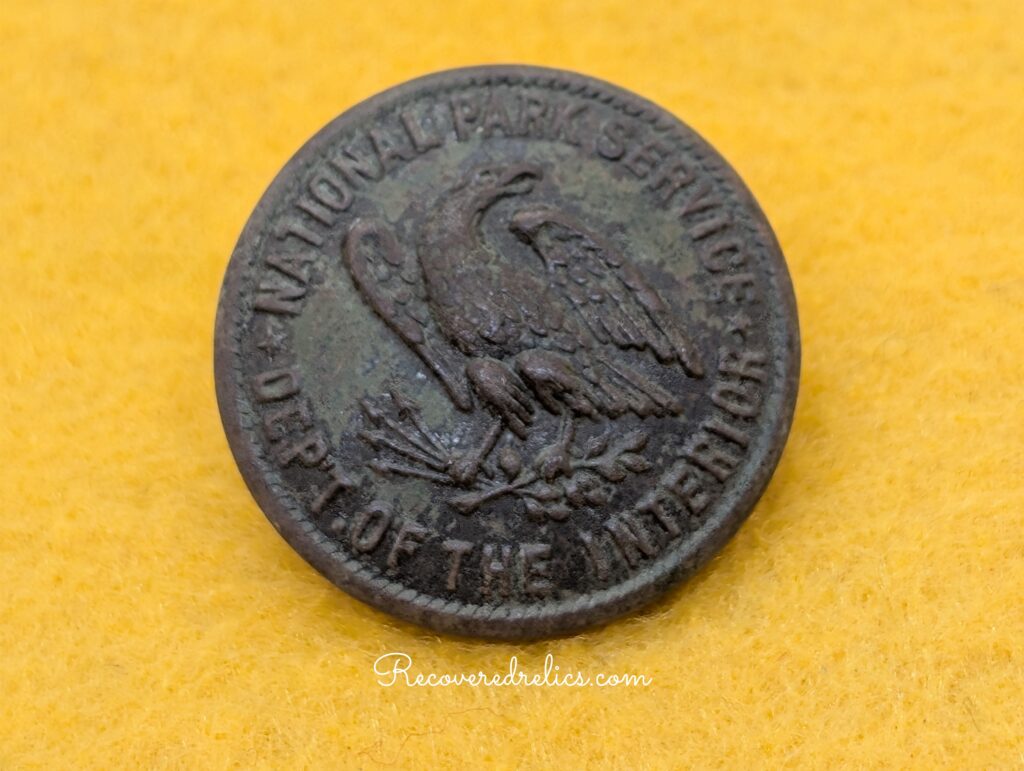
National Park Service Button– The official National Park Service (NPS) metal uniform button was originally designed in 1912. It features a forward-facing eagle with outstretched wings surrounded by the text “National Park Service, Department of the Interior”. The design was modeled after the 1905/1906 Department of the Interior (DOI) field service badge. Uniform supplier Sigmund Eisner collaborated with DOI Chief Clerk Clement Ucker to create a custom button. Eisner commissioned the Waterbury Button Company of Connecticut to manufacture these buttons. Early buttons (1912–1920’s) were stamped with the S. EISNER CO. backmark while later pieces feature the Waterbury Button Company backmark.
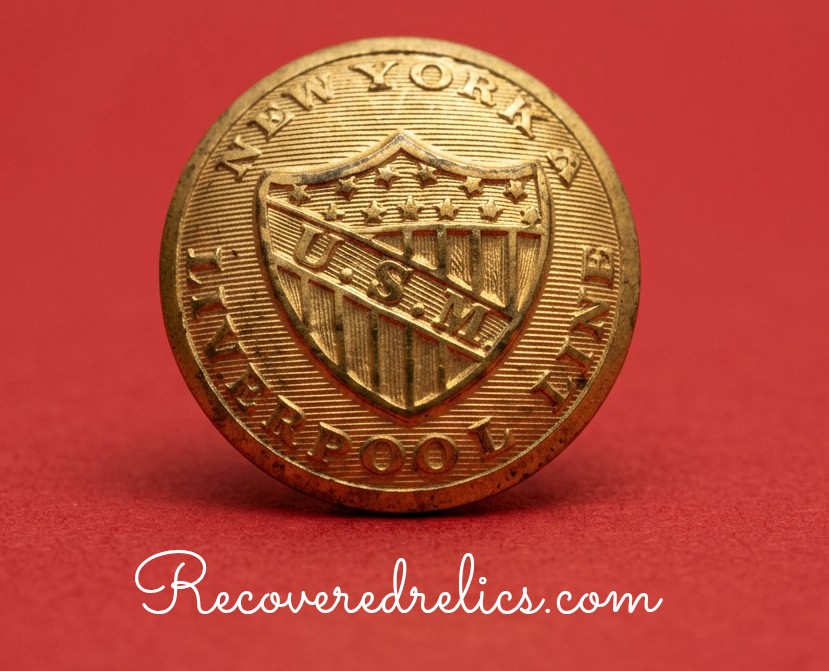
New York Liverpool Line Button– This button is a mid-19th century U.S. Mail Service uniform coat button used by crew members aboard transatlantic mail steamships traveling between New York and Liverpool. The New York and Liverpool United States Mail Steamship Company, known as the Collins Line, ran its premium transatlantic steamship service for 8 years, operating from April 1850 to February 1858. This prominent transatlantic steamship venture was founded by Edward Knight Collins. The company ran state-of-the-art, luxurious paddle-wheel steamers. They were renowned for their high speed frequently beating existing trans-Atlantic crossing records. Despite its speed and popularity, the line went bankrupt in 1858 due to catastrophic ship losses and excessive fuel and operational costs.

New York State Militia One Piece Button– These Post Revolution, early 19th-century military buttons almost always feature an early rendition of the New York State seal, an eagle with upraised wings perched on a globe, sitting atop an oval, lined field. The state motto “EXCELSIOR” is typically stamped in an arc directly underneath the globe. There are a number of varieties both gilt and plated.

New York State Militia Two Piece Button– New York State Seal Two-piece Excelsior button is a historic uniform button used extensively by the New York State Militia and National Guard units. It is most famous for its use by Union soldiers during the American Civil War (1861–1865), though variants were produced prior to the Civil War and afterwards as well. The obverse depicts the core elements of the Great Seal of New York, featuring an eagle perched atop a world globe, sitting above a shield with a rising sun. The bottom ribbon prominently features the state motto, “EXCELSIOR” Latin for “Ever Upward”. Unlike early solid flat buttons, a two-piece button consists of a stamped brass front shell crimped over a separate back piece. This style became standard for military uniforms to create a lightweight, domed appearance. These buttons are typically found in two sizes, a larger coat size around 22mm to 23mm and a smaller cuff size around 14mm to 15mm


New York State Seal Two-Piece Button -The New York State Seal, also used as the state coat of arms, prominently features the allegorical figures of Liberty and Justice. Liberty stands on the left with a foot treading on a crown (representing freedom from British monarchy), while Justice is blindfolded on the right holding a sword and scales. Above the central shield depicting ships on the Hudson River with a rising sun and mountains, you will find an American eagle perched on a world globe. These buttons typically date to between the 1850’s and the early 1900’s. Two-piece construction became standard for US uniforms prior to the Civil War, and these buttons were widely worn by New York State Militia and National Guard units.
Nipple Buttons– Mid 17th Century buttons. These buttons are typically fashioned from tombac. Many pewter examples have also been found. They get their name from the small protrusion or raised point in the center of each button.
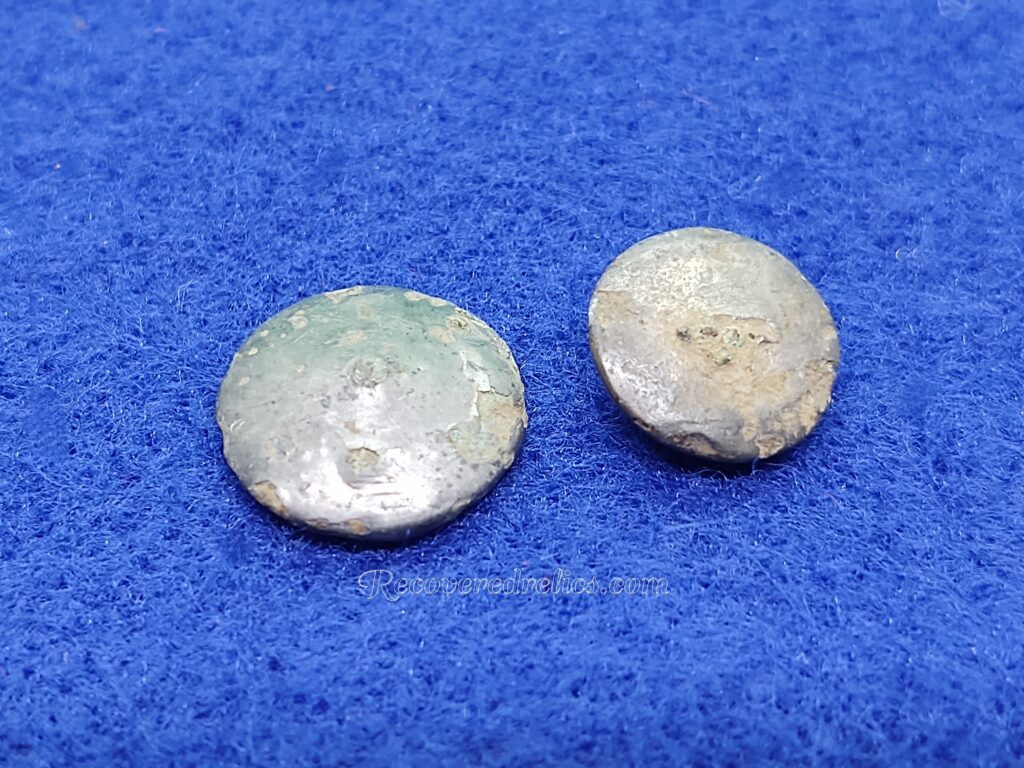

Omega Shank– This type of shank is shaped like the Greek letter Omega and soldered onto the back of one-piece flat disc buttons. It is like an Alpha shank, but the Omega shanks have feet. Buttons with this style shank are typically made from copper alloy. The shanks are also usually made from copper alloy and occasionally from iron. This style shank was primarily used on the back of buttons, manufactured after the year 1800. It was especially common on heavy 19th century buttons to keep them flat and firm.
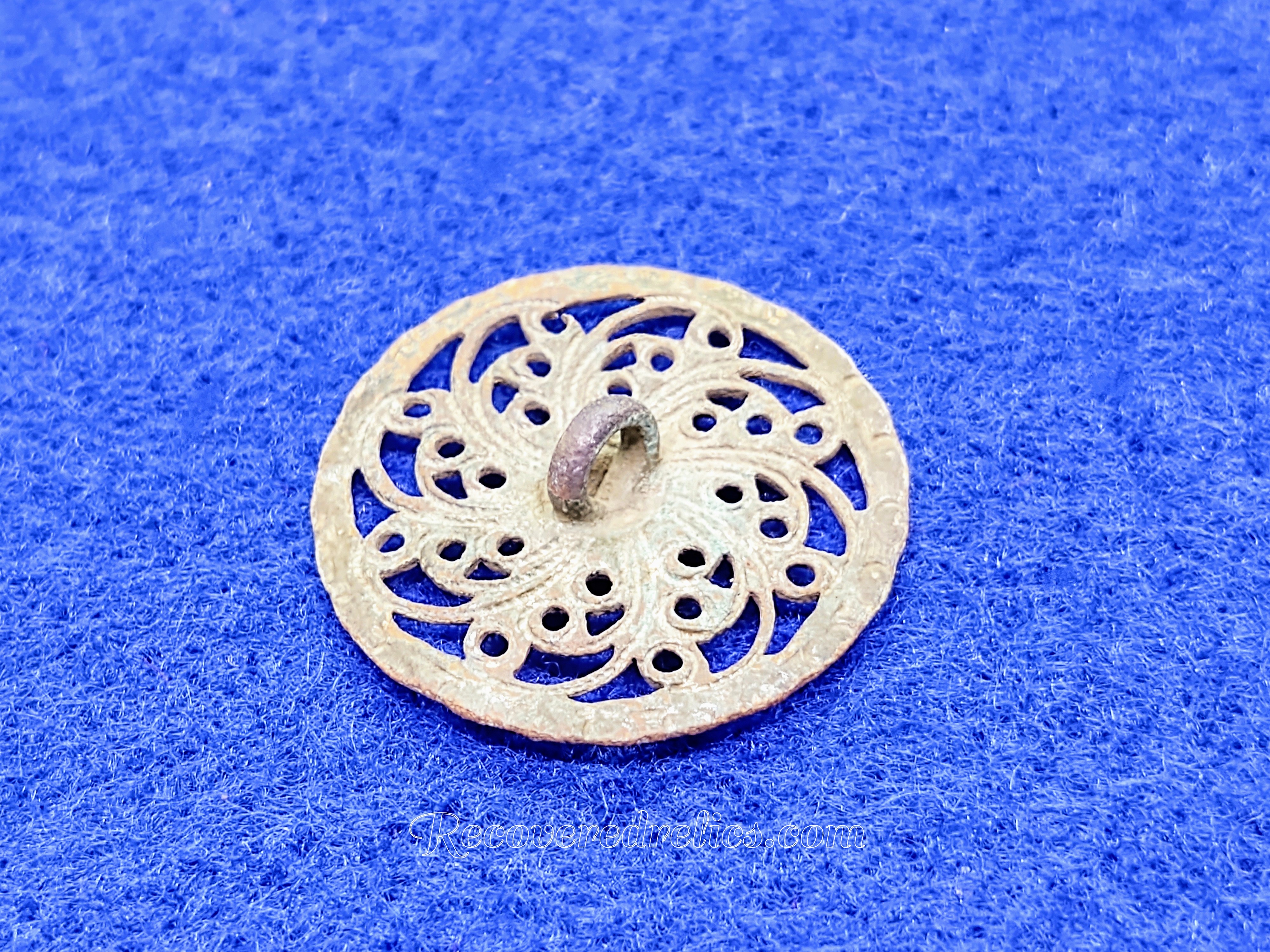
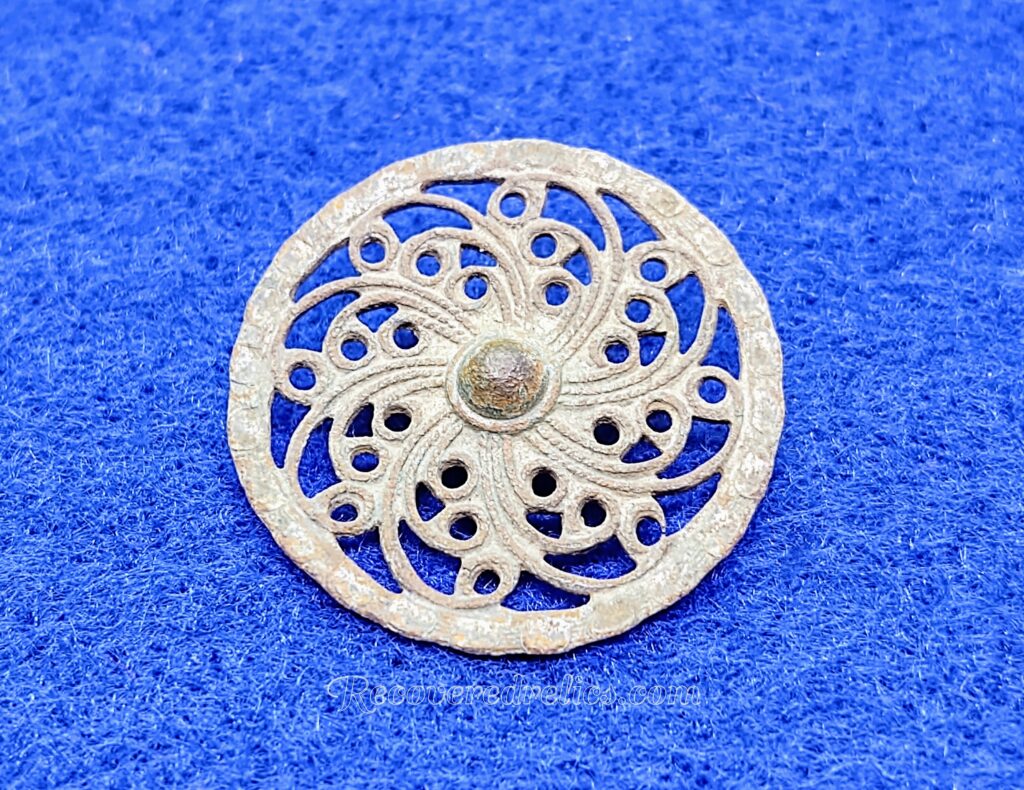
Open-work Buttons– Open-work is a term for any technique that produces decoration by creating holes, piercings, or gaps that go right through a solid material. The button pictured is an example of an 18th century open work shank style button.
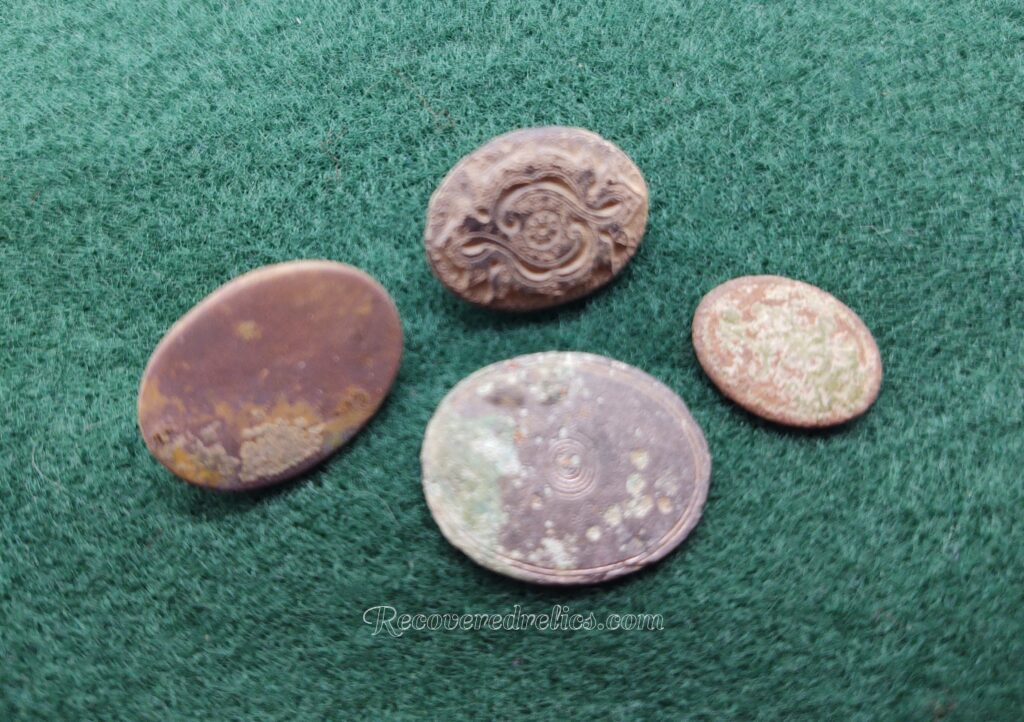
Oval Shaped Shank Style Buttons– One piece buttons from the 18th and 19th centuries aren’t always round in shape. Round shaped one piece shank style buttons are certainly the most common. Some other shaped one piece shank style buttons include oval, square, rectangular, and octagonal.
Pewter Buttons– Pewter metal is comprised mainly of tin which is mixed with varying proportions of lead, zinc, antimony, bismuth, or copper. The best quality pewter contains a very tiny amount of lead. Pewter was a durable and practicable metal for making buttons. The pewter buttons we find metal detecting are fragile and should be handled with great care. Pewter buttons were popular during the 18th and 19th centuries.

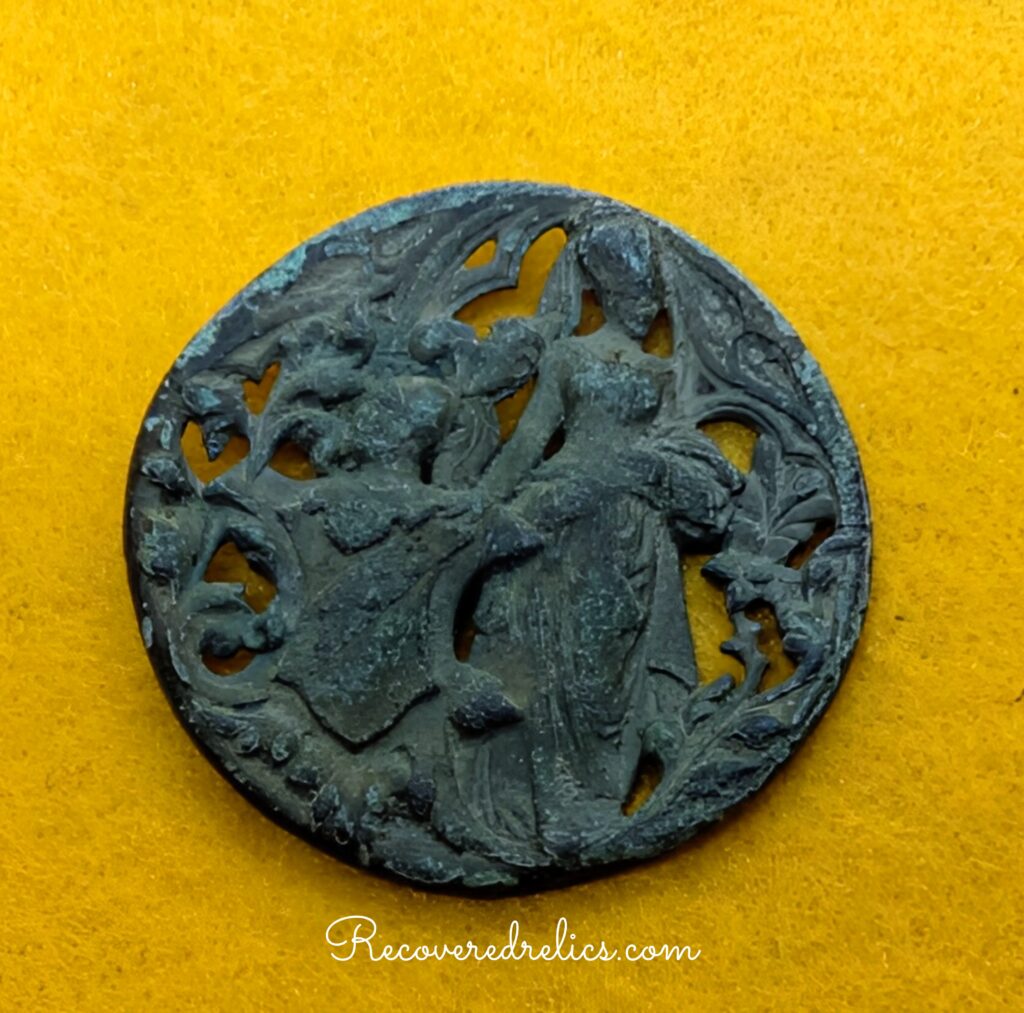
Picture Buttons-In the 1800’s, metal picture buttons were highly detailed, mass-produced miniature works of art made from stamped or cast brass, copper, or other alloys. These intricate buttons feature raised, molded, or stamped designs depicting narrative scenes, folklore, animals, and historical events. They peaked in popularity during the Victorian era and reached the height of their popularity between the years 1870 and 1900, serving as both fashionable garment closures and popular conversation starters. The most common motifs found on 1800s metal “picture buttons” include fables, opera and theater characters, mythology, flora and fauna, architecture, and everyday children’s activities. These pieces specifically depict identifiable scenes, objects, or subjects rather than just abstract, geometric, or floral patterns.

Pinwheel Buttons-Pinwheel buttons feature geometric, spiral, or starburst-like spoke designs radiating from a central point to create a spinning effect. In the 19th century, pinwheel and geometric swirl designs were produced in mass quantities using inexpensive stamped metals and alloys.


Prince of Wales Plumes Icon Backmarks– Beginning around 1800, British Button manufactures began stamping the Prince of Wales Plumes or Feathers trademark icons on the back side of their buttons. The iconic three-plume emblem was widely used by prominent British button makers. It was primarily used as a pictorial quality mark and often appears next to quality marks such as “Best Quality” or “Best Plated”. Historians believe the emblem was used to signify the superior gilt quality of the buttons. The Prince of Wales plume backmark can also be found on the back of some Victorian era British manufactured buttons as well. Jennens & Co. of London added the mark to the back of their buttons starting in 1860 to proudly display their royal patronage.

Quality Assurance Backmarks– Quality marks were used by manufacturers to promote the superiority of their metalwork. They are marketing terms and do not indicate strict industry standards. Rather, they were used to promote the thickness of the brass, the quality of the gilt gold plating, and the durability of the piece. Common phrases include Best Plated, Extra Quality, Double Gilt, Treble Gilt, Rich, Standard, Superfine, Imperial, and Warranted. Quality marks began appearing on the backs of metal flat buttons in the late 18th century around 1792. This practice of using die-stamped backmarks peaked between 1800 and 1830, eventually falling out of favor by the 1840’s as manufacturing shifted.


Quality Marks and Their Meanings–
Best / Extra Fine/ Superfine Quality: Generic, highly inflated marketing terms intended to assure the buyer of the button’s premium make and durability.
Gilt / Double Gilt / Treble Gilt: Means the button was treated with a mercury and gold mixture. “Treble gilt” implied the process was repeated three times for maximum thickness and quality.
Imperial/ Imperial Standard: A quality rating typically found on flat brass or gilt buttons from the 1810’s to the 1830’s, the mark was used by various British and American manufacturers to indicate a high-grade product.
Orange Colour / Rich Orange: Refers to a highly desired shade of gold plating commonly stamped on buttons in the 1800’s.
Plated: Usually indicates the button was silver-plated rather than gold-plated.
Standard / Extra Quality: Mid-to-late 19th-century grading marks used to separate premium uniform and civilian buttons from cheaper, bulk-produced alternatives.
Warranted Superior / Extra Rich: Generic marketing quality marks introduced during the 19th century to denote a high-quality brass alloy, gold coating, or secure shank.

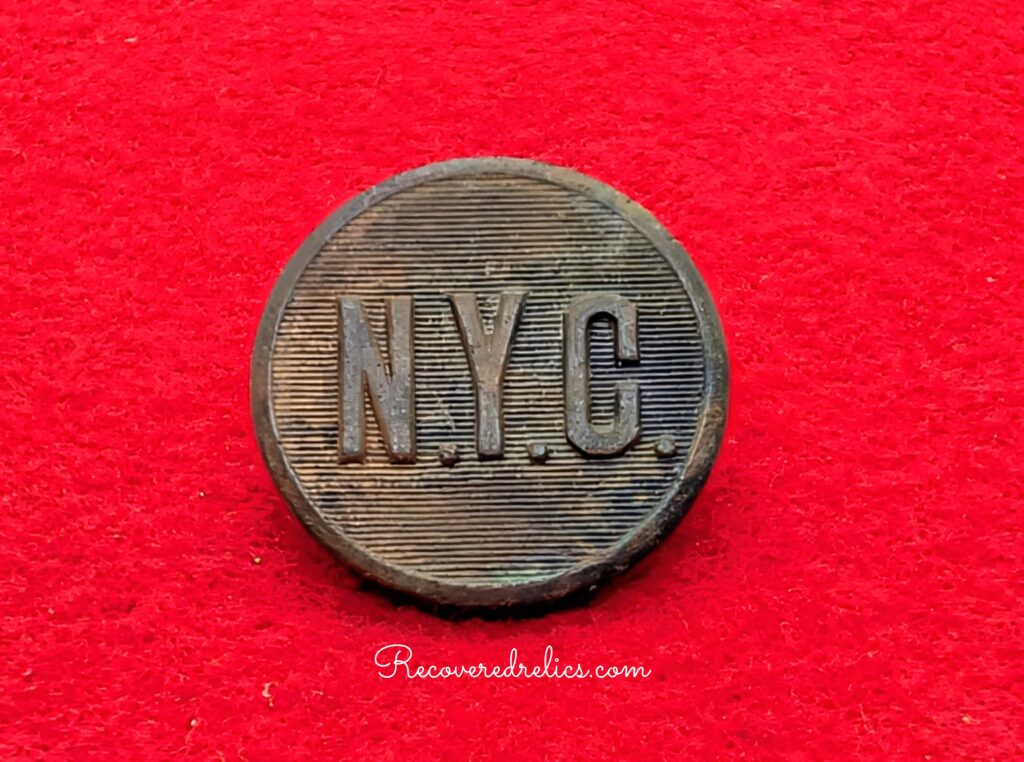
Railroad Buttons– Railroad uniform buttons historically worn by train staff to maintain a standardized, professional look when interacting with passengers. These custom buttons typically feature distinct company logos, initials, or detailed locomotive engravings specific to individual rail lines. They came in varying sizes for coats and vests and sleeves and cuffs. These buttons span from the mid-19th century to the mid-20th century. To determine the age specifics of railroad buttons, analyze their backmarks, the manufacturing style of the shank and body, and the specific railroad logo or initials stamped on the front. During the height of the railroad boom, thousands of independent railroad, railway, and streetcar/trolley companies operated in North America. Almost all of them issued customized uniform buttons for their conductors, brakemen, and porters.

The railroad buttons pictured are from the New York Central Railroad (NYC) which operated from 1853 to 1968, the Erie Railroad which operated from 1832 to 1976, and the Pullman Palace Car Company (PPCC) which manufactured comfortable railroad sleeping cars in the mid-19th century through the first half of the 20th century.


Rice & Duval (New York)– Rice & Duval were an elite merchant tailoring firm operating in prime Manhattan locations such as 236-238 Fifth Avenue and 509 Fifth Avenue during the late 19th century and into the 1920’s. The firm specialized in premium officer uniforms, particularly for the U.S. Navy and Naval Militia. While Rice & Duval designed and assembled the uniforms, the metal buttons themselves were outsourced to dedicated button makers. This is an example of a button with a Merchant backmark. Merchant backmarks feature the name of a retail store, tailor, or wholesaler, rather than the name of the company that physically manufactured the button. Merchant backmarks served as a form of retail branding.
Rifles Militia One Piece Button– The button features a central hunting horn, which was the standard insignia for U.S. Riflemen and light infantry units, complete with a wrapped cord and tassels and encircled with stars. There are slight variations of the pattern. These early 19th century buttons were worn by State Militia and Volunteer Rifle companies.


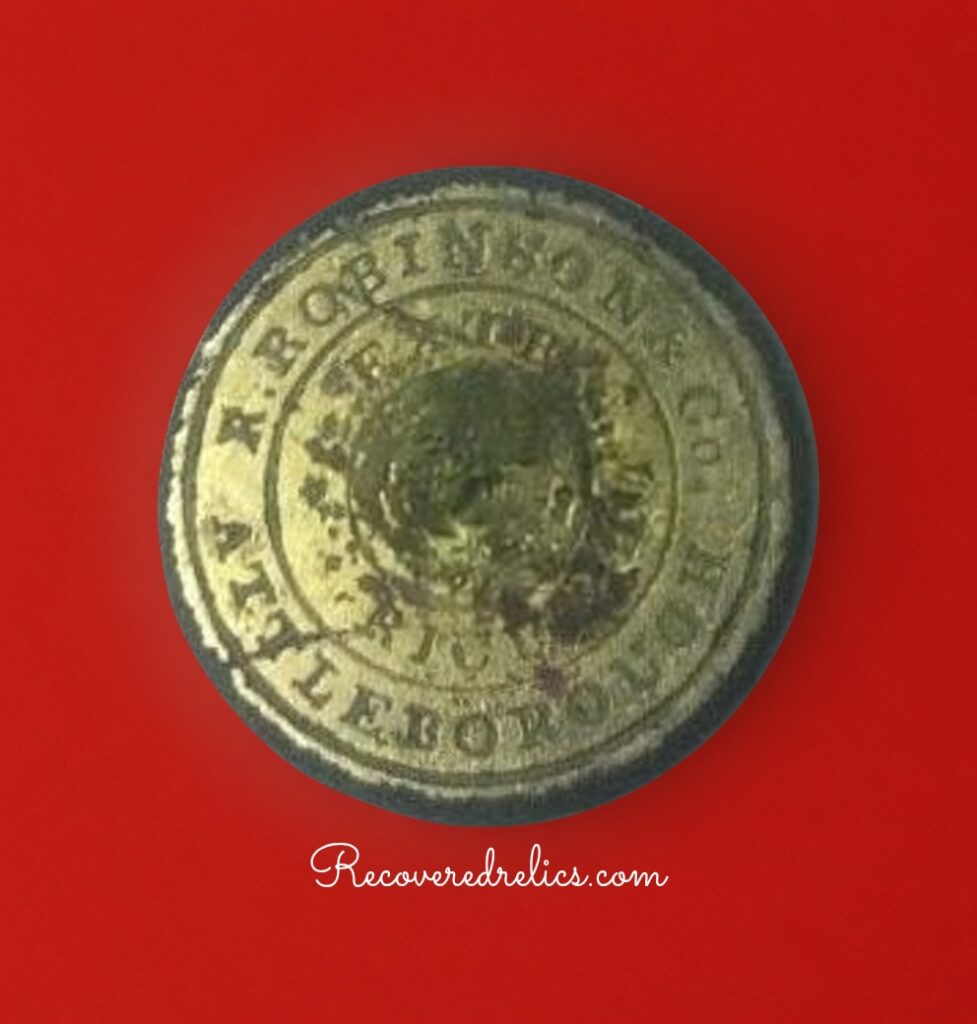
Robinson (Attleboro Massachusetts) – Attleboro, known as Bloomery before the Revolution, is one of America’s first industrial centers. The Robinson family of Attleboro established one of the nation’s very first mass-production metal button industries in the early 19th century. The most common and historically significant Robinson backmarks trace the progression of the family’s businesses.
1812- Ca. 1820 (Obed and Otis Robinson): Backmarks from this period are unknown.
1813 to 1828 (Richard Robinson): Backmarks used during this period include Richard Robinson or R. Robinson & Co and often feature the abbreviated town name ATTLEB.
1828 to 1834 (Robinsons Jones & Co.): Backmarks used during this time are stamped Robinsons Jones & Co. and often feature the modernized town spelling ATTLEBORO.
1834 to 1848 (R & W Robinson): Backmarks feature R & W Robinson and ATTLEBOROUGH. Buttons from this time are also frequently stamped with slogans like EXTRA RICH or TREBLE GILT.
S. A. French (Ney York)– S. A. French was a well-known military and civil uniform outfitter based in New York City. They operated heavily during the late 19th and early 20th centuries. S. A. French was a dealer and retailer rather than a standalone button manufacturer, often outsourcing production to major button makers such as Scovill Manufacturing Company. The backmarks usually read as S.A. FRENCH NEW YORK.


S. Eisner (Red Bank, New Jersey)– The Sigmund Eisner Company, which was once the largest uniform manufacturer in the United States. The company was founded in 1890, by Sigmund Eisner, and operated out of massive textile mills based in Red Bank, New Jersey. Rather than being an independent button foundry, Eisner was a master uniform contractor. The company frequently ordered custom metal buttons from prominent die-makers, such as Scovill or Waterbury, stamped with the Eisner name on the back. Buttons with the S. EISNER CO. backmark were primarily used on Boy Scout, military, and police uniforms from roughly 1910 through the 1940’s.
Scovill Manufacturing Button Company– Scovill button backmarks are stamped manufacturer marks. Scovill is one of the oldest manufacturing companies in the United States, tracing its roots back to 1802. The company was officially incorporated as Scovill Manufacturing Company in 1850. They supplied vast quantities of uniform buttons for the U.S. military. The Scovill Manufacturing Company, based in Waterbury, Connecticut, evolved its backmarks as the company’s official name and stamping techniques changed over the years. Examining the text and abbreviation style stamped on the back of the button can help to provide a reliable timeline for identification and determining the age of a given button. Scovill backmarks are an example of Maker Marks, stamped text identifying the exact company or button manufacturer.


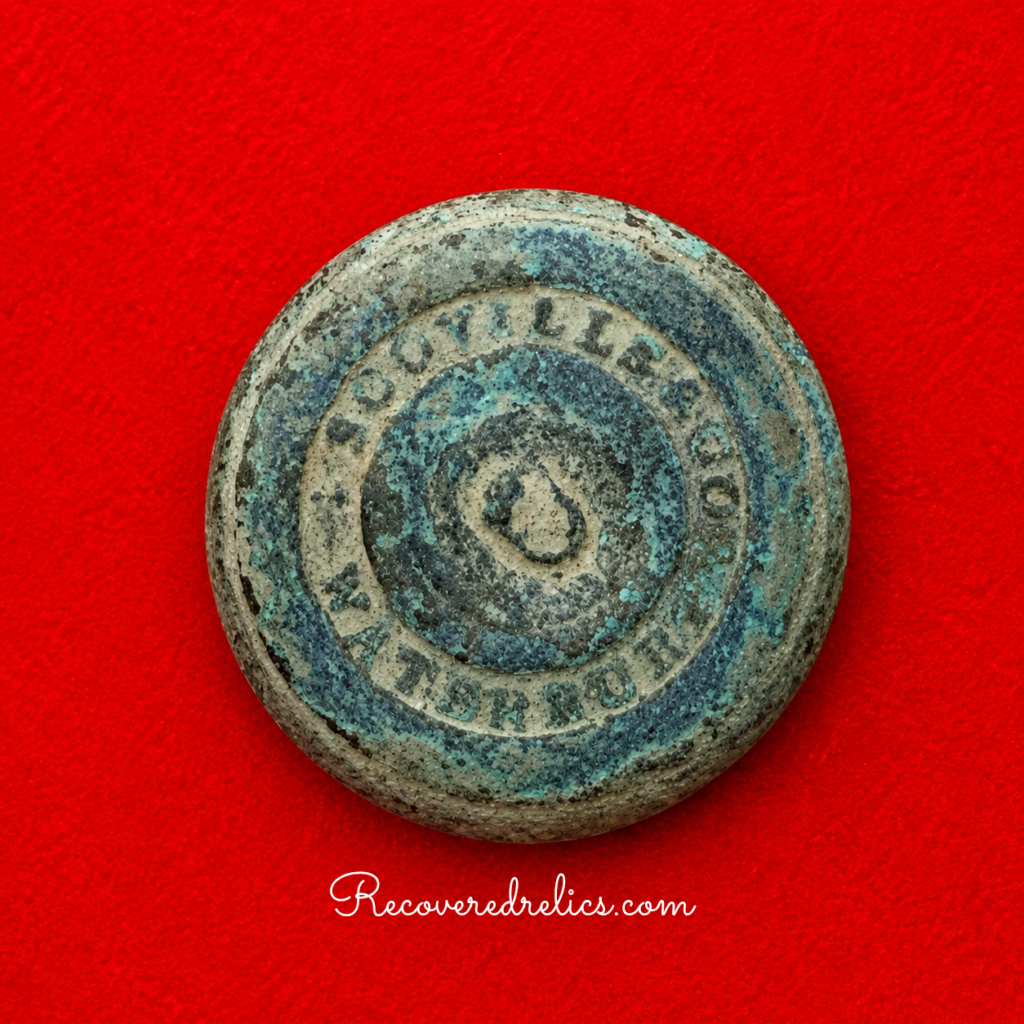
Scovill Backmark Chronology:
L H & SCOVILL (1811 – 1827)- This backmark signifies buttons manufactured by the partnership of Leavenworth, Hayden & Scovill. They also used the initials L. H. & S for markings.
SCOVILLS (1827-1840)- The partnership of J.M.L. & W.H. Scovill used these marks. They also used the markings J M L & W H Scovill.
SCOVILLS & CO (1840 – 1850)- J.M.L. & W.H. Scovill united with their brother-in-law to manufacture brass hardware in the year 1840.
SCOVILL MG. CO (Early 1850’s)- This was a transitional mark used in the early years of Scovill Manufacturing Company. Some old backmarks with “SCOVILLS” may have been used during the early 1850’s.
SCOVILL MF’G CO. (Mid 1850’s–1860s)- The most common Scovill backmark found on Civil War-era Union military buttons.
SCOVILL MFG CO (1860’s–1950’s)- The abbreviation dropped the apostrophe in the mid-1860’s. This marking continued to be used for decades.

Silver-wash or Silver Gilt One Piece Buttons– Silver was also a popular color. This style button began to emerge during the first half of the 18th century. Gilding or plating gives a button a silver appearance at the fraction of the cost. These buttons resembled the brilliance of silver while at the same time were much lighter and easier to wear. Gilt buttons although pricier than brass buttons were not exactly expensive. I imagine that people liked them because they were both elegant and affordable.
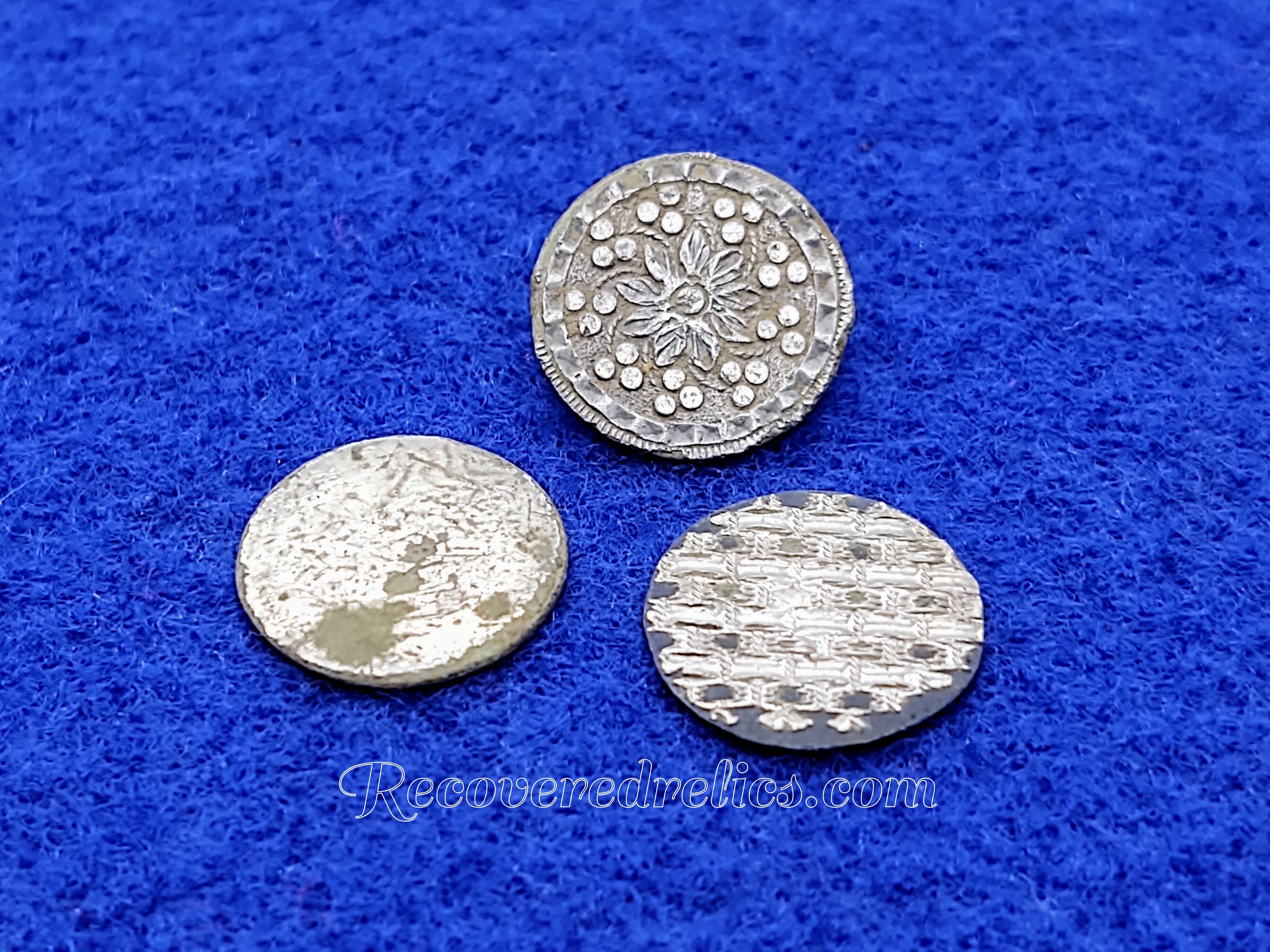

Sporting or Sportsman Buttons– The designs on these buttons depict outdoor sports such as hunting, fishing, and equestrian. Common designs include hunting dogs, game birds, stags, boars, foxes, fish, horses, and scenes of hunters with muskets. Sporting buttons date from the 18th century to the 20th century, but most were made in the 19th century.

Star Design – Star designs were extremely popular. The symbol has been used for thousands of years. It holds cultural and religious significance across various historical contexts. Today when we picture a star, a 5 point pentagram is probably what most likely what comes to mind. Six, seven, or eight point stars were nearly as common as five pointed stars in the 18th and 19th centuries.

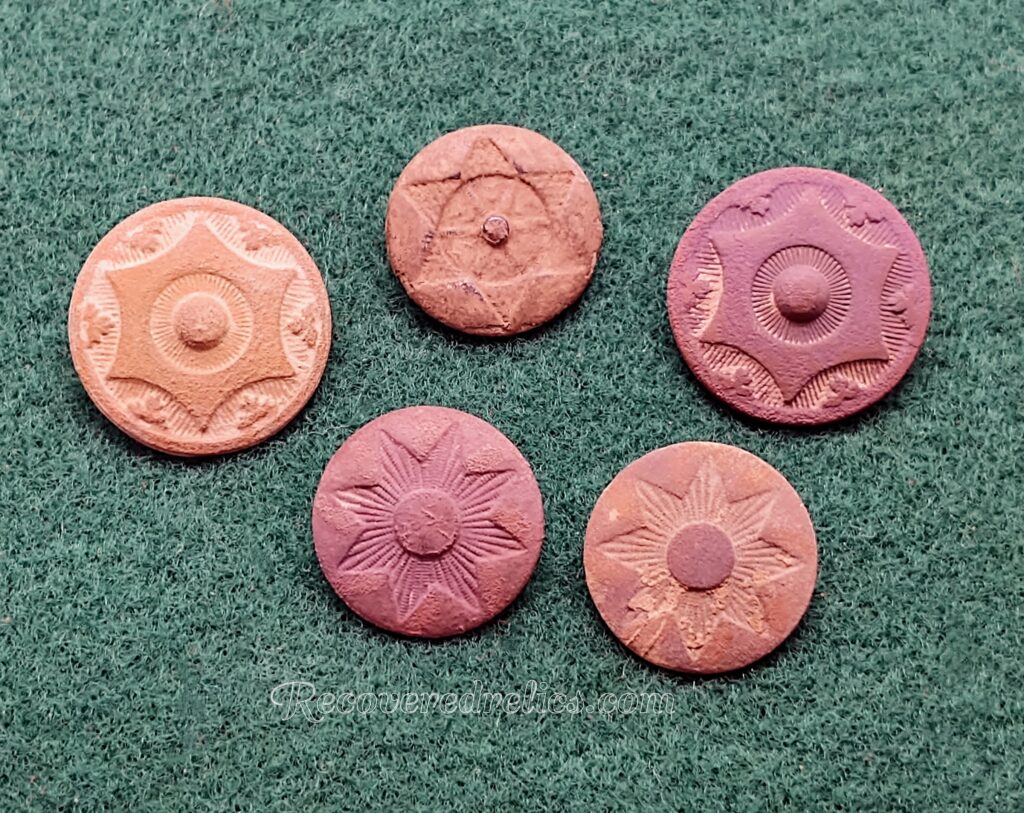

Steele and Johnson Manufacturing Company (Waterbury Connecticut)– The Steele and Johnson Manufacturing Company was established as the Waterbury Jewell Company in 1851 and soon changed its name to the Steele and Johnson Button Company. In 1865, the company established its New York store. In 1875, they again changed their company name, this time, to the Steele and Johnson Manufacturing Company. The STEELE & JOHNSON backmark was used up until 1875. From 1875 to 1920 their buttons were stamped with “STEELE & JOHNSON MFG. CO.” or abbreviated variants. Backmarks also included WATERBURY CT, the location of the firm. They produced both military and civilian uniform buttons until operations ceased in 1933.


Sunburst and Starburst Designs– A sunburst or starburst design is a motif characterized by lines, beams, or geometric rays extending outward from a central point, resembling the sun or an exploding star. The design has been a popular, timeless choice for centuries.


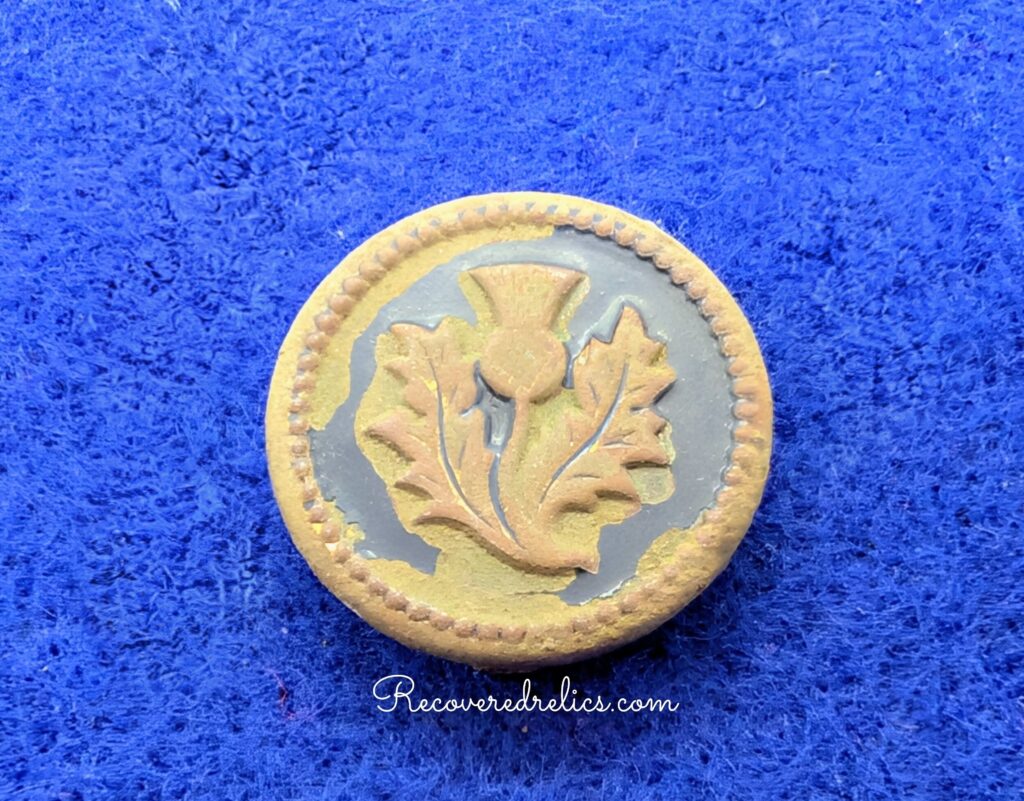
Thistle Buttons– The thistle is a hardy, determined plant that thrives in harsh, barren soils and challenging climates. It has been a symbol of Scottish courage, strength, and resilience since the reign of Alexander III. According to a famous Scottish legend, a barefoot, invading Norse army stepped on thistles during a night raid. Their cries of pain alerted the Scottish army, saving the camp and turning the thistle into a symbol of divine protection. While the thistle is the national emblem of Scotland, it was also highly popular in fashion. Ornate floral and botanical designs were widely used on civilian clothing and were massively popular on waistcoats during the Victorian and Federal periods. The gold gilt thistle button pictured dates in age to the early to mid-1800’s and was heavily gold-plated using a chemical fire-gilding process.
The other thistle button pictured with the raised thistle and border design and recessed background is a more modern example of a thistle picture button.
Tombac Buttons– Around 1760 a form of brass called tombac was developed. Tombac buttons were very popular during the end of the 18th century. They have a distinct silvery look. The high zinc content makes tombac buttons rather brittle. Decorations were normally engraved rather than stamped.

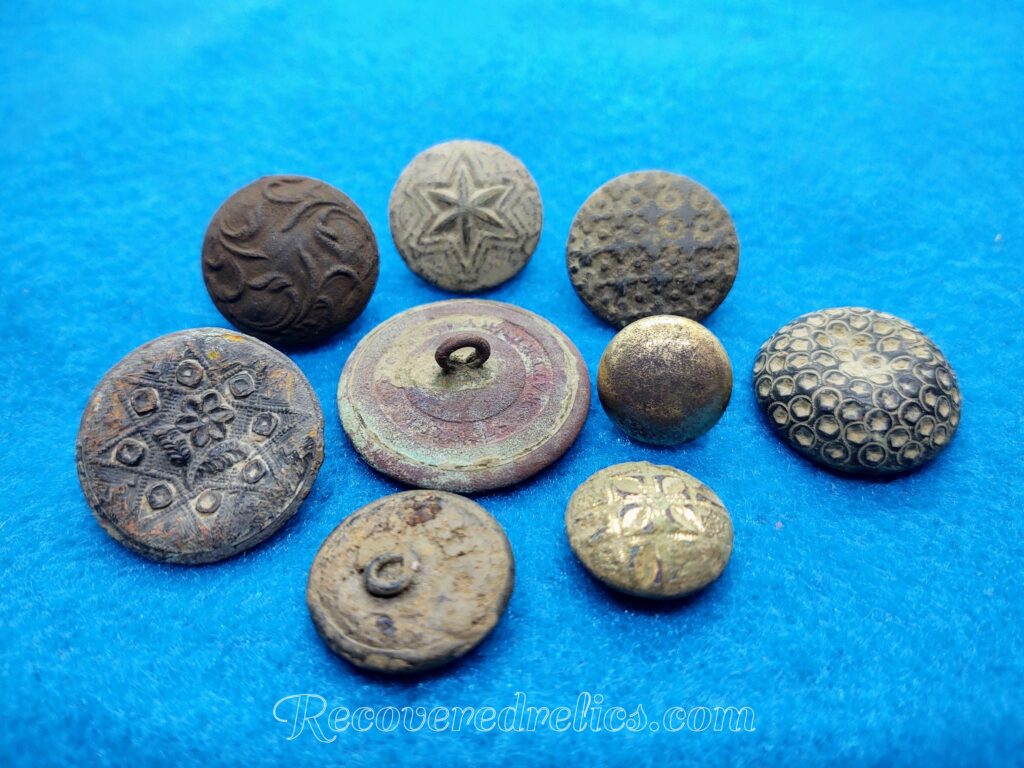
Two Piece Button– This type of button is made from two pieces, a front shell and a back plate to which the loop shank or wire eye is attached, usually by brazing. The two parts are then fastened or folded together at their rims. The edge of the front shell is turned over the back piece. Two piece brass buttons appeared in England around the year 1813 and were well established by the 1820’s. Production of these two piece brass buttons peaked in the United States between 1830 – 1850.
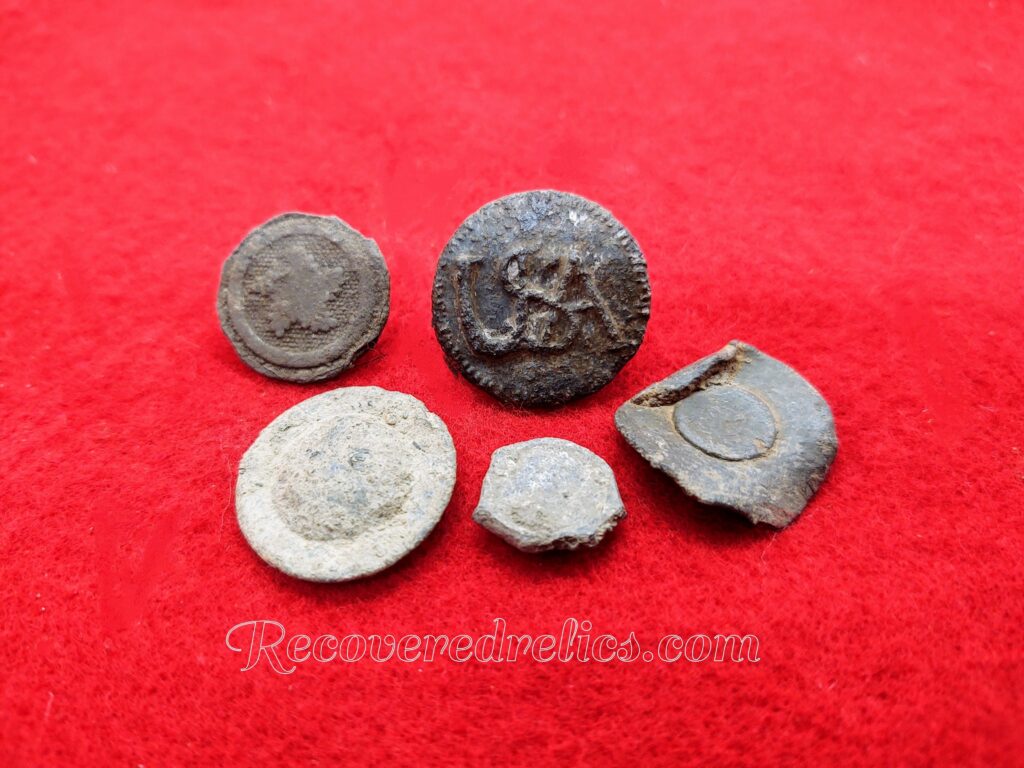
USA Continental Army General Service Button– The USA Continental Army General Service button is one of the most iconic military relics from the American Revolutionary War. These uniform buttons feature the letters “USA” intertwined in a classic monogram design across the face of the button. They served as a unified symbol for General George Washington’s troops. Most USA general service buttons were cast in pewter or white metal. Variants in design style include rimmed or pie-crust borders, dotted edges, and completely borderless variations depending on the year and foundry.


U.S. Navy Device Backmark– In the US Navy, a “device” is any distinct miniature emblem or insignia pinned, sewn, or affixed to uniforms. When referring to the U.S. Navy device on a button, it most commonly means the classic, stamped motif found on Navy uniform buttons; an eagle clutching an anchor within a shield. The U.S. Navy device is on the back of the button with the shank. The front side of the flat button is plain. These backmarks were most likely used by British makers exporting to America. After the War of 1812, British button makers utilized patriotic American motifs such as eagles, as decorative maker marks on the back of their buttons in order to make them more marketable to American citizens. It is uncertain the exact date when these buttons were in use. Some historians estimate these buttons date to circa 1820. It has been suggested that these were surplus buttons and that the makers added the shank over the eagle on old military buttons which they then marketed and sold to civilians.
US Navy (Eagle Resting on a Horizontal Anchor) Button– This button features an eagle perched on a horizontal fouled anchor, surrounded by a ring of 13 stars. This iconic design has been used on uniforms since the mid-19th century. US Navy buttons used from 1852 until 1941 featured an eagle facing its left side (the viewer’s right). In 1941, the design officially shifted to right-facing (the viewer’s left) to align with traditional heraldic honor rules. In heraldry, directions are always based on the bearer’s or in this case, the eagle’s perspective. The dexter (Latin for “right”) side of the bird corresponds to the viewer’s left. Conversely, the sinister (Latin for “left”) side corresponds to the viewer’s right. The left-facing anchor design remained standardized for nearly 90 years, and it was heavily worn by Union Navy sailors and officers throughout the Civil War, the Spanish-American War, and up to the beginning of World War II.


W. Wallis (Birmingham, England)– William Wallis was a prominent 18th-to-19th-century button manufacturer based in Birmingham, England. Wallis buttons were primarily manufactured between the late 1790’s and 1828. During this era, Birmingham was the global hub of the gilt button industry. Manufacturers used backmarks not only to identify themselves but also to stamp quality marketing claims about the thickness of the gold plating. W. Wallis buttons typically feature backmark variations such as W. Wallis Extra Rich, William Wallis Extra Fine, W. Wallis Orange Gilt, or W. Wallis Warranted.
Wadhams (Wolcottville, Connecticut)– The firm operated as Wadhams, Coe & Co. from 1835 -1837 in Wolcottville, Connecticut, a thriving industrial mill village that was absorbed into the growing City of Torrington, Connecticut. It was founded by George D. Wadhams, Asahel Coe, and the Abernathy family. The company produced stamped brass buttons and military uniform insignia. In 1838, Asahel Coe left the partnership, and the factory was reorganized as Wadhams, Webster & Co. which operated from 1838 until 1846. From 1847 to 1849, the enterprise was known simply as Wadhams & Co. before closing.


Waterbury Button Company (Waterbury, Connecticut)– Waterbury Button Company is the oldest continuously operating button manufacturer in the United States. It was founded by Aaron Benedict in Waterbury, Connecticut. In 1812, Aaron Benedict bought up every brass kettle, pan, and pot he could find and established a rolling mill to make buttons for the US armed forces. When Benedict ran out of brass, he turned to pewter.


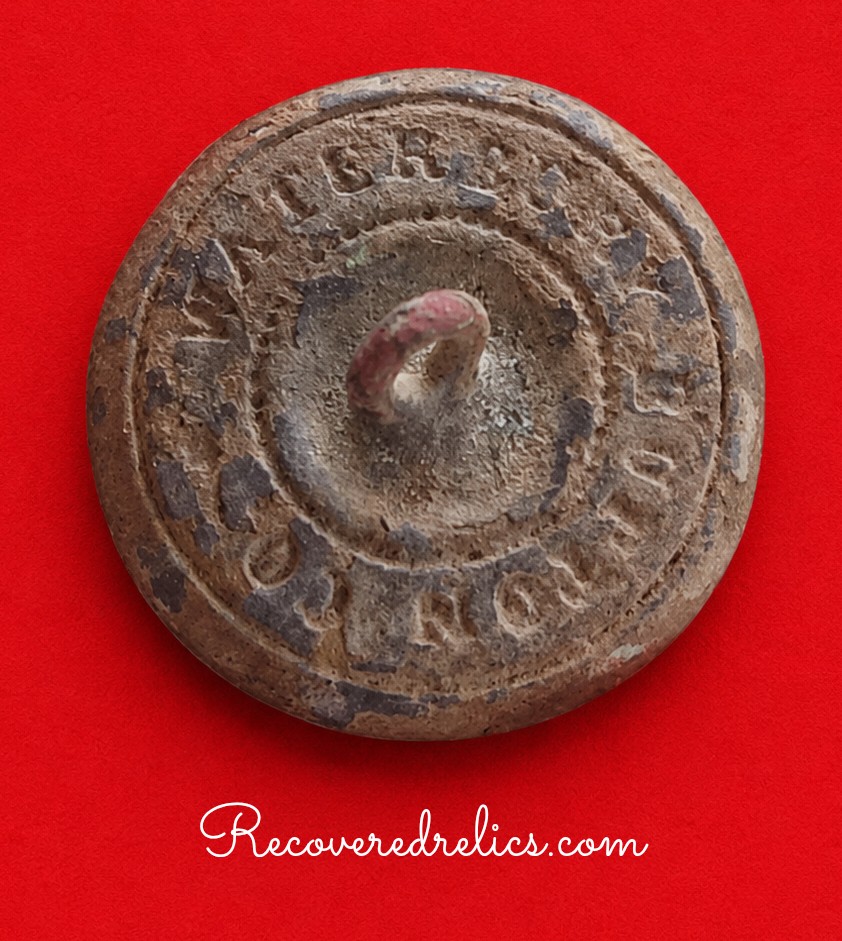
Waterbury Button Company Backmark Chronology:
Listed below are company’s backmark details, production dates, and historical context.
A. Benedict (1823 – 1829):Benedict’s first formal partnership manufacturing brass buttons brushed with gold-mercury gilt. Buttons from this era carry backmarks stamped “A. Benedict” and are often accompanied with quality marks such as “Extra Rich”, “Treble Gilt”, or “Warranted”.
Benedict & Coe (1829 – 1834): When A Benedict was reorganized in 1829, the new firm took the name Benedict & Coe. This era marked the expansion of their brass rolling mills to produce surplus sheet brass. Buttons are stamped with “Benedict & Coe”.
Benedict & Burnham (1834 – 1843): When the Benedict and Coe partnership expired, it was replaced by a new firm called Benedict and Burnham. Initiating the “Golden Age” of ornate, hand-engraved gilt civilian buttons. Backmarks usually read “Benedict & Burnham”, “B. & Burnham”, “B & Burnham Best” or “B & B. Extra”.
Benedict & Burnham Mfg. Co. (1843 – 1849): Reorganized as Waterbury’s first joint-stock corporation. The factory branched into consumer goods like pins and clocks. Backmarks from this period generally read “B. & Burnham Man’g Co.” or “B & B. M. G. Co. Waterbury”.
Waterbury Button Company (1849 – Present): The button manufacturing division was spun off into its own dedicated business entity. Buttons transitioned to using variations of the “Waterbury Button Co.” stamp.

Watchcase Buttons– Watchcase is the term used for a type of gold gilt button which is shaped similarly to the hunting case of a watch. These style buttons were manufactured between 1835 and 1850. A hunting case of a watch, typically found on pocket watches, refers to the protective, spring-loaded hinged metal cover located over the dial. The cover was designed to protect the fragile glass crystal and porcelain dials from breaking during rugged activities such as hunting or manual labor. These covers were often heavily decorative. These round, bulbous back like, gold gilt buttons had decorative stamped or sometimes chased designs and their edges were very often elaborately stamped.


Wellington Flat Buttons– 19th century British commemorative buttons that were issued to celebrate the Duke of Wellington’s victory over Napoleon at the Battle of Waterloo fought on Sunday June 18, 1815. These one piece brass flat buttons commonly feature a blank, flat front and a “Wellington” backmark often alongside the words “treble gilt”.
Ceramic Sherds
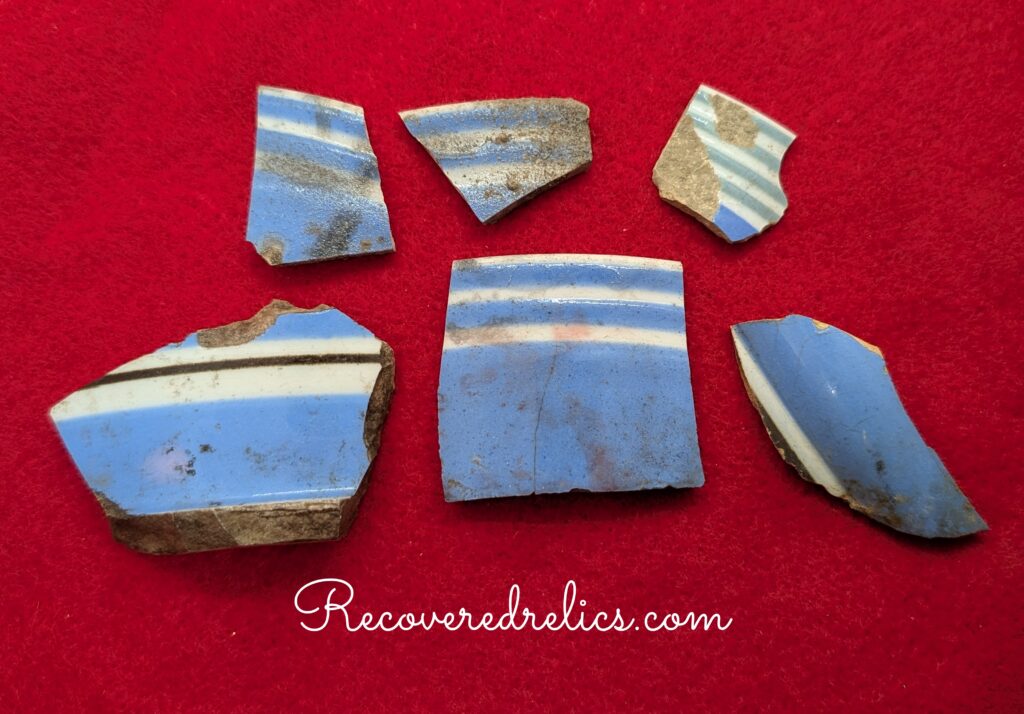
Banded Transferware– An annular decoration found on earthenware. Banded transferware features uniform, precise circles around the body of the piece. Early pieces (late 18th to early 19th century) often used earth tones like ochre, olive green, and rust. After roughly 1840, blue banding became the most common style.


Blue Willow Pattern– Blue Willow is an iconic blue on white pattern. It originated in England around the year 1780. There have been many variations of the pattern made over the years. It is said that the pattern tells a tragic love story of Kwang-se, a wealthy mandarin’s daughter, and Chang, her father’s poor clerk. They fall in love, elope, and run away in order to be together. Kwang- se father, Tso Ling, was furious when he found. Tso Ling would not stand for this betrayal and ordered them both killed. As legend has it, the Gods transformed the lovers into turtle doves. If you look closely at the pattern you will notice several features of the story. There is a house where the daughter was said to be kept a prisoner,, the wealthy Mandarin’s home, a fence built to keep the lovers apart, the daughter, lover and father on the bridge, a boat which was used by the lovers to escape, a willow tree of course,, the island where the lovers escaped to, and the two lovers flying off together. The pattern is a distinctive and elaborate chinoiserie style pattern featuring Chinese-inspired motifs. The patterns intricate decorative edge or borders were decorated with geometric patterns and stylized floral elements, scrolling, and small dots or circles. The classic, “standard” Willow design commonly includes an outer decorative border and an inner border that frames the central scene. The pattern was created as an affordable, mass-produced alternative to expensive imported Chinese porcelain for the English middle class and became a staple of Victorian dining. There were approximately over 400 manufactures in Great Britain whom manufactured the Blue Willow pattern.


Creamware– Creamware is an elegant, cream-colored refined earthenware featuring a clear, glossy lead glaze. It was developed in 1750’s in Staffordshire, England and became the era’s most popular tableware. It revolutionized European ceramics by offering a durable, elegant, and affordable alternative to imported Chinese porcelain and became a staple of 18th- and 19th-century dining.
Flow Blue– Flow blue is a 19th century blue on white pottery style that is characterized as having an intentionally blurred or smudged design. The hazy appearance was created by adding chemical agents which caused the blue underglaze to flow during the firing process. Flow Blue pieces often featured Asian inspired floral or scenery patterns. It was popular from about 1830 to 1920.


Earthenware– is a broad category of pottery defined as non-vitreous, porous ceramic ware that has been fired at relatively low temperature. Earthenware was commonly used for everyday items such as dishes, pots, and decorative objects in various cultures. The raw clay commonly fires to shades of red, buff, orange, or white. Earthenware encompasses various specialized forms such as Terracotta, Tin Glazed, Pearlware, Creamware, Redware, Yellowware, Slipware, and Whiteware.
English Delftware-A type of tin glazed earthenware, produced in Britain from the mid-16th century until the late 18th century. This It was developed as a more affordable alternative to expensive Chinese porcelain. It features a soft porous often beige or pinkish clay body covered in a white opaque lead tin glaze. Blue and white was the standard color however English potters also used a “polychrome” palette of yellow, green, orange, and manganese purple. Common design motifs include Chinoiserie and Chinese Landscapes, Floral and Botanical Patterns, Pastoral and Nature Scenes, and Geometric and Border Patterns such as Blue-Dash and Corner Motifs.
The tin glaze is brittle often showing crazing (fine cracks) or pinholes (small surface pits).


Lustre Decoration: A metallic decoration produced by the reaction of metal-based paint with a glaze. Traditionally copper and silver oxides were used. Over time the range of metallic oxides used to create lustre decorations expanded to include salts of gold, platinum and bismuth. The name “Lustreware” arises from the iridescent or luminous effect imparted to glazed ceramics. The technology for producing lustreware has been around for centuries. In the late 17th century and early 18th century there was a great revival of interest in lustreware.
Pink Rose Design– This style pattern features scattered pink roses and light green foliage. The multi color pink rose design was popular during the early 20th century. The design was applied through decal transfer printing, a method of decorating ceramics by applying pre printed images using specialized paper.


Pearlware-Pearlware was produced in England from around 1780 to the mid-1800’s. Pearlware is a type of refined earthenware characterized by a white-to-faintly-blue-tinted lead glaze caused by the addition of cobalt to the glaze. Pearlware was frequently decorated with blue transfer printed designs, underglaze painted colors, and shell edged ware typically in blue or green.
Tin Glazed Earthenware-a type of soft, porous pottery coated in a white opaque lead glaze which is made opaque by adding tin oxide. It is typically decorated over the unfired glaze with metallic pigments before a second firing. It is often decorated in blue or polychrome (multi-colored) designs. The glaze is prone to chipping. Tin Glazed Earthenware was widely produced in Europe during the 16th-18th centuries as an affordable alternative to Chinese porcelain. Tin-glazed pottery is known by many different names. The decorated tin-glaze of Renaissance Italy is referred to as maiolica. In the Netherlands, it became known as delftware. Dutch potters brought it to England and the wares produced there are known as English delftware. In France it was known as faience.


Transfer Printing (Blue on White)– The transfer printing process, involves transferring a design from an engraved copper plate to a unglazed earthenware ceramic vessel, after an initial firing. The process was developed around the year 1760 but not perfected until many years later. An artist’s drawing was engraved onto a copper plate first. Then, color made from inorganic metallic oxides mixed with oils were rubbed into the hot copper plate, and the excess was carefully scraped off. When the copper plate cooled, specially prepared tissue paper was placed on the copper plate. The paper and copper plate were run through a press, forcing the paper into contact. The copper plate was then heated once more which dried the tissue paper and soften the color. Then, the paper was carefully pulled away from the engraving. Sections of the tissue paper print were cut out and positioned onto the bisque fired ceramic vessel. The print was rubbed down with a brush lubricated with soft soap. Once the design was affixed then the item was immersed in water and the tissue paper was removed. The piece was then fired first at a low temperature to “harden on” the print. This allowed the maker to dip the item in glaze without damaging the design before the final firing. Blue on white was the classic color due to the stability of cobalt underglaze. Blue on white transfer-printed earthenware was produced in vast quantities during the first half of the 1800’s.
Transfer Printing ( Purple/Mulberry)– Early underglaze printing was restricted to cobalt blue because it could withstand the high temperatures during firing. Purple transfer printing emerged as a stable color option around the year 1830. The purple color was achieved using manganese oxide, a mixture of cobalt and manganese, or gold oxides. The most coveted purple transferware is known as “Mulberry” or sometimes “Flow Purple,” and was produced between 1835 and 1855. It is characterized by a dark, rich, almost blackish-purple color rather than a pale violet.


Transfer Printing (Green)– Green ceramic color was historically achieved through metal oxide glazes. Copper oxide produced a wide range of green glazes, from light green to turquoise depending on the acidity of the glaze. Iron produced green tones known as celadon, jade-like green color, ranging from pale green to blue-green and grey. Green transferware was most popular between 1830 to 1860. Green transferware, as a part of the broader Victorian era’s demand for varied, colorful tableware, often featured pastoral, romanticized landscape imagery.


Shell Edged Ware– Shell-edged or edged wares are characterized by molded rim motifs and usually painted under the glaze in blue or green, on refined earthenware’s. This type of decoration is very distinct. Shell-edged earthenware’s were one of the most common decorative types used on table wares in North America between the years 1790 and 1860.
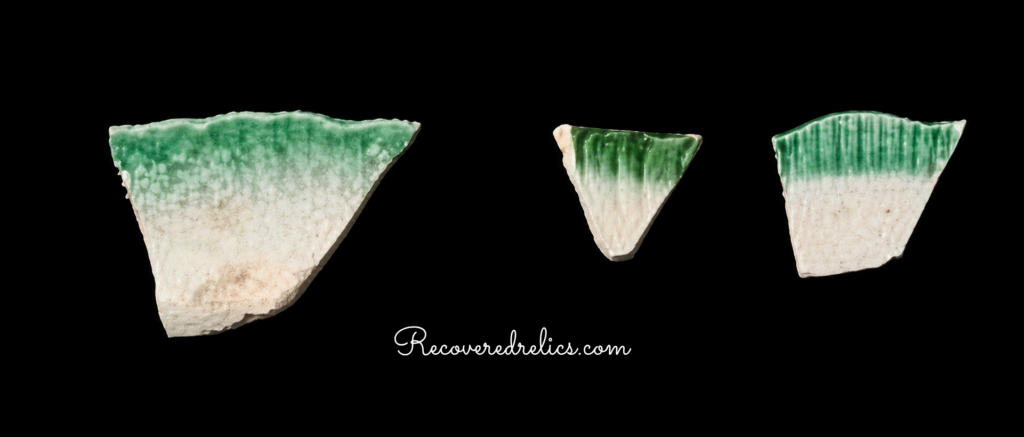


Splatter/Sponge Design– These ceramic pieces feature a distinct mottled or speckled design. Splatter and sponge ceramic ware originated in England, during the late 18th century. Initially it was created by blowing colored glaze through a pipe. It evolved into using sponges to create designs in the early 19th century. The splatter techniques created a fine, speckled look, while sponge applied method created a thicker, textured, or stamped pattern. This pattern peaked in popularity between 1800 and 1850 as durable, affordable tableware.
Whiteware– Whiteware is defined by its white, clean appearance. It features a clear, colorless glaze that appears paper white. Early transitional pieces may still have a very faint blue tint. Whiteware, a refined, white-bodied earthenware, was developed in England around 1810–1820 as a successor to creamware and pearlware. It became the most common and affordable kitchenware by the year 1840. The term Whiteware is also a broad industry term that is used to describe any ceramic with a white colored body, including Porcelain and China.

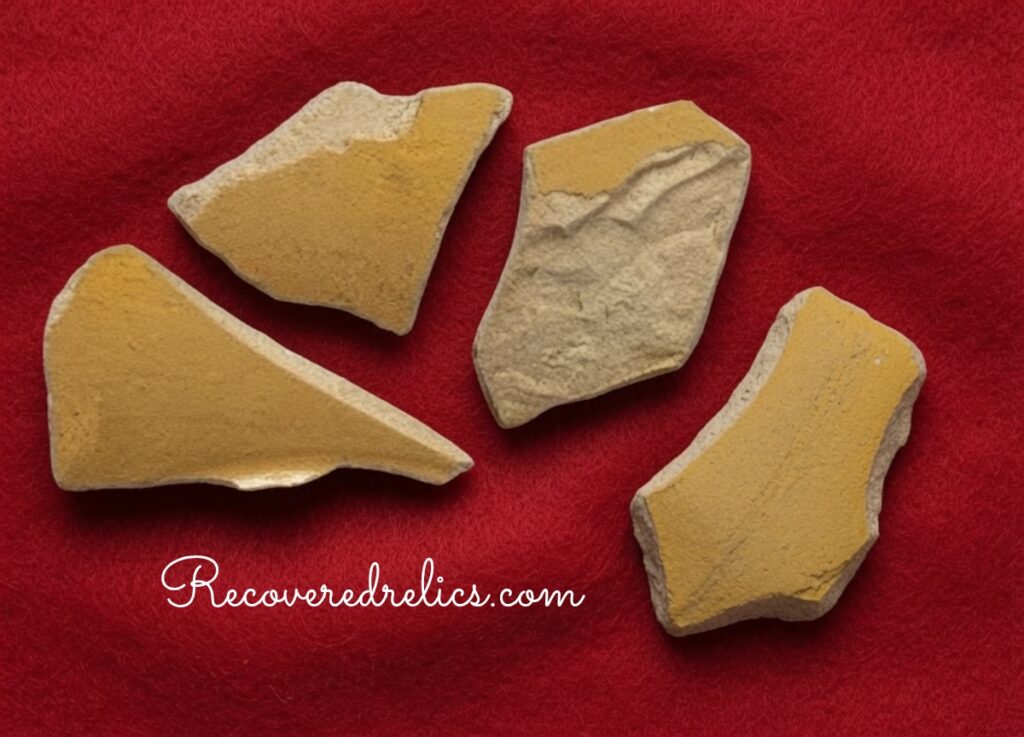
Yellowware– Yellowware is a type of durable, heavy earthenware named for its signature buttery yellow to deep mustard clay body. Originating in 18th-century England and peaking in 19th-century America, it is coated in a clear lead or alkaline glaze. Yellowware vessels were predominantly designed for practical kitchen and pantry use, including mixing bowls, pie plates, pitchers, and baking molds.
Coins
Colonial Coins– Currency that circulated in the British American colonies, now the United States, prior to the establishment of the U.S. Mint in the year 1792. This catecory includes authorized foreign coins such as Spanish Reales, British copper coinage and the Virginia Half Penny, coins minted within the colonies such as the Massachusetts Oak Tree and Pine Tree sillings, State coppers, and 1787 Fugio Cent.

Cartwheel Penny (1797 King George III Penny)– The Cartwheel penny is a massive, 36 millimeters in diameter, British copper coin which was minted exclusively with the date 1797 during the reign of King George III. It earned its popular “cartwheel” nickname from its unprecedentedly large size, heavy weight, and a uniquely thick, raised outer rim that resembled the shape of a wooden cartwheel. The obverse side displays the laureate bust of King George III. The reverse portrays a seated Britannia holding an olive branch and a trident next to a shield, marking the first time the trident imagery appeared on a British penny.

Colonial State Coppers– Connecticut, New Jersey, Massachusetts, and Vermont issued government approved copper coinage between the years 1785 and 1788. New York also issued copper coinage during this time period however the coins were not authorized by the government.
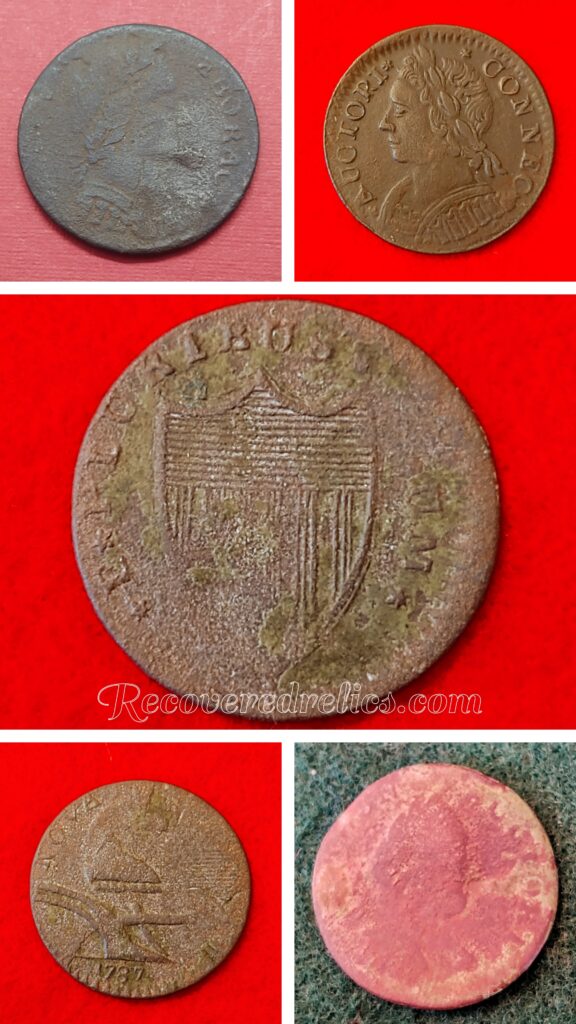
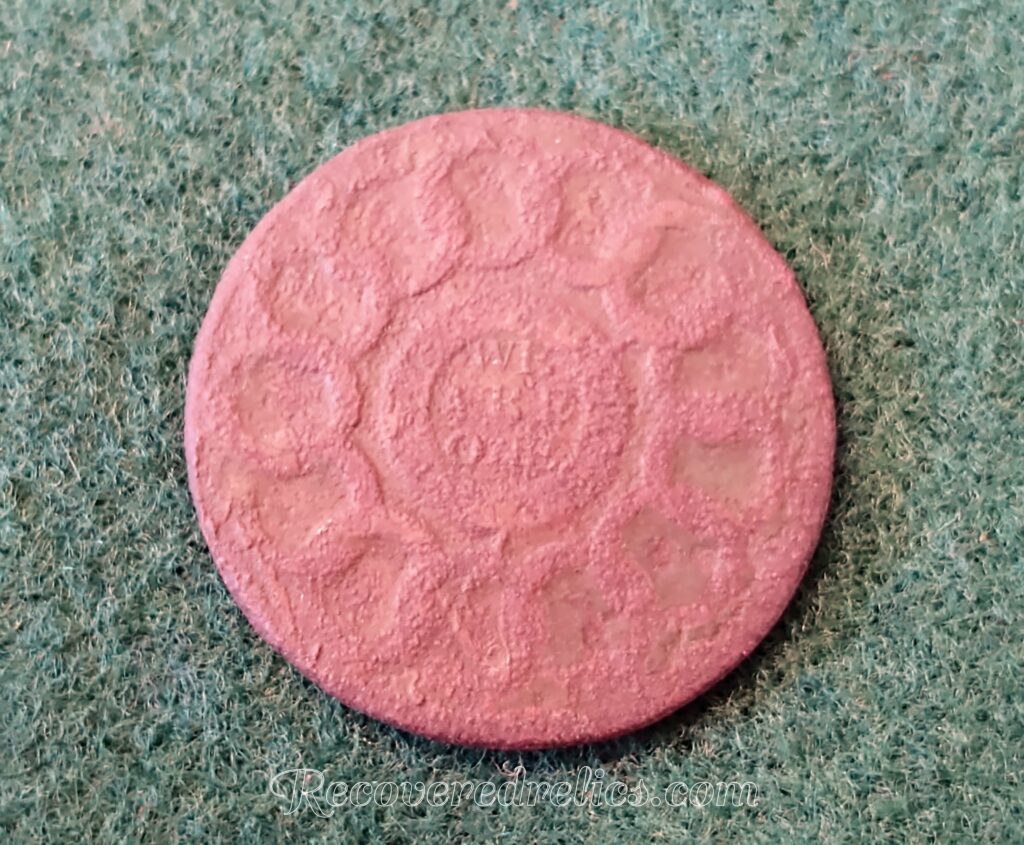
Fugio Cent of 1787– The Fugio cent of 1787 was the first coin issued by the authority of the United States and authorized by the US Congress. At the time a national mint run by the government did not exist within America. The coin was contracted out to a private mint for production. The sun and sundial on the coin is to symbolize time, and together with the Latin word fugio (“I fly”), they express the idea “time flies.” Below the sundial is the phrase “Mind Your Business.” Both mottos have been attributed to Benjamin Franklin. On the other side of the coin, their are 13 links forged into an unbroken chain with the motto “We Are One” which is to represent the uniting of the 13 colonies into one strong nation.
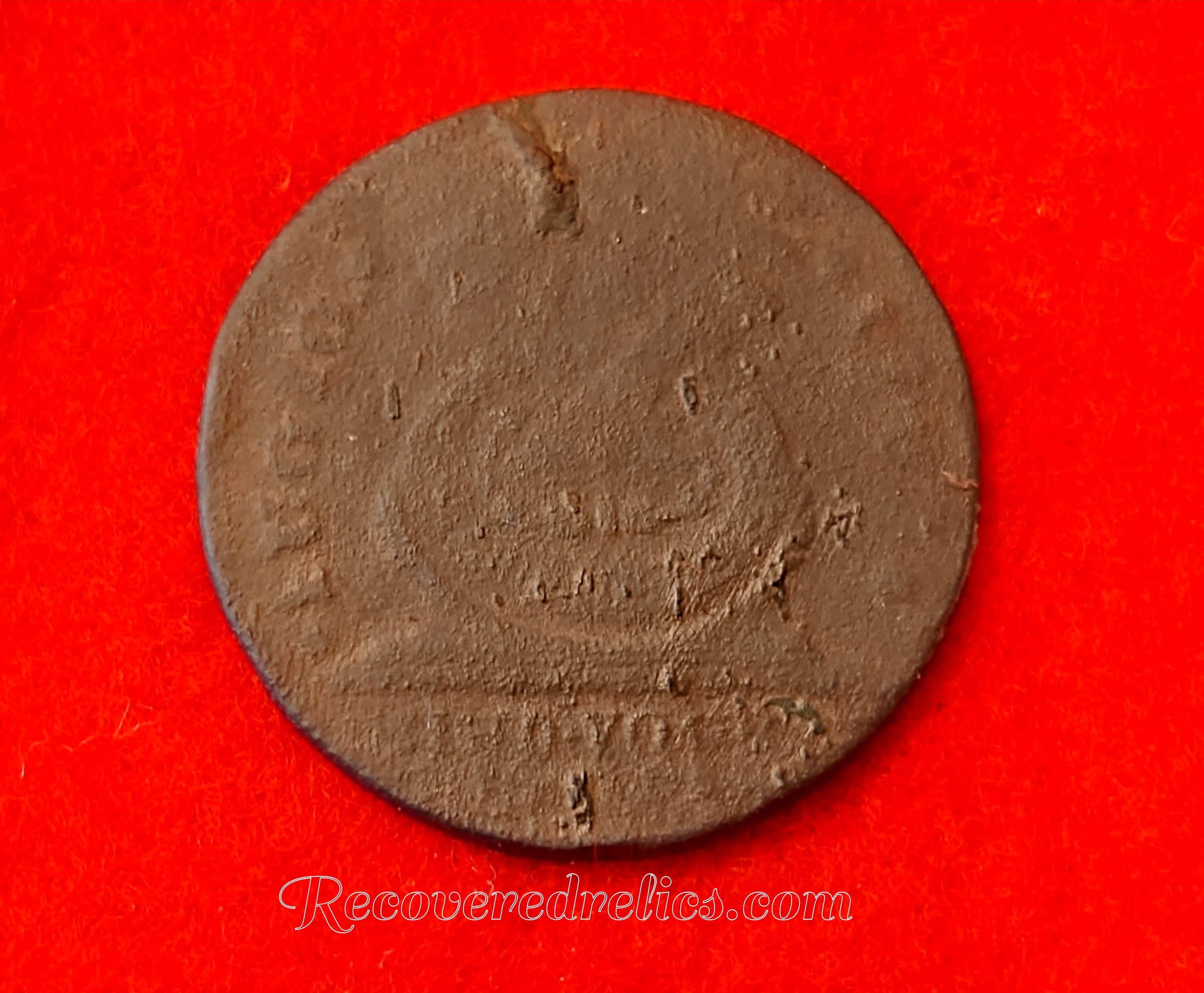
Hibernia Copper– William Wood was a copper and tin mine owner in Ireland. He purchased the Royal Patent in 1722 which allowed him to produce copper halfpence and farthings for use in Ireland. This coinage has two major types. The first type struck in 1722 has a reverse design with a harp left of Hibernia. The second type struck from 1722 until 1724 has a harp to the right of Hibernia. The obverses of both types have portrait of King George I, facing right. There are a number of varieties of these coins. These Hibernia coins were heavier and thus intrinsically more valuable than the coppers then circulating in Ireland. These pieces display no denomination, but come in two sizes: the farthing, which averages 22 mm in diameter; and the halfpence of 26 mm. There is no evidence of any substantial colonial circulation of these coppers in America however many have been recovered by detectorists.
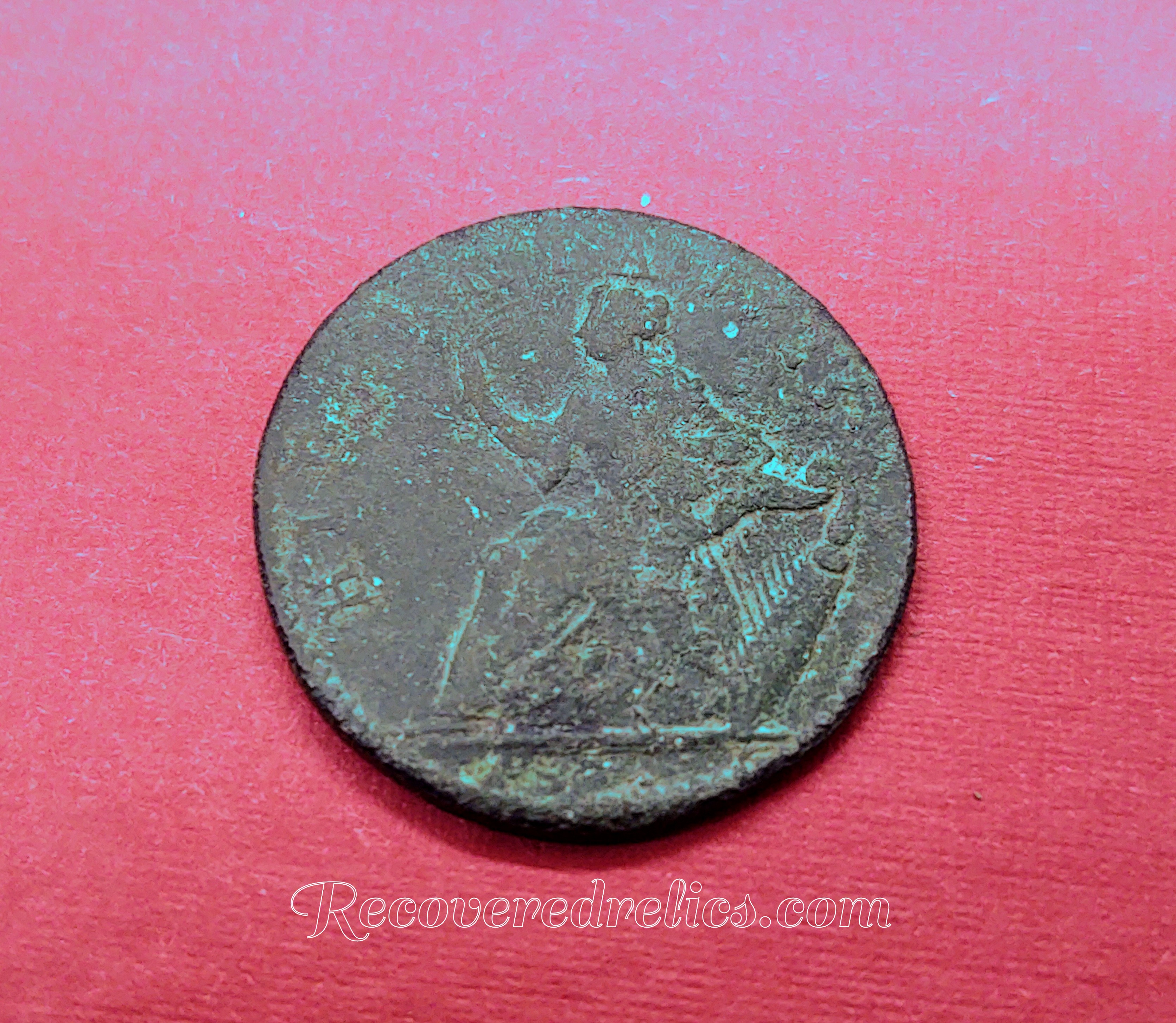
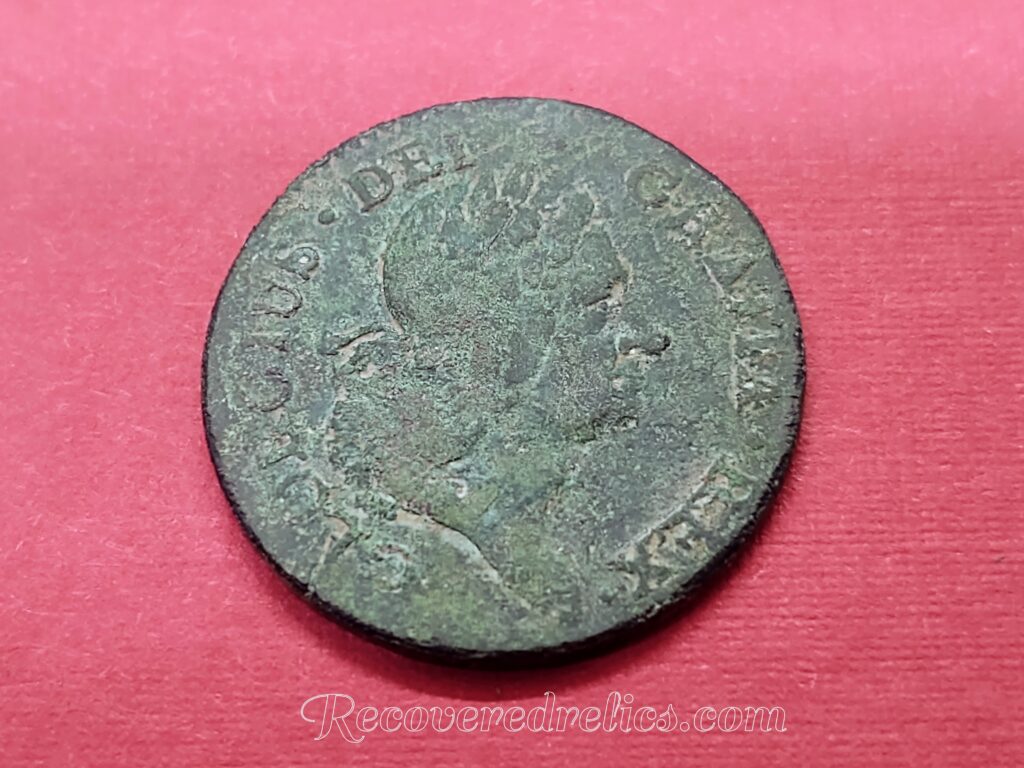

King Charles II Copper– Prior to 1672, English small-change coins were made of silver or unofficial private tokens. King Charles II introduced the first official copper coins to the Kingdom of England. He minted copper halfpennies and copper farthings from 1672 through 1679. The obverse features the bust of King Charles II, facing left, with the Latin legend CAROLVS A CAROLO meaning “Charles, son of Charles”. The reverse features Britannia seated on a globe, facing left, holding an olive branch and a spear, with a Union flag shield beside her and the date.

KGI /King George I Copper– Soon after King George I (1714–1727) took rein, the surplus of copper coins was used up. In the year 1717 a new contract was signed and a Royal Warrant was issued for the production of a new halfpenny. The halfpennies struck in 1717 and 1718 looked slightly odd as they were smaller, thicker and somewhat lighter than the previous issues, weighing 9.4–10.3 grams with a diameter of 25–27 millimeters. The size of the coin was increased to 26–29 millimeters for those issued from 1719- 1724. The weight however remained the same (.9.4–10.3 grams ). The obverse features the right-facing head of King George I and the inscription “GEORGIVS REX”. The reverse features Britannia with the inscription “BRITANNIA” and has the date of issue beneath Britannia.
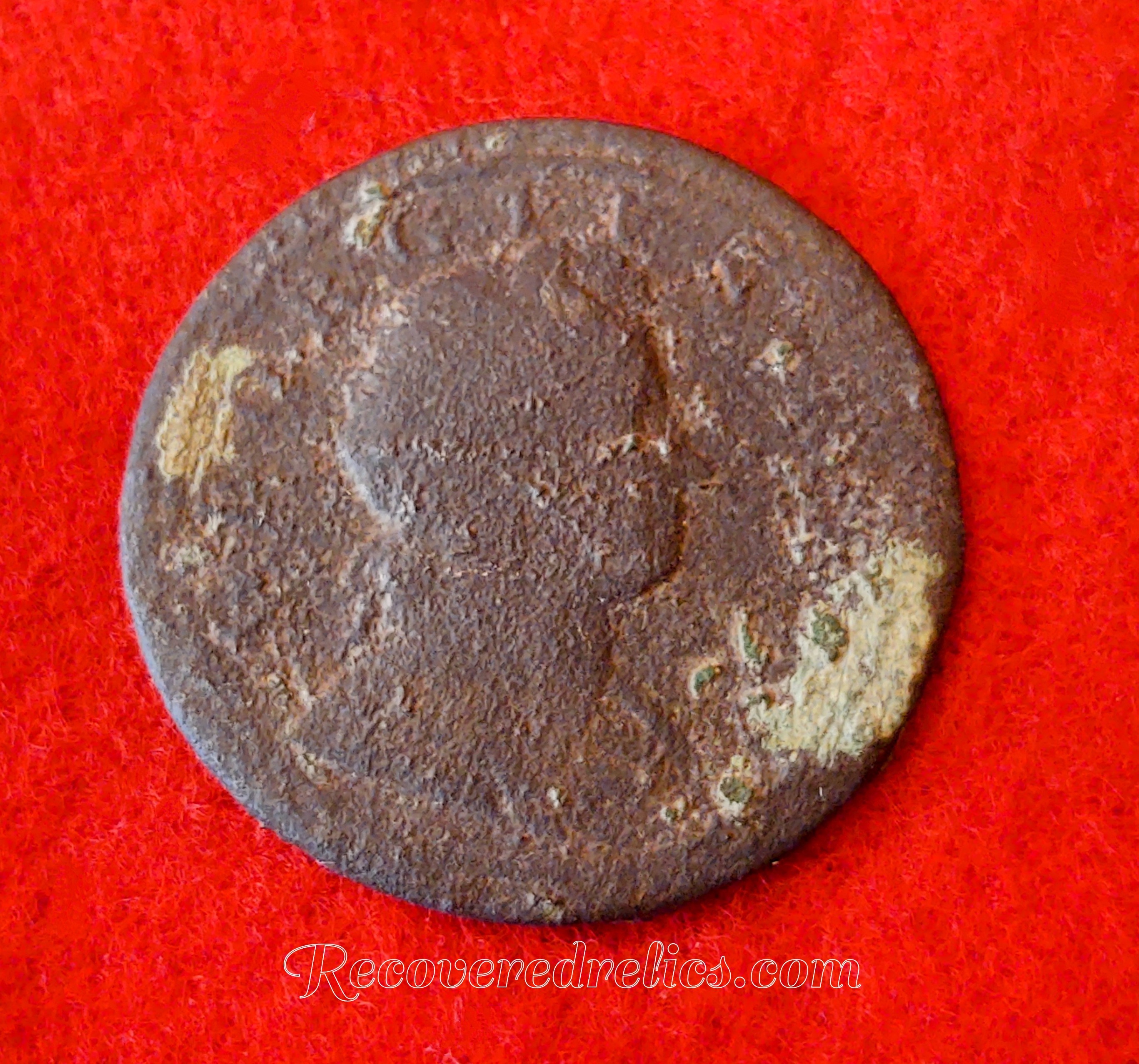
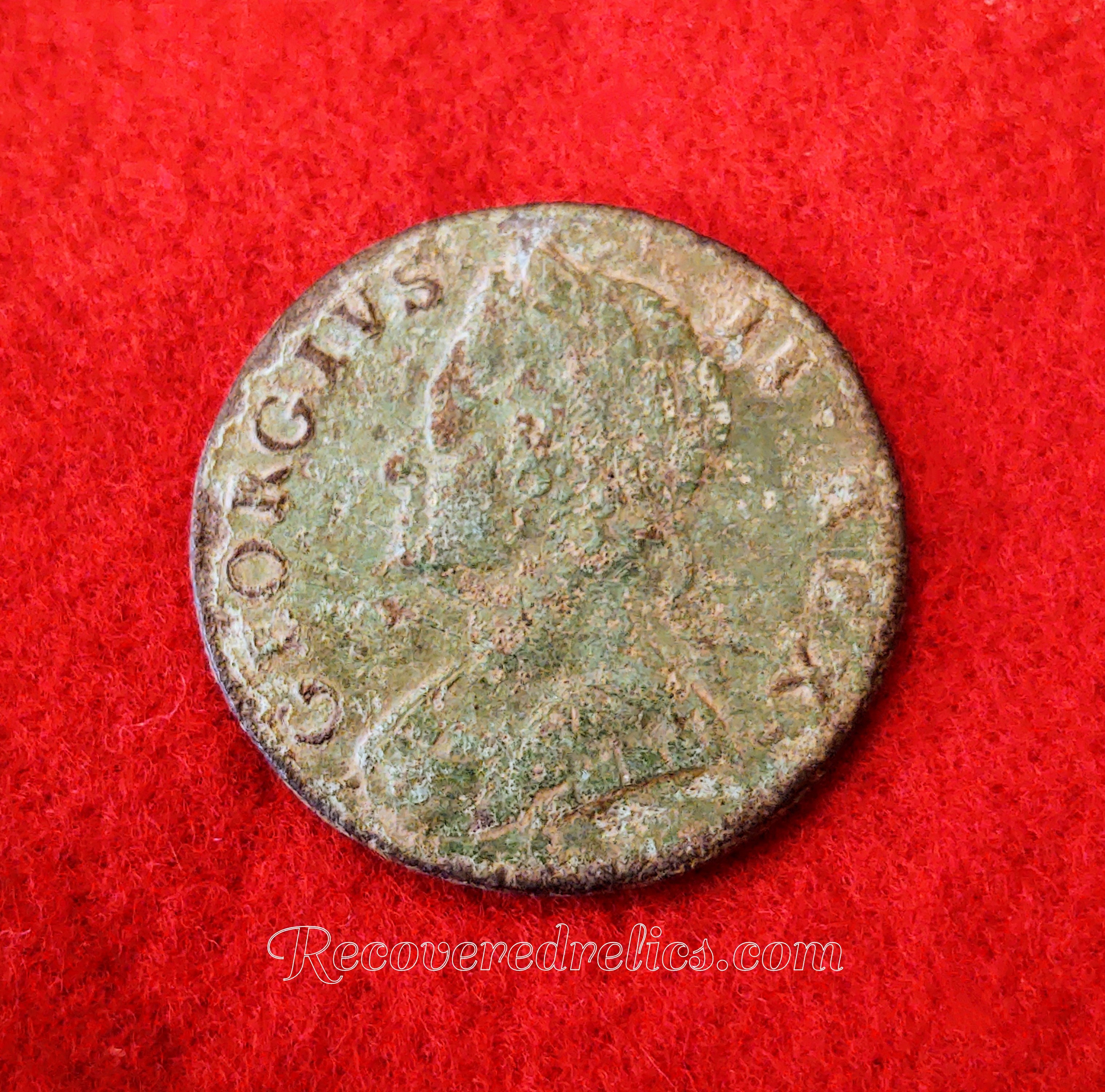
KGII/ King George II Copper– King George II’s rein was from 1727-1760. There are two different busts of the King used on his coinage, the Young Head which was used from 1729-17 39 and the Old Head which was used from 1740-1754. The design of the early and late issues differs only in this respect. A left facing head of George II is shown in the laureate bust style, either as a young king or in his maturity. The legend, which means King George II remains the same. It reads: “GEORGIVS II REX’”. Britannia is seated at center on the reverse side of the coin. She holds a spear and an olive branch, with a shield to the right. The word BRITANNIA meaning “Britain”, is also on the reverse side along with the date the coin was issued.
KGIII/King George III Copper– George III became king in 1760. The first George III British halfpenny was minted in 1770 and the last in 1807. Halfpennies were minted infrequently during George III’s reign. They can be categorized into 3 distinct groups.
The 1770–1775 coinage weighted 9.2–10.8 grams and had a diameter of 29–30 millimeters in size. The obverse side shows a right-facing bust of the king, with the inscription “GEORGIVS III REX”. The reverse side shows a left-facing seated Britannia holding a spray and spear, with the inscription “BRITANNIA” and the date of issue. The king’s bust has a fuller face in 1774 and 1775.
The 1799 issue weighted 12.0–13.1 grams, and had a diameter of 30–31 millimeters. The obverse shows a right-facing bust of the king, with the inscription “BEORGIVS III DEI GRATIA REX”. The reverse shows a redesigned left-facing seated Britannia holding a spray and spear, with the inscription “BRITANNIA 1799”.
The 1806–1807 coins weighted 9.2–9.8 grams and had a diameter of 29 millimeters. Their obverse shows a right-facing bust of the king, with the inscription “GEORGIVS IIID G REX” and date of issue. Their reverse shows a slightly different left-facing seated Britannia holding a spray and spear, with the inscription ” BRITANNIA”.
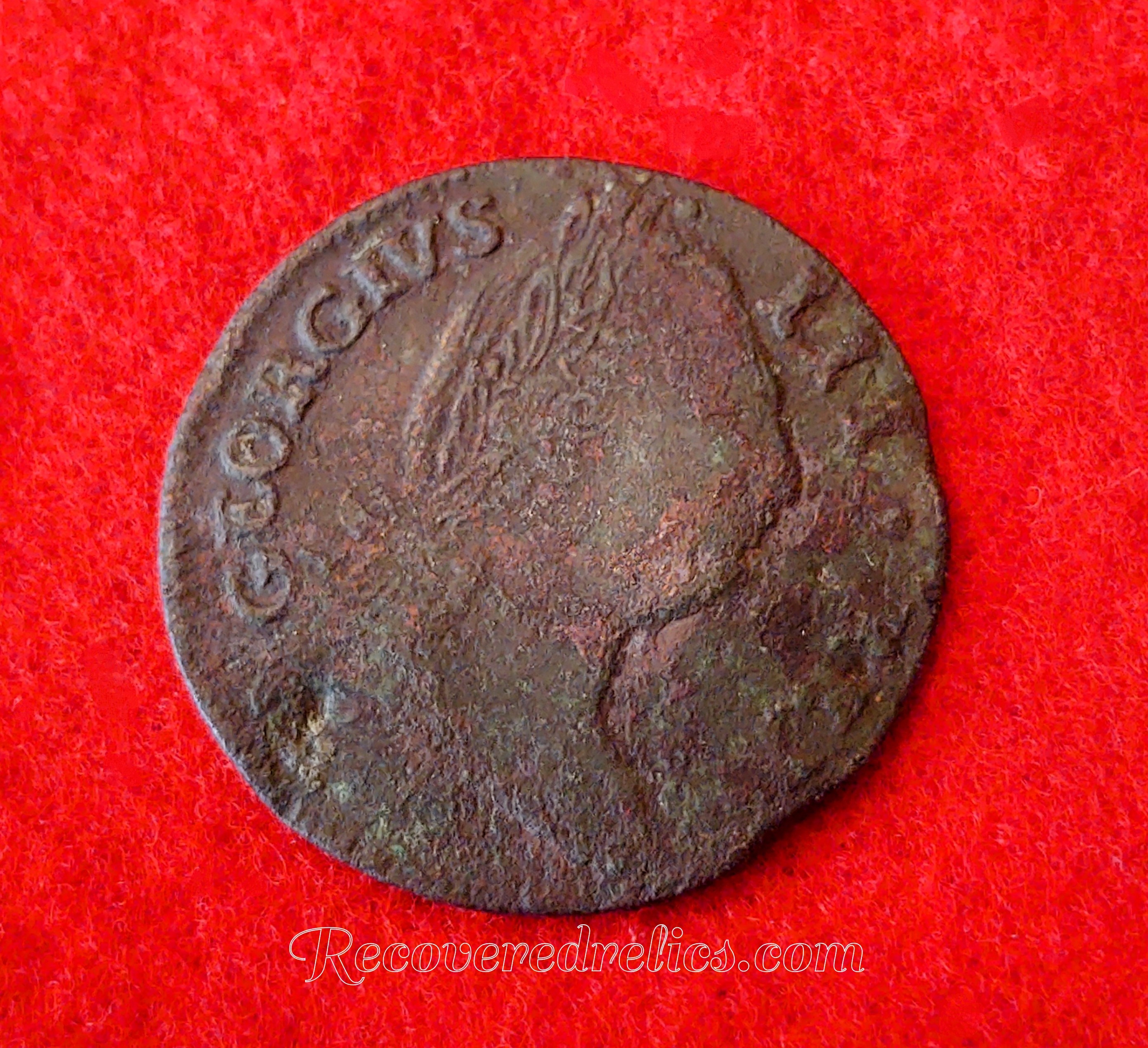
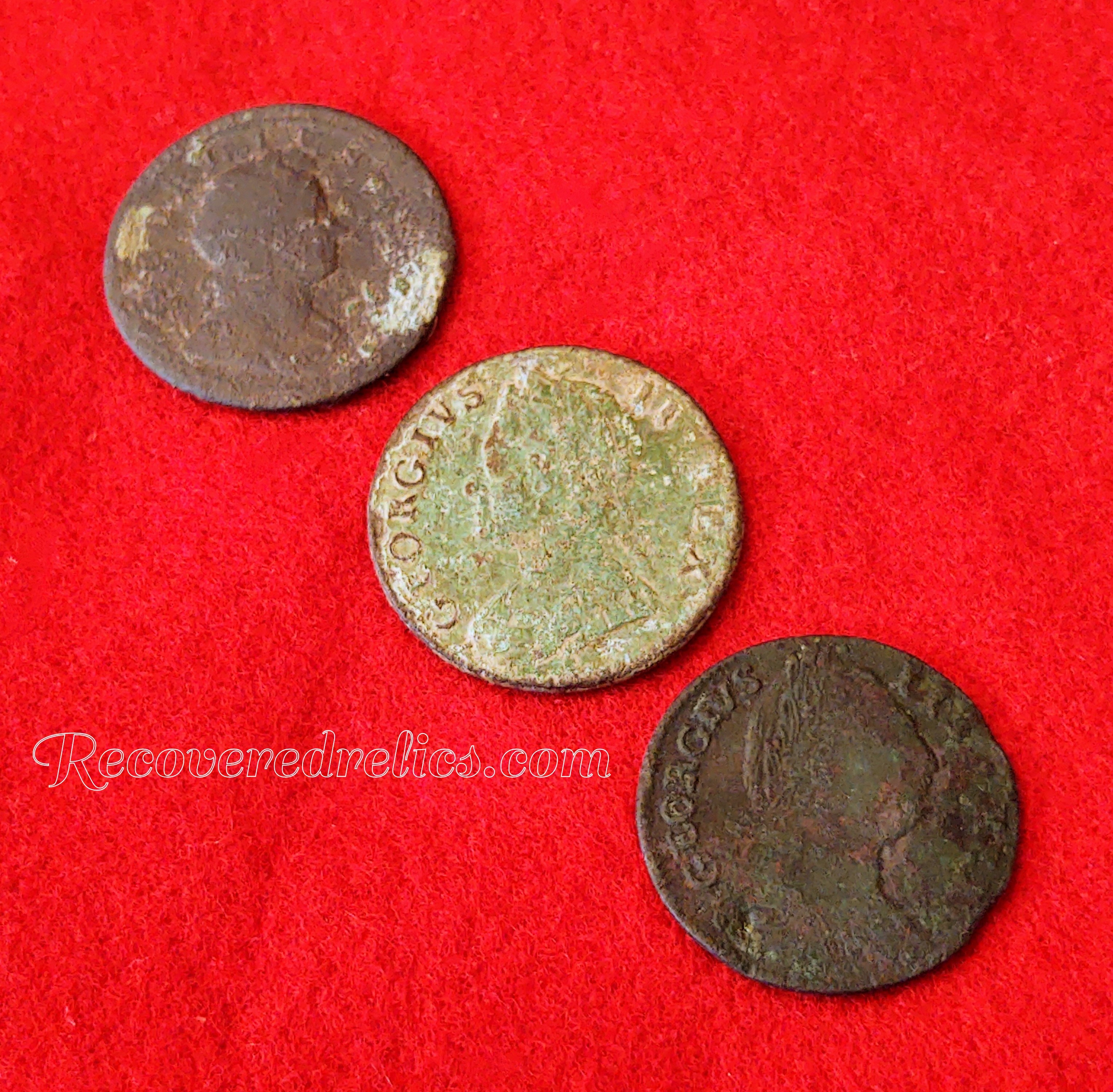
Mermaid Coin– In 1749, the British Royal Mint struck a massive quantity of copper coinage. King George II authorized shipment of thousands of these copper farthings and halfpennies to the American colonies. A British naval vessel named the HMS Mermaid brought these newly minted coins to Boston. The ship launched in 1749 and safely delivered these copper coins to Boston in the year 1750. The delivery consisted of over 420,000 farthings and 800,000 halfpennies, all dated 1749. At the time, there was a massive shortage of official British currency in the Americas, and these Mermaid coins became the backbone of daily exchange and commerce in the colonies.


Oak Tree Twopence– The Massachusetts Oak Tree silver coins were minted between 1660 and 1667. They are rare, early American colonial currency featuring a stylized oak tree surrounded by a beaded circle, with the legend “MASATHVSETTS” on the obverse and the date “1652” with the denomination (XII, VI, III, II), and the wording “NEW ENGLAND” and “AN DOM”, on the reverse. These coins were produced in four main denominations: the Shilling (12 pence), Sixpence (6 pence), Threepence (3 pence), and the Twopence (2 pence).

Pine Tree Shilling– These were colonial issued coins that were in circulation in the Thirteen Colonies during the 17th century. The obverse features a pine tree in the center enclosed within a beaded circle. The obverse has the inscription “MASATHVSETS IN”. The reverse shows the year “1652”, the denomination “XII” (for 12 pence), and the lettering “NEW ENGLAND AN DOM”. Records indicate that Pine Tree Shillings were minted between the years 1667 – 1682. However, practically every Pine Tree Shilling produced bore the date 1652.
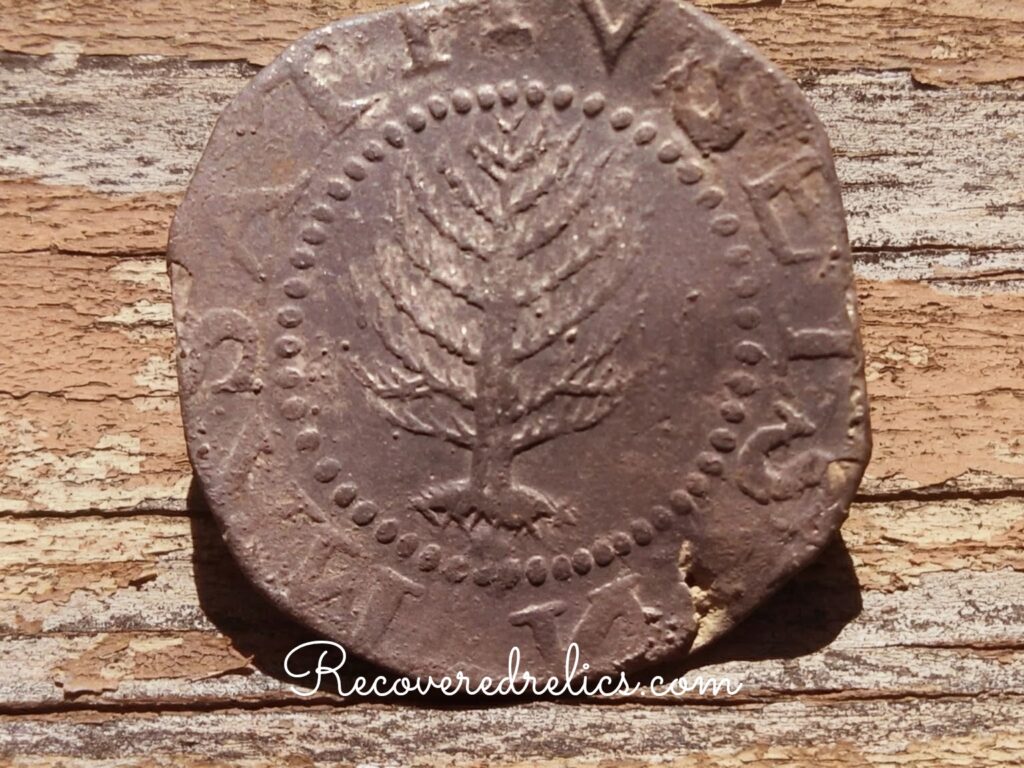

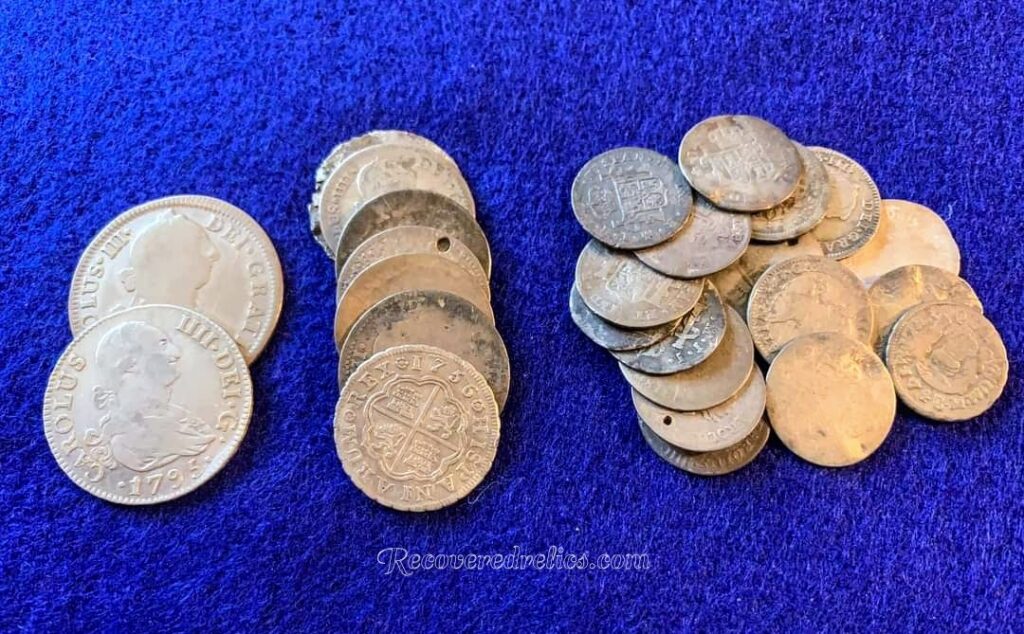
Spanish Silver Reales– The real was a unit of currency in Spain and the Spanish colonies in America for several centuries. Spanish Reales were widely circulated during the colonial era in America. Spanish Reales were first minted during the 14th century under the direction of the King of Castile and Leon, known as Pedro the Cruel. The design of the Spanish Real have greatly changed over time. Changes were made to the coins appearance and design every time a new king took over the crown.
Virginia Half Penny – In the year 1609 the Royal Charter decreed granted the Colony of Virginia the authority to mint coinage for use in Virginia. In 1773, the Virginia Assembly recognized the need for actual coinage and authorized the striking of a Halfpenny from the Mint on the Tower of London. The obverse design has a bust of King George III, facing right. The reserves has a large crowned shield and the word “VIRGINIA”. The lettering and date is separated by the crowned shield. The coins arrived to New York in 1774 and were distributed to Virginians in 1775.
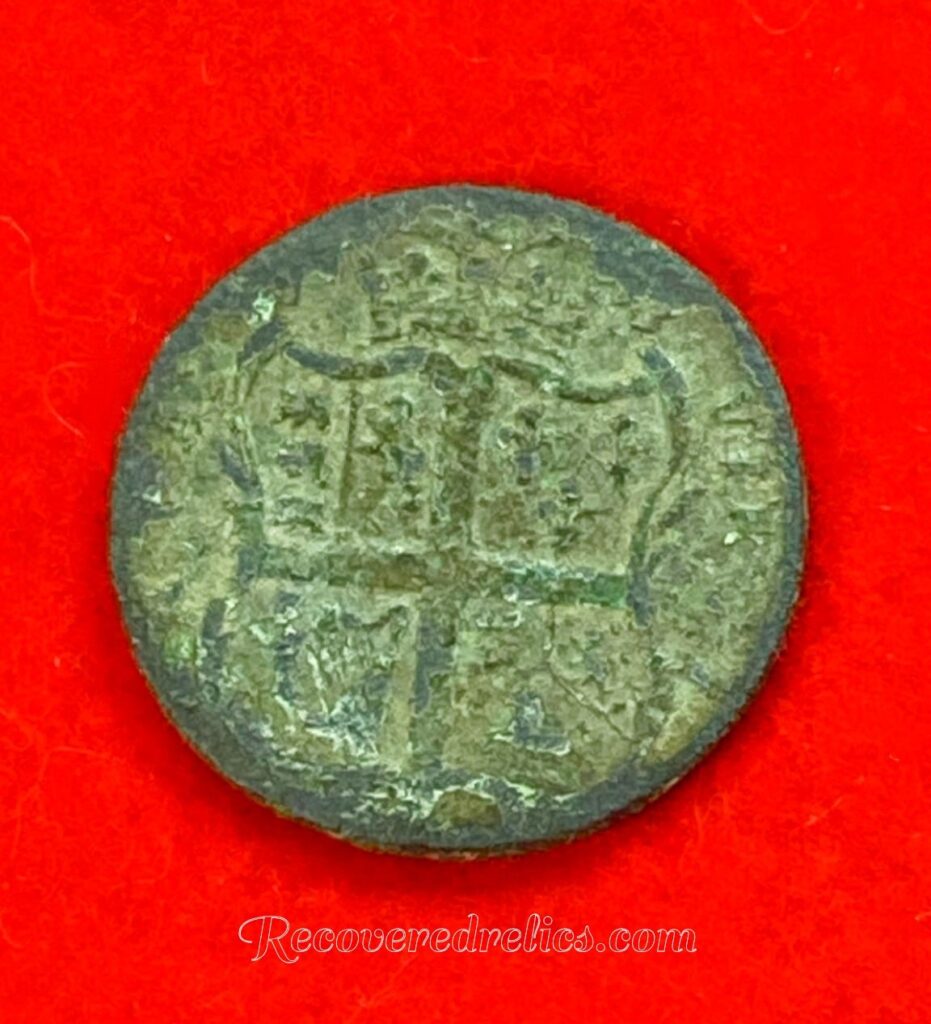
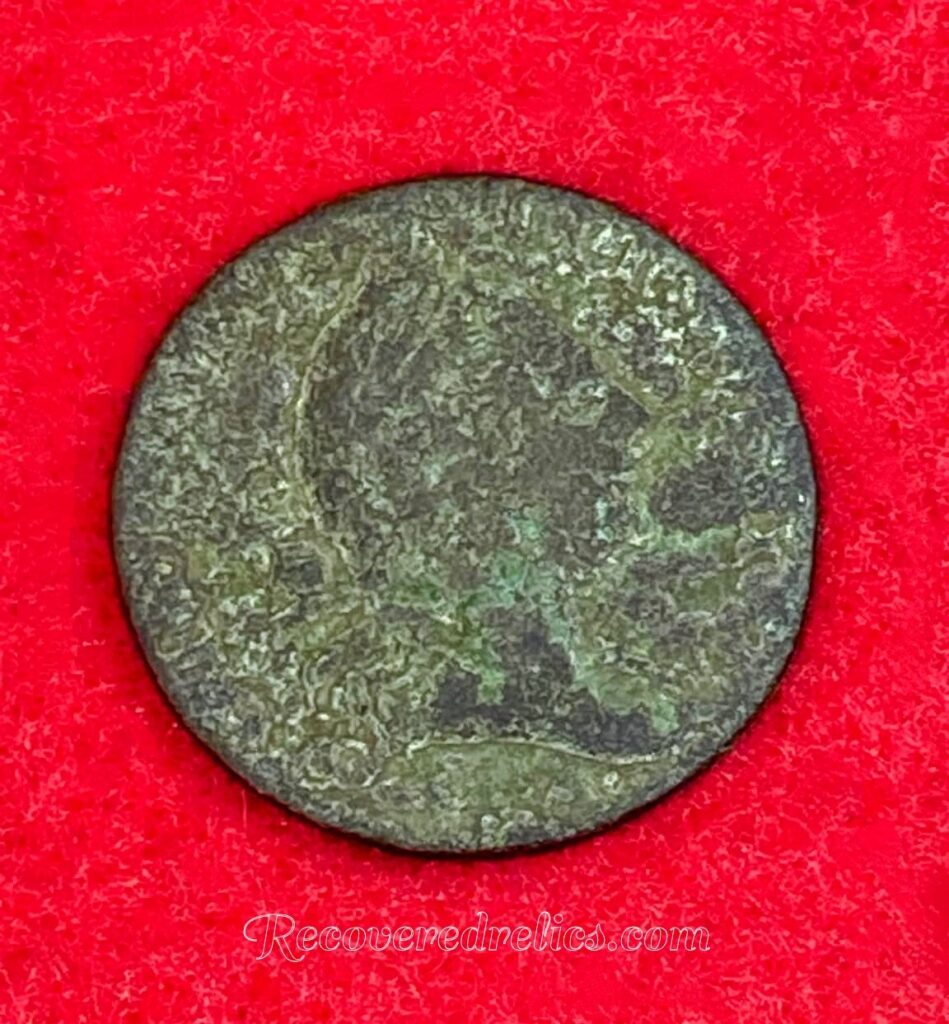

William and Mary Copper– These British coins were made during the unique joint reign of King William III and Queen Mary II. They were produced in 1694. There were two copper coin denominations made, the halfpenny and the farthing. The obverse features their conjoined busts, both facing right. The legend inscribed features the Latin text GVLIELMVS ET MARIA. The reverse of the coin has a figure of Britannia seated on a globe, facing left.
United States Coins (Post 1792)- This category includes coinage produced by the U.S. Mint. The Coinage Act passed on April 2, 1792 established the United States Mint in Philadelphia, created the U.S. dollar as the standard unit of money, and introduced a decimal system for currency.
Barber (US Mint) Coin Series– The Barber coinage series, designed by Charles E. Barber, consists of a dime, quarter, and half dollar. These coins were minted between the years 1892 through 1916. No half dollars were struck in the final year of the series though.
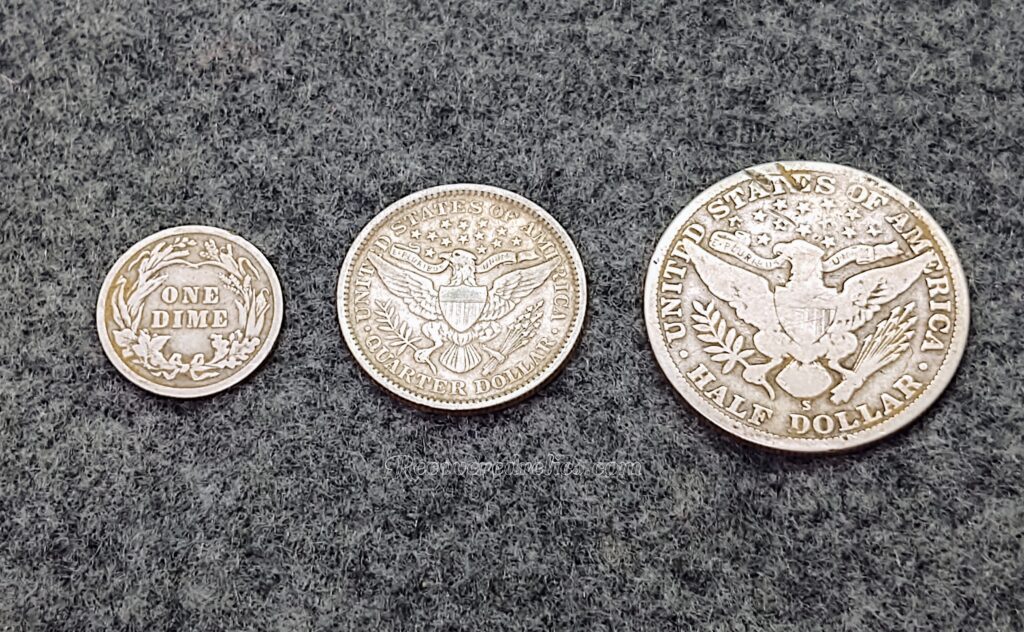
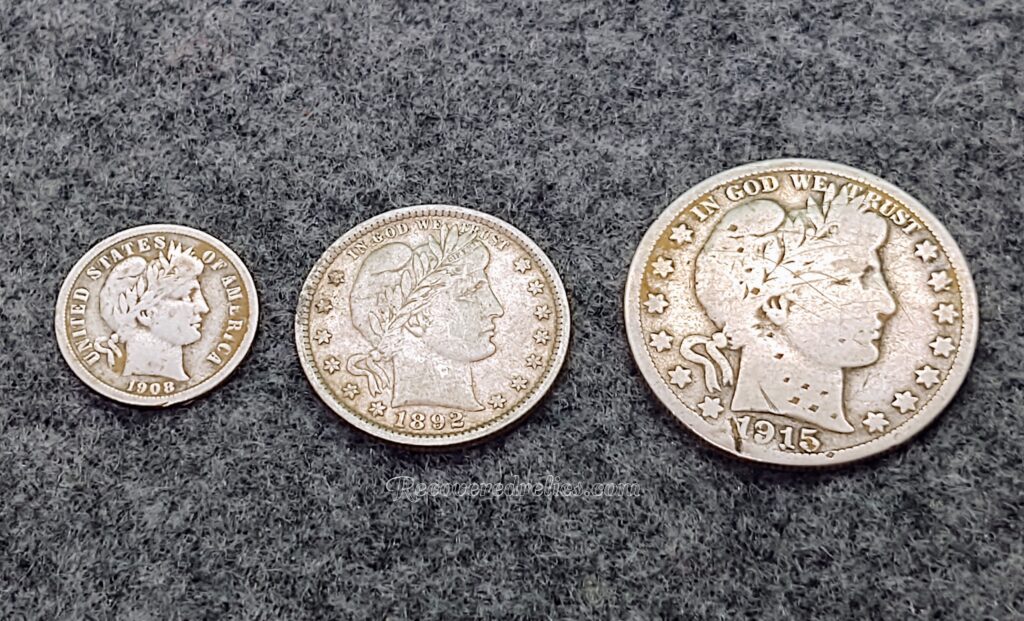

Buffalo Nickel (US Mint)– The Buffalo nickel is a five cent piece that was struck by the United States Mint from 1913 to 1938. It was designed by James Earle Fraser. The obverse features a portrait of a Native American Indian and the reverse has an image of a buffalo or bison.
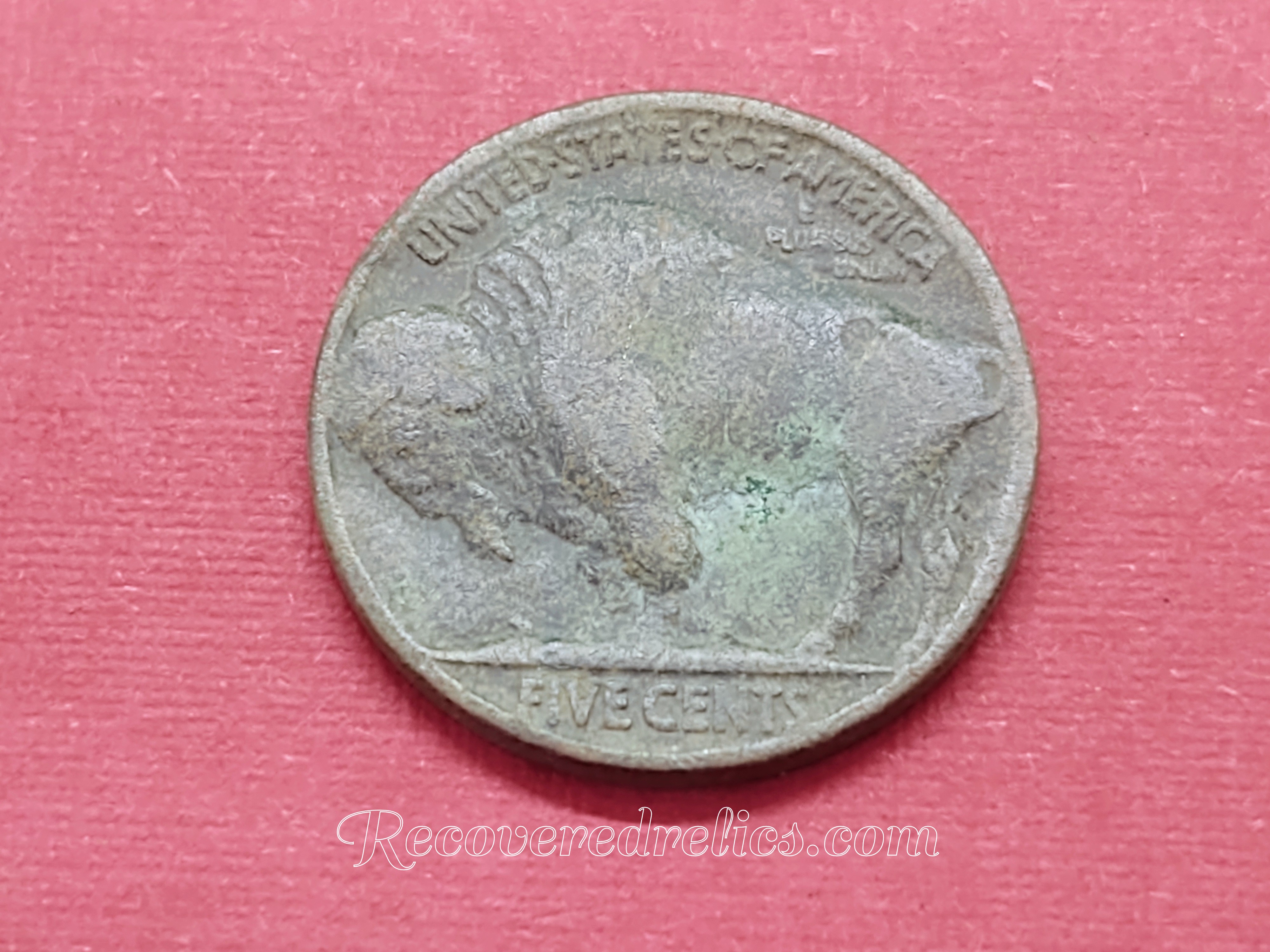
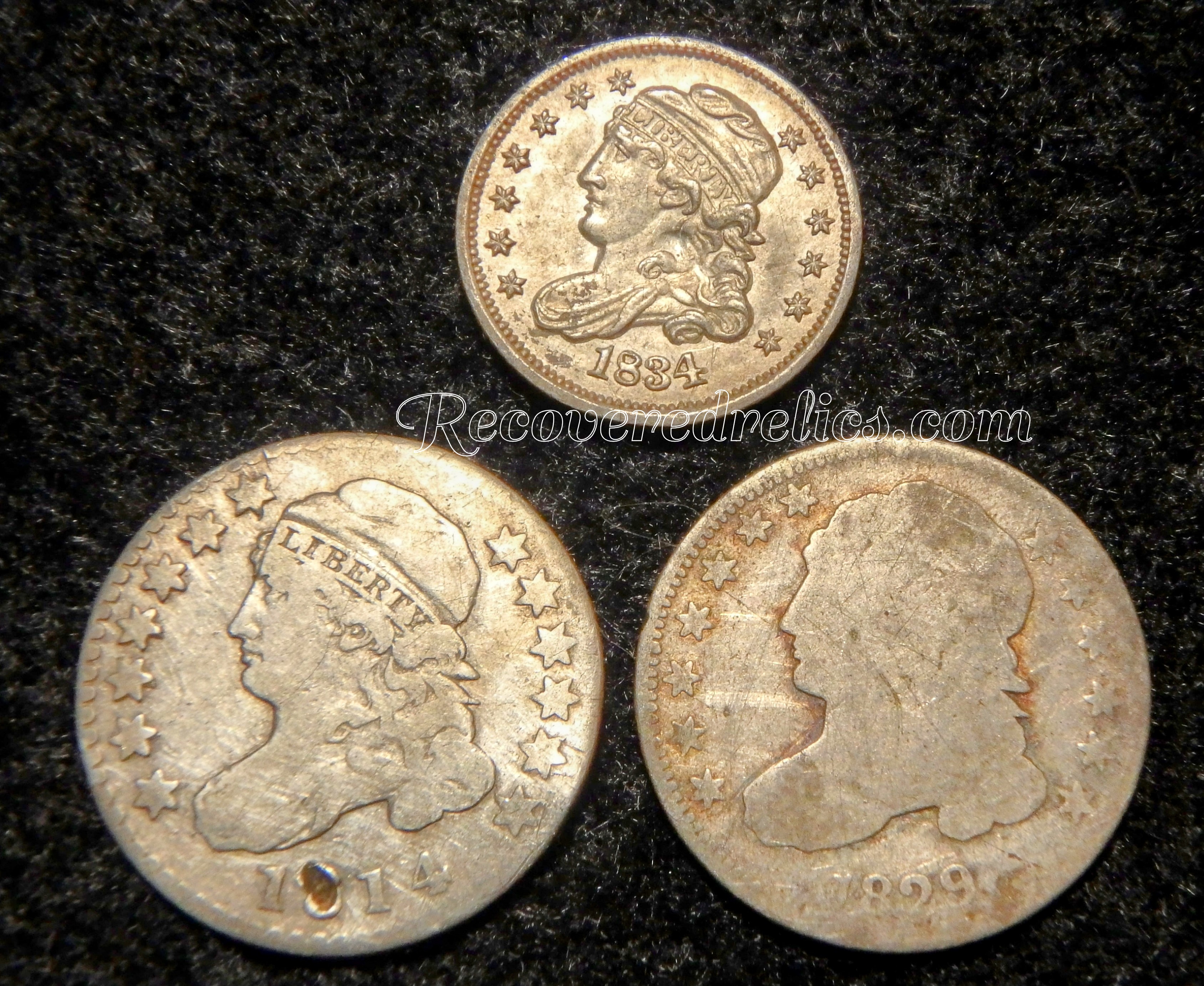
Capped Bust Silver Coinage (US Mint)- The capped bust series consists of a half dime, dime, quarter, and half dollar. The half dollar was minted by the US from 1807 to 1839. The quarter was minted from 1815 to 1838. The dime was minted from 1809 to 1837 and the half dime was minted from 1829 to 1837.
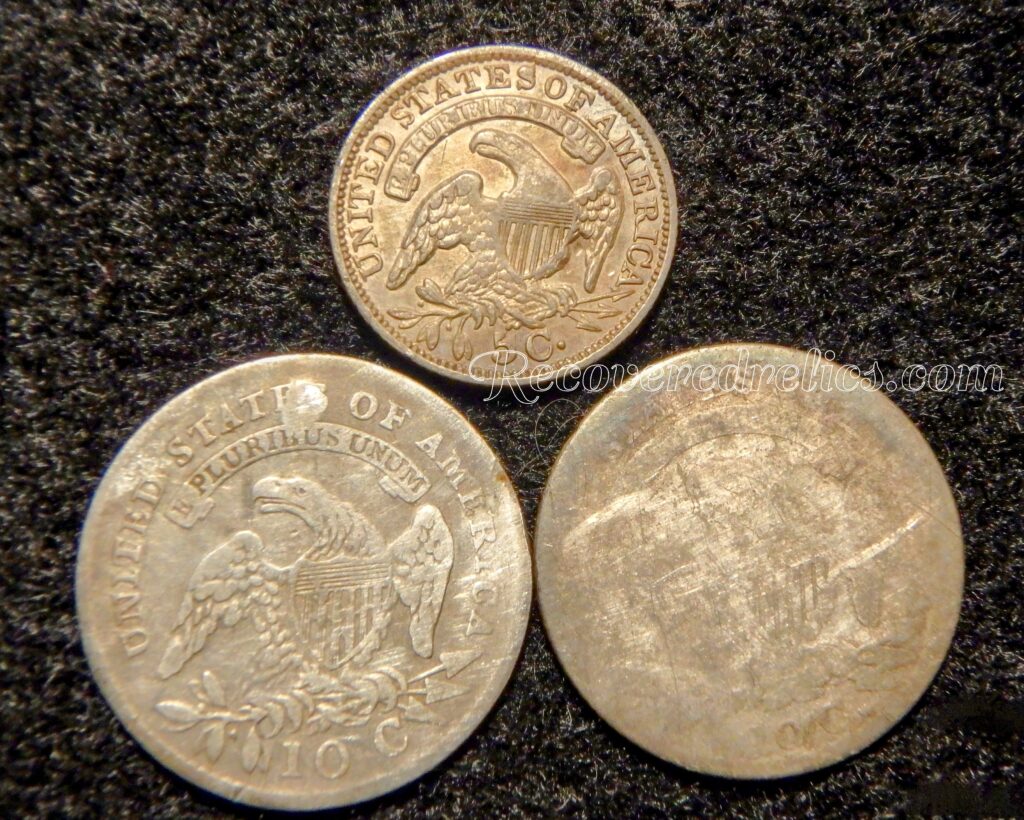
Flying Eagle Cent (US Mint)– The Flying Eagle cent is a one cent piece struck by the US Mint as a pattern coin in 1856 and for circulation in 1857 and 1858. The coin was designed by James B. Longacre. It was the first small-sized cent coin produced by the United States Mint.
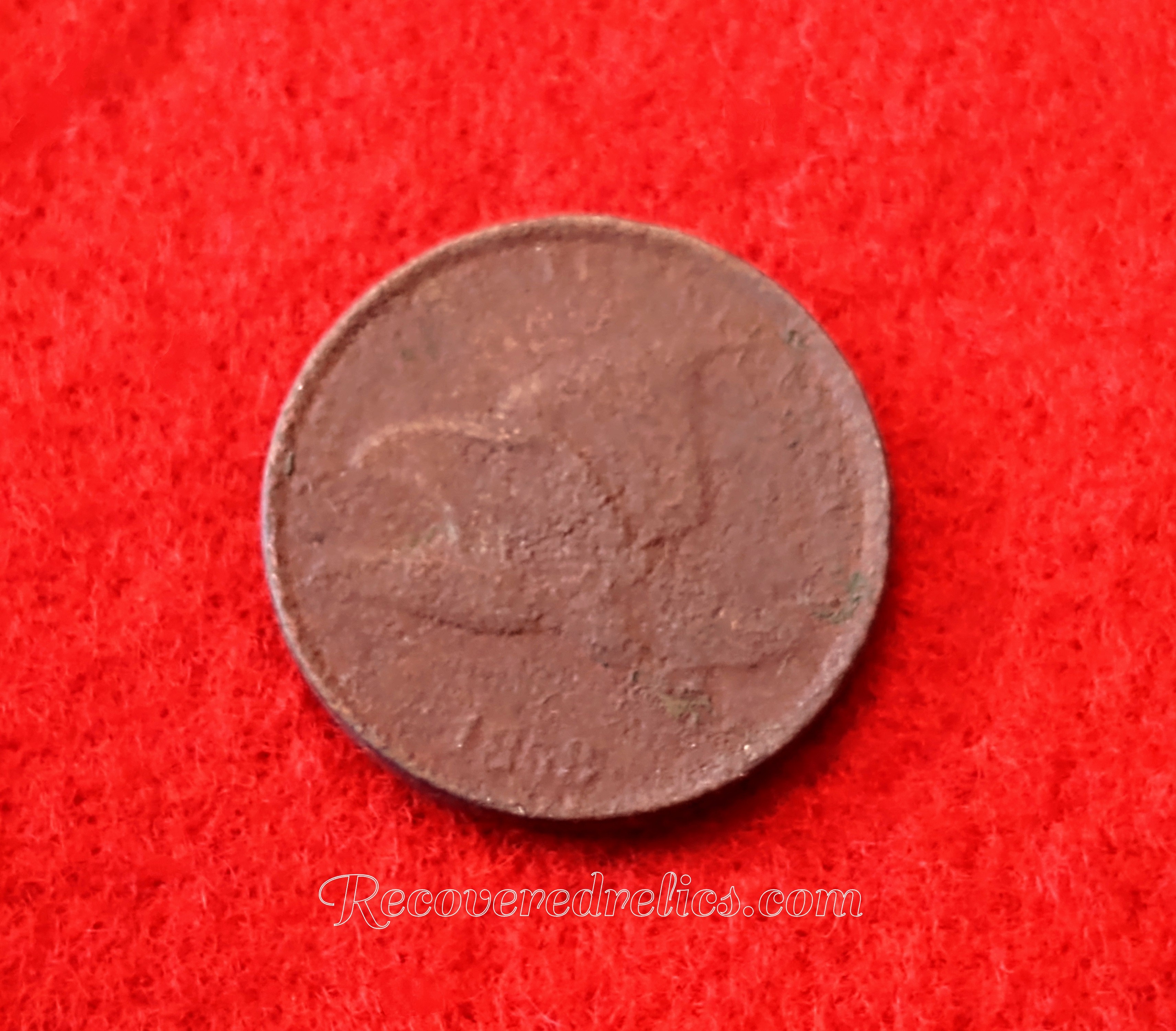
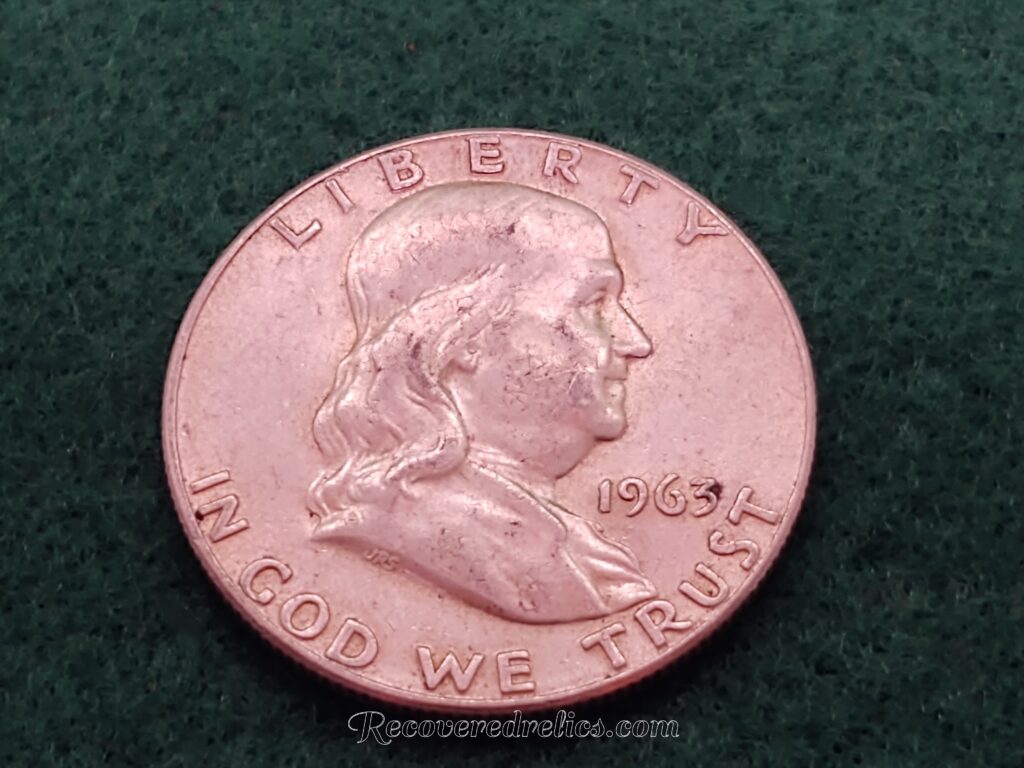
Franklin Half Dollar– This coin was struck by the US Mint from 1948 – 1963. The coin pictures one of our founding fathers Benjamin Franklin on it’s obverse and the Liberty Bell on it’s reverse. The example pictured is a non-dug coin.
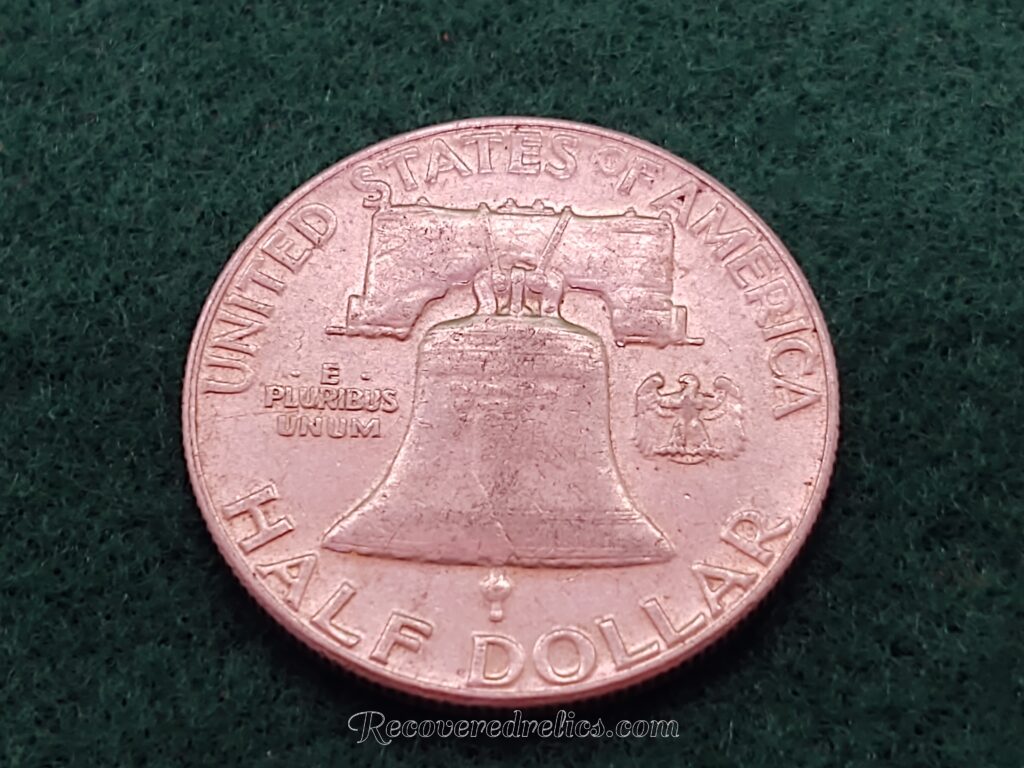
Half Cents (US Mint)– The half cent was the smallest denomination of United States coin ever minted. It was first minted in the year 1793 and last minted in 1857. It was minted with five different designs; Liberty Cap Facing Left (1793), Liberty Cap Facing Right (1794 -1797), Draped Bust (1800-1808), Classic Head (1809-1836), and Braided Hair (1840 -1857).

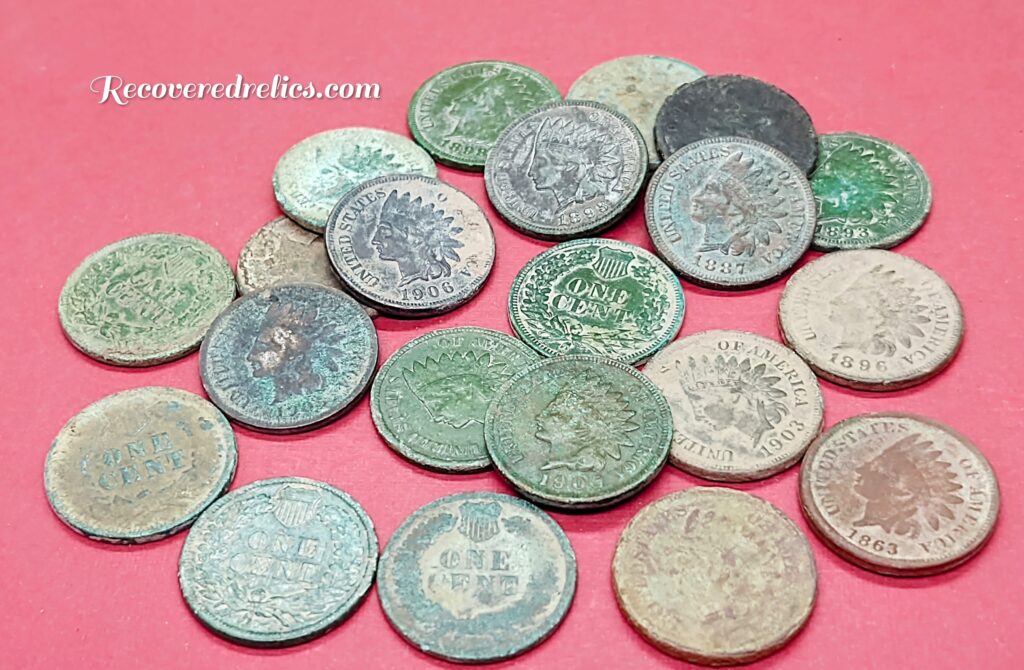
Indian Head Cents (US Mint)– The Indian Head cent is a one-cent coin that was produced by the United States Mint from 1859 to 1909. It was designed by James Barton Longacre. The obverse features Liberty wearing a feathered headdress, while the reverse depicts a wreath encircling the words “one cent.” The composition of these coins evolved from 88% copper and 12% nickel (1859-1864) to 95% copper and 5% tin and zinc (1864-1909).
Large Cents (US Mint)– Large cents are one cent piece coins that were minted in the US between the years 1793 -1857. The large cent was minted every year from 1793 to 1857 except for the year 1815. They can be categorized into 7 distinct groups.
Flowing Hair cents, chain reverse (1793)
Flowing Hair cents, wreath reverse (1793)
Liberty Cap cents (1793–1796)
Draped Bust cents (1796–1807)
Classic Head cents (1808–1814)
Matron Head Coronet cents (1815–1839)
Braided Hair Coronet cents (1839–1857)

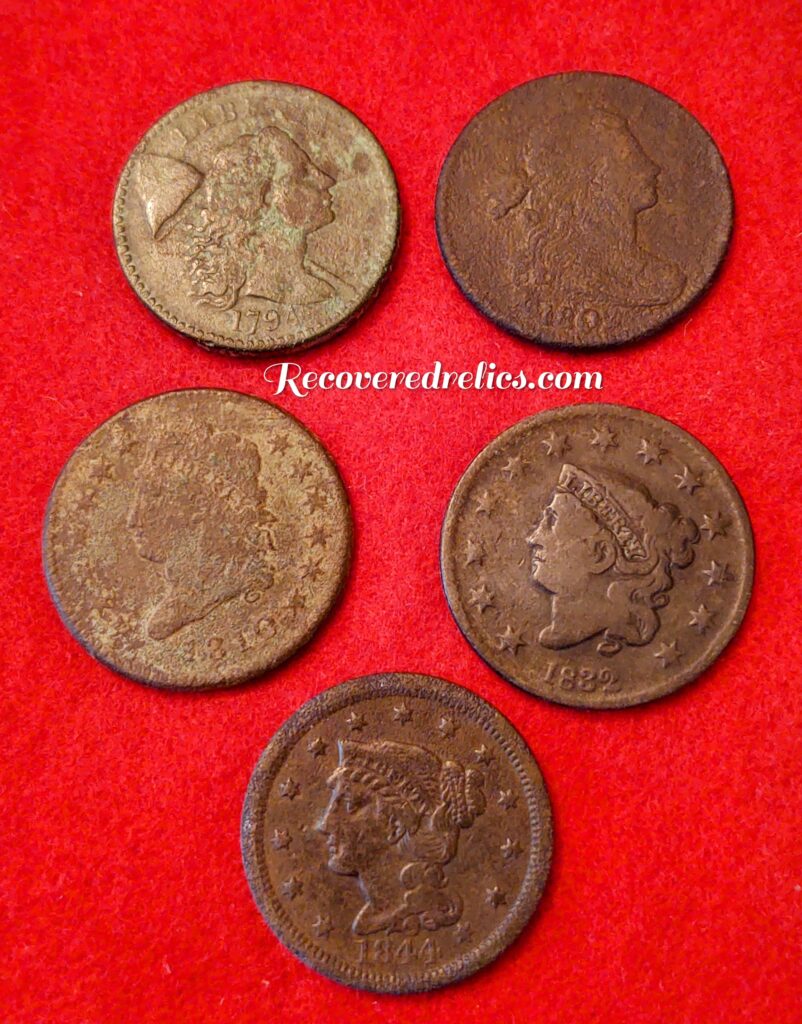
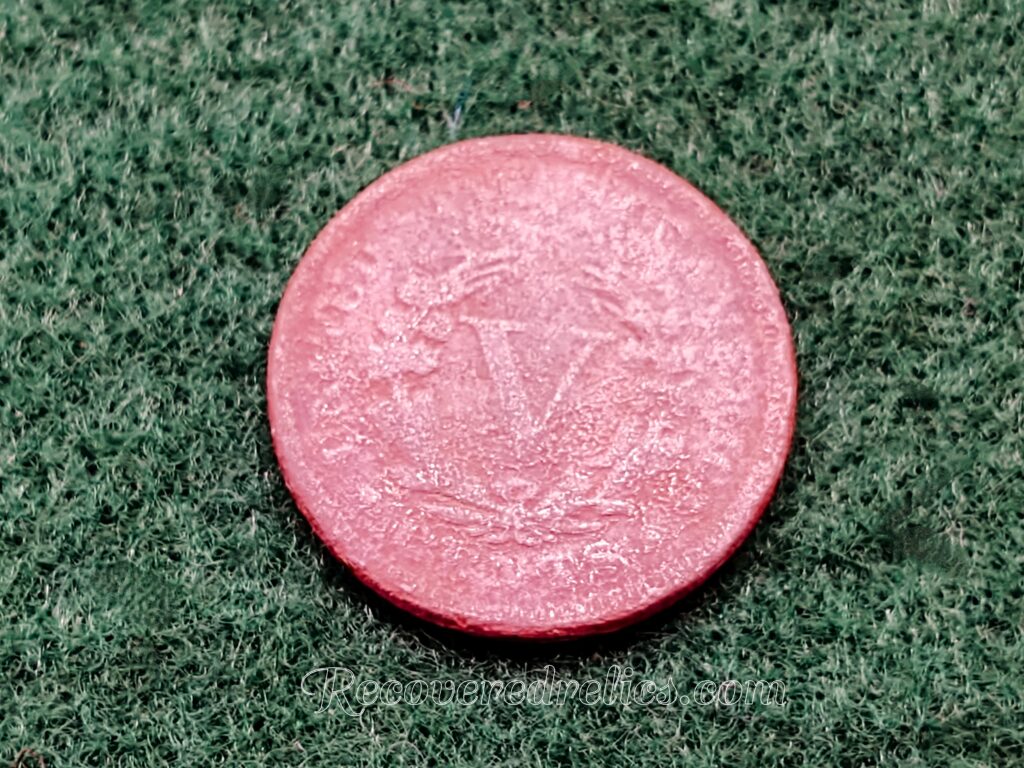
Liberty Head/ V Nickel (US Mint)– The Liberty Head/ V Nickel is a five cent piece that was minted for circulation by the U.S. Mint from 1883 to 1913. It gets it’s V Nickel name from the coins reverse design.
Morgan Silver Dollar (US Mint)– The Morgan dollar is a United States dollar coin minted between the years 1878 to 1904. The coin was designed by George Thomas Morgan. The coin pictured is a non-dug example.
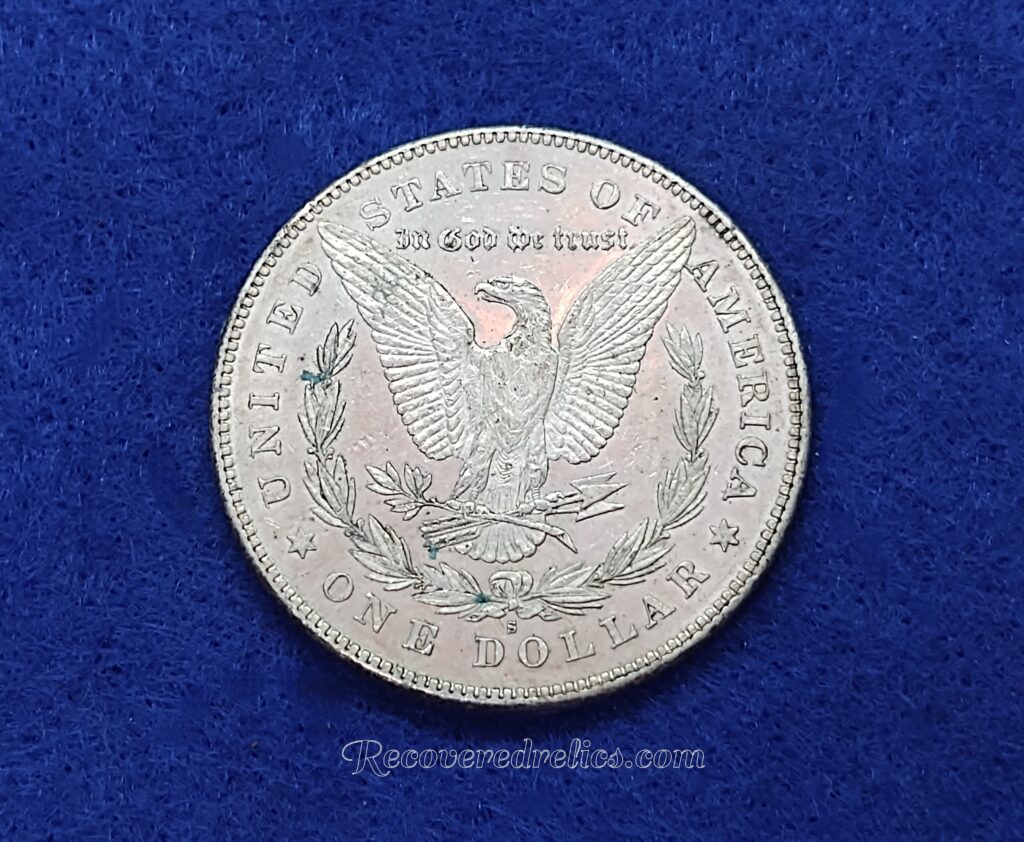
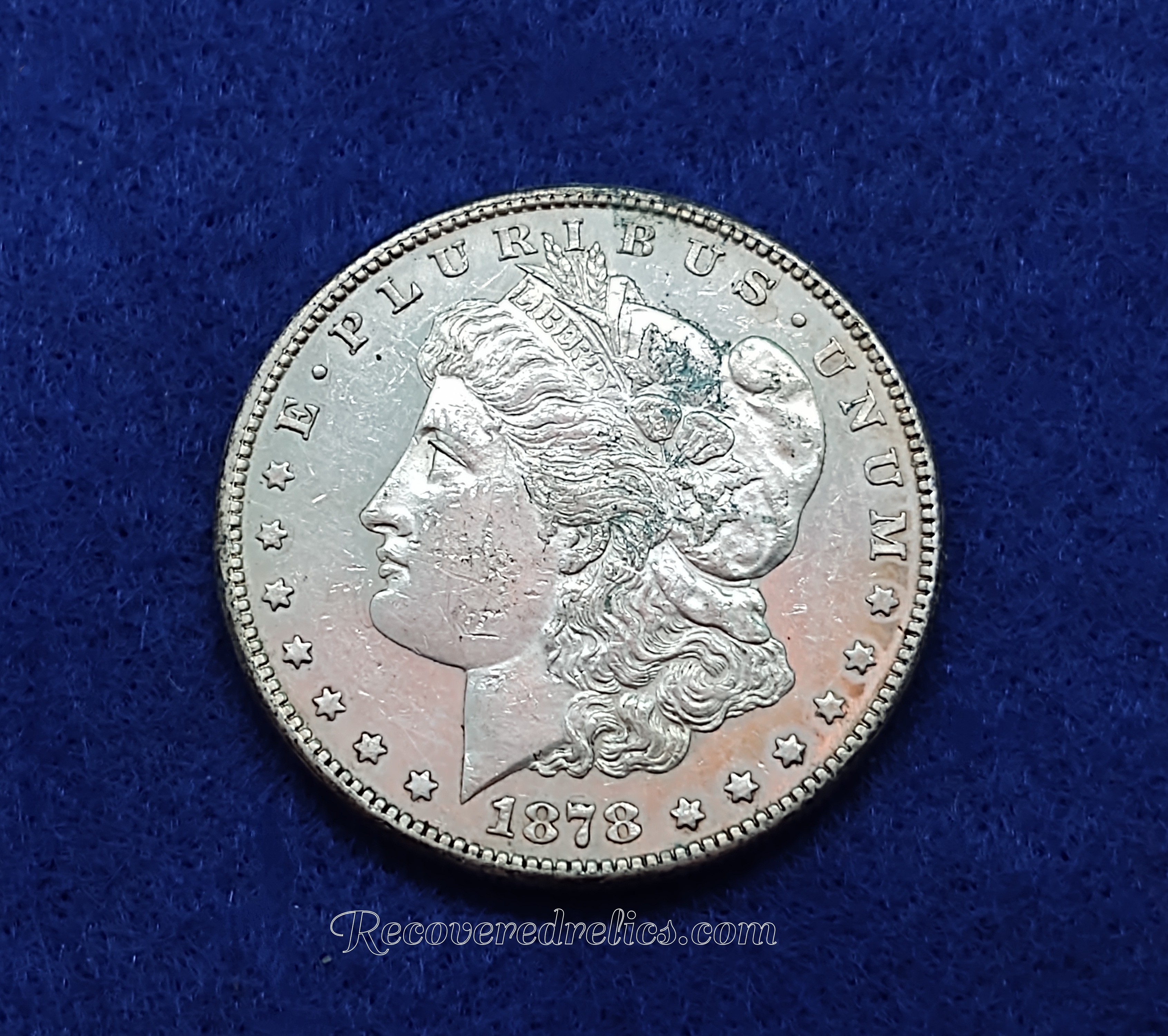
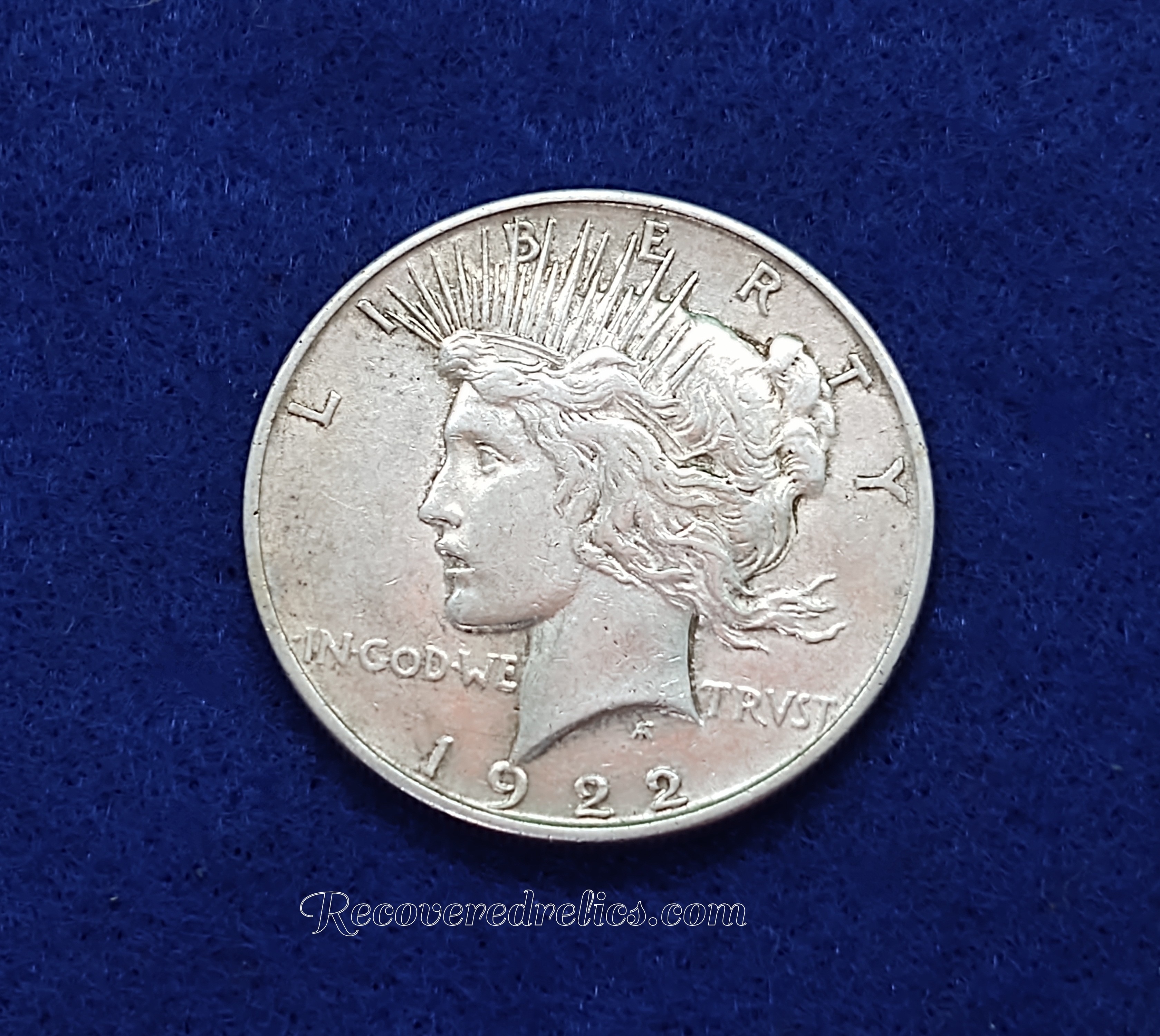
Peace Dollar (US Mint)– Peace dollars were minted for circulation from 1921 to 1928 and 1934 to 1935. The coin was designed by Anthony de Francisci. The Peace Dollar was the last United States dollar coin to be struck for circulation in silver. The coin pictured is a non-dug example.
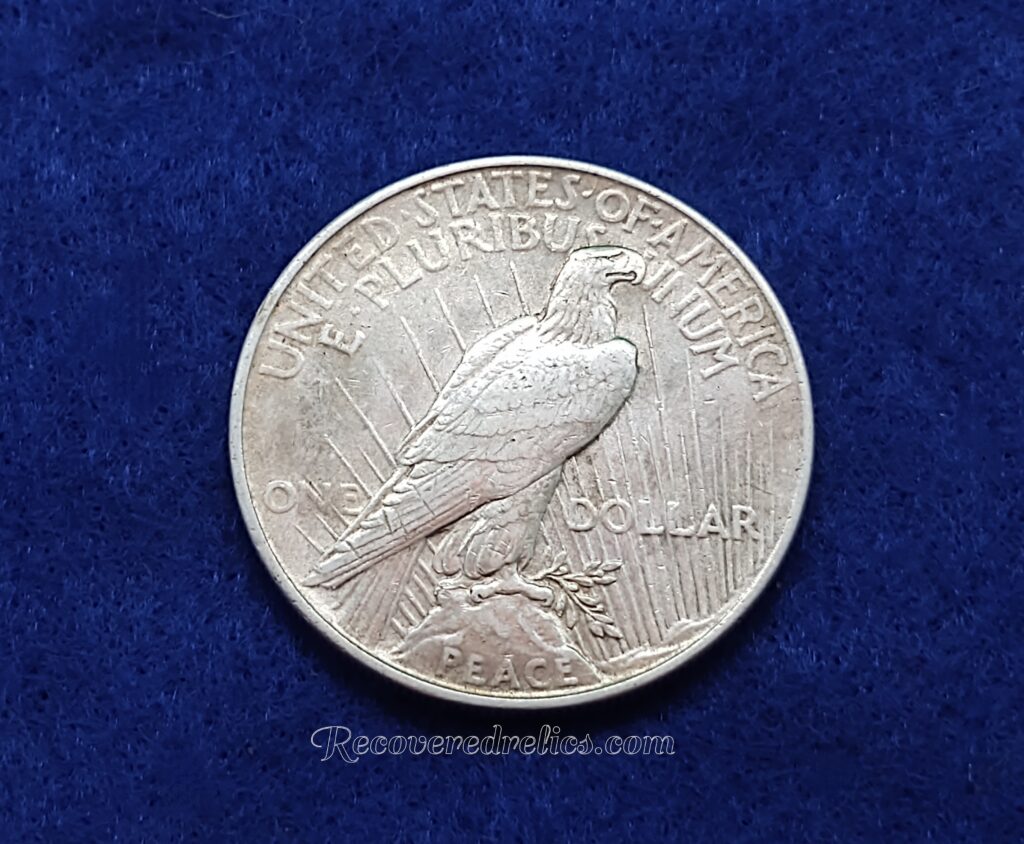
Seated Liberty (US Mint) Coin Series– (1836 – 1891) There are six denominations in the series including the half dime, dime, twenty cent piece (1875-1878) quarter, half dollar, and dollar (1836-1873). The obverse consists of the figure of Lady Liberty in a flowing dress and seated upon a rock. The date of the coin appears on the bottom below Liberty. The reverse design of Seated Liberty coins depended on the denomination. The reverse on the half dime and dime consistently featured a wreath around the words “half dime” or “one dime”. On quarter, half dollar, and silver dollar coins the reverse featured an eagle about to take flight, with a striped shield upon its breast. The reverse on the the twenty cent piece features an eagle grasping three arrows and an olive branch.
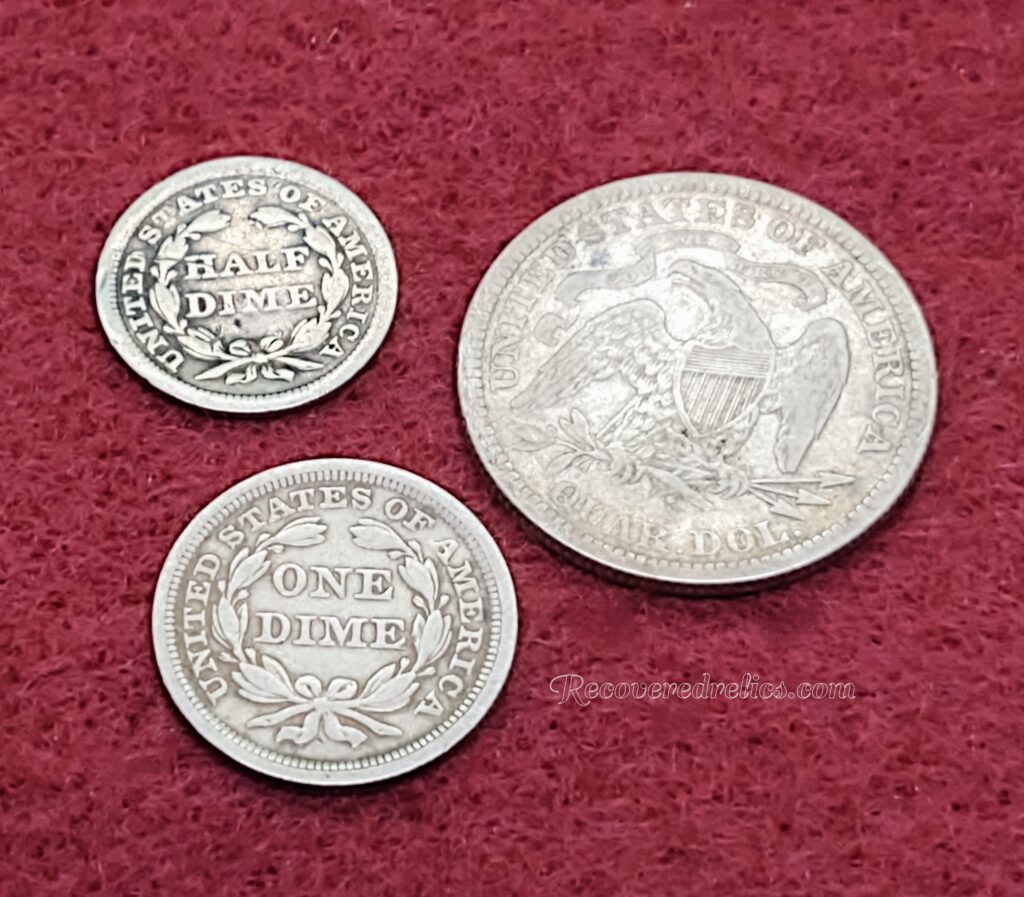
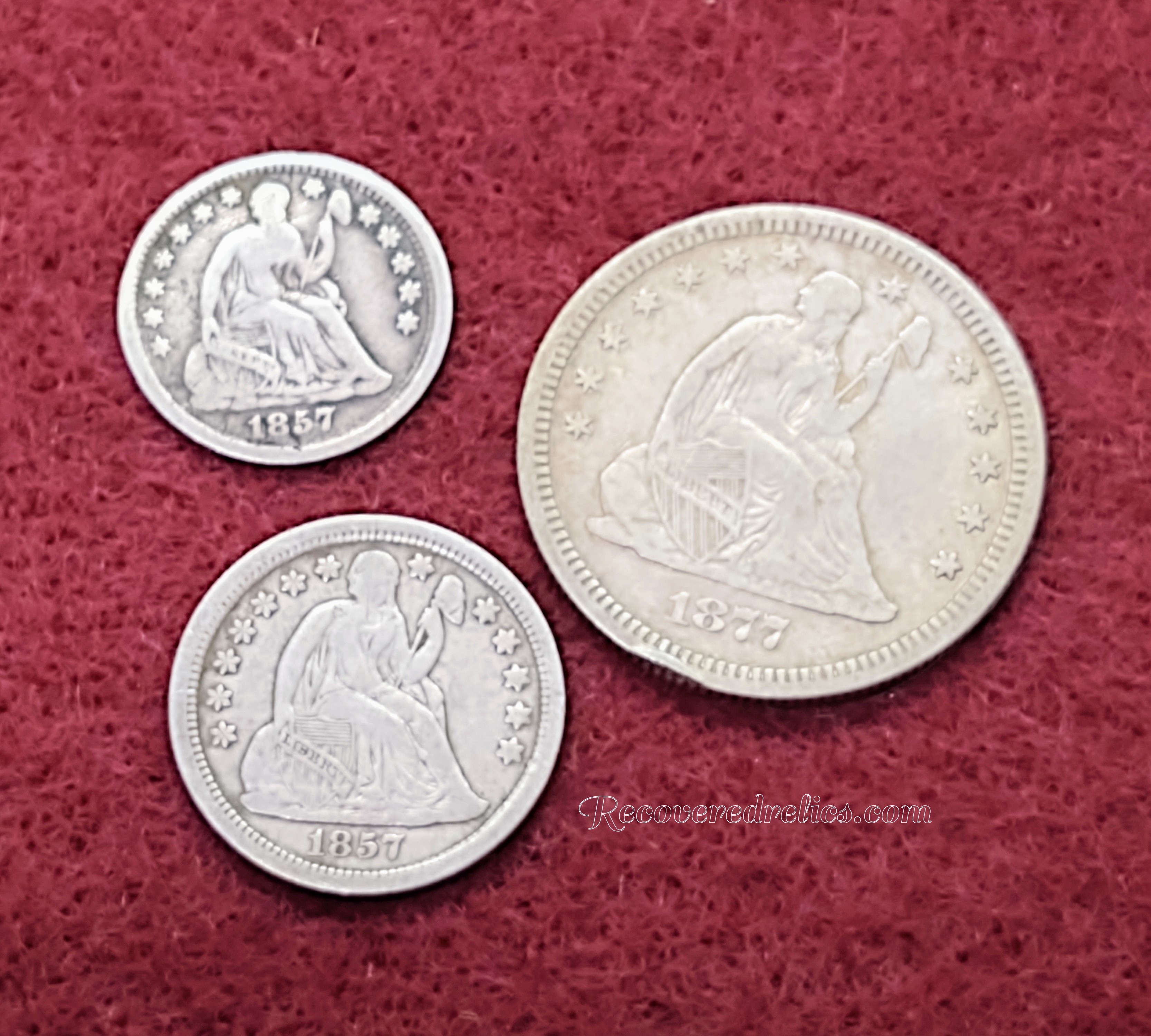

Shield Nickel (US Mint)– (1866-1883) The Shield nickel was the first United States five cent piece to be made out of copper-nickel. The coin was designed by James B. Longacre.
Standing Liberty Quarter (US Mint)– The Standing Liberty quarter is a 25 cent coin which was struck by the US Mint from 1916 through 1930. It succeeded the Barber quarter. Many of the Standing Liberty quarters we find detecting don’t have a visibly clear date. While in circulation, the coin’s date wore away rather quickly. The Mint engravers modified the design of the coin in 1925 in order to address the issue. The Standing Liberty quarter was discontinued in 1931, a year in which no quarters were struck by the US Mint.
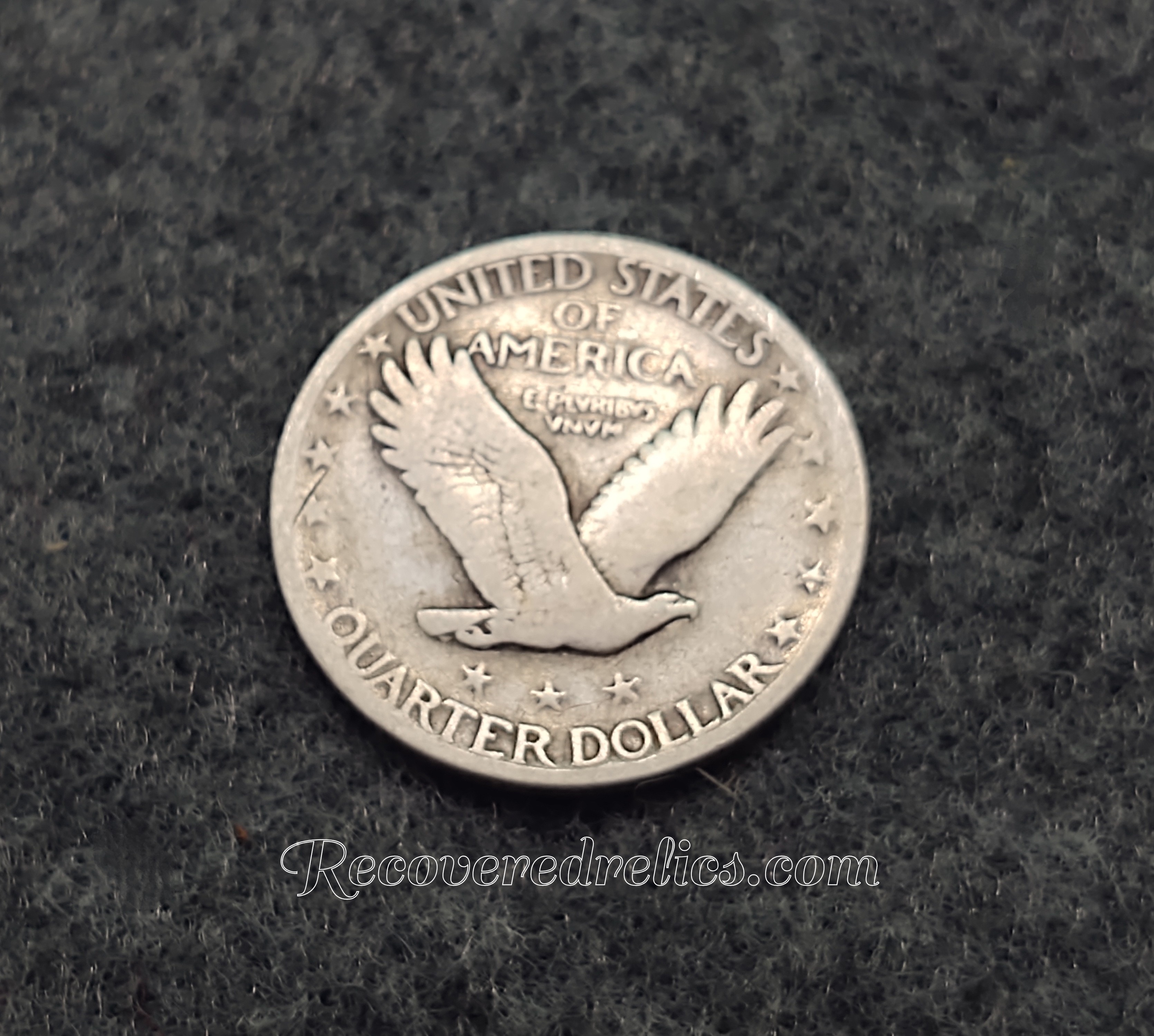
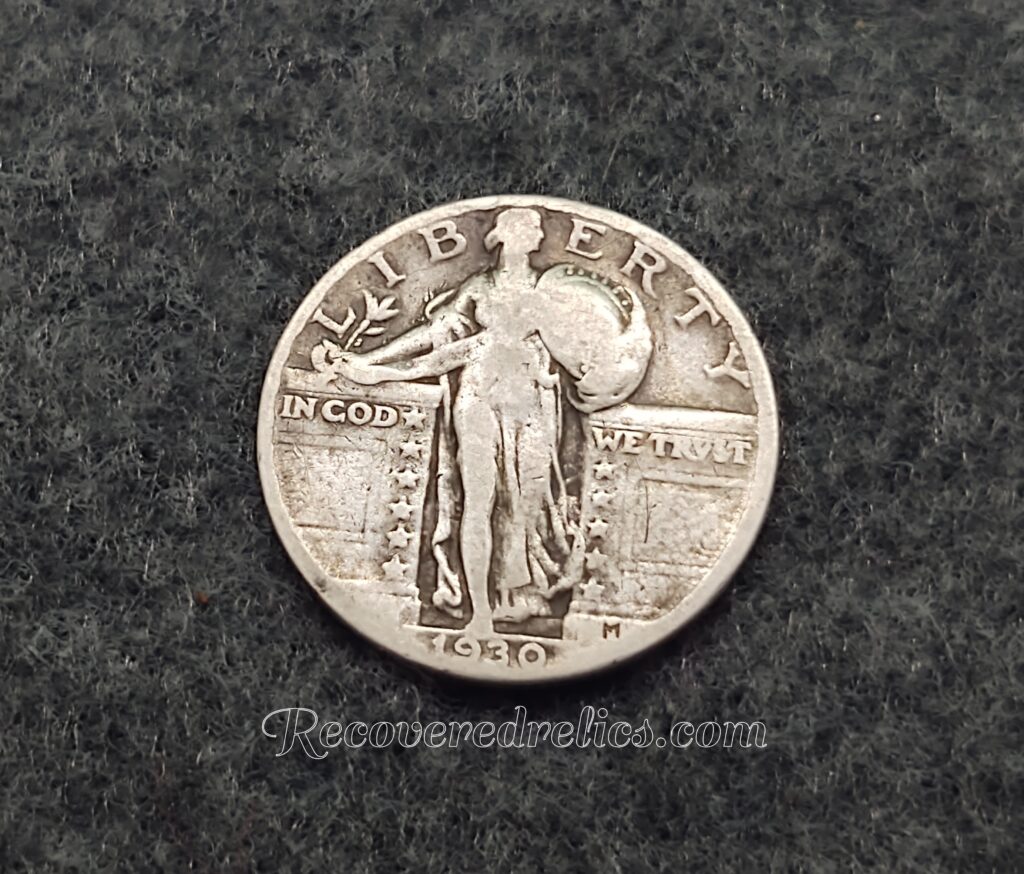
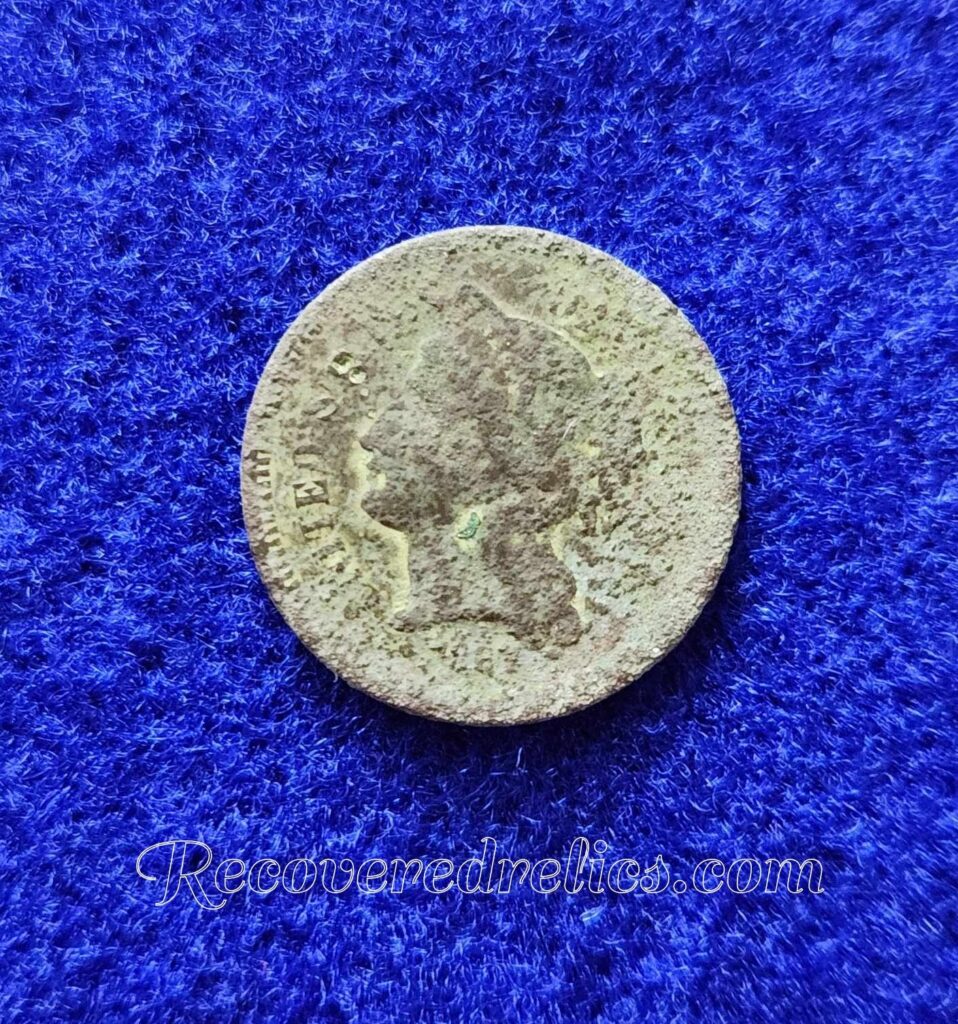
Three Cent Nickel (US Mint)– The Copper/ Nickle Three Cent Piece was minted from 1865- 1889. It was designed James Barton Longacre. Initially it circulated well but it became less popular when the five cent nickel was introduced in 1866.
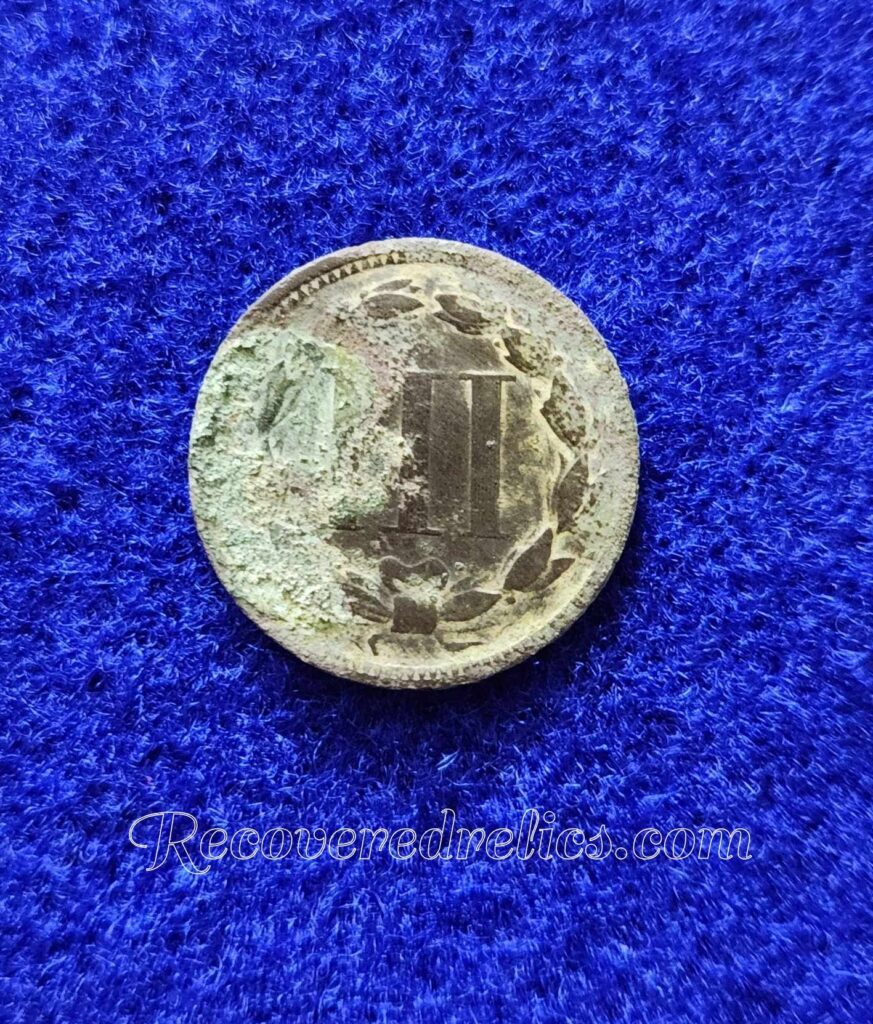
Three Cent Silver/ Trime (US Mint)– The Three Cent Silver coin was struck by the US Mint for circulation from 1851 to 1872 and as a proof coin in 1873. It was designed by James Barton Longacre.
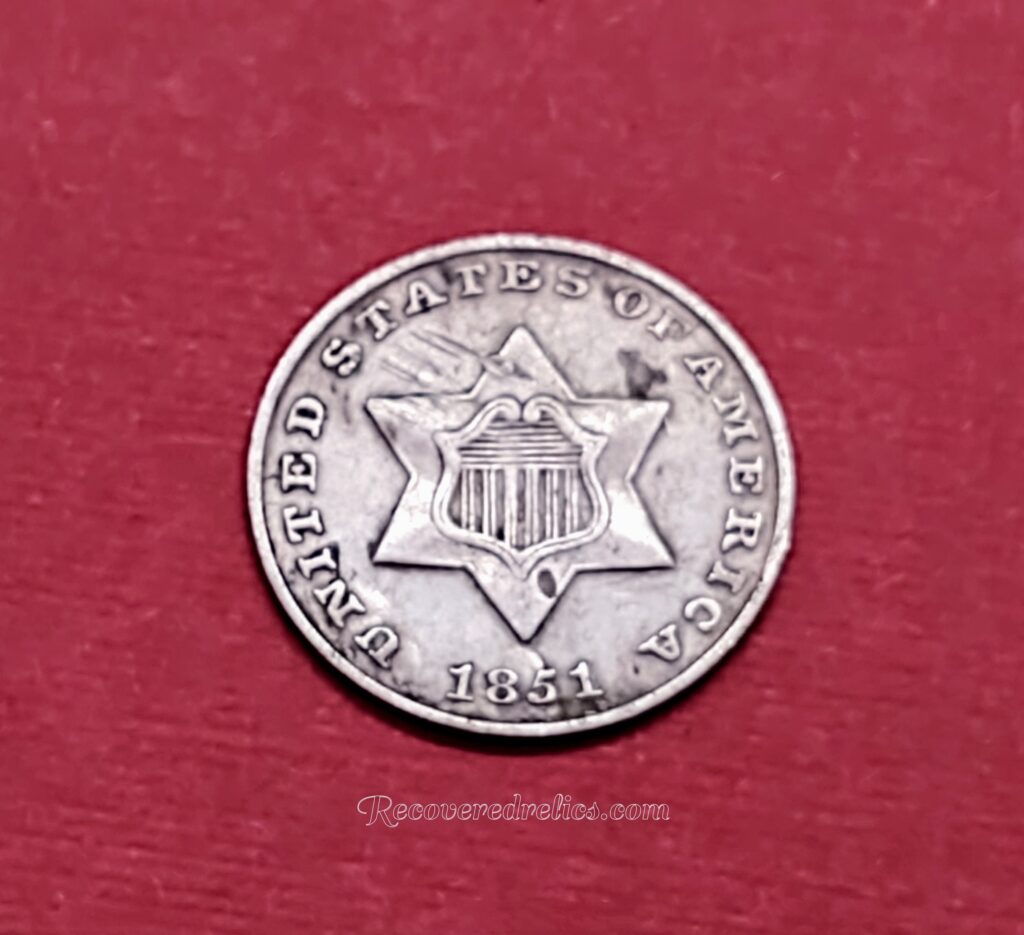
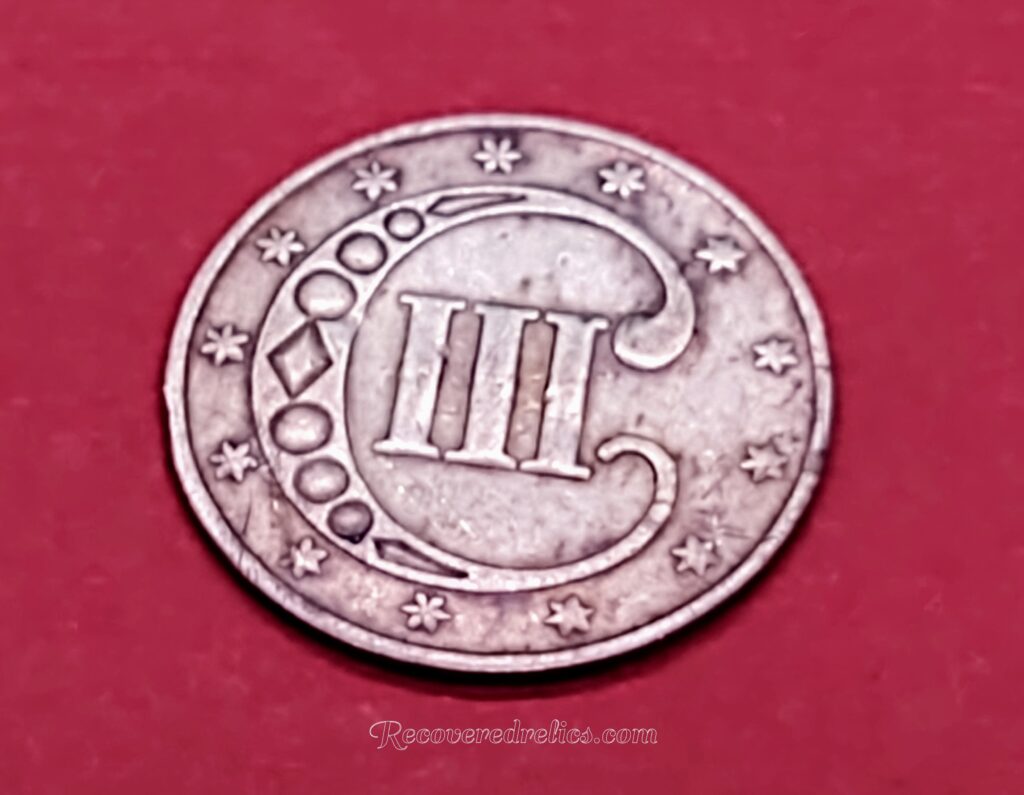
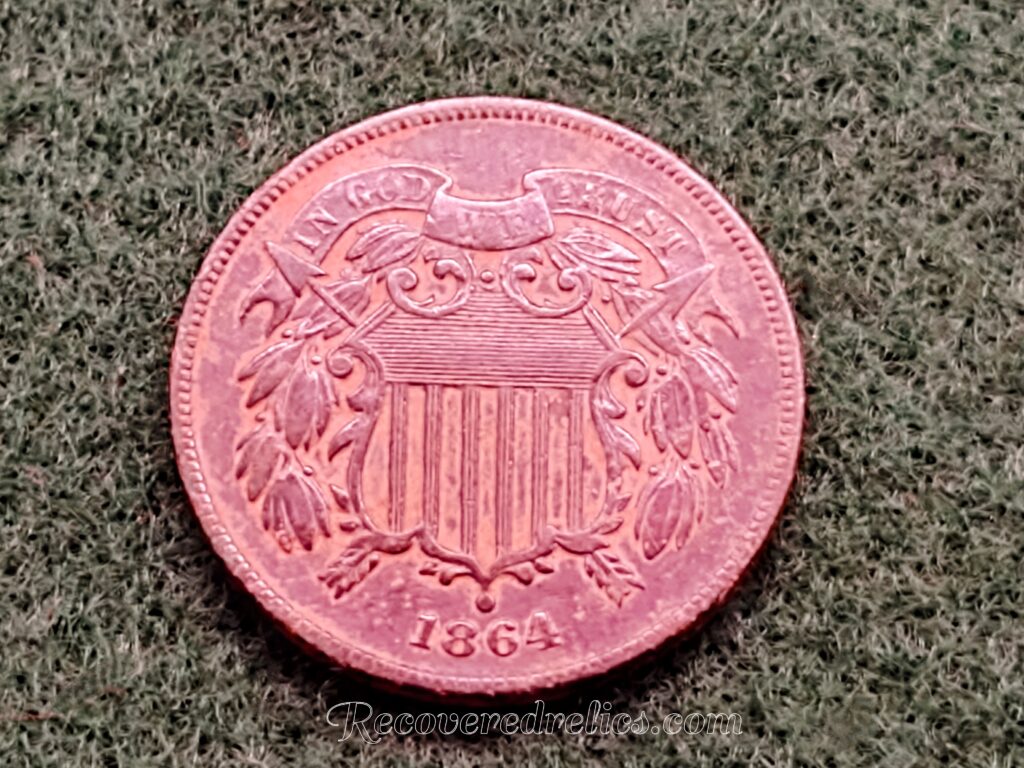
Two Cent Piece (US Mint)– The Two Cent Piece was produced by the US mint for circulation from 1864 through 1872. The coin was designed by James B. Longacre. There were decreasing mintages each year of production since other coins such as the nickel proved to be more popular. The two Cent Piece was abolished by the Mint Act of 1873.
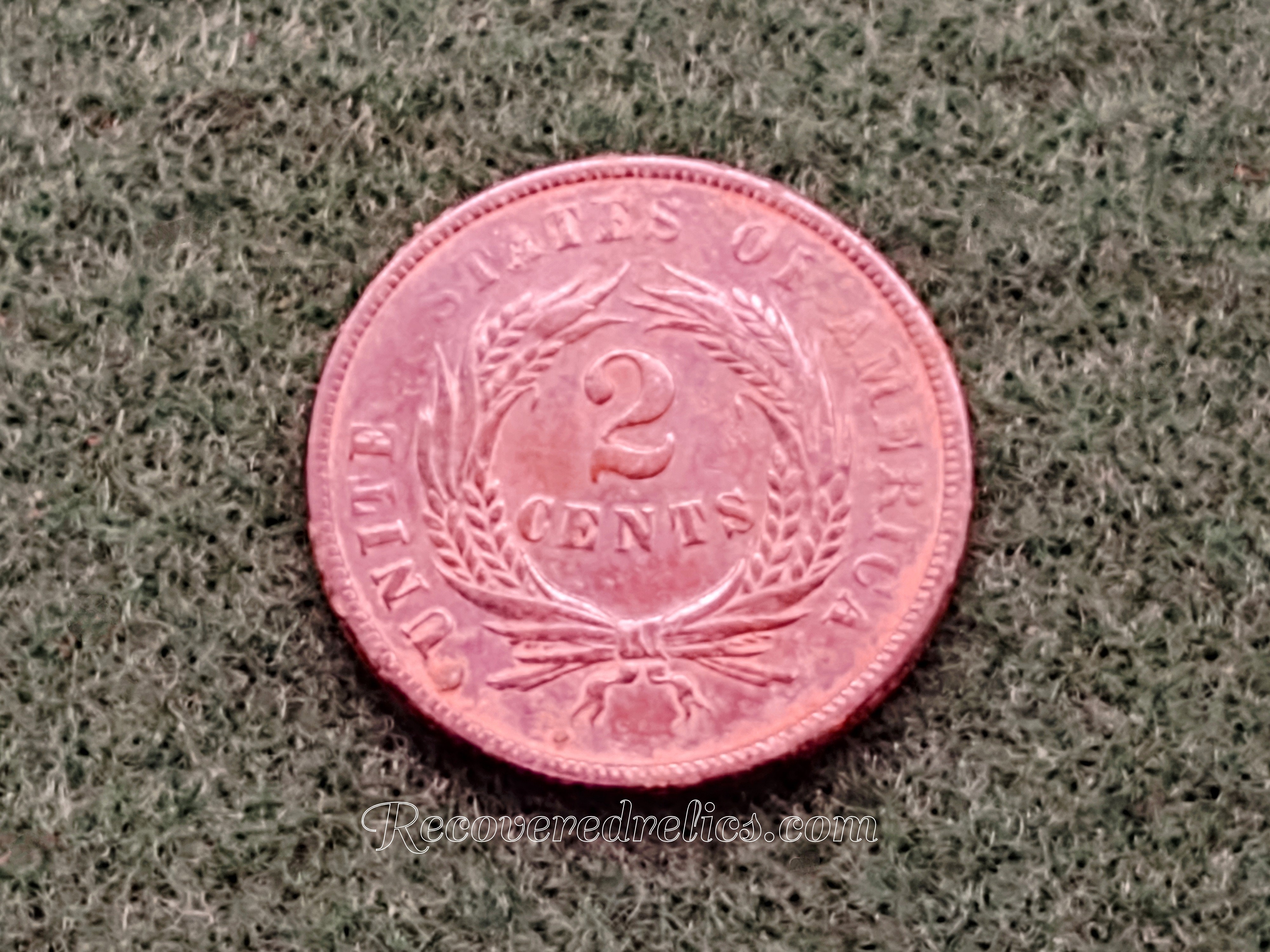
Walking Liberty Half Dollar(US Mint)– The Walking Liberty Half dollar is a fifty cent piece coin that was produced by the US Mint from 1916 to 1947. The coin was designed by Adolph A. Weinman.
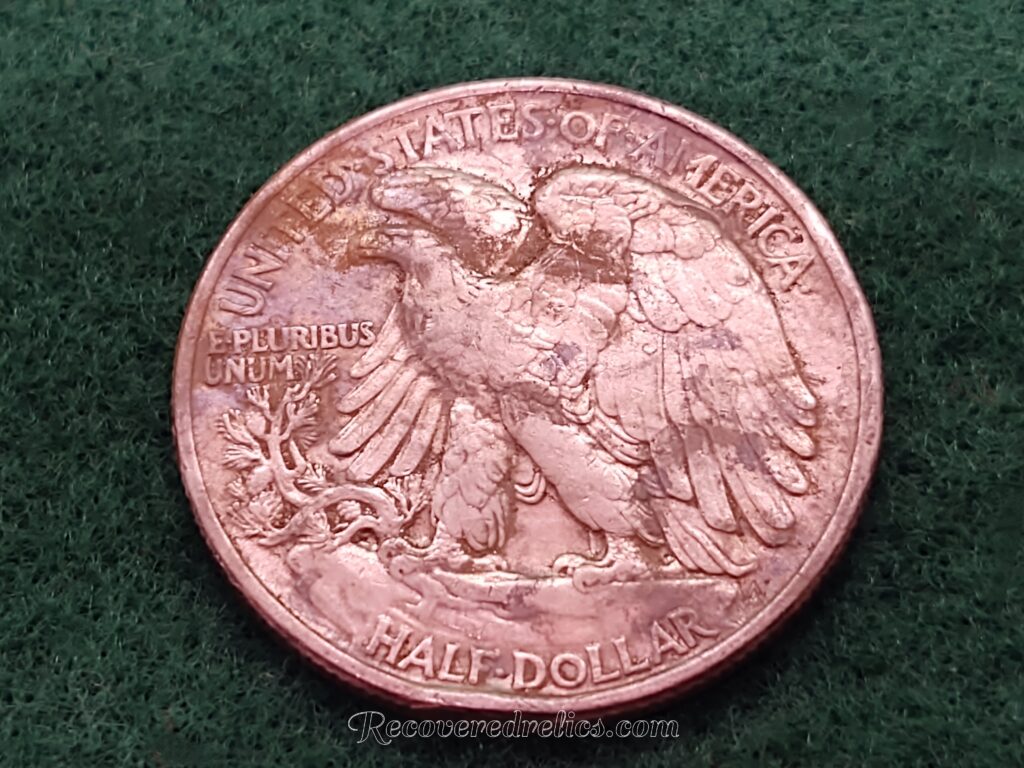
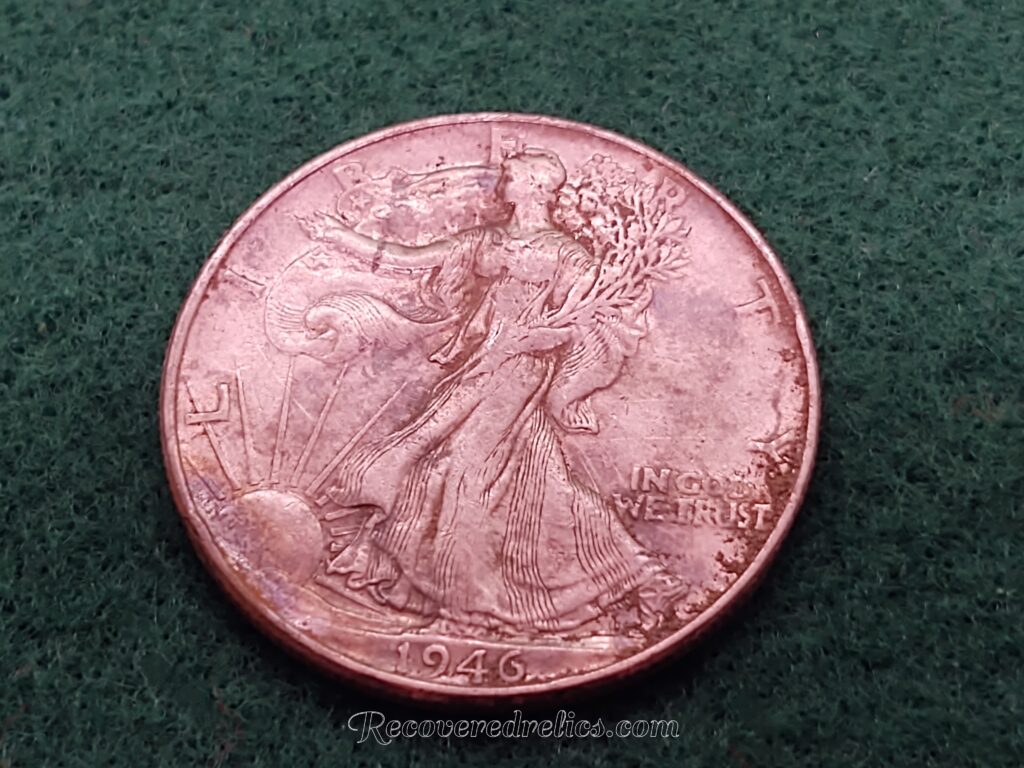
Foreign Currency (Post 1857)– This category encompasses, foreign coins minted after the year 1857, found within the United States. Prior to the Coinage Act of 1857, foreign coins such as the Spanish dollar and its fractions were officially recognized as legal tender in the United States. The Coinage Act of 1857 stripped foreign coins of their legal tender status in the U.S. and mandated that foreign currency, particularly Spanish and Mexican silver, be exchanged for new U.S. currency. It aimed to create a unified national monetary system.
Canadian Large Cent– Canadian large cents were produced between 1858 and 1920. The portrait on the front of the coin changed based on the reigning British monarch at the time of issue. Queen Victoria was featured on the earliest large cents from 1858 to 1901. King Edward VII was featured on the coin from 1902 to 1910. King George V was the final monarch featured on the coin from 1911 to 1920 before the coin’s size was reduced in 1920. The reverse design typically featured a maple leaf wreath surrounding and the denomination “ONE CENT”.


Hardware and Utilitarian Items

Ball and Claw Furniture Leg– A classic decorative element inspired by Chinese mythology where a dragon clutches an ancient jewel. The claw usually resembles an animal’s talon, often an eagle or lion. The motif emerged during the 18th century on furniture pieces. Ball and claw furniture legs became a hallmark of Queen Anne style furniture and later Chippendale styles. There was a resurgence later during the Victorian era. The smaller sized ball and claw leg pictured was most likely from a decorative piece such as a small cabinet, jewelry box, or small accent table given its size.

Barrell Tap and Key– A tap is a valve that controls the flow of liquid from a container. Taps have hollow pipes, stems, and a cross piece or socket. The pipe is the part that brings the liquid towards the tap. The spout is the part that the liquid comes out of. The cross piece or socket is the piece that the stem fits into. The key is comprised of a handle and stem. The handle is the piece which is held to turn the tab on and off. The part below the handle is the stem. Stems usually have a hole through which the liquid flows when the tap is turned.
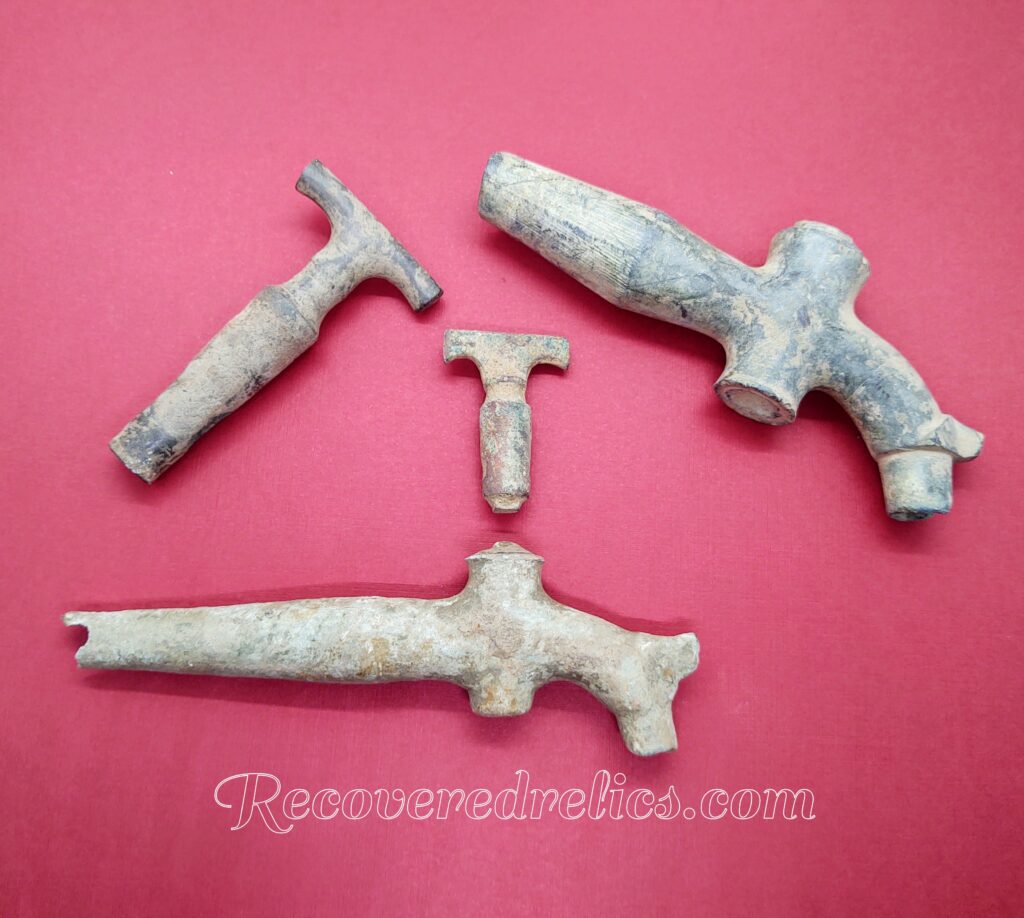
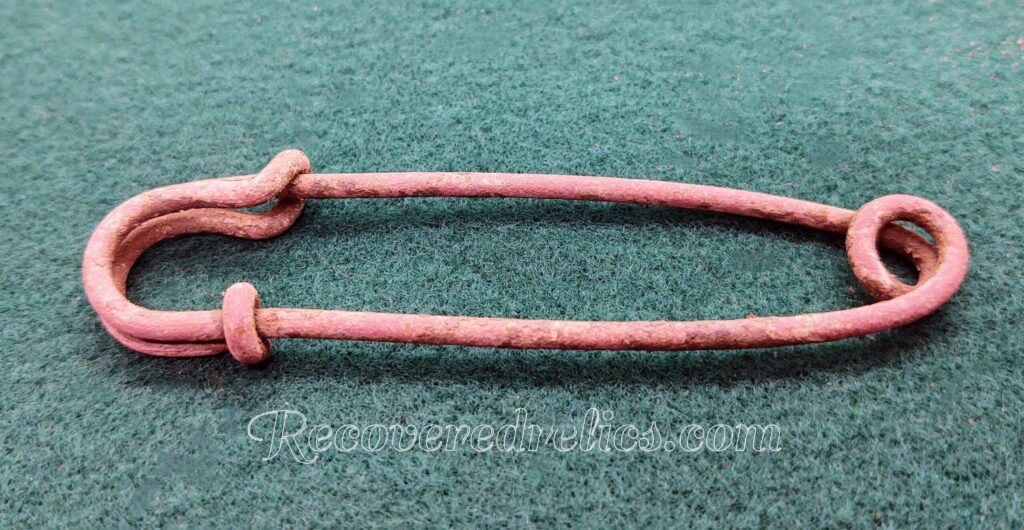
Blanket Pin-Safety pins are divided into numbered size categories. Size 4 or larger are referred to as blanket pins. These large sized safety pins were traditionally used to secure horse blankets.
Carriage/ Horse Buggy Shaft Tip– Metal shaft tips are used to protect the ends of the wooden shaft. The shaft of a horse carriage is the component that connects the carriage to the horse.
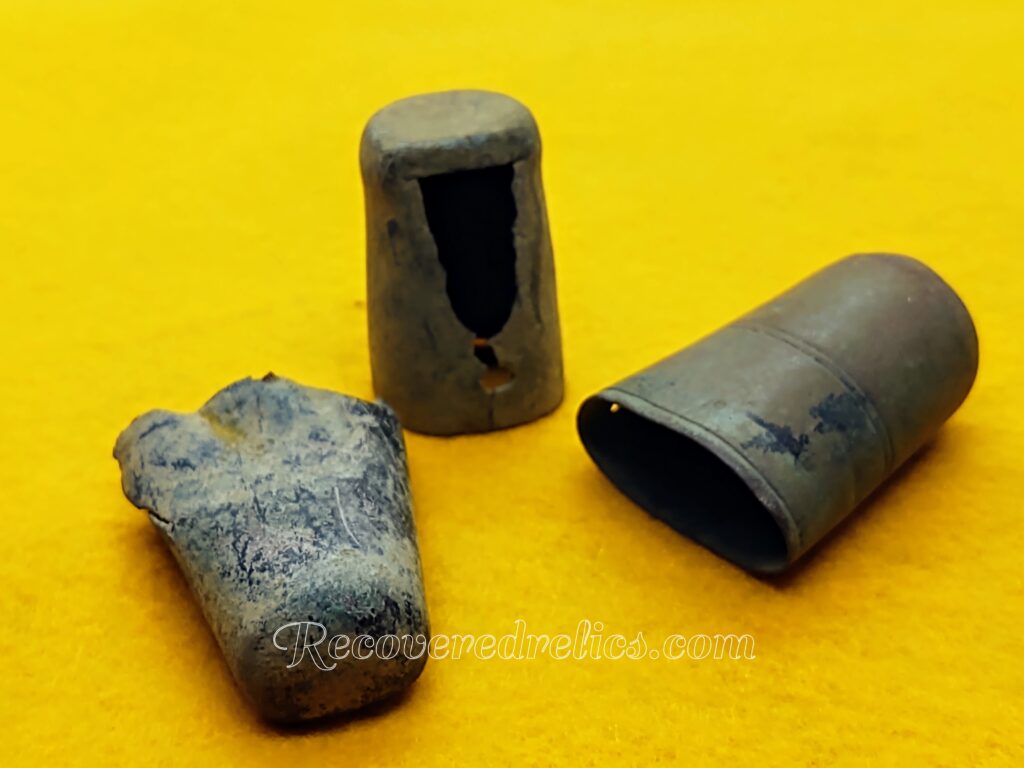

Chest Lifting Handle Plate– A plate would be positioned on each side of a handle. Lifting handles were commonly used on chests and trunks. The design of the handle keeps ones fingers from getting pinched when lifting a chest or trunk. This handle style was popular in the 19th century and is still manufactured today.
Clock Pendulum– Kitchen wall or mantel-style clocks from the late 19th to mid-20th century often featured a swinging pendulum that regulates timekeeping. The precise, steady swing of the pendulum regulates the clock’s gears, allowing them to advance at a consistent rate to track time accurately. These are often made of brass, iron, or lead.


Clock Wheel– Within a mechanical clock, a clock wheel is a gear with more than 20 teeth that works as part of a gear train which transfers power from a mainspring or heavy weight to the hands of the clock. Mechanical clock utilizes a sequence of interlocking gears.
Clock Winding Key– The key winds the clock by pulling up weights via chains, cords or internal springs. These keys were essential and often specific to the clockmaker. The key allowed the owners to wind the clock so it continued to keep time.
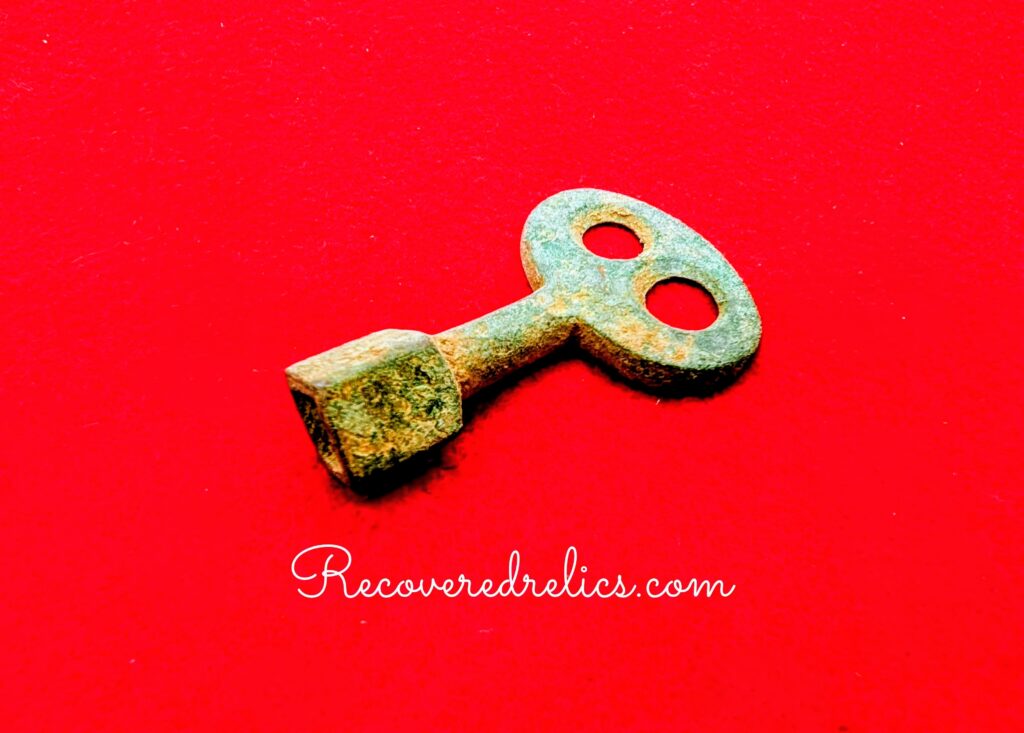
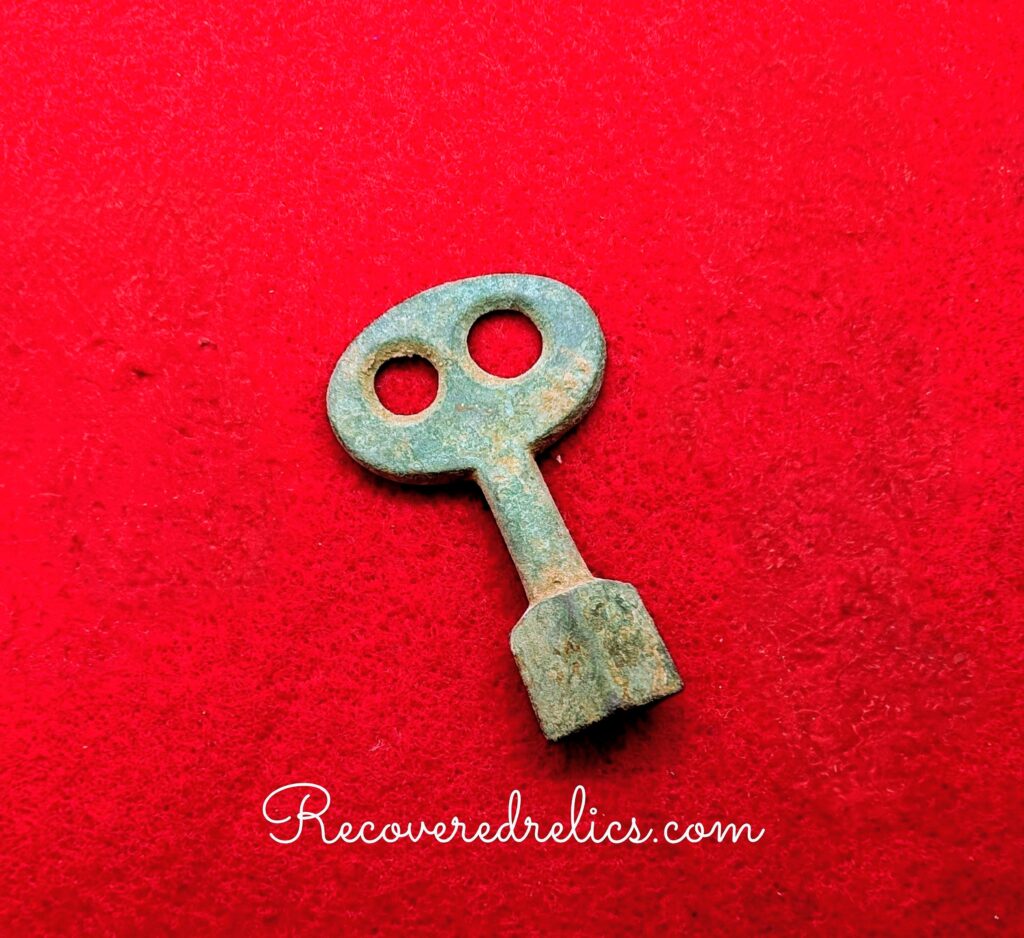
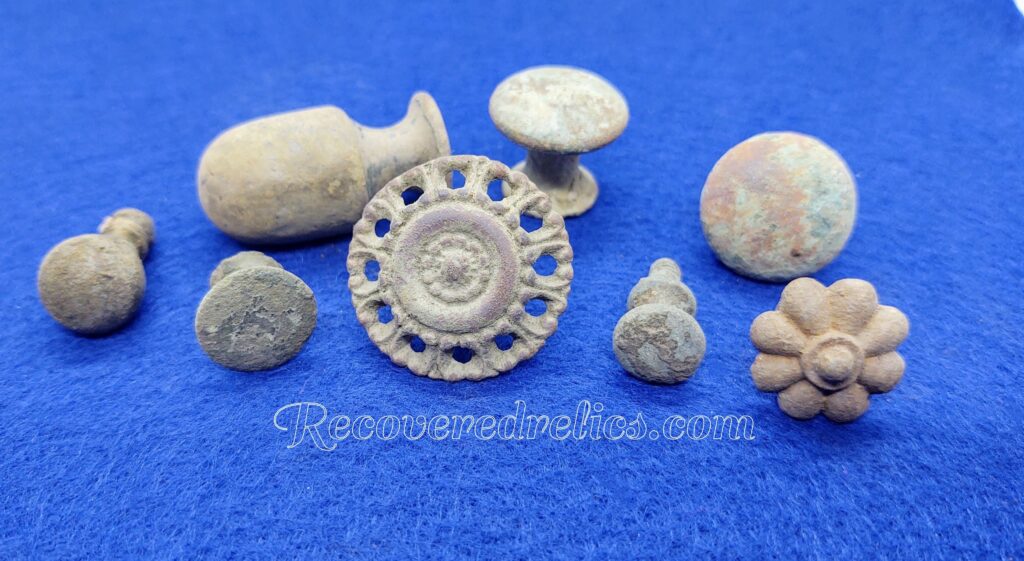
Drawer Pulls– A handle for pulling open a drawer. They come in a vast number of different sizes, styles, and designs.
Drawer Drop Pulls– Drawer drop pulls are a distinctive type of hardware where the handle hangs vertically and can be lifted to pull the drawer open. The items pictured are the pendant section or part of the drawer drop pull. These “pendant” style pulls came in a variety of shapes and often featured a swivel joint that allowed the drawer handle to move. This style drawer pulls were ideal for smaller drawers. They are frequently found broken or detached.
Teardrop-shaped drawer drop pulls were extremely popular and are primarily associated with two distinct historical time periods: the William & Mary period from 1680–1730 and the Renaissance Revival / Late Victorian era from 1870’s–1890’s.


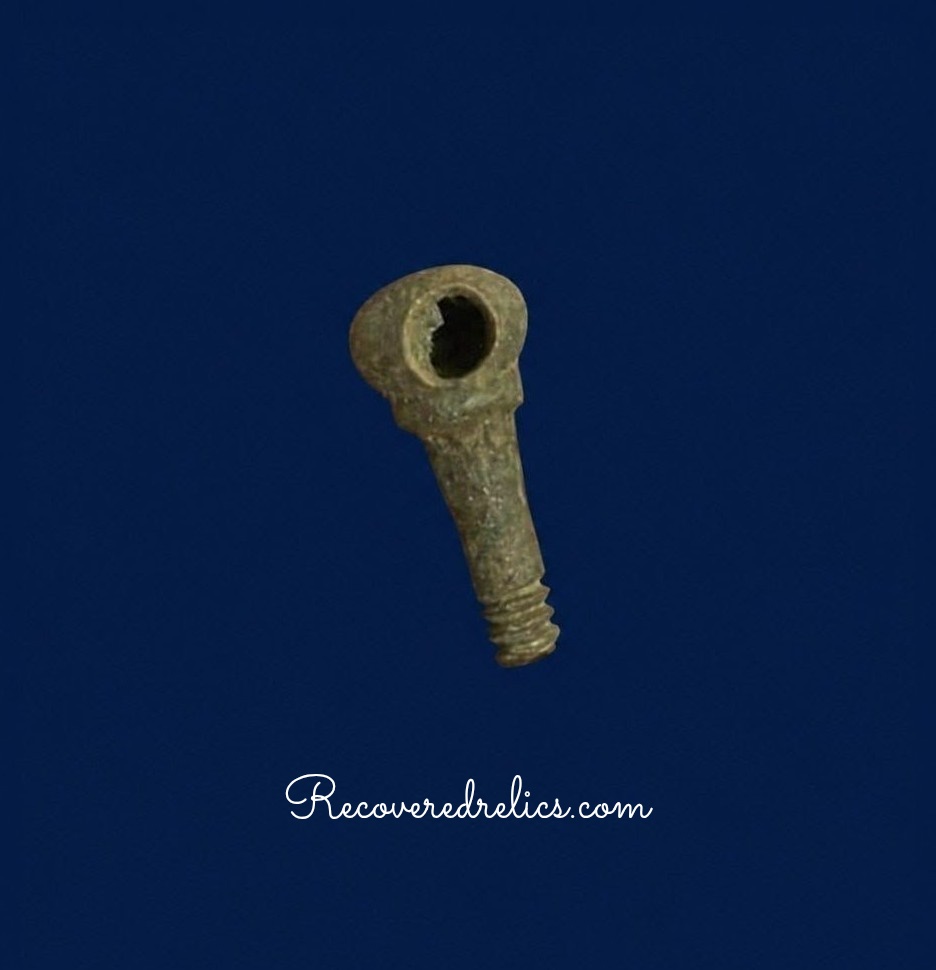
Drawer Pull or Cabinet Handle Stud– A drawer pull stud refers to the hardware used to mount decorative knobs or single hole handles onto furniture. It consists of a threaded post or a specialized metal connector that passes through the drawer face, allowing the pull to be securely fastened from the inside. One end threads directly into the back of a cabinet knob, while the other end goes through the drawer hole and secures with a nut.

Escutcheon Plate– A decorative metal plate or shield that surrounds a keyhole, doorhandle, light switch etc. They are both ornamental and protective. Escutcheon plates are useful protective covers that conceal gaps or holes in walls, ceilings, or keyholes while at the same time enhancing the aesthetics of ones home.

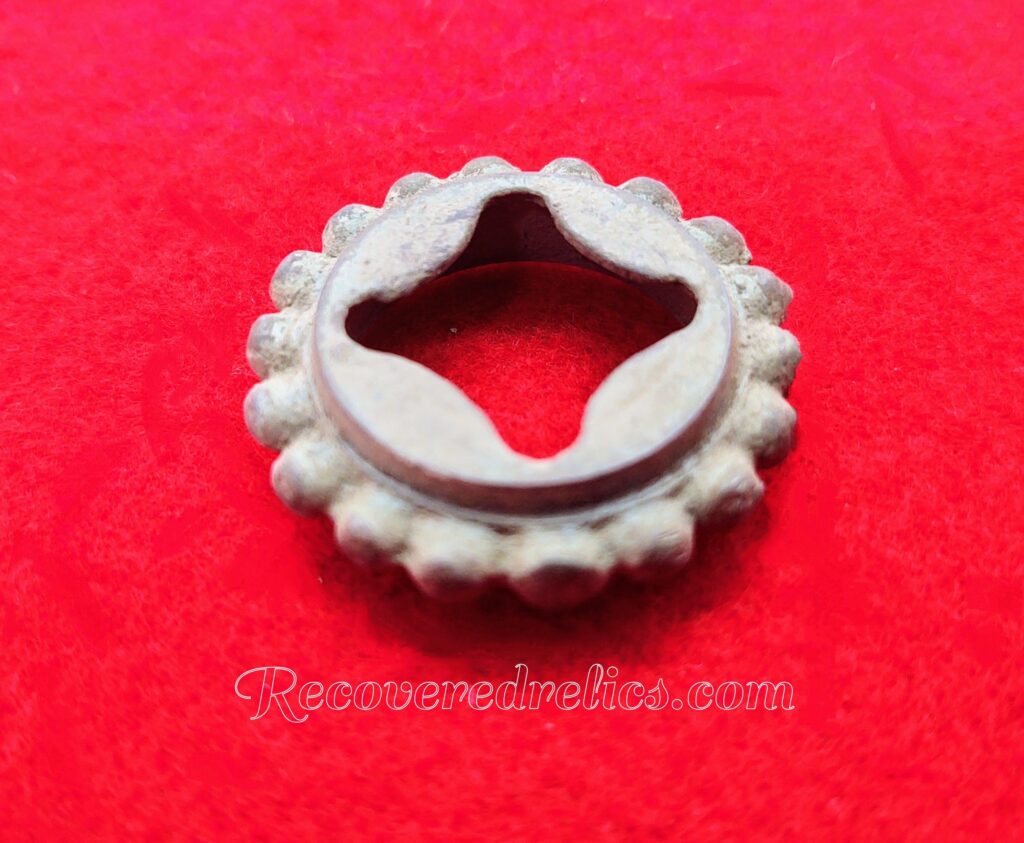
Furniture Caster Ferrules– A ferrule is a metal ring or cap that is placed around the end of a furniture leg. Ferrules add strength to the legs. Furniture casters are wheels that attach to the leg of a piece of furniture, allowing it to roll. The furniture caster cap pictured was used with a stem style caster. Numerous sets have been found on furniture pieces dating from the 1800’s. These caster caps are often misidentified for ink well cap lids.
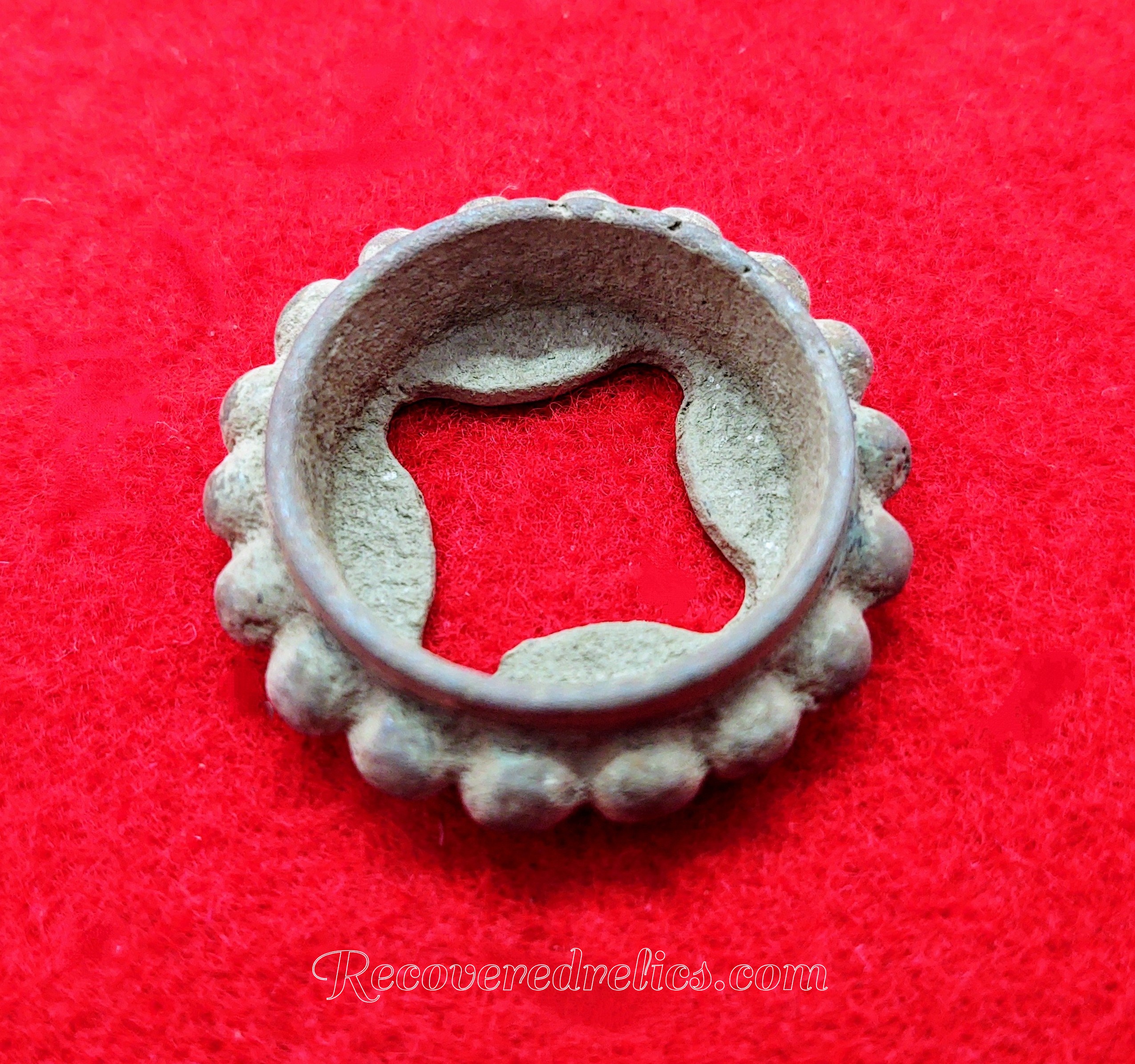
Handle off of a Candle Holder– The piece pictured is the handle off of an old candle holder. We often find broken bits and pieces that aren’t always easy to identify when out metal detecting. The handle most likely was once attached to a chamberstick style candle holder. Chamberstick candle holders are typically short, stubby holders that usually have a dish or tray at the base of the holder and a handle. Chamberstick candle holders were used in the bed chamber at night and were used to keep the room light enough while one got ready for bed. The individual could then carry the candle holder to their bedside and safely blow it out or leave the candle to burn out since only short candles were used with this type of holder.
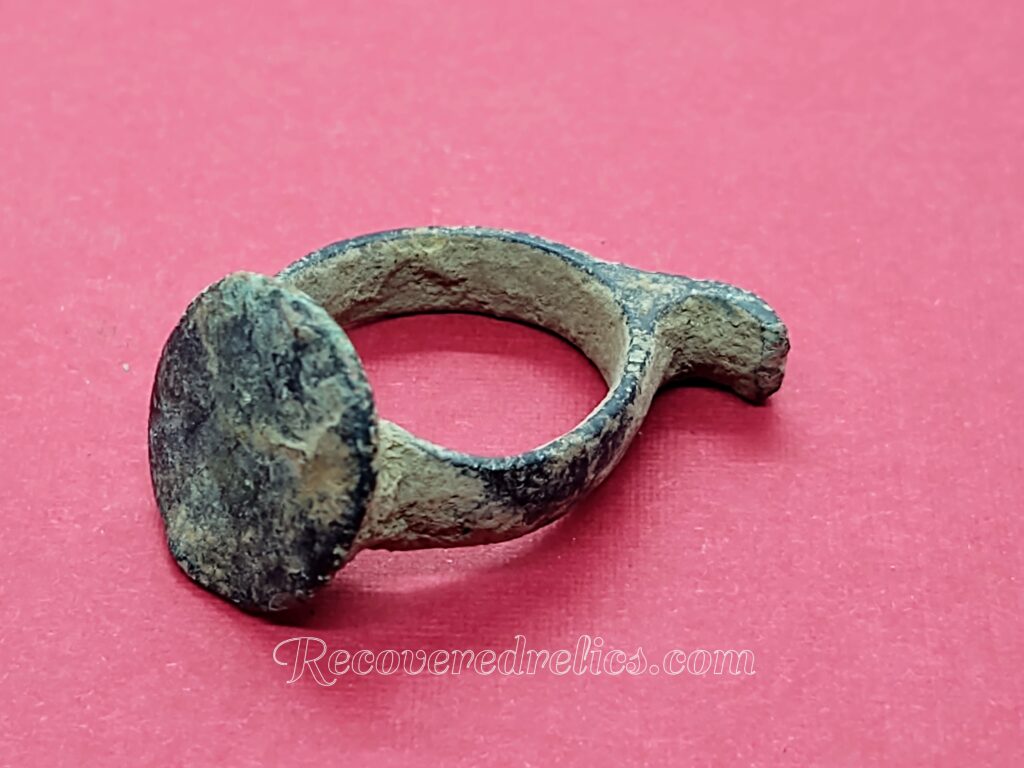
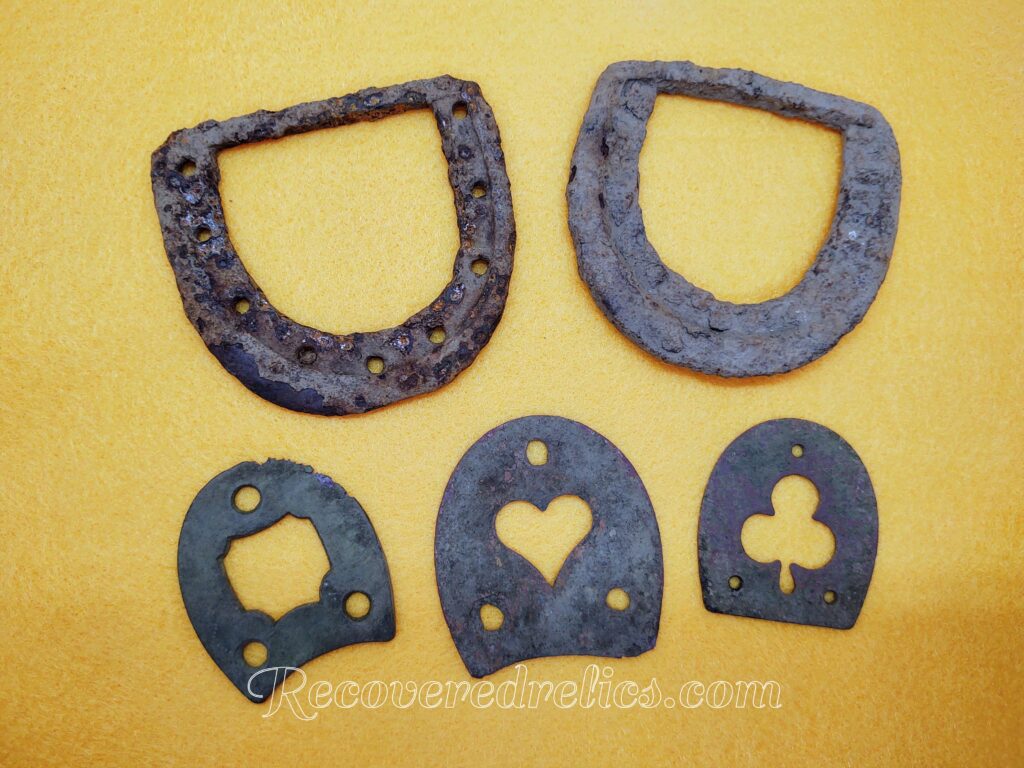
Heel Plate– A small metal plate that attaches to the heel of a shoe. Its purpose is to help protect the shoe’s heel against excessive wear.
Hem Weight– Metal fabric weights that were sewn into dresses, skirts, pants, shorts, coats, jackets, bathing dresses or swimming gowns, and curtains. They get their name “hem weights” because these weights were generally enclosed or concealed inside the hem where they would go unnoticed. A hem lies at the end of a piece of cloth and can be defined as a fold in the fabric that is sewn into place to prevent the material from fraying or losing it’s shape. Hem weights come in various sizes and shapes.
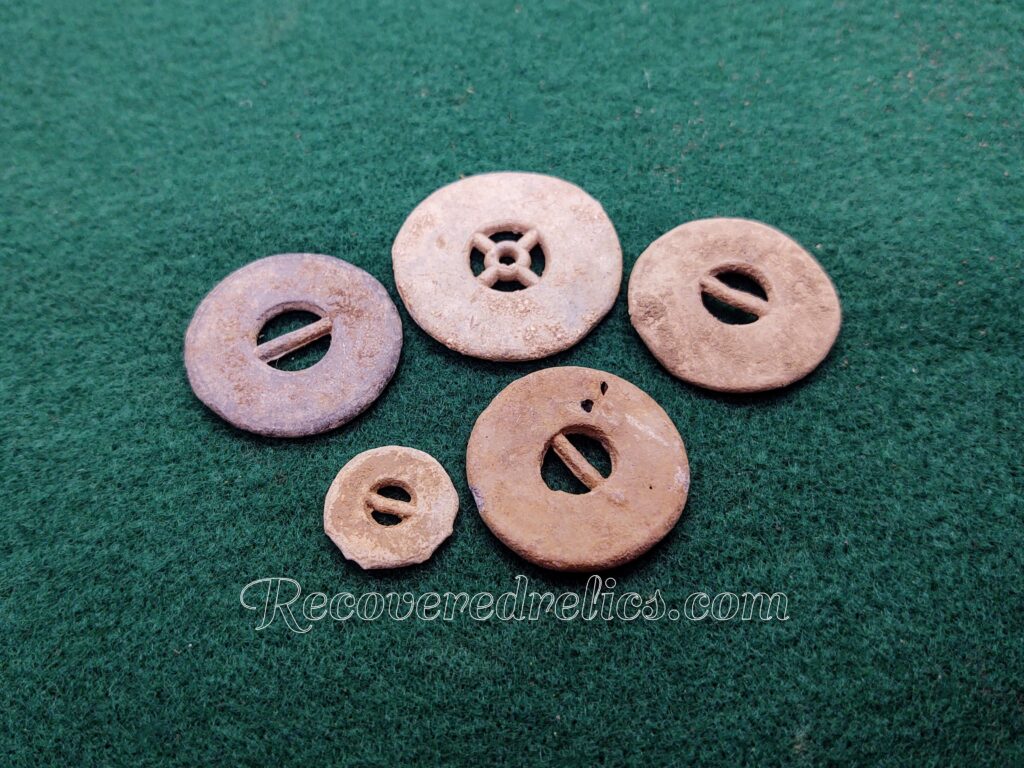
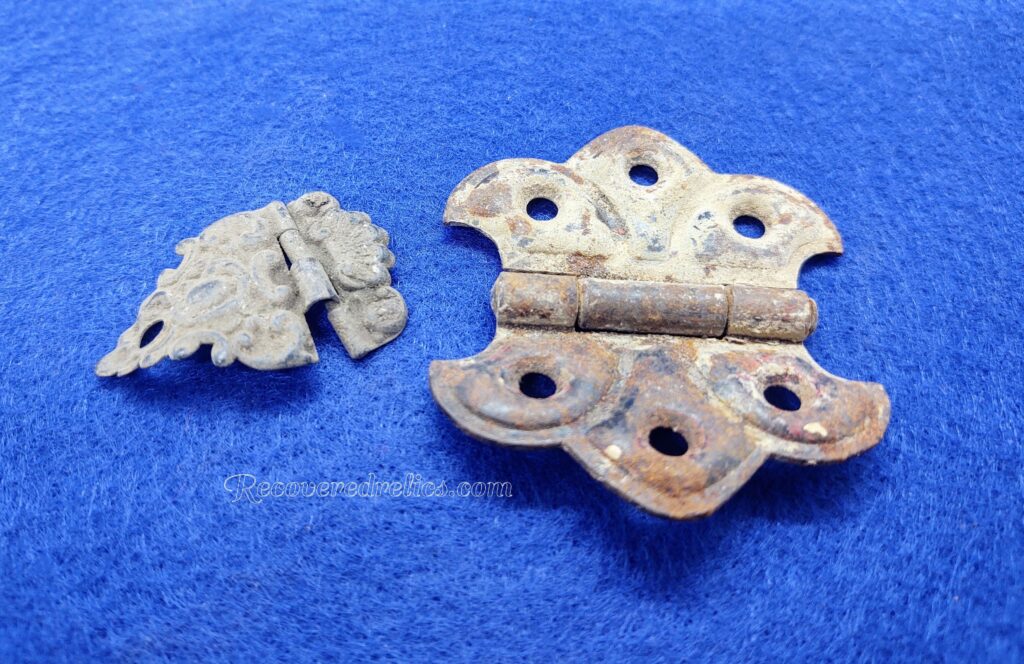
Hinge– A moveable joint or flexible mechanism that holds two parts together so that one part can swing and move relative to the other.
Hutchinson Bottle Stopper– Charles Hutchinson invented and patented the Hutchinson bottle stopper in 1879 as a replacement for cork bottle stoppers. It was a wire and rudder device that lived inside the bottle neck, unlike modern style caps that sit on top. It was the standard closures for soda bottles until the early 20th century. Production ended around the year 1912 after being replaced by more sanitary and cheaper crown-style caps.
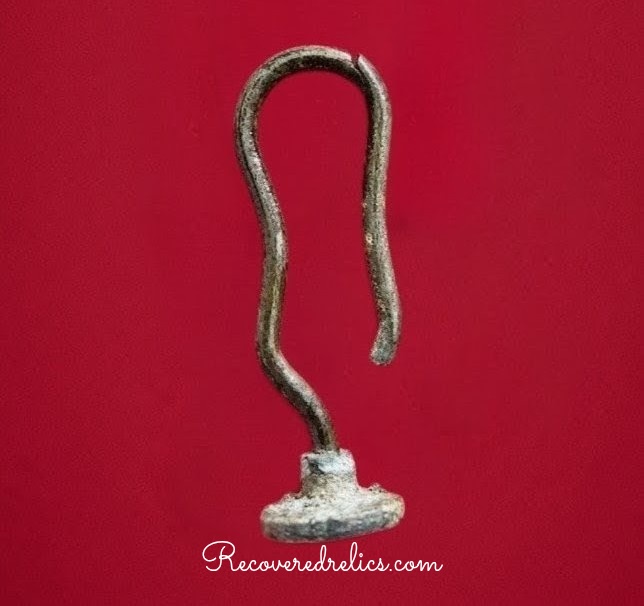
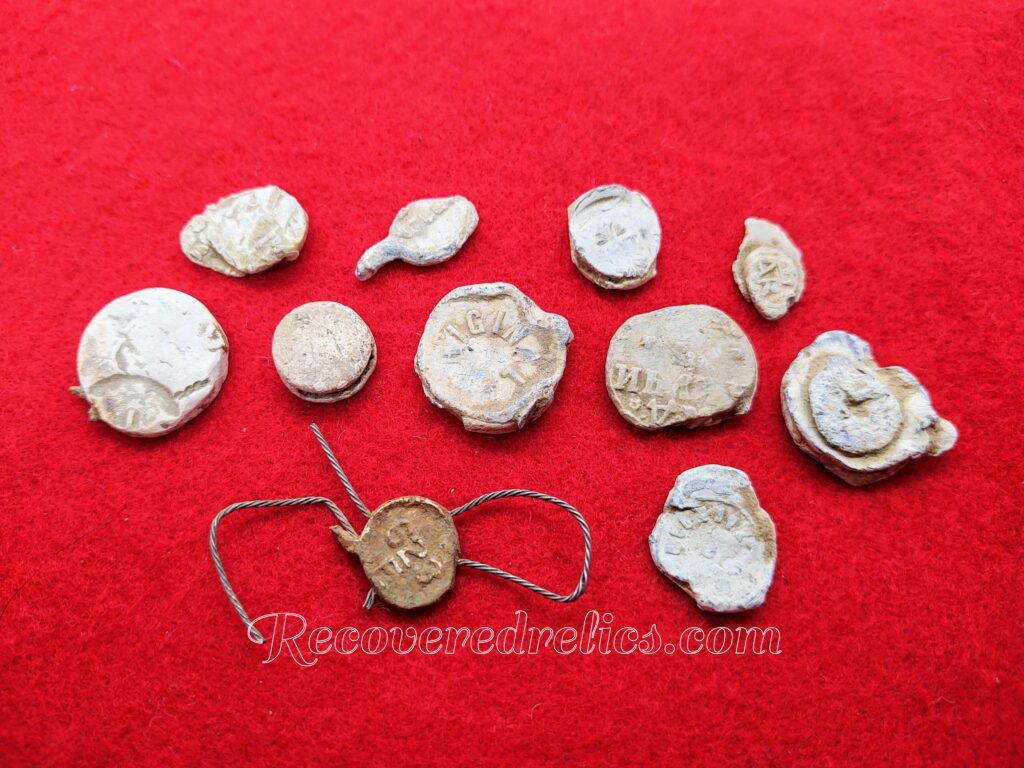
Lead Seals-Lead seals are small leaden discs that were crimped onto bags or bales of goods. They were commonly attached to textiles. Lead seals are alternately called bag seals, bale seals, or cloth seals depending on the item they marked. Lead seals were widely used in Europe between the 13th and 19th centuries. The lead seals we find in the United States typically date from the 18th to 19th centuries. Some may be more modern and others older in age.
Oil Lamp Burners– An oil lamp is a lamp used to produce light continuously for a period of time using an oil-based fuel source. Oil lamp burners are situated at the top of the reservoir where the oil is stored and hold the wick in place. They control the flow of oil to the wick and help to regulate the flame’s size and intensity.
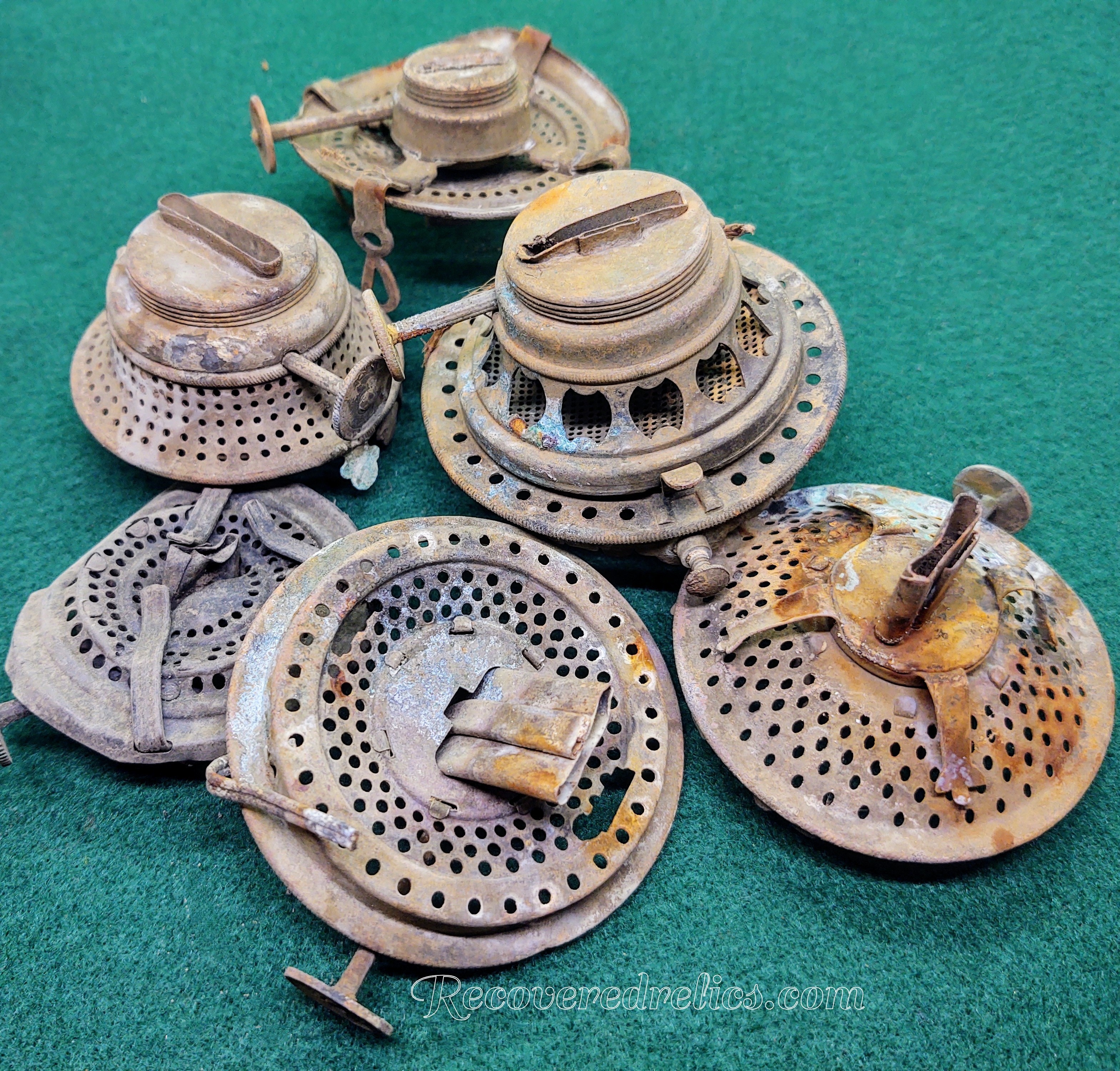

Oil Lamp Wick Adjuster Part– An oil lamp wick adjuster is the mechanism used to raise or lower the wick within an oil lamp or kerosene lantern. By turning the exterior thumbwheel or knob, you adjust how much of the wick is exposed above the burner, which controls flame height and brightness. The section pictured is a broken and incomplete piece. When metal detecting it is very common to find broken bits and pieces from old kerosene or oil lamps.
Parasol Runner-Parasol runners are an internal part and critical component that facilitates the opening, closing and stability of an umbrella or parasol. It is the primary sliding piece that moves up and down the shaft connecting the umbrella’s stretchers to the pole.


Parasol Tips– Metal parasol tips, the small caps at the end of each rib, anchor the canopy fabric to the frame. They secure the fabric edges, prevent the sharp metal ribs from tearing through the material, and protect the structural ends from rust and wear. These small, conical, copper, brass, or lead alloy caps are frequently recovered from 18th to 20th century sites. Parasols and umbrellas were highly fashionable, status-bearing accessories in Victorian society.
Purse Frames– Metal purse frames are used on a distinctive type of purses. Frames provide the external structure for the bag and allow it to support the weight of its contents. They come in various shapes and sizes.
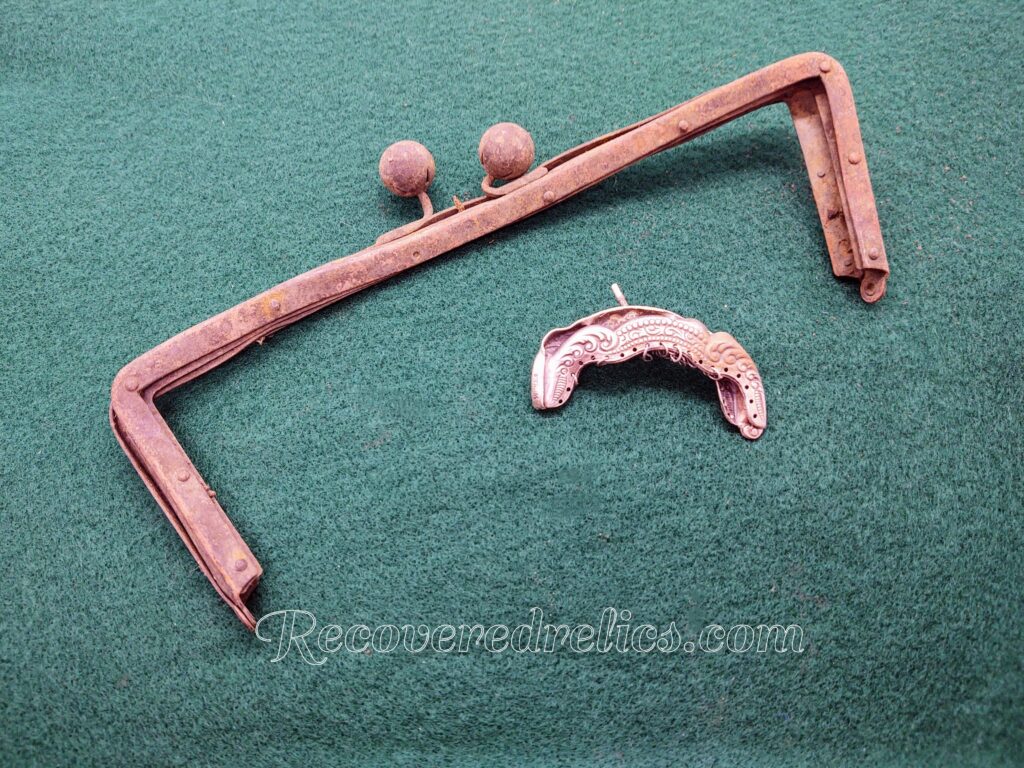
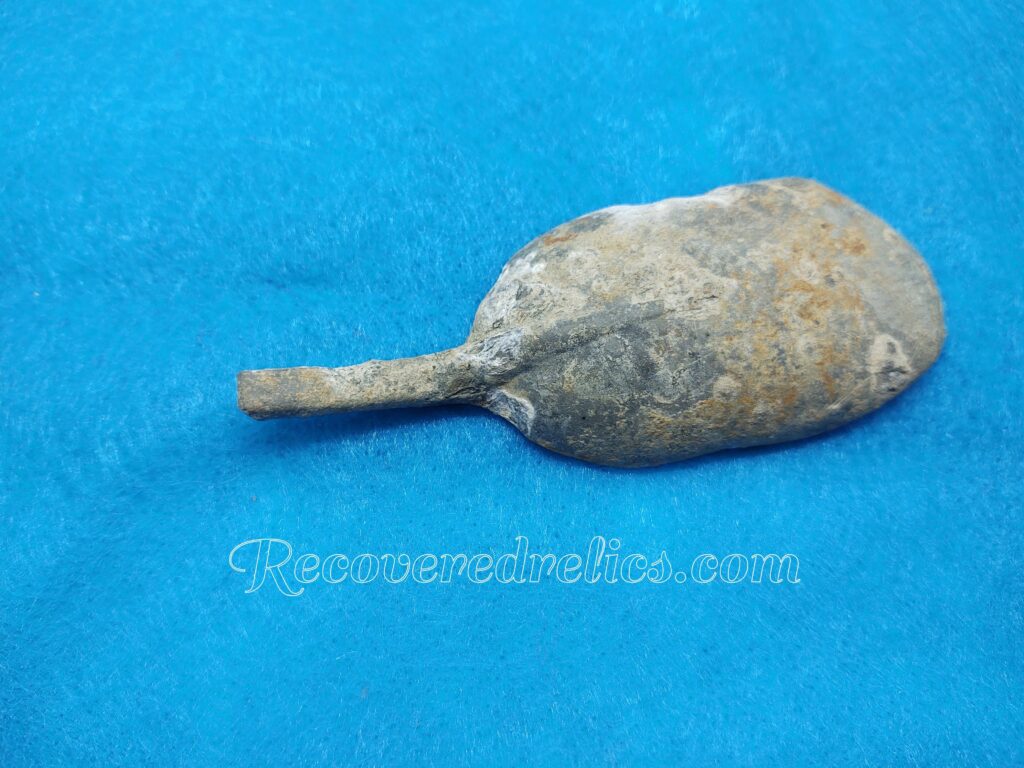
Rat Tail Spoon– This type of spoon was developed in the late 17th century. It has a thin pointed tongue on the bottom of the spoon bowl (back side) which helps to reinforce the joint of bowl and handle.
Rivet– A metal fastener consisting of a smooth cylindrical shaft with heads on either end. Rivet are used to join two or more materials together permanently. There are many different types of rivets. Metal rivets are used to fasten together a variety of different types of materials such as wood, metal, plastic, and cloth. The rivets pictured were used to fasten cloth and or leather.
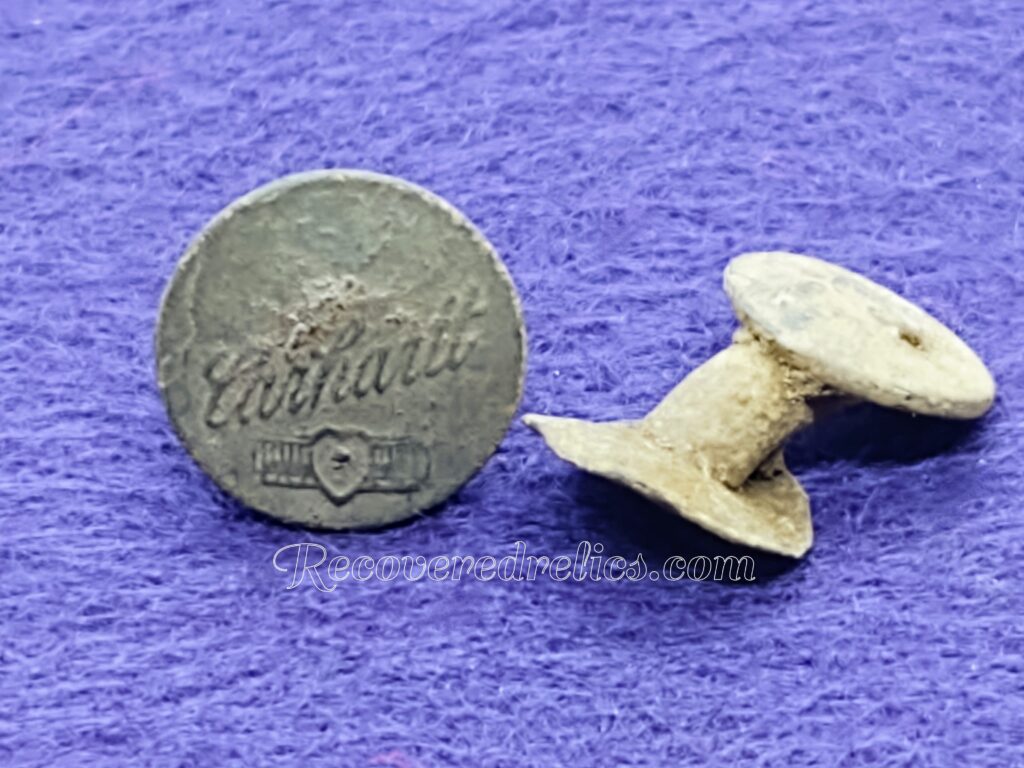
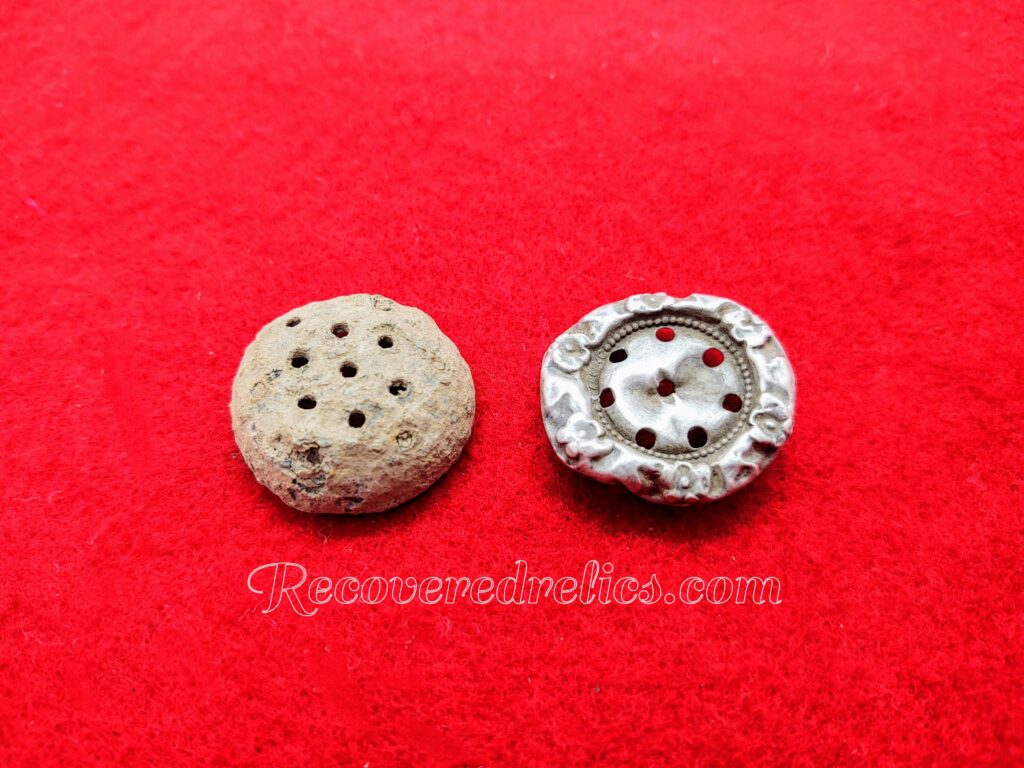
Salt and Pepper Shaker Caps
Scissors Handles– Broken scissor handles, often made of iron, brass, or copper, are frequently found at archaeological sites. Scissors have a history spanning over 3,000 years, evolving from single-piece spring designs to the modern pivoted blades that we use today.


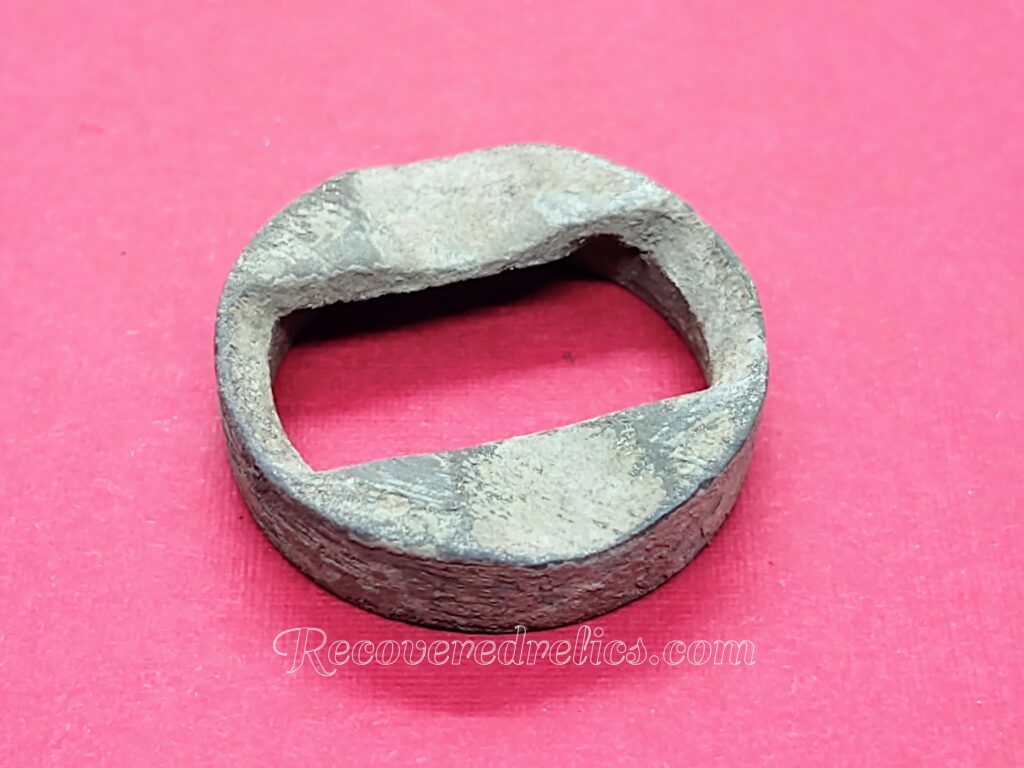
Scythe Nib Block – A scythe is a powerful and versatile tool used for mowing and removal of unwanted grass or weeds. The handle on the scythe is referred to as a snath. The side handles of the snath are called nibs. Nib blocks are metal plates through which the nib bands are drawn when tightened.
Skeleton Keys– Skeleton keys have been around for centuries and have been used for a variety of different purposes. Skeleton keys typically have a cylindrical shaft and a single, minimal flat, rectangular tooth or bit. The series of notches and grooves on the key match the internal workings of a particular lock, allowing the key to open that lock. Skeleton keys are designed to work with warded locks, a type of lock that uses a set of obstructions, or wards, to prevent the lock from opening unless the correct key is inserted. Warded locks and keys provide minimal security.
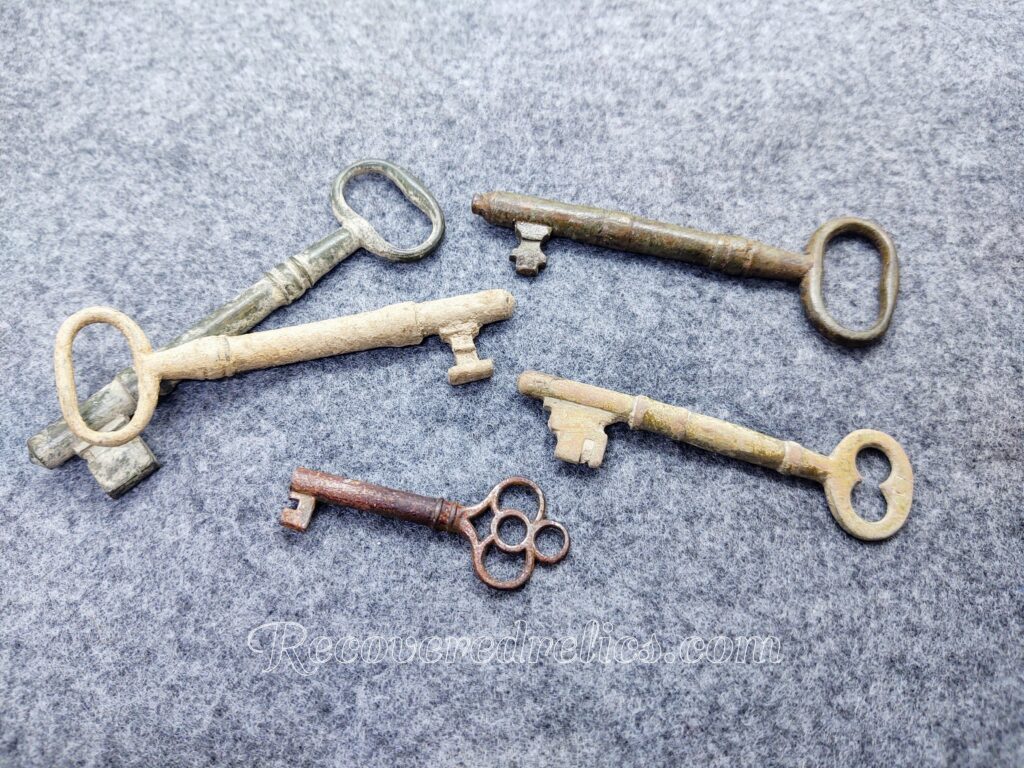
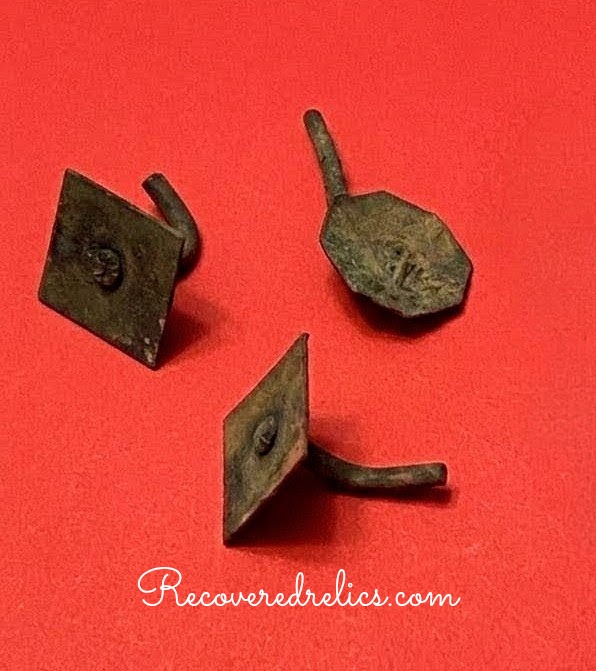
Slate Roofing Tacks– Around the turn of the 20th century, slate was the premier roofing material in the United States. Slate roofing tacks were designed to hold slate tiles firmly without cracking them. These were driven through the slate and bent over on the underside to secure the tile. The clinching method, bending the shank, was a standard practice to prevent the slate from sliding. These date in age to the early 1900’s.
Square Nails or Cut Nails– The term square nail is broadly used to describe any non-round antique fastener. The 19th century definition specifically refers to fasteners mechanically sheared from flat sheets of iron, resulting in a distinctive rectangular or square shank or body. Prior to 1800 square nails were primarily hand-forged by blacksmiths. In the early 1800s, the heads were still finished by hand with a blacksmith’s hammer, giving them an uneven, square shape. By the 1820’s and 1830’s, machines completely took over, automatically stamping out uniform, flat, rectangular heads. Square nails were the dominant fastener in construction and furniture-making from roughly 1800 to 1890, before being replaced by modern round style nails.

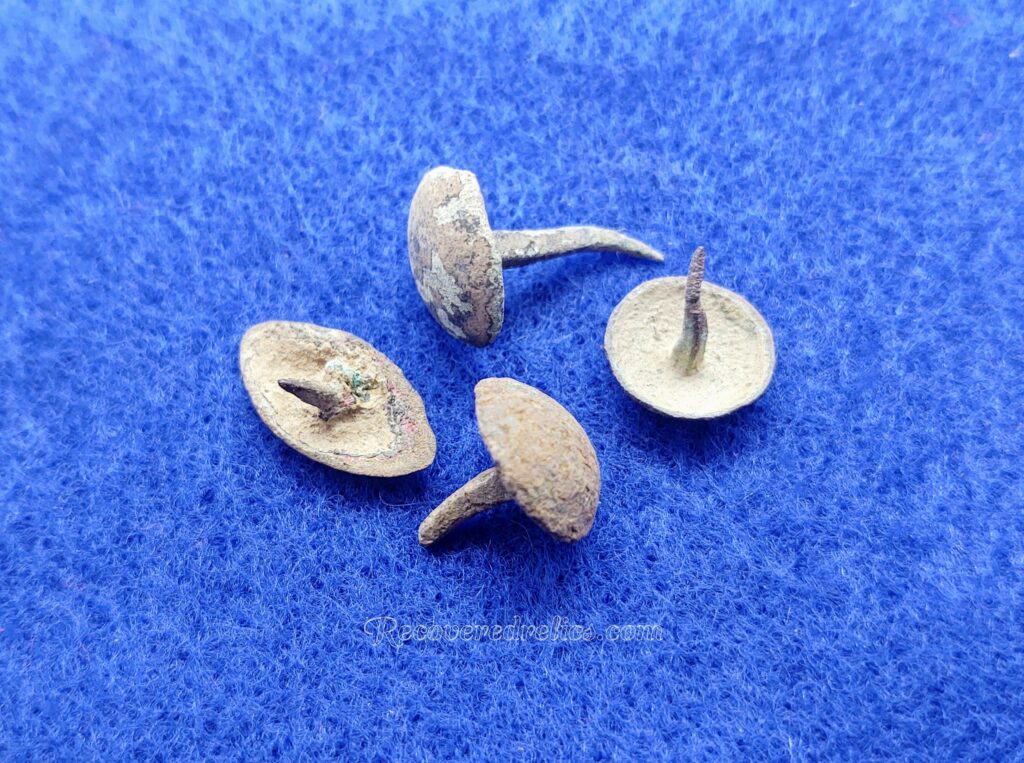
Tacks– Metal tacks are small, decorative nails used to fasten upholstery. Tacks were used to decorate furniture, leather work, and coffin lids.
Toe Tap– A toe tap is a metal plate which is added to the bottom or soles of shoes. This sole modification is used to help prevent wear and tear of the toe portions on the soles of shoes.
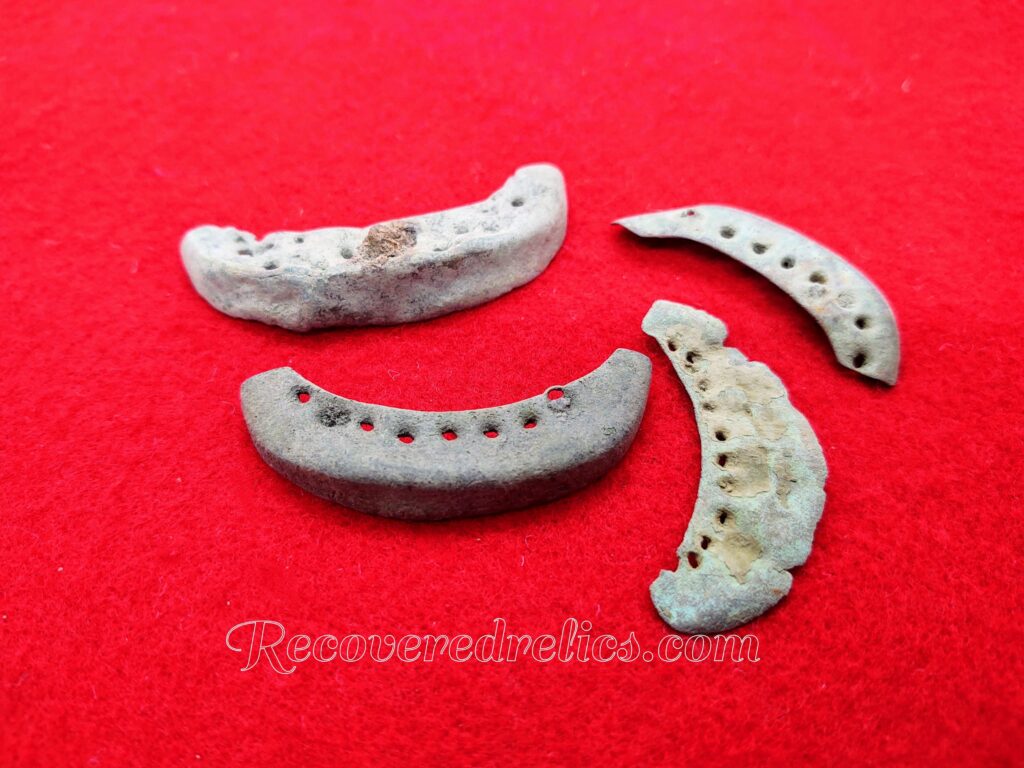
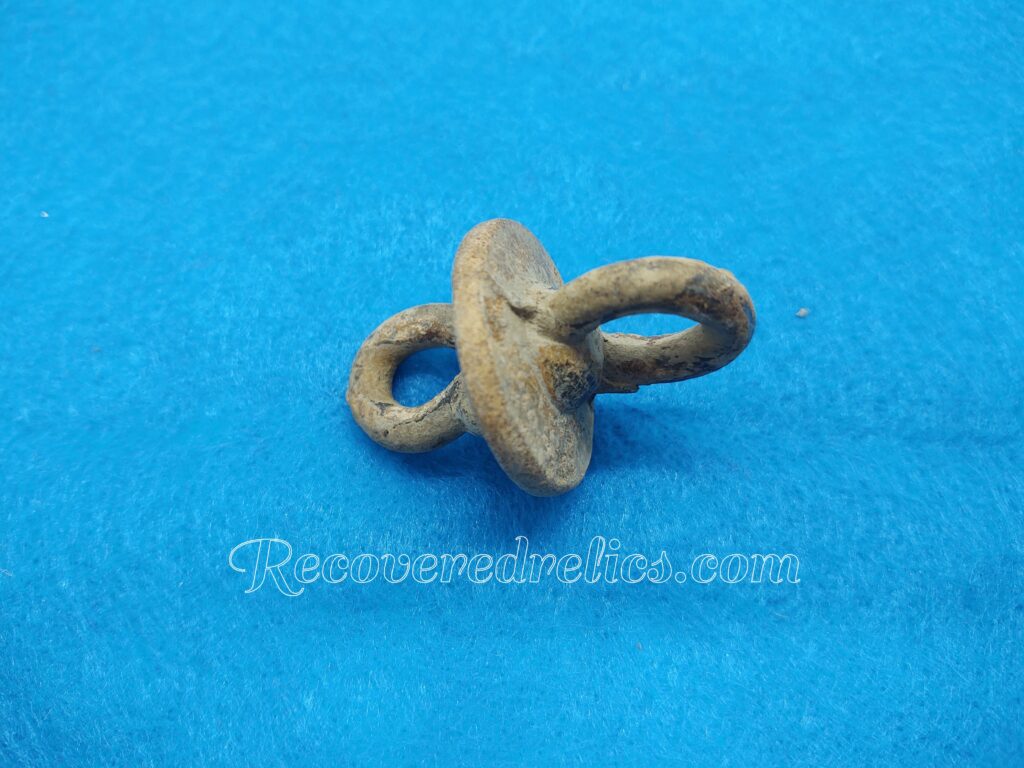
Well Pump Chain Link– The link was a part of a continuous chain. The chain would have run through a tube, slightly bigger than the diameter of the discs on the links. As the chain is drawn up the tube, water becomes trapped between the discs and is lifted up to and discharged at the top of the pump.
Horse Tack and Adornment
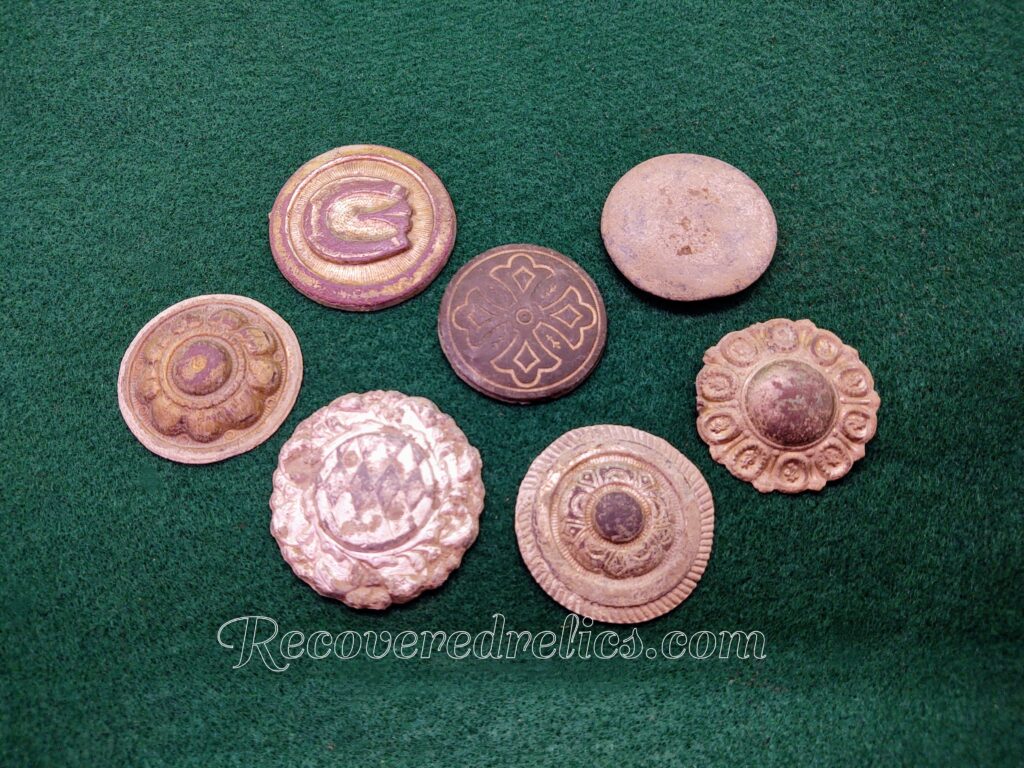
Bridle Rosette– These pieces have two primary functions. They were used as decoration and helped to stabilize the headstall portion of the bridle. The metal loop on the back slips over the end of the browband and divides the space between cheek piece and throat latch. Bridle rosettes add beauty and color to the bridle. They often have ornate designs and patterns.
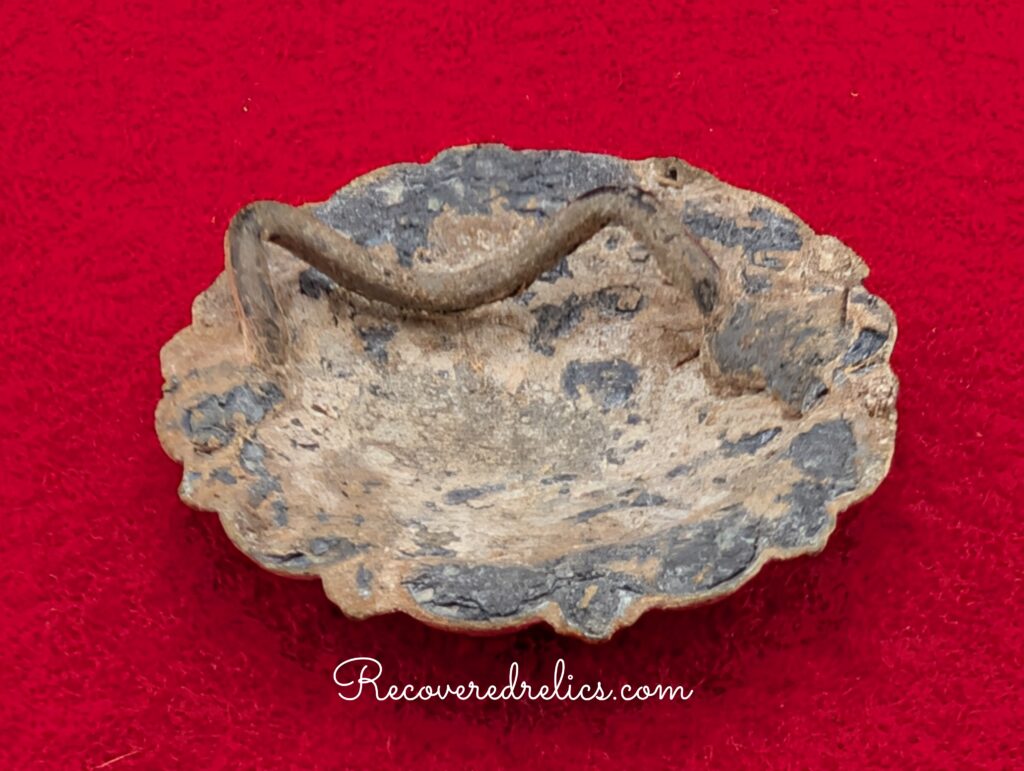
Buckle Cover or Shield– Buckle shields were used to cover the buckles that attach the breeching to the hip strap of a horse harness. The shields were used in order to prevent the hair of the tail of the horse from being caught on the tongue of the buckle and pulling it out of place. They were quite useful.
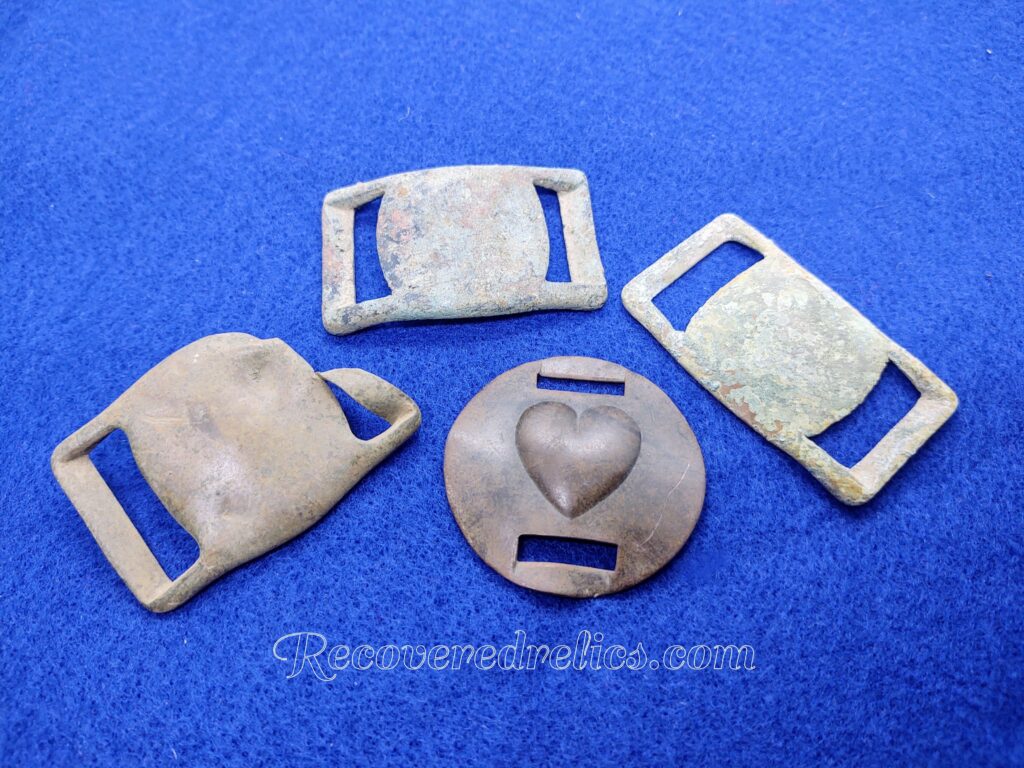

Gag Chain– A horse gag setup is a leverage-based system designed to lift the horse’s head, shift its weight to its hindquarters, and provide extra control for strong pullers. A gag chain, often associated with gag runners or gag swivels, is a specialized section of chain used to route the gag rein through the bridle. In the 19th century, gag setups were heavily used on carriages and stylish harness horses to forcefully keep their heads elevated.
Gag Runners/ Gag Loop Swivels – A gag setup is used to create a lifting and leveraging effect on the horse’s head. It is highly useful for controlling horses that tend to lean, pull, or carry their heads too low. Ideally gags help you stay in position when riding and elevate your horse’s head rather than pull you down and out of position. These horse-related hardware pieces were popular in the 19th and early 20th centuries.
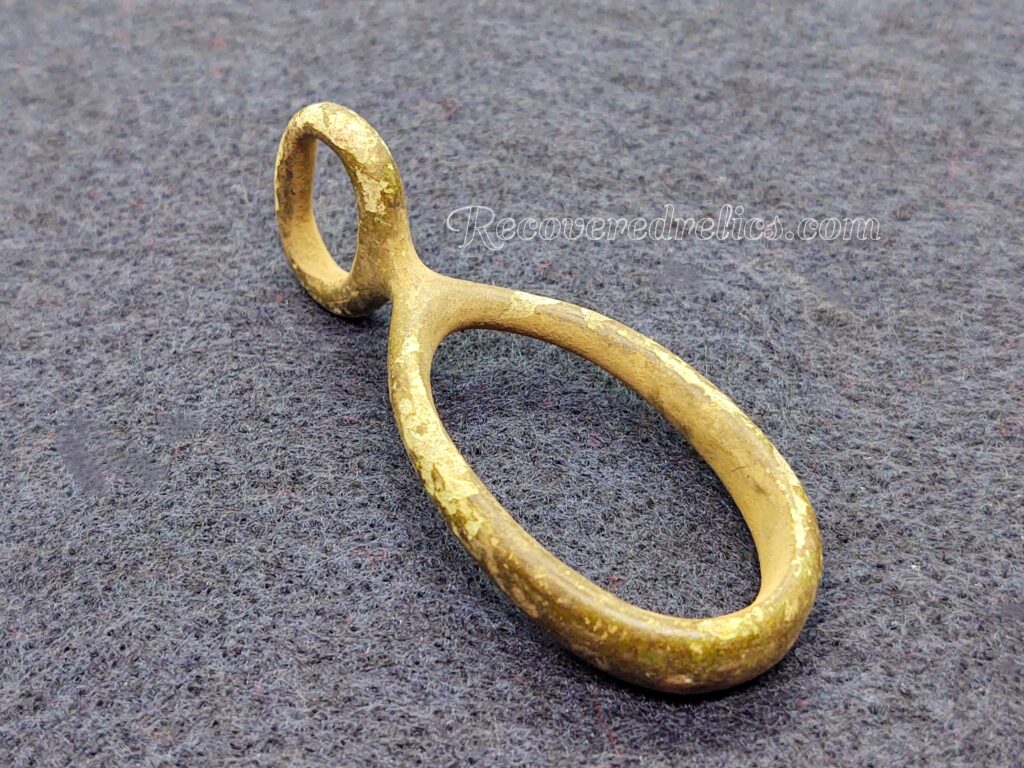
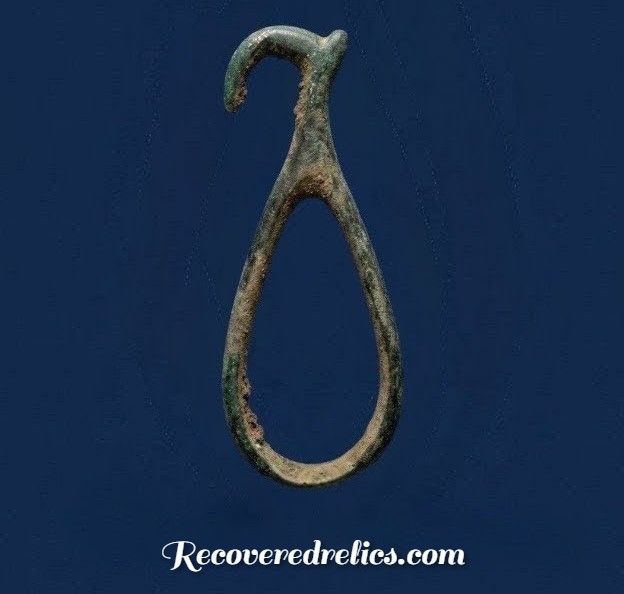
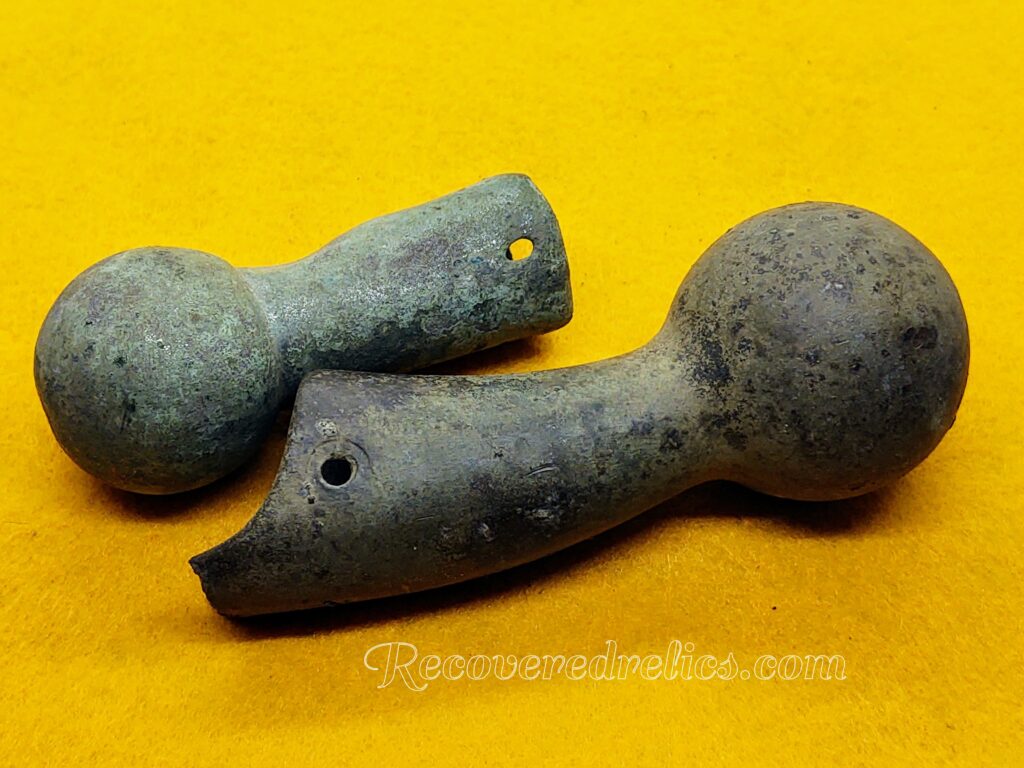
Hames Tops – On both sides of a horse’s collar are wooden or metal bars called hames. Hames are used to help better distribute the load around the horse’s neck and shoulders when they are pulling a wagon or plough. Detectorists sometimes find hames tips or tops.
Leather Ornaments– A term used to describe a broad range of metal attachments which sole purpose was for decoration. It is generally accepted that these decorative adornments were for horses, however some may have been used for personal items. They commonly appeared on leather straps, saddles, and other personal items such as pouches, belts, and sword hangers. The back of each piece has two or more tines that were designed to pierce and fold around the leather.
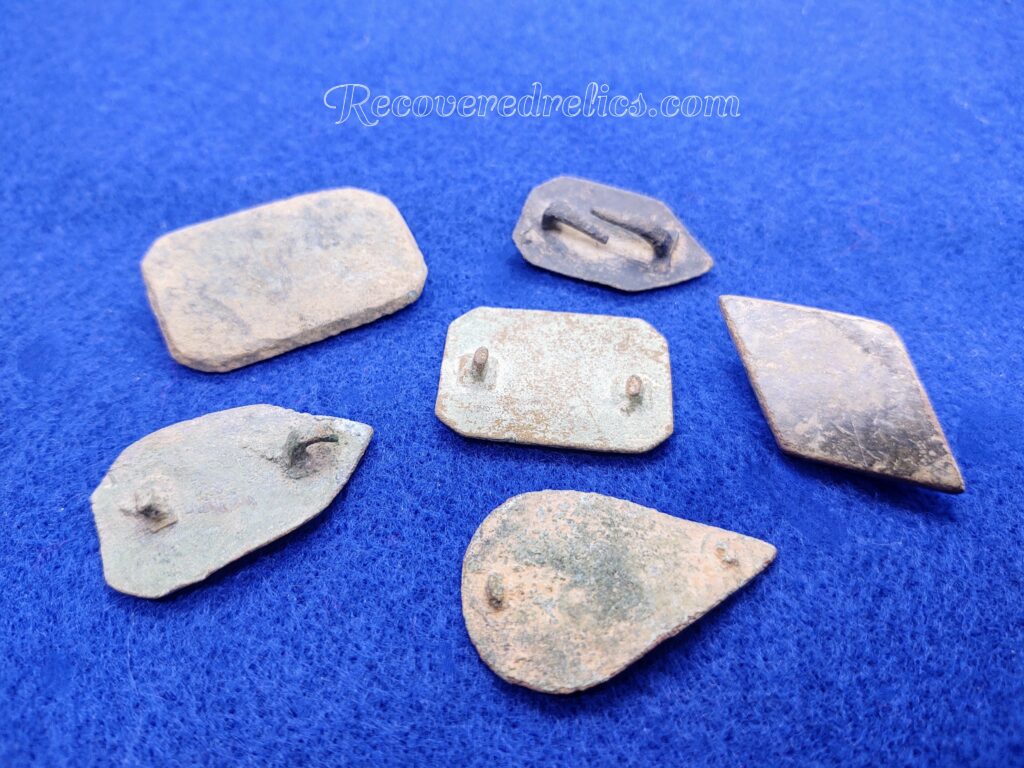
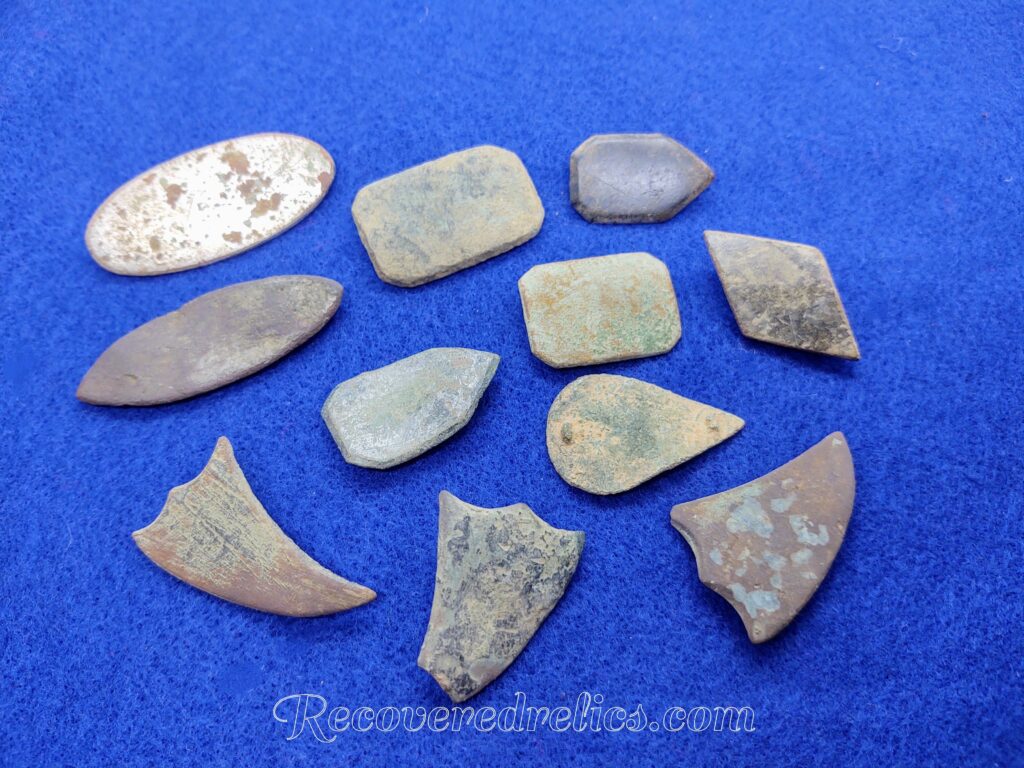
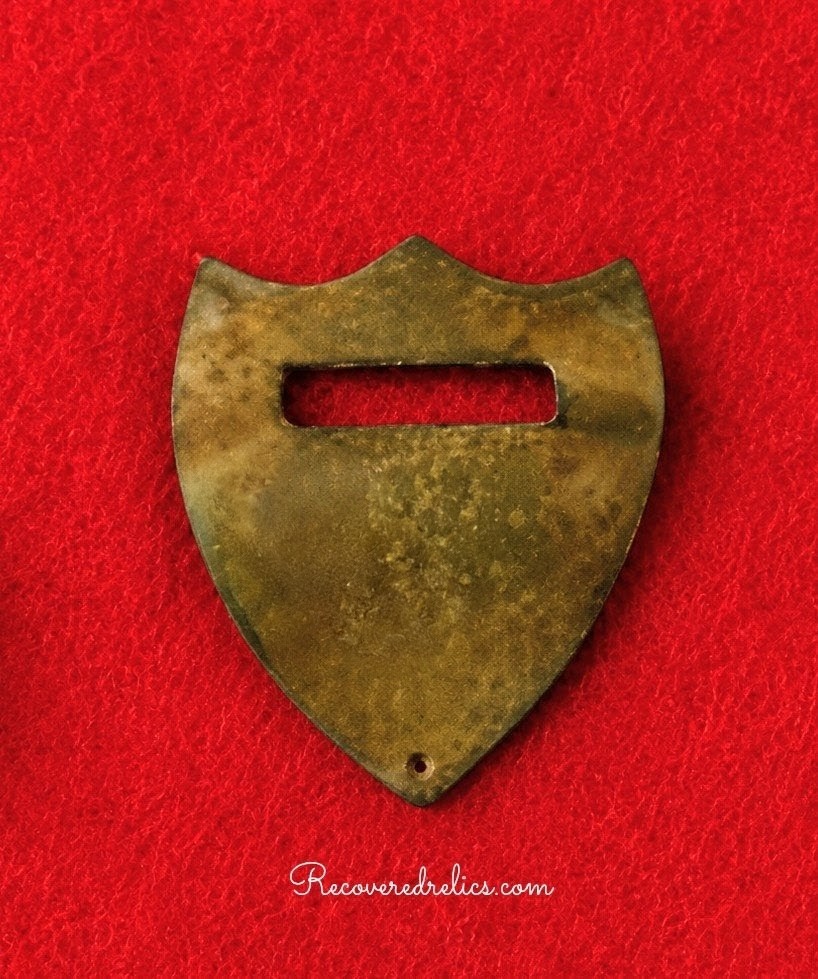
Pommel Shield- Pommel shields are decorative ornaments historically used on cavalry saddles. A pommel shield is a small metal plate that attached to the swell of the saddle. These were used to proudly display insignia like cavalry regiments or the “CS” emblem for the Confederacy. They were also used to display practical details such as the exact inch-measurement of the saddle seat. Plain, unadorned, pommel shields were also very common. The primary engineering purpose of the pommel shield was not solely decorative. It functioned as a metal reinforcement for the coat-strap slot, a feature used to anchor bedrolls.
Strap Guides – Strap guides are generally circular in shape with two linear protrusions on their back side. The protrusions on the back which would have had iron fasteners were attached to an oval shaped backplate. The gap between the front piece and backplate allowed for the strap to pass through freely. There were also a narrow rectangular or oblong like version. Strap guides are generally decorated with designs. Plain ones were also common.
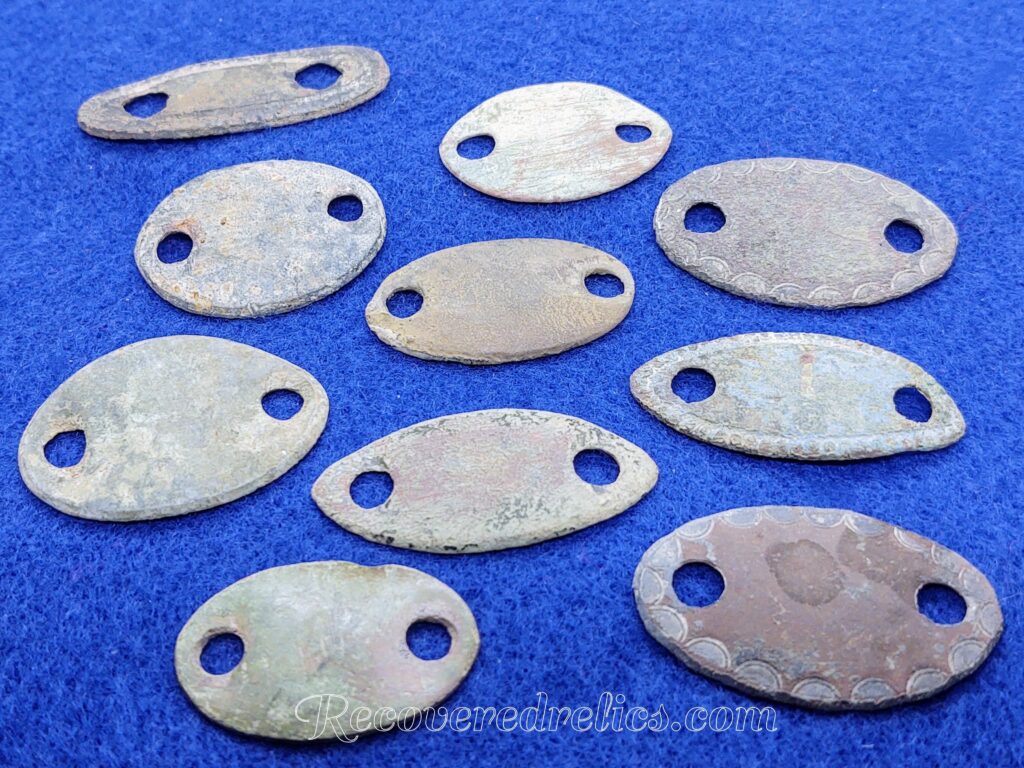
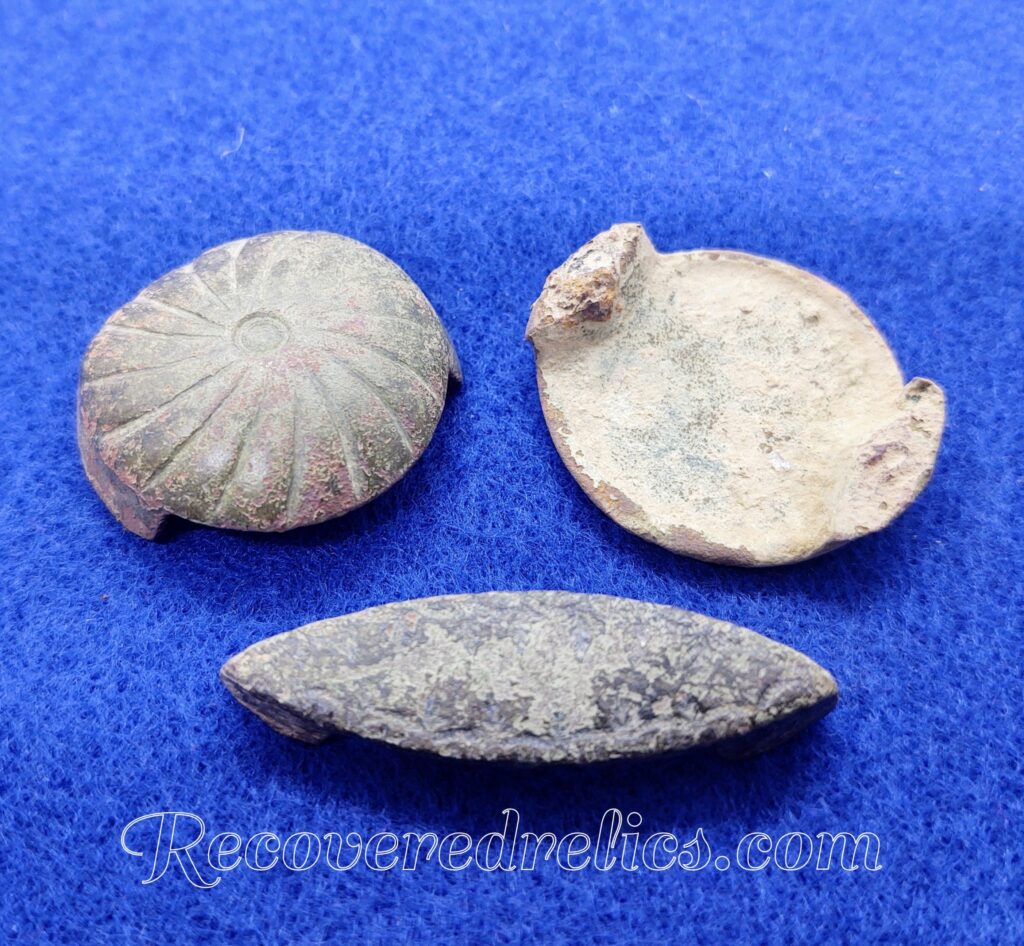
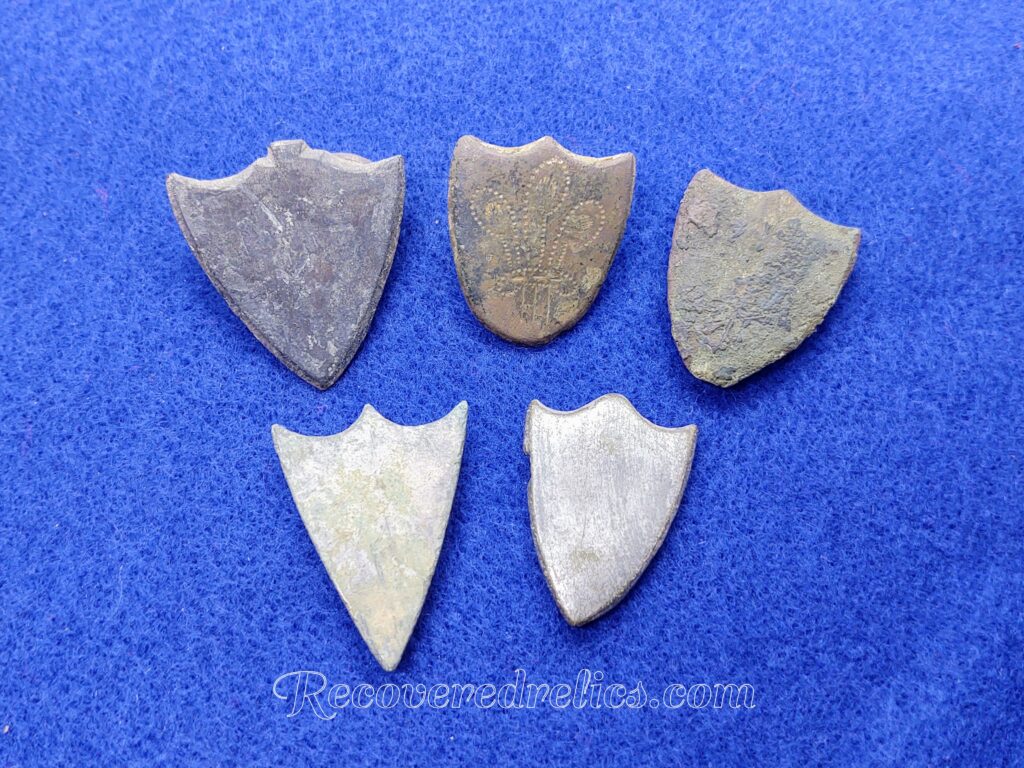
Shield Shaped Equestrian Ornaments– These shield shaped mounts were probably for use on horse harnesses, most likely on the blinkers, bridle, or saddle. They are commonly referred to as saddle shields by detectorists. Decorations or ornaments used on horses were popular in the 1700’s and 1800’s and were utilized to show wealth, status, and personality.
Shield Equestrian Ornaments with the Prince of Wales Plumes– The Prince of Wales plumes or Prince of Wales’s feathers is the heraldic badge of the heir apparent to the British throne. It consists of three white ostrich feathers emerging from a gold coronet, with a ribbon bearing the German motto “Ich dien” which means “I serve”. The symbol is traditionally traced back to Edward, the Black Prince and the eldest son of King Edward III in the 14th century. Aside from being the personal badge of the heir to the British throne, it also frequently was used to symbolize Wales itself. The Royal Welch Fusiliers, formerly the 23rd Regiment of Foot, adopted the Prince of Wales’s feathers as a core regimental emblem after the year 1714, when George I conferred the title of “The Prince of Wales’s Own Royal Regiment of Welch Fuzeliers” upon them. Many examples have been unearthed by detectorists in the United States. These Prince of Wales plumes shields are notably found in colonial-era sites.
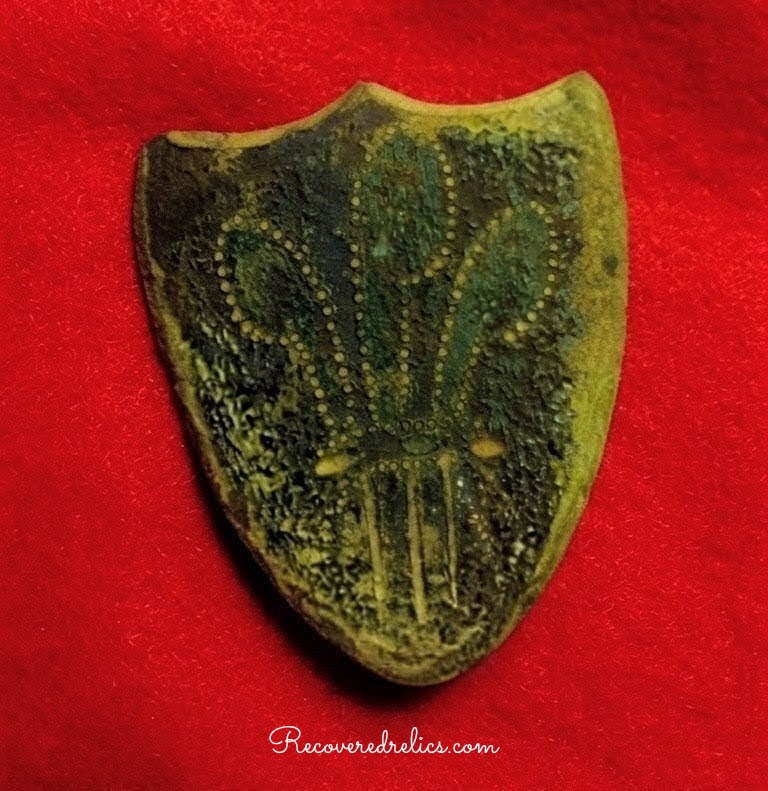
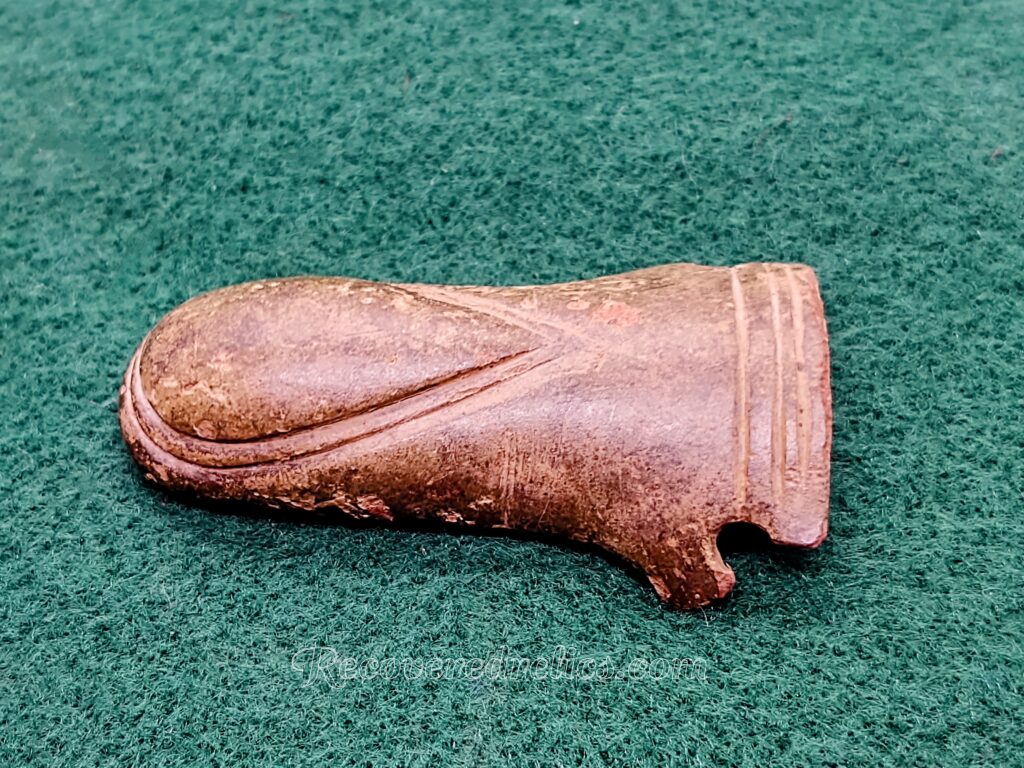
Saddle Horn– The saddle horn is a key part of a Western saddle. It extends from the saddle’s pommel. Originally made for cattle roping, the saddle horn lets a cowboy wrap or tie a rope around it when dallying cattle.
Spur– A device with a small spike or spiked wheel that is worn on a rider’s heel of their boots for the purpose of directing a horse to move forward while riding.
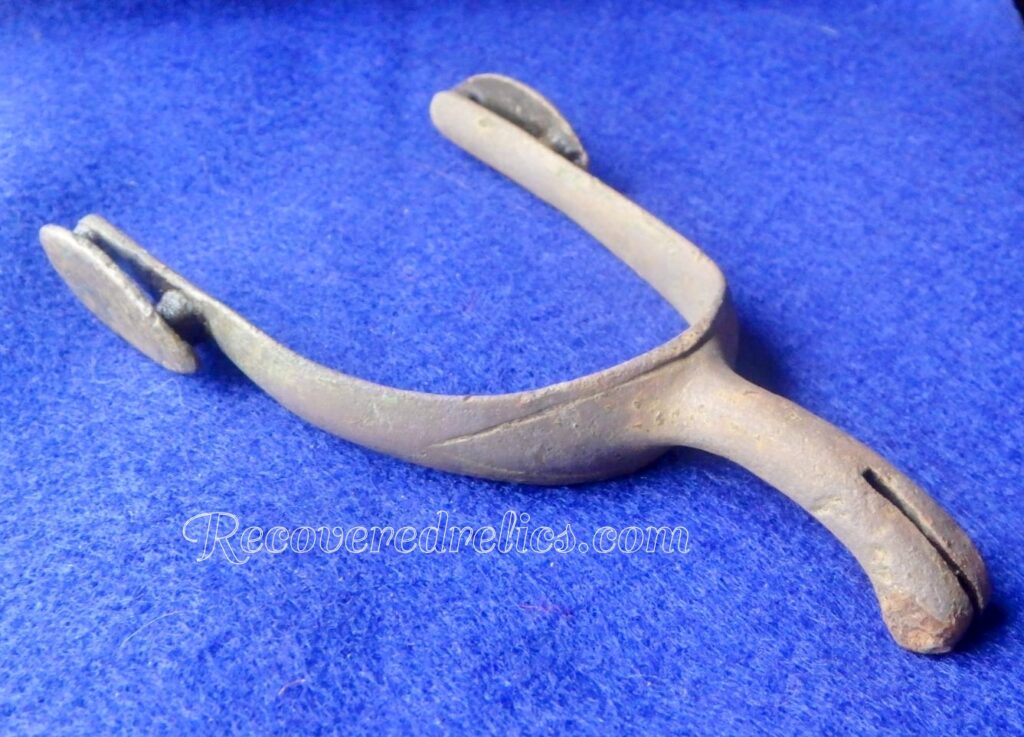
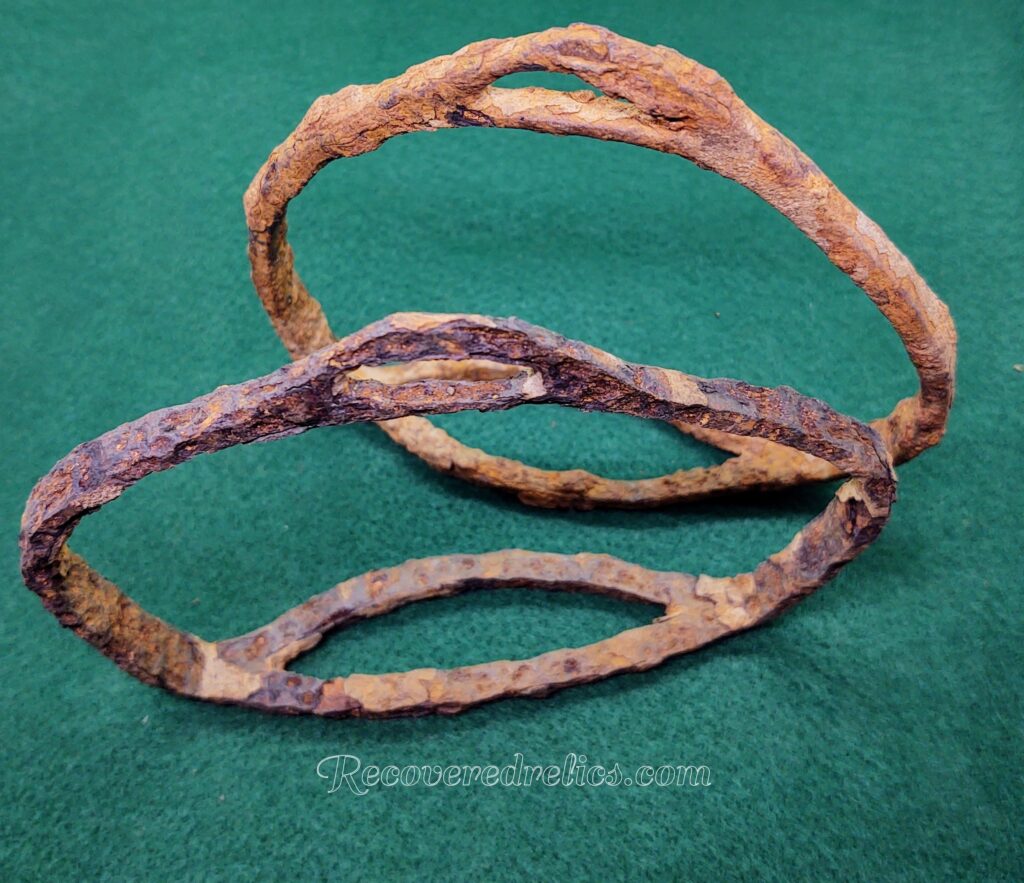
Stirrups -Stirrups are attached with a strap to each side of the horses saddle. They are a frame that both holds and supports the riders foot. They are also used to aid in mounting.
Terret or Rein Ring– A terret or rein ring is a metal loop that is attached onto a horse harness. The reins pass through the terret. The terret helps to prevent the reins from tangling or getting snagged on the harness or shafts.
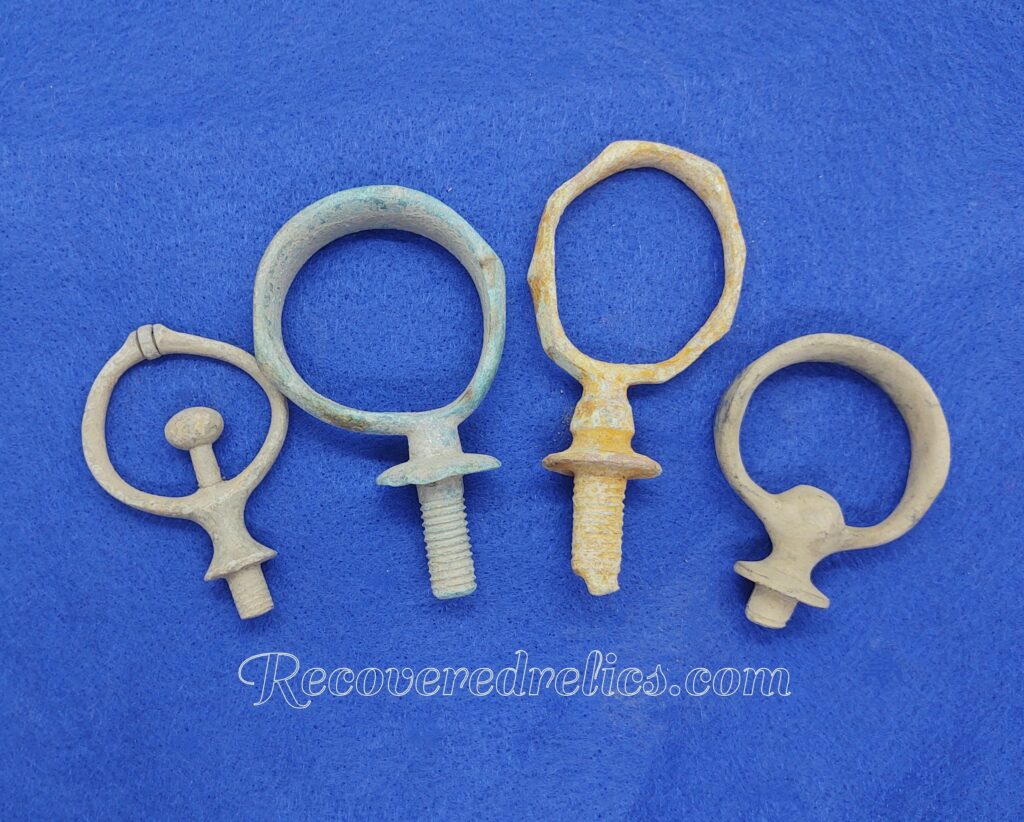
Livestock Equipment and Miscellaneous Farming Related Relics
Ox Knobs-Ox knobs are fitted to the tips of a ox’s horns. They are a decorative and useful device used to keep the oxen from instinctively, sharpening their horns. In some parts of the country they are referred to as horn buttons or horn balls.
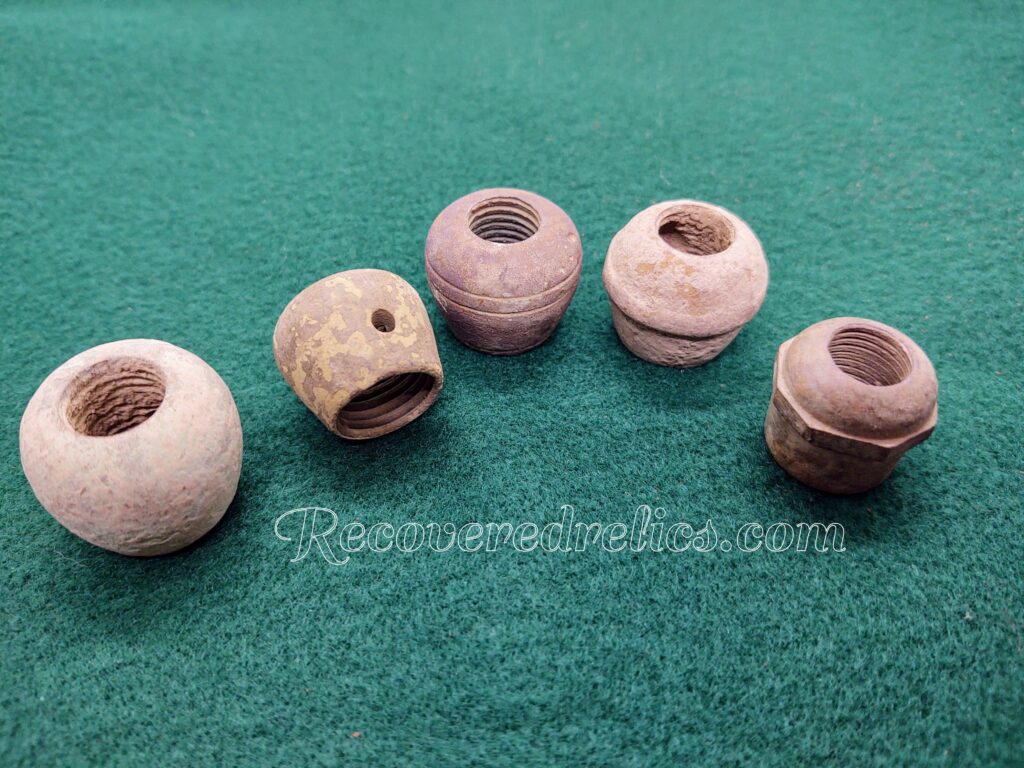
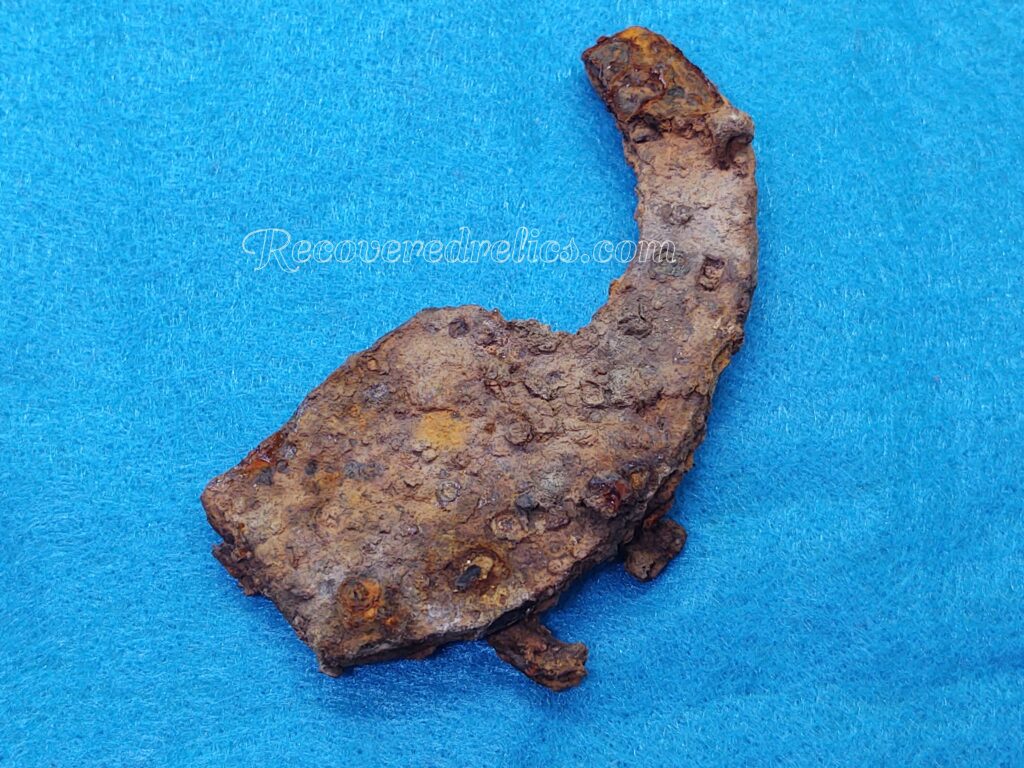
Ox Shoe– a shoe for an ox often consisting of two pieces one for each side of the hoof.
Miscellaneous Personal Adornment and Personal Items
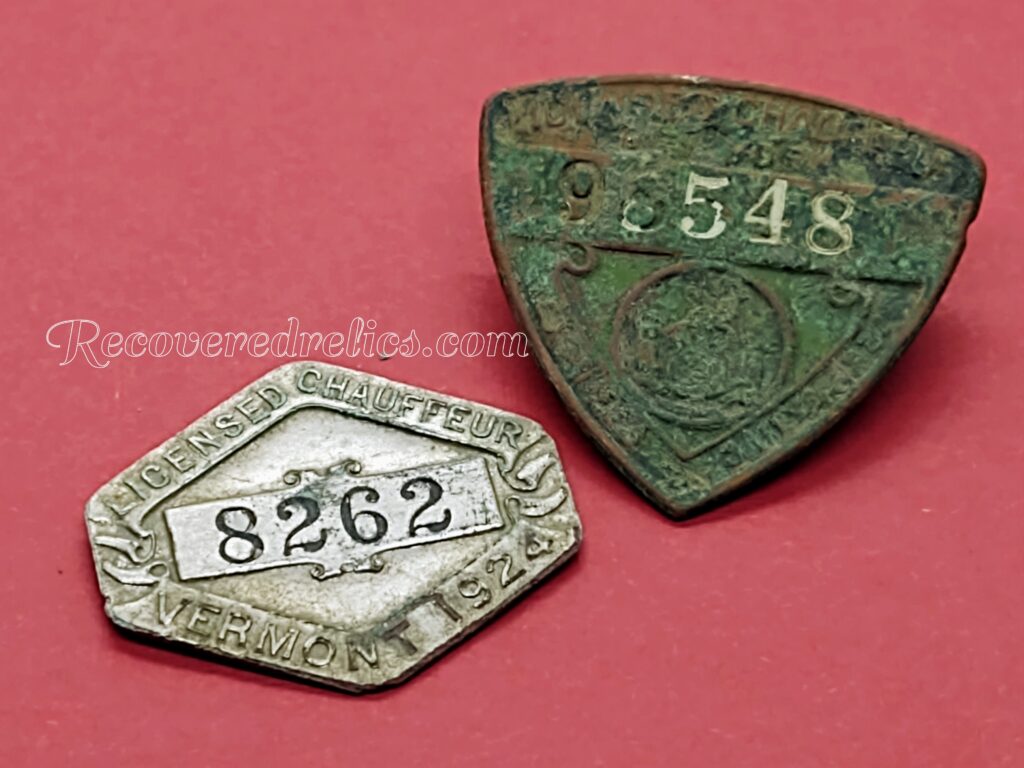
Chauffeur Badges/Licenses– During the early 1900’s states began to require that chauffeurs obtain a valid annual license. States issued metal chauffeur badges to drivers. These badges typically indicate the date of issue, state of registration, and the drivers issued license number.
Condom Tins-Condoms were sold in small metal containers or tins in the early 1900’s . During the 1920s and 1930s, the Merry Widows brand was so popular that the term “Merry Widow” became slang for a condom.

Farming Machinery Success Manure Spreading Promotional Advertising Tag– These promotional advertising tags were originally distributed as pocket novelties or pocket watch fobs by the Kemp & Burpee Manufacturing Company of Syracuse, New York during the first decade of the 20th century. The company and its “Success” spreader line were acquired by Deere & Co. in the year 1910. The front of the tag prominently features the brand’s iconic trademark lion head and the words “Success Manure Spreader”. The company information is embossed on the back of the tag. These tags represent an era when early machinery manufacturers actively promoted their agricultural innovations at state fairs and local hardware stores.


Fobs– An adornment that hangs from a short strap, ribbon, or chain (fob chain). The fob chain attached usually with an adornment of some sort (medallion, ornament etc.) were commonly attached to a pocket watch and were often worn hanging from one’s pocket. The little front pockets sewn in pants just below the waistline are also defined as fobs. An item carried on a key ring or piece of material which fastens a key or a group of keys together is also referred to as a fob.


Heart Shaped Pendant– The heart shaped pendant pictured is a classic heart shaped silhouette with highly detailed openwork, filigree style, scrollwork and a decorative central element resembling a stylized fleur. The style is reminiscent of Victorian or early 20th century sentimental jewelry. Heart lockets with intricate scrollwork were popular as romantic gifts.
J. Wellington Wimpy Pin– J. Wellington Wimpy is a famous supporting character in the Popeye universe. Created by Elzie Crisler Segar in the 1931 Thimble Theatre comic strip. Wimpy’s entire personality revolves around his relentless obsession with hamburgers. Because he is perpetually broke or just too cheap to pay for his own food, he spends his time using convoluted logic, flattery, and scams to trick other patrons into buying him meals. While Wimpy acts like a cowardly scoundrel and a lazy freeloader, he is surprisingly intelligent, well-educated, and highly articulate. These hand-painted metal and enamel lapel pins were frequently offered as mail-in promotions produced by Wheatena Cereal in the 1930’s, during the height of the comic and cartoon’s popularity. Wheatena offered 1.25-inch enameled metal pins of Popeye, Olive Oyl, and Wimpy in exchange for package tops.


Jockey and Harness Racing Horse Brooch– A trotting horse pulling a sulky, the lightweight, two-wheeled cart used in harness racing, with a jockey seated in it. The horse is captured in motion, trotting along, with a flowing mane, bridle, and full harness. The jockey, a small figure leaning forward, painted in flesh tones with a distinctive bright green cap and jacket detail. The delicate piece is gold-toned metal with enamel accents and rhinestone embellishments. The piece is classic Mid-20th century costume jewelry style. The design is a popular motif in vintage equestrian jewelry. Many similar pieces were made in the 1950’s–1970’s. The 1950’s saw a booming post-war economy, and equestrian themes became status symbols representing wealth, leisure, and the “sport of kings.”. Lapel pins were essential fashion accessories during the time period and costume jewelry brands created affordable replicas in gold-tone base metals with rhinestones and colorful paint.

Letter Opener-a knife for opening envelopes that is not sharp and is often decorative.
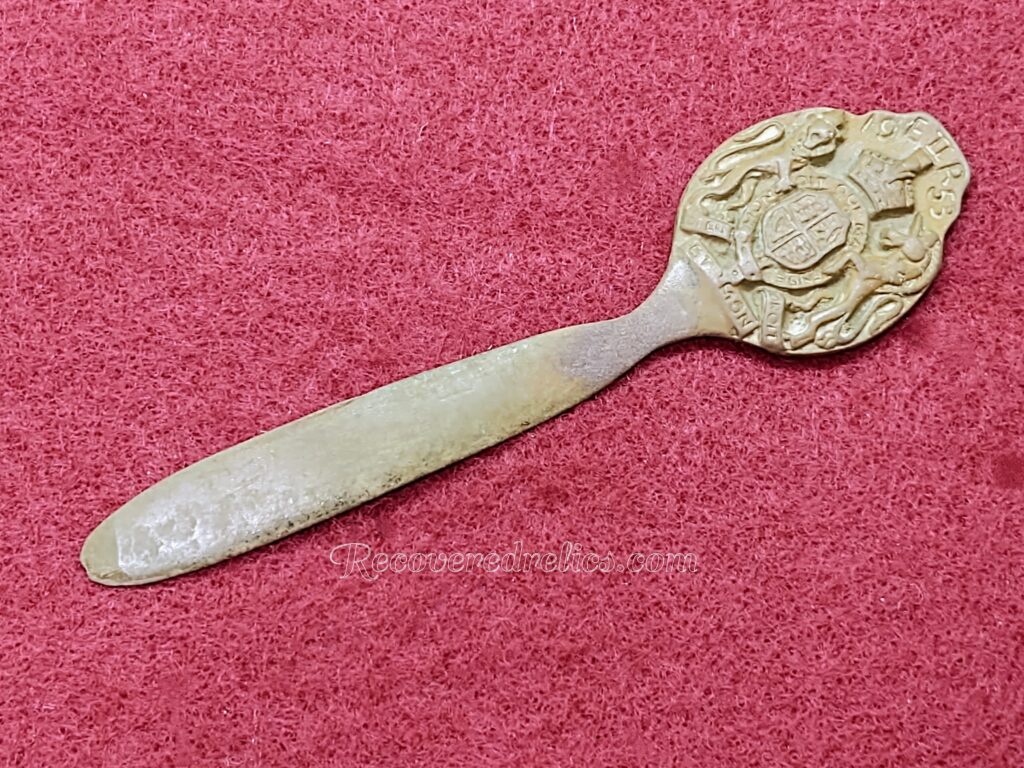
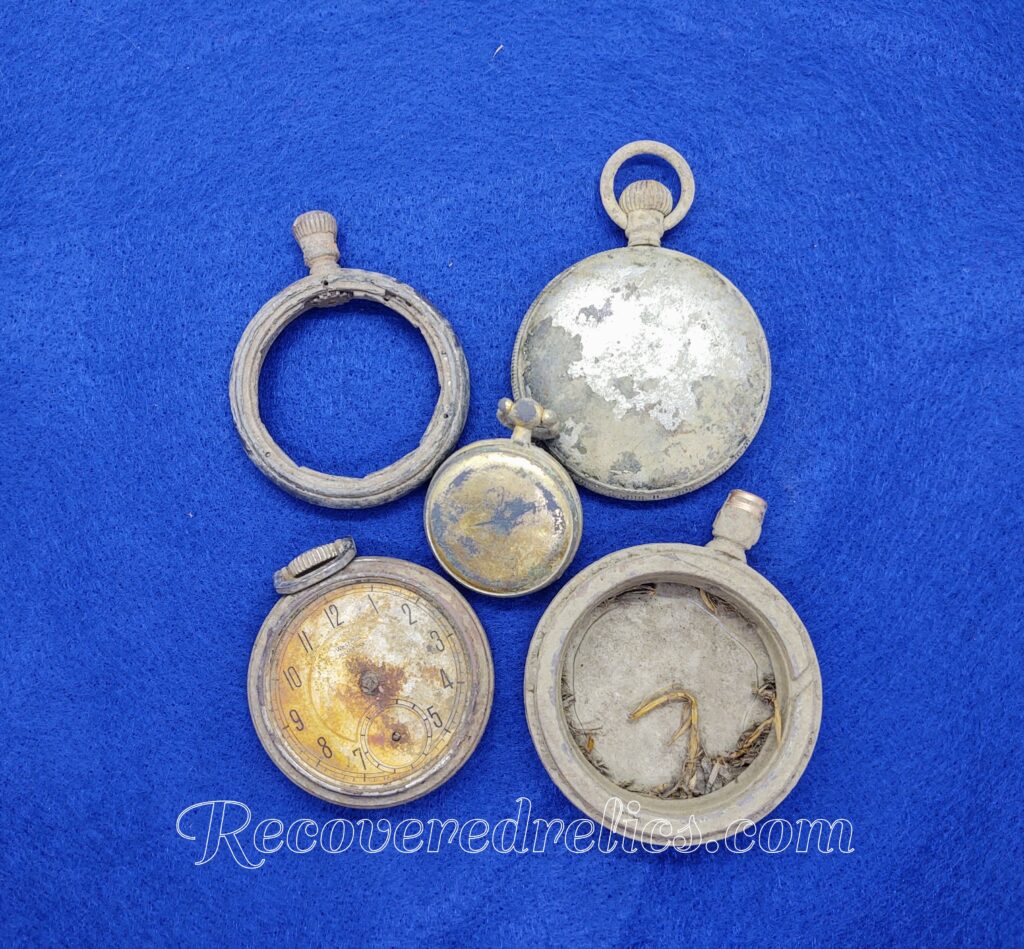
Pocket Watches– A pocket watch is a manual winding timepiece that traditionally was attached to a chain and was intended to be carried in the pocket of a man’s jacket or vest. Pocket watches were the most common type of watch from their development in the early 16th century until wristwatches became popular after World War I. Special pockets were made in jackets and vests in order to accommodate the timepiece.
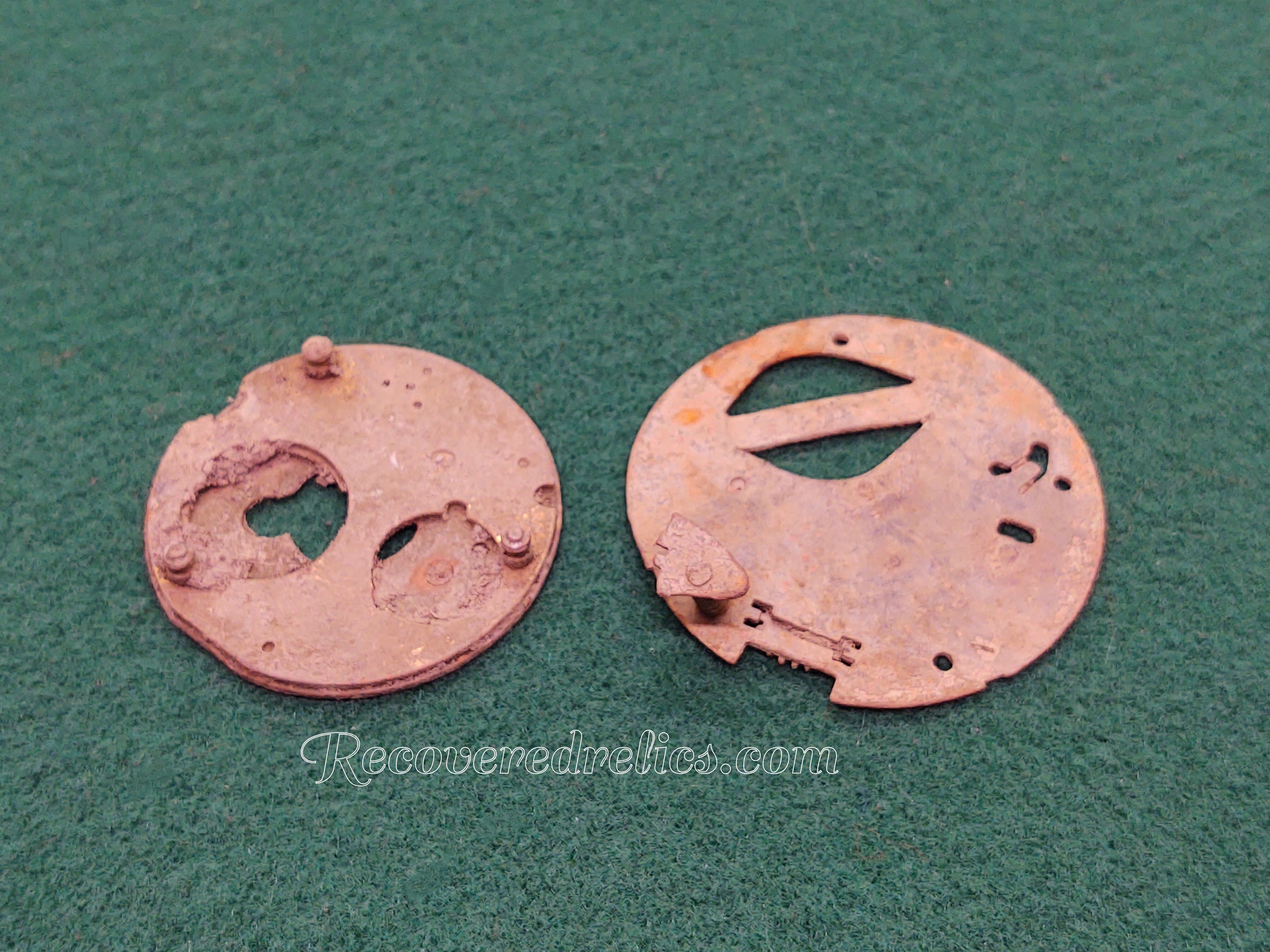

Religious Medallions– Religious medallions are symbolic items used across various faiths to express devotion, seek protection, and commemorate spiritual milestones. Religious medals have a long history originating in early Christianity. The most common religious medallions are the Miraculous Medal, St Christopher, St. Benedict, St. Joseph, the Guardian Angel, and Patron Saints. Modern Era (1900’s–Present) religious medals are made mostly of aluminum, pewter, or silver-plated brass. Vintage and antique religious medals (1700’s–1800’s) are more often cast in copper alloy or made of solid silver.
Revolutionary War Era Lead Pencil– There have been a few different types and varieties of Revolutionary War era lead pencils that been discovered and excavated from various sites. The first type is made from scrap lead and the second type is hammered out of musket balls. Type one has 3 different known varieties listed. Variety A has a round cross section. Most lead pencils of this style seem to have a flat tip at one end and are blunt on the other end. Variety B has a rectangular to square cross section. This style generally has blunt or pointed tips on one end. Variety C has a thin rectangular cross section. The second type, musket ball pencils, generally are hammered to a blunt point on one end and retain the musket ball shape at the other end. Some lead pencils that have been found are twisted, probably for extra strength and some have also been discovered to have drilled holes on one end, like the one pictured, for suspension.
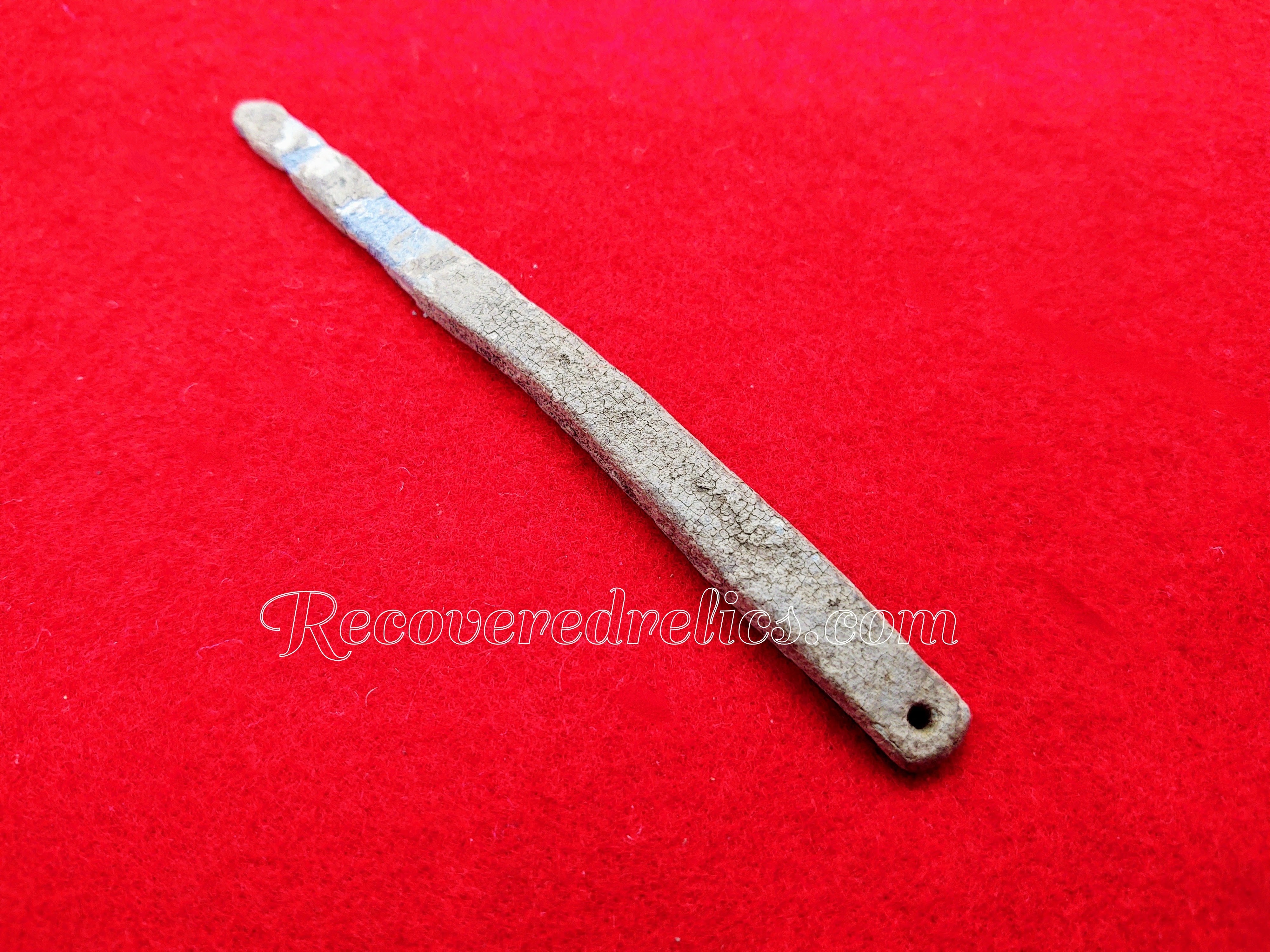

Scholastic Achievement Award Selz Chicago Liberty Bell Medal– These awards were commissioned by Maurice (Morris) Selz and later J. Harry Selz, of the prominent Chicago footwear company Selz-Schwab Shoe Company. These medals were awarded to students for demonstrating proficiency in scholarship and deportment or good behavior. The program spanned several decades from 1887 into the 1920’s. It served as a widespread educational incentive program throughout Midwestern public schools.

Shoe Button Covers– Button covers were extremely popular during the 1920’s. During that time, it became a growing trend for women to cover up the plain buttons on their shoes with decorative button covers. Shoe button covers can be easily identified by their attachment feature which is located on the backside of the button cover.
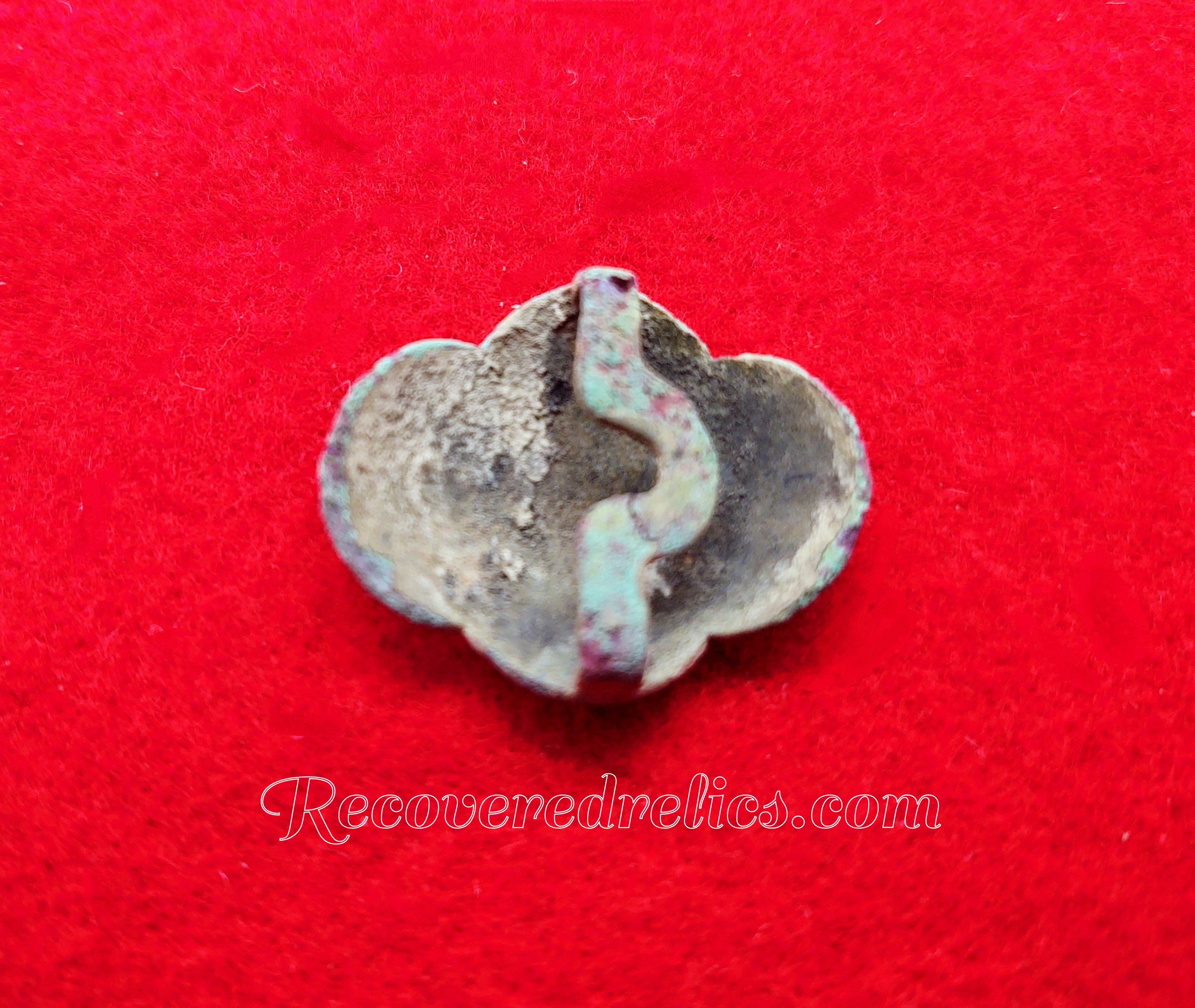
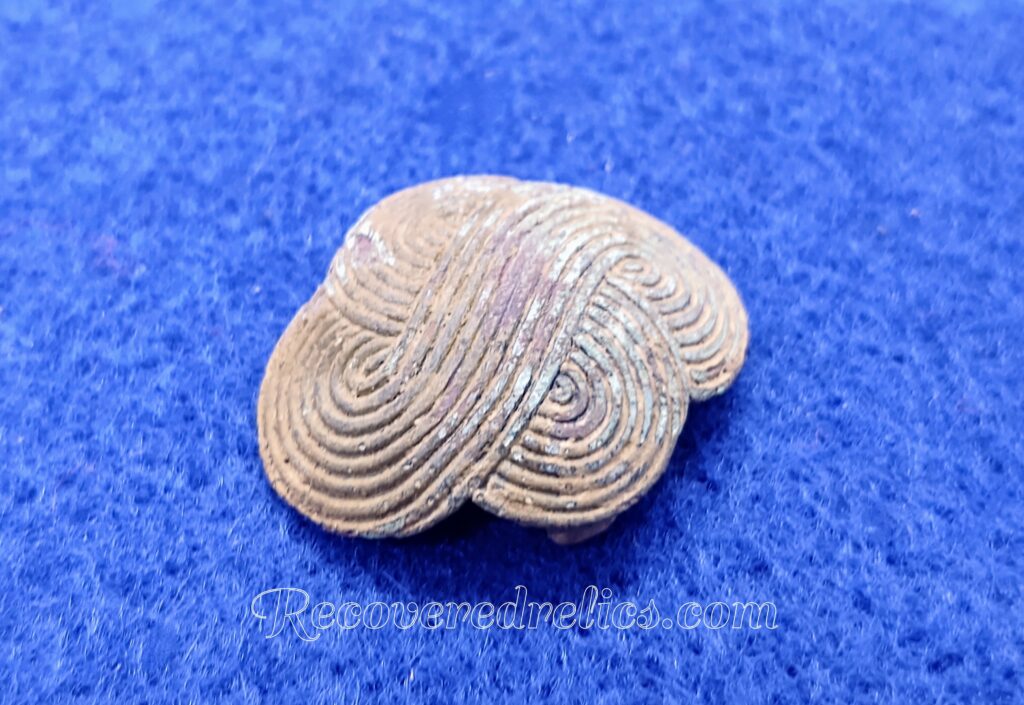
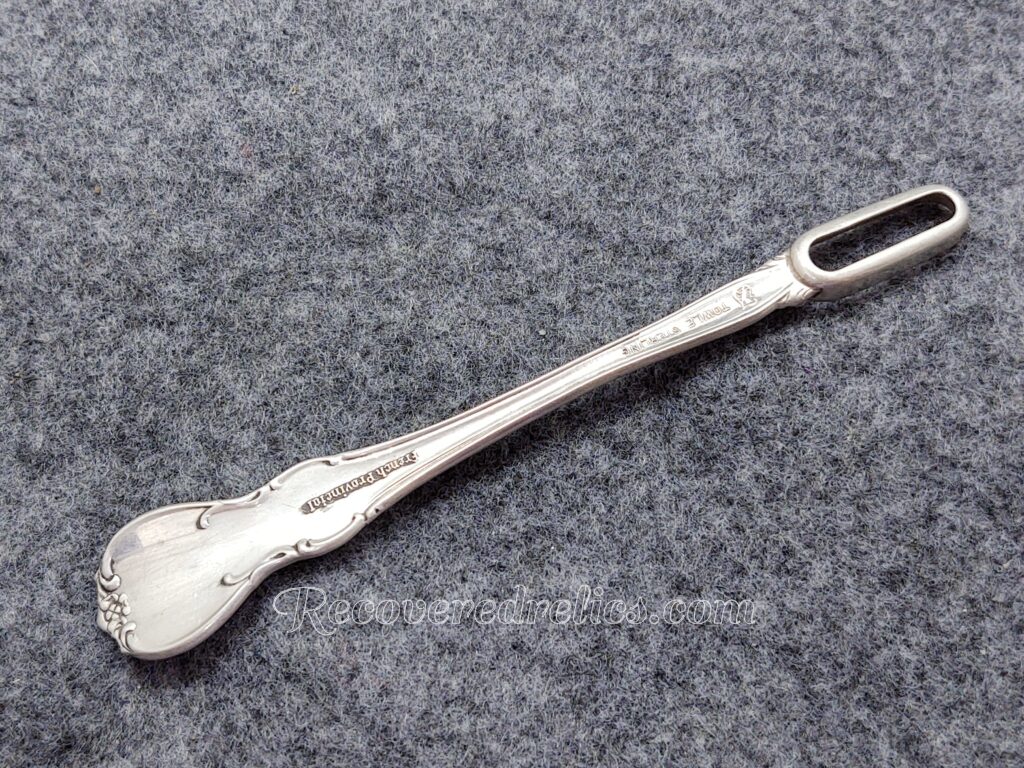
Silver Baby or Child’s Toothbrush-Toothbrushes were widely available for purchase during the 18th, 19th, 20th century. Great care was taken to preserve the teeth of children. Silver was and still is a precious commodity. The toothbrush pictured dates to the 20th century. The French Provincial pattern was first introduced in 1948. It has been a common practice in our culture to give the parents of newborns silver baby items. Historian’s believe that this long standing tradition throughout America dates back to the 18th century. Other popular silver items commonly gifted to the parents of newborns include spoons and rattles. These gifts were considered a symbol of investment in the child’s future.
Thimbles- A thimble is a small pitted cup designed to be worn on ones finger while they are sewing. It is used to protect ones finger from being pricked or poked by a sewing needle. Metal thimbles were made from all types of metals such as silver, gold, brass, copper, and iron. They are a common metal detecting find.
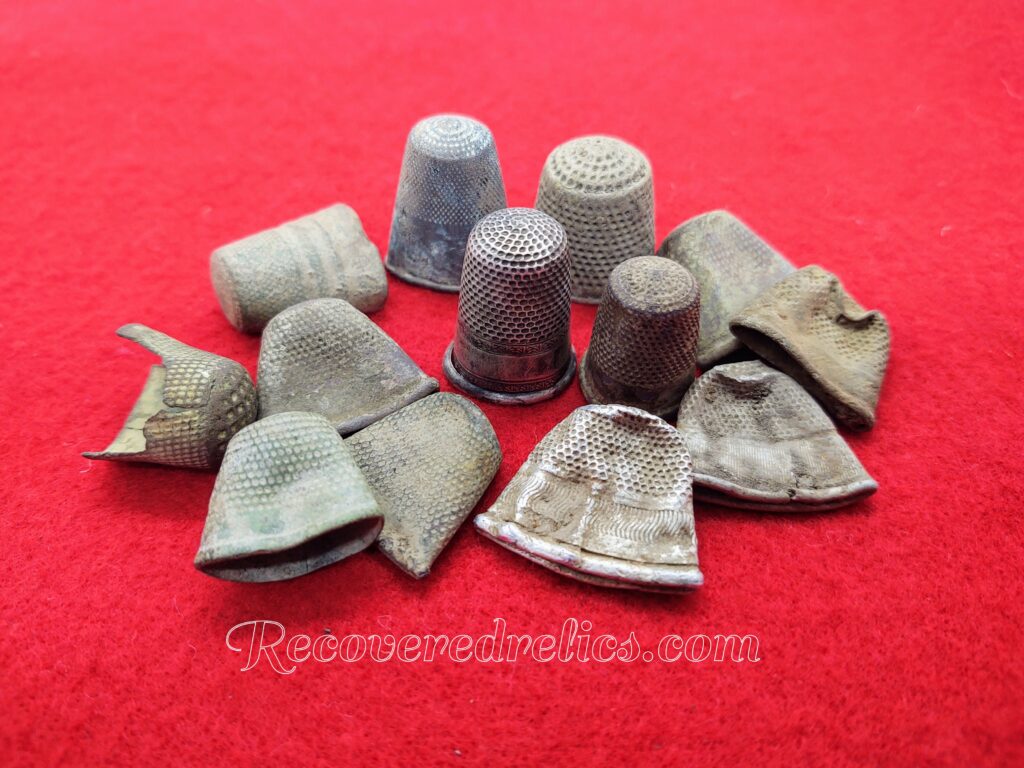
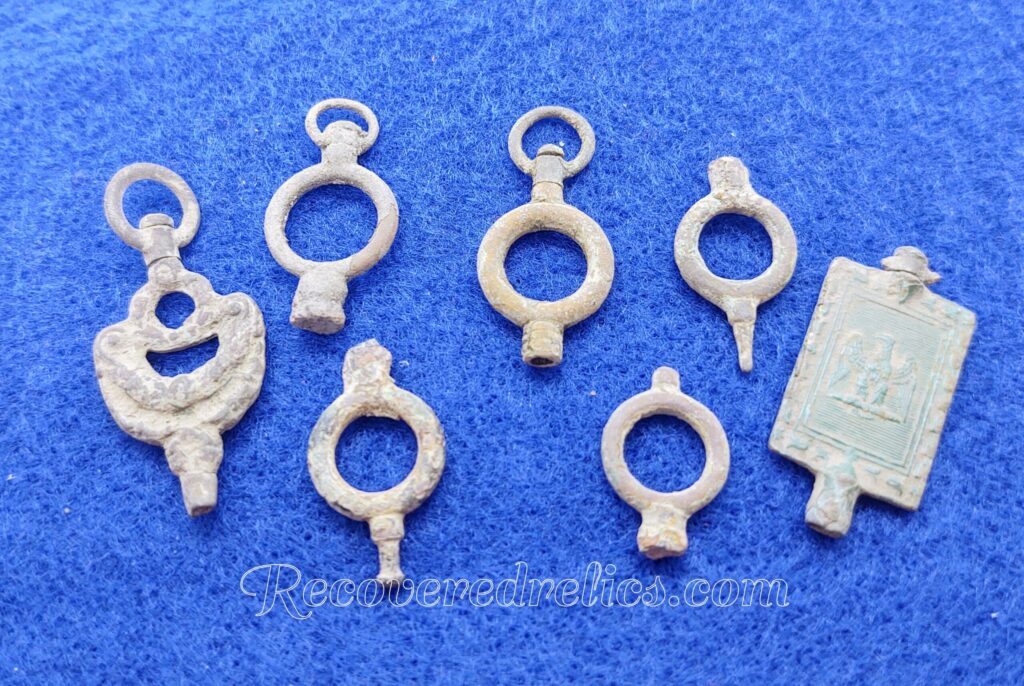
Watch Winders– Watch winders were used to wind pocket watches. Pocket watches first emerged during the 16th century, allowing people to personally keep track of the time. Pocket watches needed to be wound and reset daily. Because of this, watch keys or winders became a necessity. The keys were made from various metals and in an array of different designs. Some were simple, while others featured jewels, engravings, or ornate designs.
Wafer Seal– Wafer seals are a different type of seal for letters and were first introduced around the end of the 18th century. Glue wafers were made from a mixture of wheat, flour, water, egg white, and coloring. The mixture was made into a paste, dried on sheets, and punched out into small flat disks. Wafers were then used like sticky labels. When you wet the bottom of the wafer and placed it between two pieces of paper it sealed them closed. Wafer seals are often misidentified as wax seals or sometimes even as pipe tampers. Wafer seals have a simple cross hatched design on their bases.
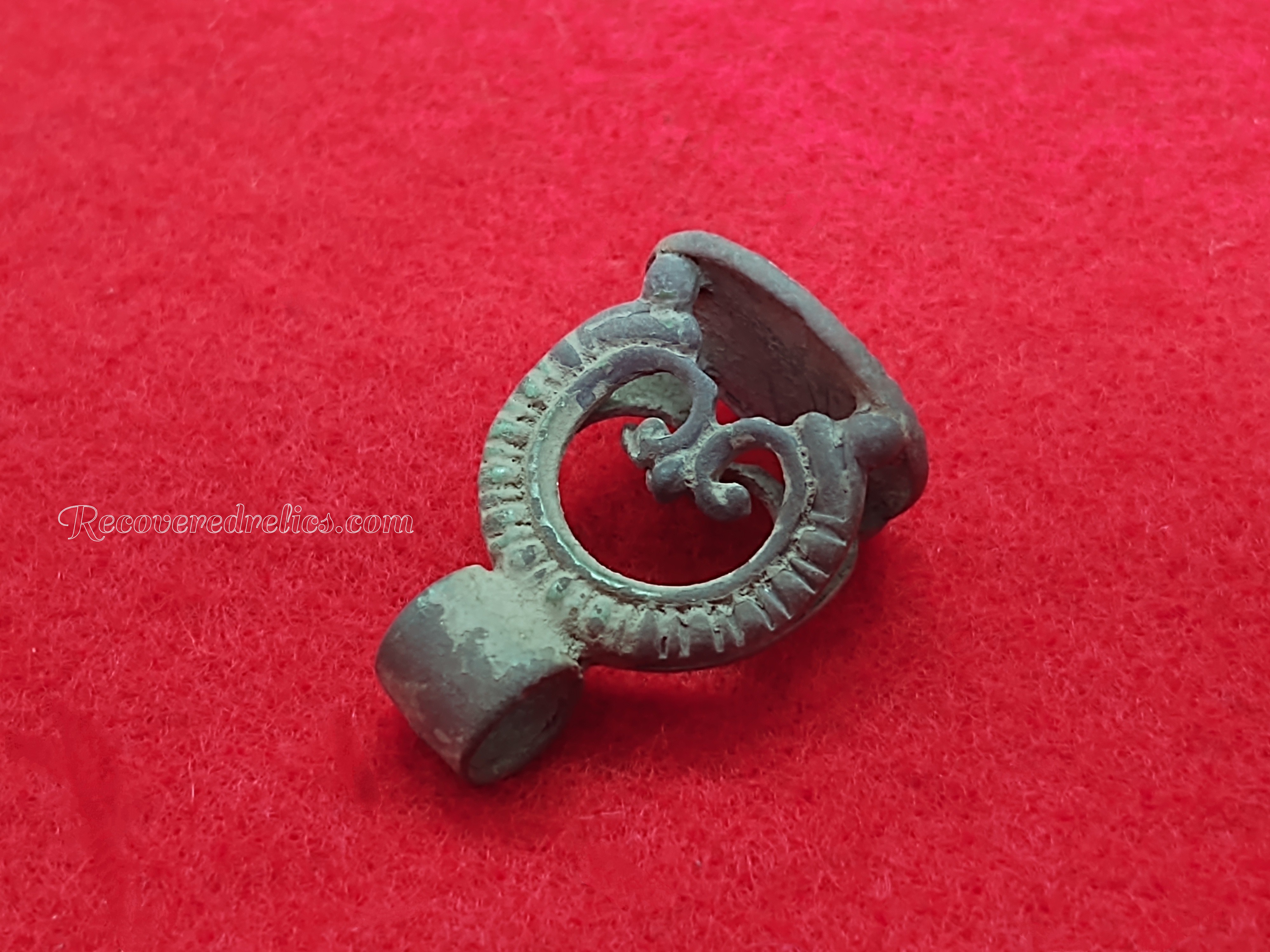
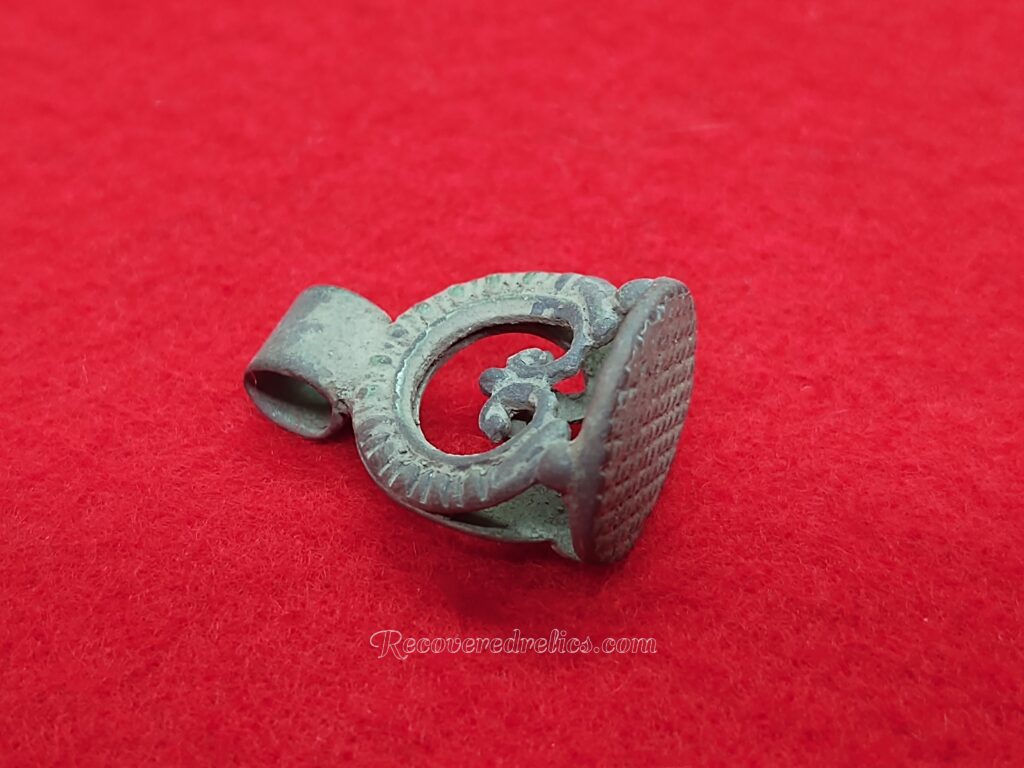

Wax Seal– A seal is a device for making an impression in wax, clay, paper, or some other medium. People began using sealing wax in the Middle Ages. The earliest forms of sealing wax was typically made of beeswax and resin. Sealing wax was used to “seal” the letters or envelopes. Sealing wax was also used for the purpose of stamping or signing legal documents. Wax seals come in many different forms. There are seal rings or signet rings, hand-held desk seals, pendant seals, and seals that attach to a watch fob. All seals are reversed engineered to ensure that their designs come out properly when stamped.
Musical Goods
Accordion Reed– An accordion reed is a sound-generating unit inside an accordion. It consists of a flexible metal tongue, the reed, securely riveted to a metal frame called a reed plate. The reed tongue or reed is the vibrating element that produces the pitch. The reed plate or rectangular frame houses the tongue. A small metal pin or rivet permanently fixes the tongue to the reed plate at one end, allowing the other end to swing freely. Unlike woodwind reeds, which vibrate against a mouthpiece, accordion reeds vibrate freely through a precisely cut, microscopic slot in the metal reed plate. When the player expands or compresses the bellows, air rushes through the slot. This air pressure forces the metal tongue to rapidly oscillate, creating the sound waves that result in a musical note.

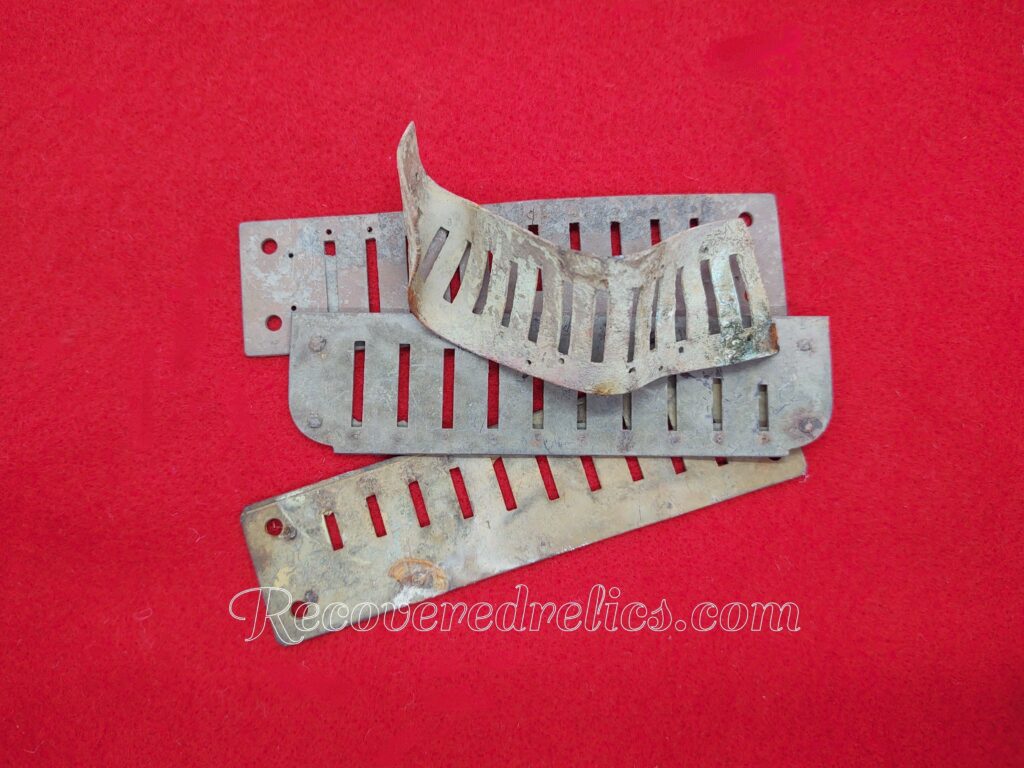
Harmonica Reed Plates– A harmonic is a musical wind instrument consisting of a small rectangular case that is held in in ones hand and played by the mouth. Sound is produced through metal reeds which vibrate as air is blown or drawn past them. Harmonic reed plates are flat, elongated shaped and typically made from brass. They have little slots milled out of them to house the individual reeds. Each individual reed has its own slot. Reeds are riveted onto the reed plate. The reed plates are then screwed or nailed onto the comb or body of the harmonica.
Jews Harp– The jews harp is a small, single reed musical instrument. Also referred to as the jaws harp, mouth harp, juice harp, or trump. We often find the frames of jews harps or fragments of the frames when metal detecting. The reed or tongue piece was thin and fragile and frequently broke off. Also, the reed pieces don’t typically withstand the test of time when in the ground.
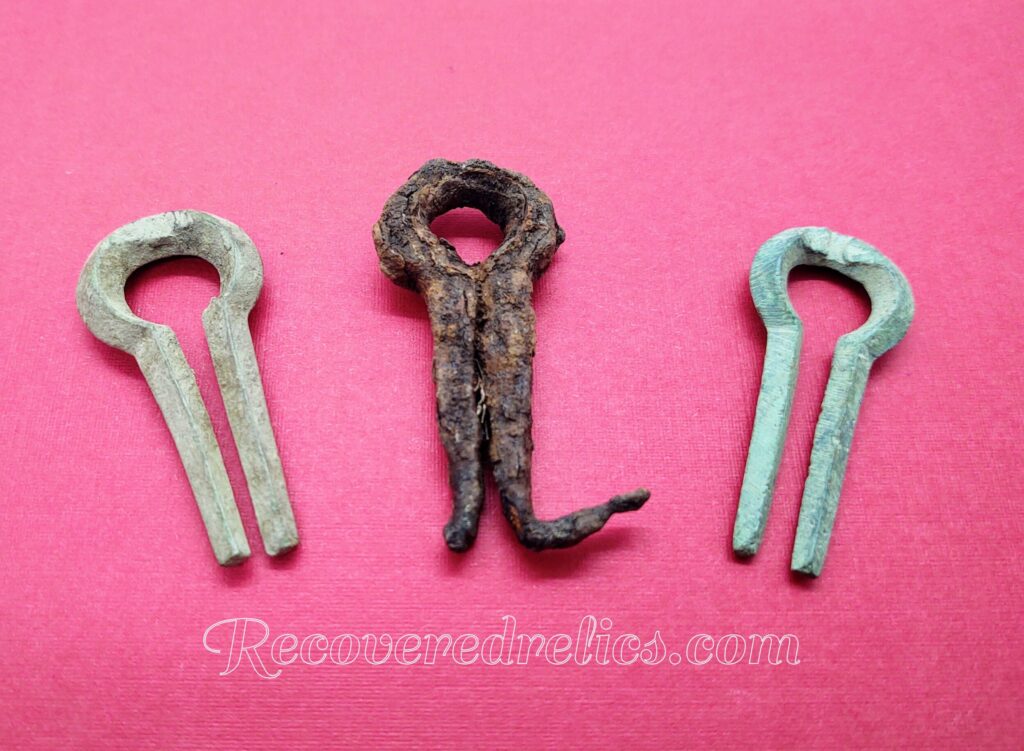
Tokens
Advertising or Promotional Tokens– Issued by businesses to promote goods or services. This category does not include privately issued tokens by businesses that served as a substitute for money. Those tokens are covered in the trade token section.

Alcohol Advertising Tokens– Advertising tokens promote name brand products, chain stores, franchises, corporations and other businesses and services. This type of token typically was not good for anything in trade, services, and had no monetary value. The alcohol advertising token pictured is a Green River Whiskey token distributed by Oldetyme Distillers Inc. of NY. It was designed to be a pocket piece or “lucky coin”. These promotional tokens were issued post Prohibition, after the year 1933, to promote alcohol sales and consumption. When Prohibition ended, companies rushed to re-establish brands and attract customers. Beer advertising tokens were also popular in the 1930’s after the end of Prohibition.

Gasoline Company Contest Promotional Tokens– In the 1960’s and 1970’s gasoline companies such as Shell and Sonoco ran contests where aluminum tokens were given out. Many of these tokens issued were of US presidents, famous people, antique cars, landmarks, and space exploration. All of these tokens are 26mm in size.
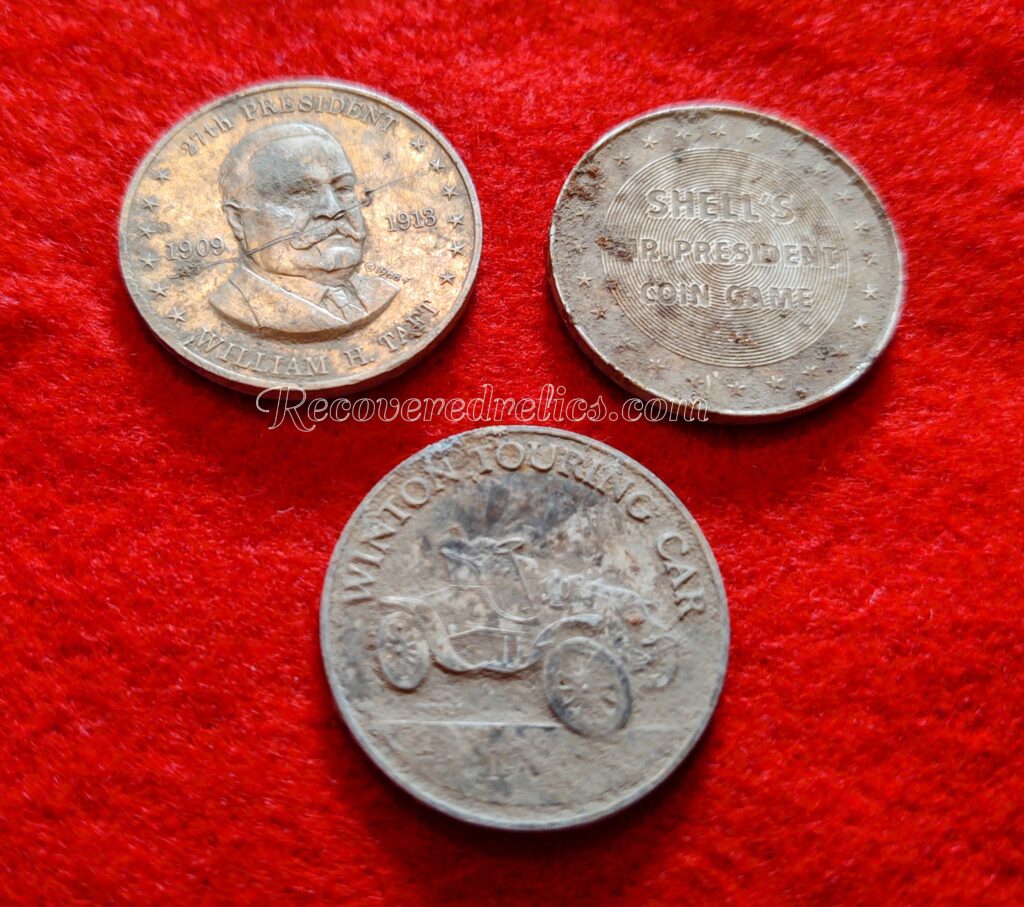
Commemorative & Novelty Tokens– Tokens designed to honor significant people, events, places, or institutions. They served as collectible souvenirs or markers of historical moments or significant milestones. Commemorative tokens are privately produced souvenirs with no face value or legal tender status. Novelty tokens were often created for entertainment purposes or personal gifts.
Elongated Coins– A coin that has been flattened or stretched and embossed with a new design. They serve as inexpensive, personalized souvenirs and commemorative tokens. The machines that create them can be found in amusement parks, at zoos, museums, and other tourist landmarks throughout the world these days. The first elongated coins historians believe were created at the 1893 World’s Columbian Exposition in Chicago featuring designs from the fair. Prior to the year 1965, elongated coins were largely, though not exclusively, produced at fairs or expositions.

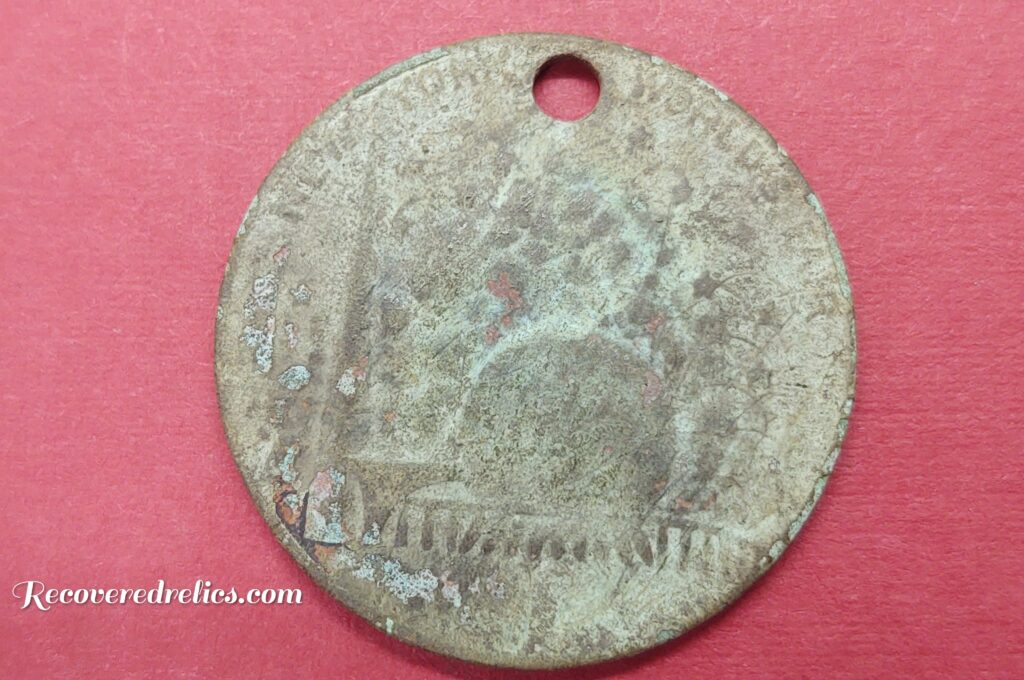
Expositions and Fair Tokens– These tokens were sold or given away as souvenirs at various major expositions and fairs. They were issued at the time of the fair or shortly afterwards.
Harvard Automatic Machine Company Lucky Tokens– Harvard Automatic Machine Company local tokens are vintage aluminum “lucky coin” commemorative tokens. They were personalized souvenirs created in vending machines prevalent at amusement parks, boardwalks, and penny arcades from the 1920’s through the 1950’s in the US. They are typically 33mm in diameter. Originating in Jamestown, New York, these aluminum tokens often called “lucky tokens” or “metal typers,” were stamped with custom letters or personalized messages. These tokens are often circular with a serrated edge and frequently featured a cutout such as a 6-sided or “lucky” star and a stamped design in the center, such as an American flag, four leaf clover, or the word “Lucky”. They came in metallic finishes, including natural silver, brilliant gold, red, blue, and green.


Heads I Win, Tails You Lose Token– A novelty token often dating back to the early to mid-20th century, designed with a deceptive premise where both sides of the coin ensure the owner wins. Historically used for amusement. These tokens are often adult themed.

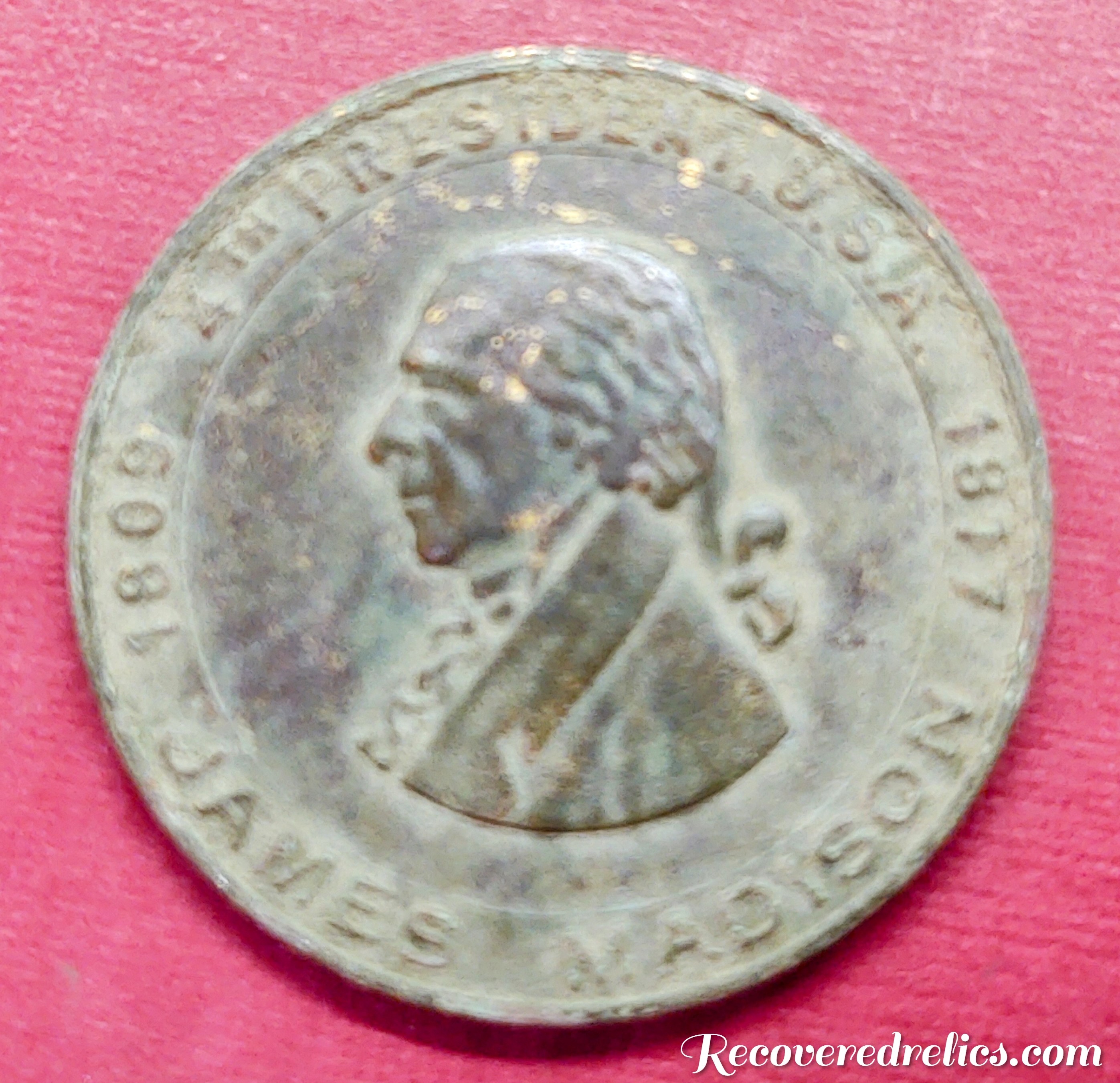
Reader’s Digest History of the U.S. Presidents Tokens– These tokens are commemorative uncirculated brass medallions. They were produced as a collectible set rather than official currency, with each piece bearing a portrait on the front of a U.S. President and biographical highlights on the back. The sets were issued in the year 1997. The complete set came with 41 solid brass tokens in total. These tokens were intended for historical display or educational purposes. The James Madison, 4th President of the US, token is pictured from the set.
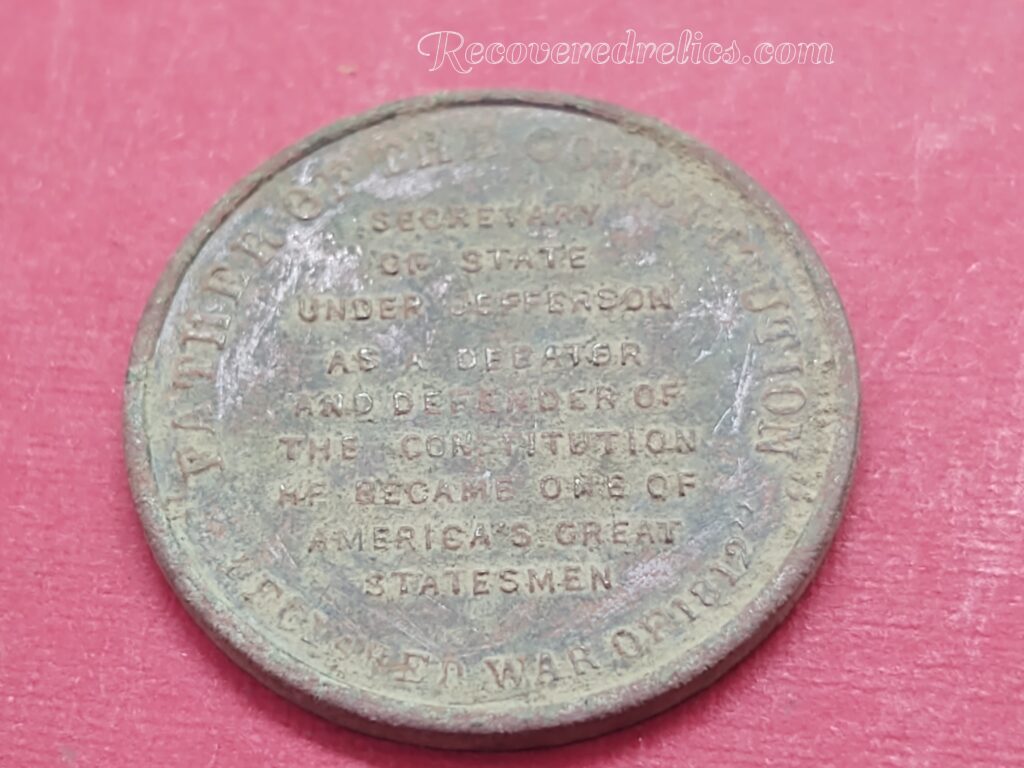
Reader’s Digest History of the U.S. Presidents Tokens continued: The token pictured is the Benjamin Harrison token. Benjamin Harrison was the 23rd President of the United States. This token is often referred to as the “Backbone Ben” token and is a mid-20th-century souvenir or commemorative medal rather than a 19th-century campaign item.


Spiel Münze City Hall New York Gaming Token– The obverse side features an image of the New York City Hall facade with a radiant sunburst design glowing over the building. The reverse side displays a facsimile of the United States Seal and features the Latin inscription “In Unitate Fortitudo”, which translates to “Strength in Unity”. These novelty tokens were primarily manufactured in Germany and are antique pieces of “play money” or game counters, known as Spiel-Münze. They were non-currency gaming tokens or counters historically used as substitutes for real money in board games, card playing, and as advertising or promotional pieces during the 19th century.

Love Tokens– Specifically, legal tender coins, often silver, with one or both sides smoothed and intricately engraved with initials, names, monograms, or dates
Bent Coin Love Tokens– Bent coin love tokens or benders are historic, intentionally bent coins, often silver, given as tokens of affection, promises, or for good luck. These coins were highly popularized in the UK especially, during the 16th-19th centuries. A “twice-bent” coin or bent into a wave/S-shape was given by a suitor to a woman to express affection, intent, and love. The bending process was considered a form of personal sacrifice, making the coin unusable in commerce to signify a permanent, sacred promise.


Love Tokens– Love tokens are defaced coins. Either one or both sides of the coins were smoothed out and then hand engraved. Engravings with initials are the most common but names, dates, sayings, or pictures were also popular. The practice was popular in the United States during the second half of the 19th century. All types of coins were used to create love tokens. The Seated Liberty dime was the most commonly used coin to make love tokens. The Love Tokens pictured are non-dug examples.
Political Tokens– This category of tokens encompasses presidential campaign tokens, non-campaign political pieces of presidents, non-presidential political campaign tokens, presidential data series tokens, souvenir tokens of local politicians, political convention tokens, cause tokens such as Anti-Slavery tokens, Temperance tokens, and Prohibition tokens. Political tokens are often satirical.
Political Abraham Lincoln Presidential Campaign Tokens– There are hundreds of distinct varieties of Abraham Lincoln political tokens, primarily from his 1860 and 1864 campaigns. They were frequently similar in size to a cent, featured Lincoln’s likeness, campaign slogans like “Millions for Freedom,” and often referenced the Union.

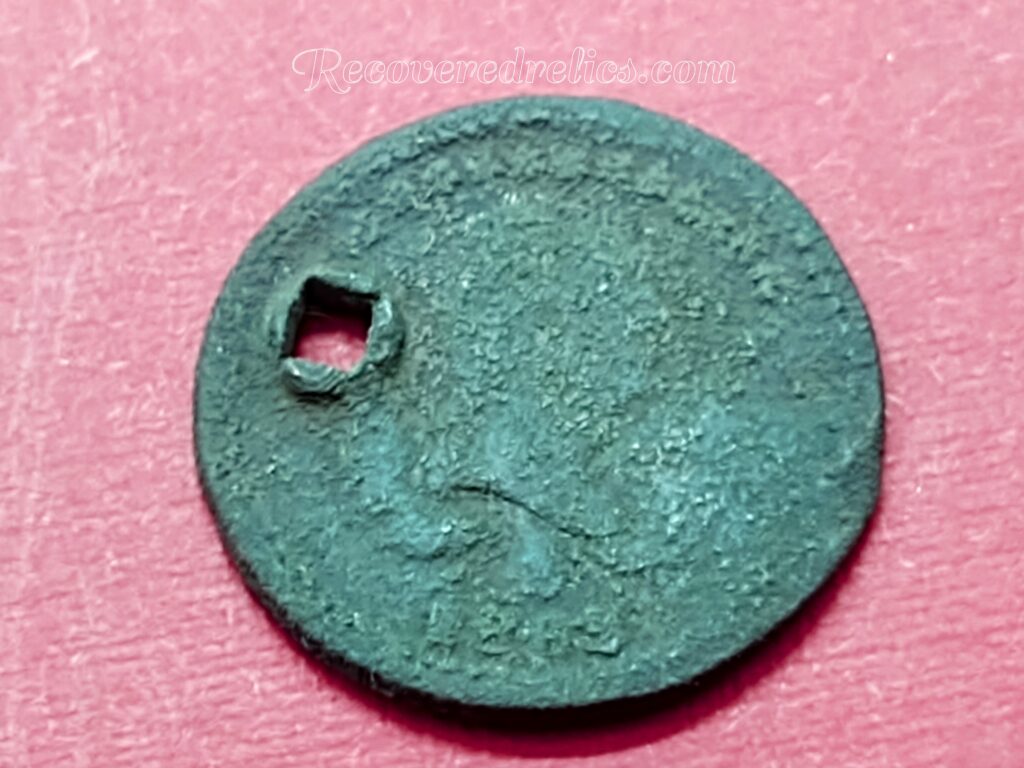

Political 1885 S. Grover Cleveland and Thomas A. Hendricks Campaign Token– This token was issued during the fierce 1884 United States presidential campaign to celebrate the Democratic ticket’s victory heading into the 1885 inauguration. The obverse features a detailed portrait bust of Stephen Grover Cleveland. The reverse is dedicated to his Vice-Presidential running mate, Thomas A. Hendricks. The word “REFORM” was the absolute cornerstone of Cleveland’s 1884 campaign. He was the first Democrat elected president after the American Civil War and the first U.S. president to serve nonconsecutive terms.

Political John C. Freemont Presidential Campaign Token– Presidential campaign tokens were small, metallic, coin-like items, used during the 1800’s and even into the 1900’s, to promote candidates, their cause, and to build voter loyalty. The John C Fremont token pictured is from his 1856 presidential campaign. These brass tokens feature the slogan “Free Soil and Free Speech” Freemont is famous for being known as the first Republican presidential candidate. Freemont lost the election in 1856 to James Buchanan, the 15th President of the United States.
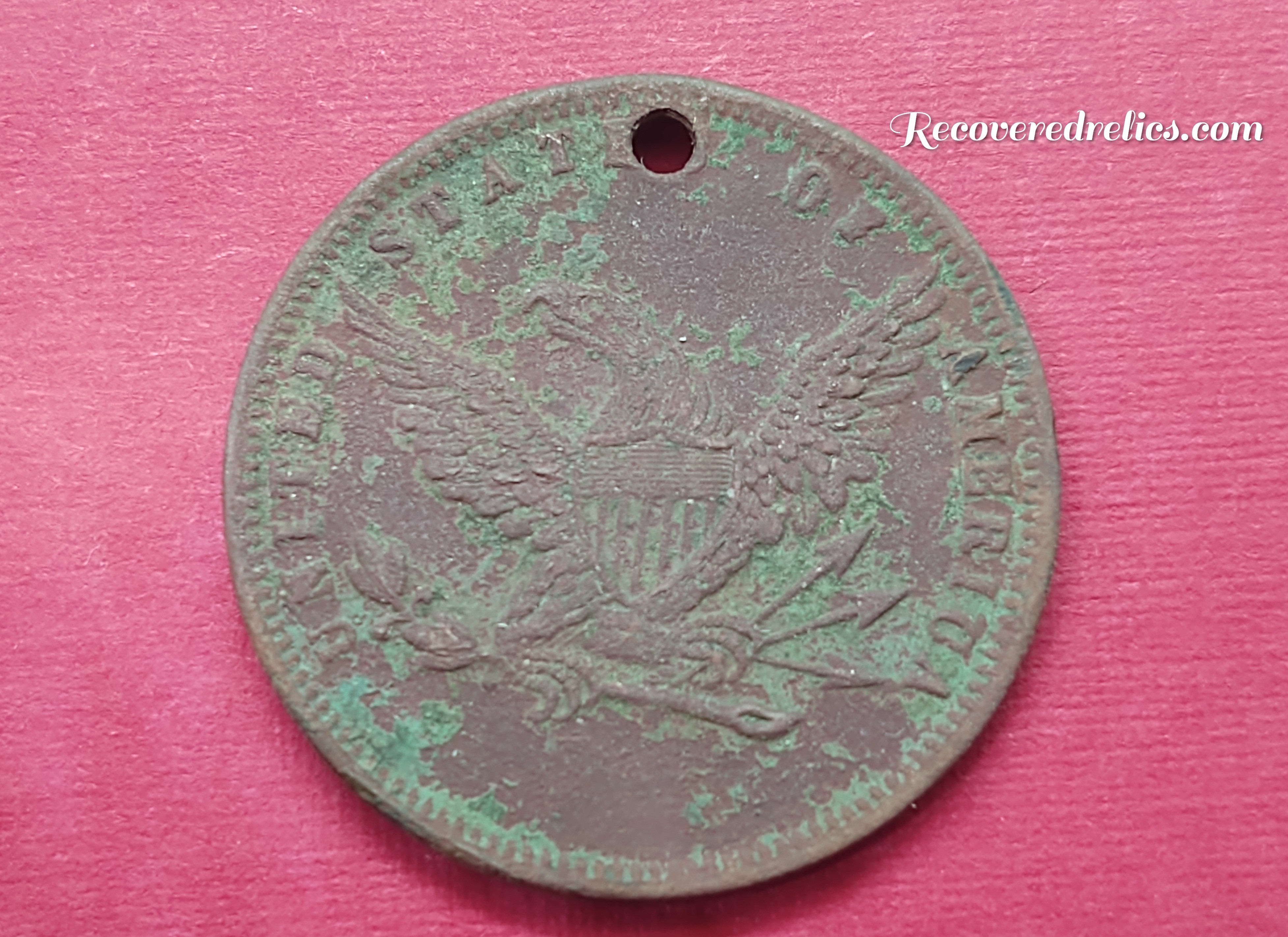


Political Wendell Willkie Presidential Campaign Token– The 1940 “Open the Gates of Prosperity” political token is a notable piece of memorabilia from Wendell Willkie’s campaign against FDR. It frequently features the slogan “Open the Gates of Prosperity with Wendell Willkie” on one side and “Token of Belief in Wendell Willkie” on the other.

Temperance Tokens– 19th Century brass or copper medals used to promote sobriety and abstinence from alcohol. Temperance tokens were common between the 1830’s to 1850’s and often featured slogans like “Promise not to drink” or “Temperance Leads to Health, Wealth, Happiness and Long Life”. These tokens sometimes functioned as merchant trade tokens which could be redeemed at Temperance Houses or hotels or taverns that did not serve alcohol. They also served as campaign propaganda for dry laws. The Temperance Token pictured was produced by A.W. Riley of Rochester, NY.


Religious Tokens– Religious tokens are small, stamped, or cast pieces of metal bearing sacred symbols, scripture, or figures. They are primarily used as physical reminders of faith, aids to prayer, or devotional protection.

Mazel Token– Mazel tokens are 20th century pocket medals associated with Judaism and Jewish culture. The Hebrew word Mazel stems from a biblical term meaning constellation, luck. fortune, or destiny. The front side of the token pictured features the Hebrew word Mazel flanked by two Lions of Judah supporting the Tablets of the Ten Commandments. The reverse side bears the shin hand blessing sign and the text of a Jewish blessing, “May the Lord bless thee and keep thee”

Scripture Quote Tokens-Most of these pieces have a scripture quote on each side, and nothing else. These tokens are designed to be easily carried in a pocket, placed in a wallet, or displayed at home as a daily reminder of faith. They are commonly used as church event favors, motivational gifts, funeral memorials, or prayer prompts. The token pictured was produced during the 1960’s by Chicago’s Good News Publishers, now Crossway.

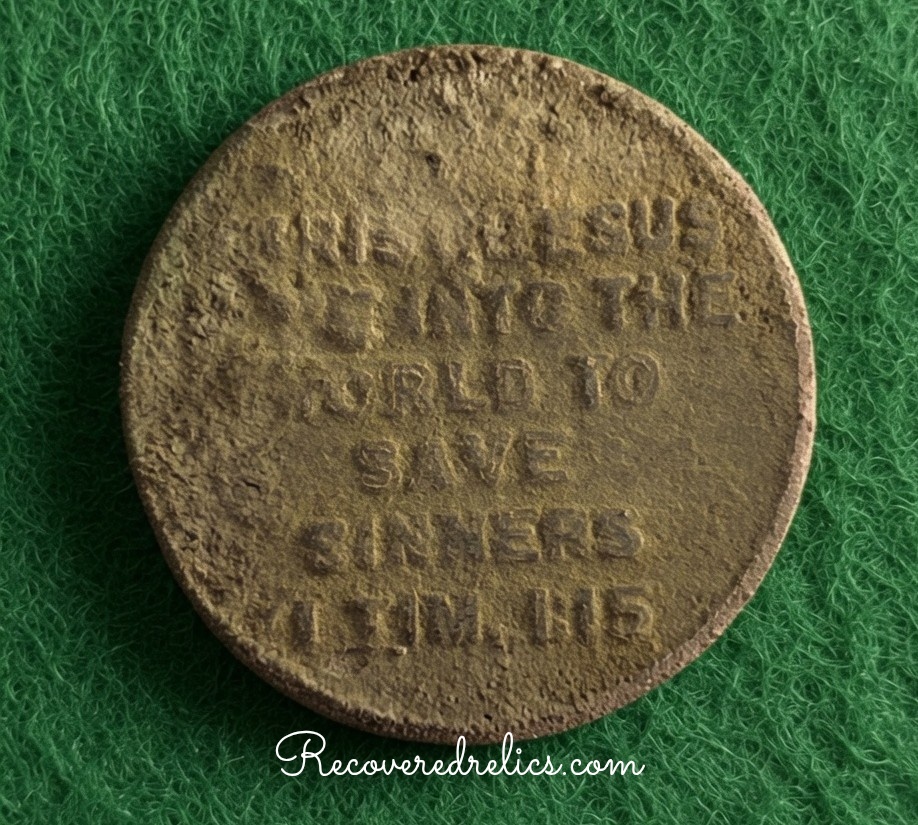
Trade Tokens– Trade tokens are privately issued, coin-like objects used as a substitute for official currency, usually during periods of small-change shortages. They are commonly issued by merchants or companies and are redeemable for specific goods, services, or cash value at a particular business.
Bank of Upper Canada Token– Bank of Upper Canada tokens were struck in Londan and Birmingham between the years 1850 and 1857. The initial 1850 batch was struck entirely at the Royal Mint in London. Subsequent issues were struck by Heaton’s Mint in Birmingham, using dies supplied by the Royal Mint. These tokens came in two primary denominations: Half Penny and One Penny. They feature St. George slaying the dragon on the obverse and the Upper Canadian coat of arms on the reverse. These legitimate copper tokens were authorized by the colonial government and circulated widely across the Province of Canada to help resolve severe currency shortages in the region that is now Ontario. Bank of Upper Canada tokens are frequently found by detectorists in the United States, particularly in northern states, border regions, and areas with historical trade routes. Bank of Upper Canada tokens were never official legal tender in the U.S and could be rejected by banks or government offices. However, the United States suffered from chronic shortages of small-denomination copper coins before the Civil War and merchant communities frequently accepted foreign coppers by weight or general size.


Canada Agriculture and Commerce Un Sou Token– The obverse features a thistle bouquet with the text “Agriculture & Commerce Bas Canada”. The reverse side displays the words “Un Sou”, surrounded by a wreath. Un Sou is French and translates to one penny or one cent. The term is often used to refer to old, small-value French coins but is also widely used in everyday language as a general term for money. These copper half-penny tokens were commissioned in the 1830’s to help relieve the severe shortage of small change in Lower Canada (Quebec). Many were struck by private mints operating in New York State.

Car Wash Trade Token– A metallic, coin-like object used in place of legal tender at a Car wash facility. These tokens often hold no actual cash value but serve as a prepaid token for a specific service. These were typically produced in the 1960’s-1990’s as the self-service car wash industry grew.


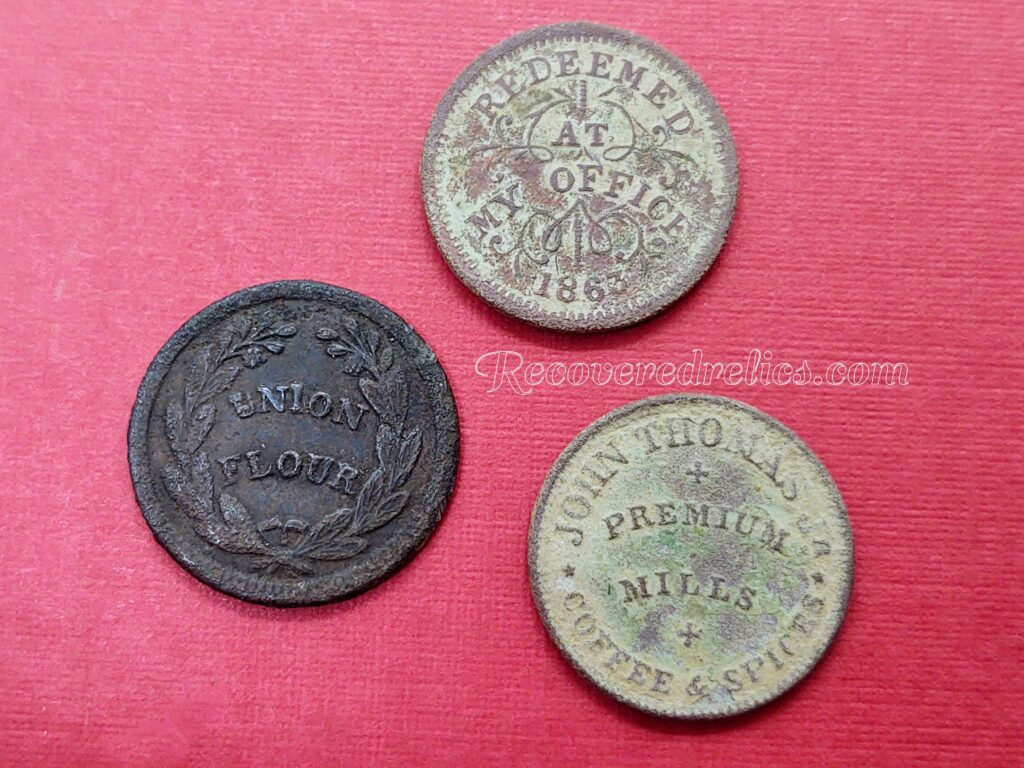
Civil War Era Tokens– Tokens that were privately minted and distributed in the United States between 1861 and 1864. These tokens were utilized as currency and were widely used in the Northeast and Midwest where at the time there was a scarcity of government issued cents. Civil War era tokens can be divided into three categories: store tokens, patriotic tokens, and sutler tokens. The US congress passed a law on April 22, 1864 prohibiting the issue of any one cent or two cent tokens or devices for use as currency ending the legal use of Civil Ware era tokens.
Drinking Cup Token– An individual drinking cup token is a brass trade token minted in the early 20th century by the Individual Drinking Cup Company. They were used in public places like train stations and in schools and offices to buy a single use folded paper water cup from a vending machine. The Individual Drinking Cup Company was incorporated in New York in 1910. They sought to ban the highly unsanitary common drinking cup, a public ladle or glass shared by everyone.
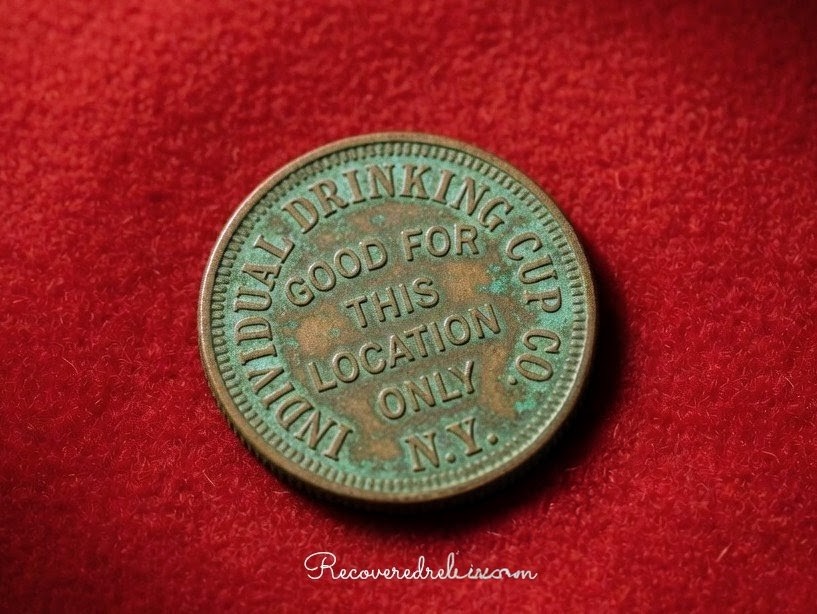
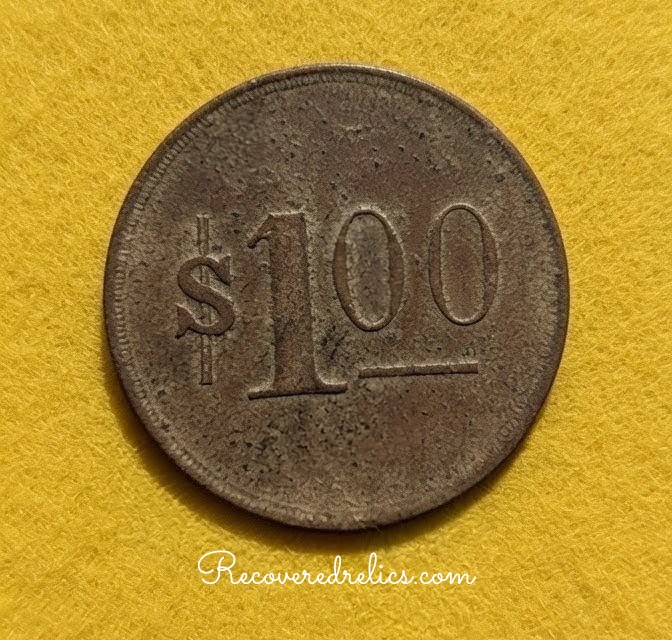
Generic Trade Token– Generic trade tokens are privately manufactured tokens featuring standard face value or denomination and completely lack any other details such as business names, locations, or dates. These tokens came in various denominations such as 5¢, 10¢, 25¢, 50¢, and $1. Private mints sold these in bulk to local merchants who could not afford or did not want custom engraved “store cards”. Merchants utilized these generic store tokens as small change during historical coin shortages. In the late 19th and early 20th centuries, generic tokens were also used in slot machines.
Good For Trade Tokens– Trade tokens are sometimes referred to as merchant tokens or “good fors”. Trade tokens in the United States date back to the late 18th century. They were manufactured by numerous token making companies. Trade tokens were worth something in trade, merchandise, cash, or service. Most businesses benefitted from using the tokens by receiving payment in advance for merchandise or services to be claimed later or they used the tokens as a means of extending credit.
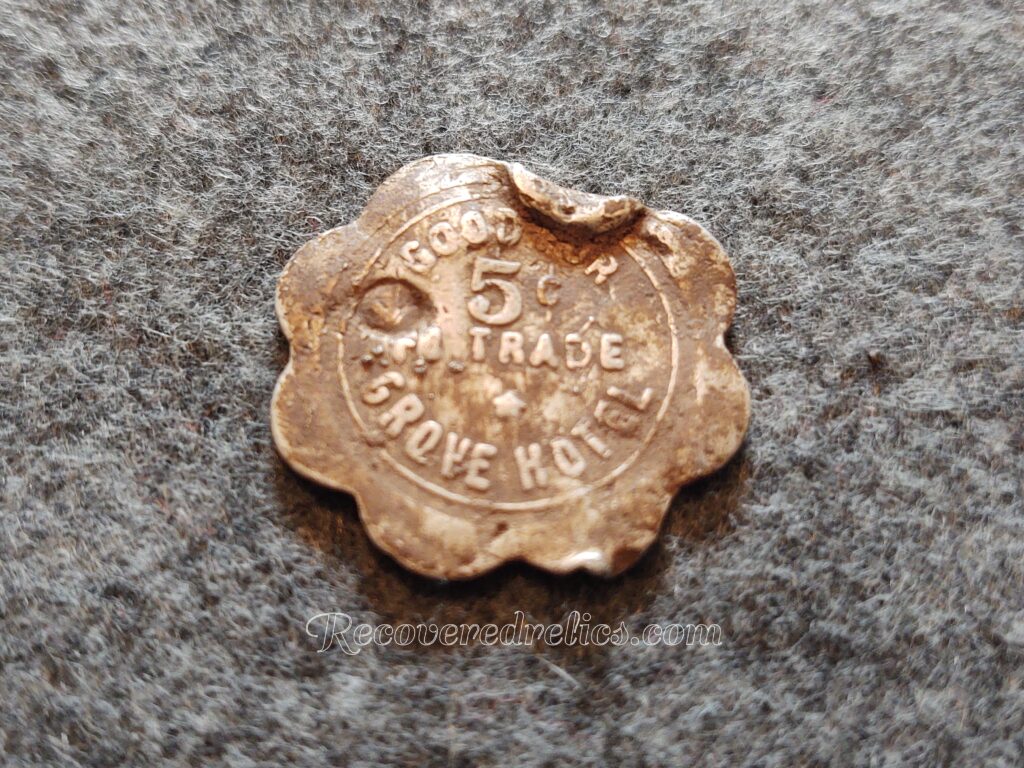
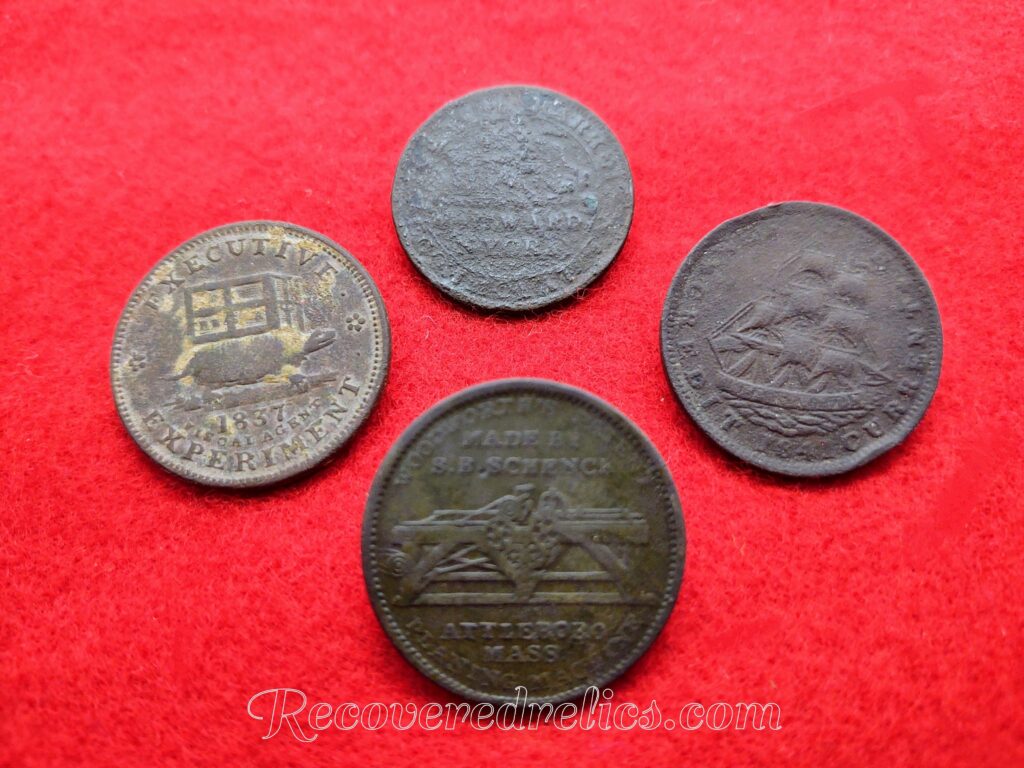
Hard Times Tokens– American large or half cent sized copper or brass tokens struck between 1833 and 1843. These privately made tokens served as unofficial currency. They were used during a time of political and financial crisis. Many of the designs are political and satirical.
Pay Toilet Tokens– These tokens were used for access to locked toilet stalls in public or commercial places.
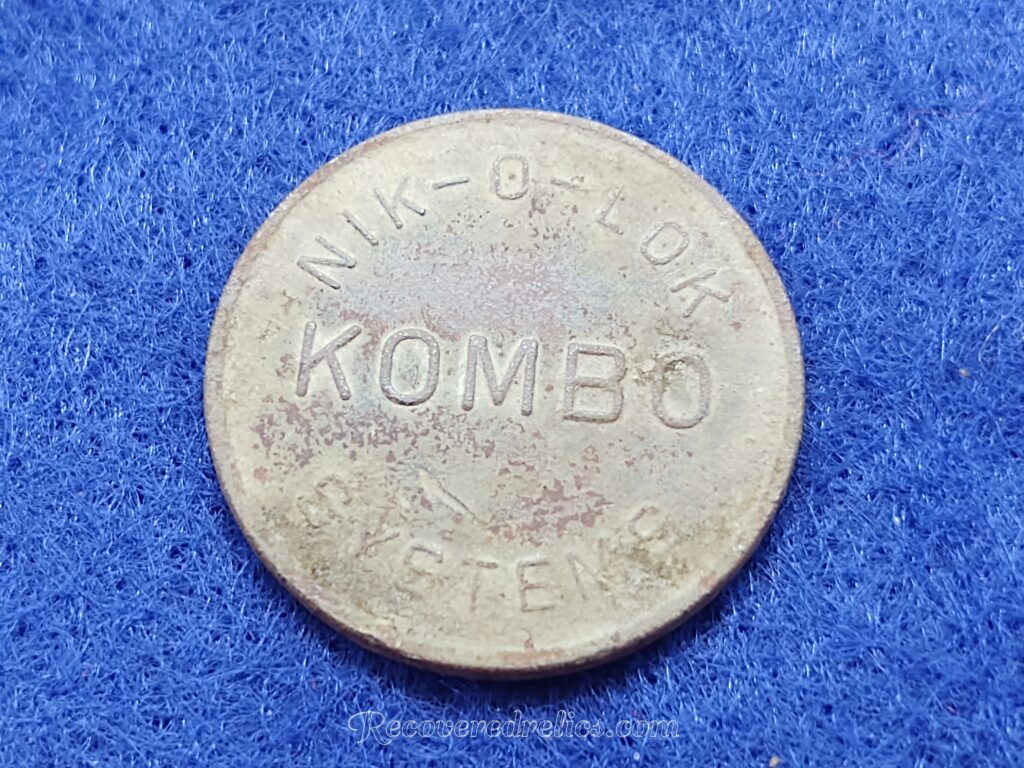

Pool and Billiard Halls Trade Tokens– These tokens were good for games of pool, drinks, or services within the establishment. In the late 1800’s and early 1900’s, many billiard rooms and pool halls used tokens to manage table time and payments when low denomination currency was in short supply.
Theater Token– During the 1800’s theater tokens were commonly used as physical admission passes. One of the most famous and widely collected examples is the copper 1817 Park TheaterTokens. These tokens were introduced by management to prevent ticket taking ushers from embezzling cash at the doors. The Admit tokens were given directly to patrons at the box office as proof of purchase. The buyer would carry it to the entrance to enter the venue. Paid tokens were handed to the theater patron by the usher at the door in exchange for their Admit token. This multi-step process ensured the box office cash logs matched the physical token counts and helped to eliminate internal theft.


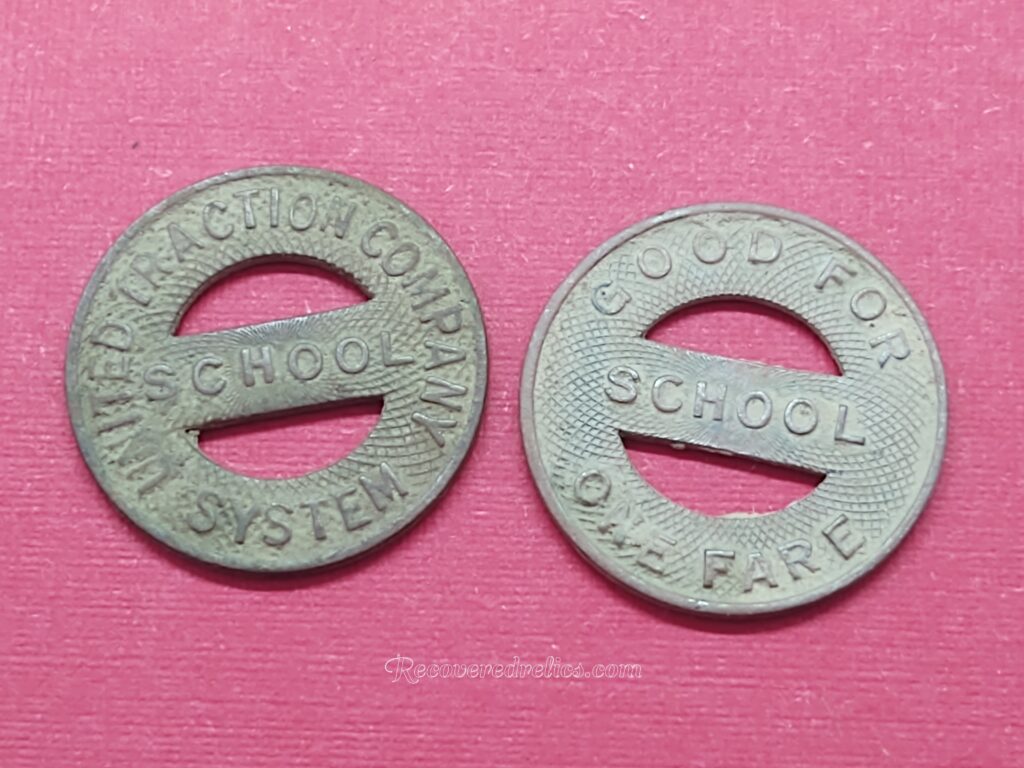
Transportation Tokens– This type of tokens was used for personal transport. These tokens were good for fares, rides, tolls, passage, trips, etc. on horse drawn vehicles, stage coaches, railways, streetcars, busses, ferries, bridges, toll roads, taxis, ect. Transportation tokens were first used in the US in the year 1837 and are still used widely even today.
Toys
Automobiles– Toy Automobiles appeared shortly after the invention of real cars. The earliest models from the late 1800’s through 1920 were often simple, handcrafted, and expensive. Beginning in the 1920’s companies like Tootsietoy began casting metal miniature cars. Toy automobiles were an extremely popular toy for children throughout the 1900’s. After World War II manufacturers began utilizing new lighter materials like plastics and they refined their diecast techniques to make cars more durable and detailed. In 1953, Lesney Products released the first Matchbox cars, specifically designed to fit inside a matchbox. Toy cars are still a popular toy for children today.


Cannons– Metal toy cannons have a rich history dating back to the 17th and 18th centuries. These early miniature cannons served as functional, loud firing, miniature replicas of naval or field guns and were fired using gunpowder and lead shots. They were often cast in bronze or brass. Later designs of toy cannons were engineered to be safer for children to play with and no longer fired explosive projectiles.
Chess Game Pieces– People have been playing chess for more than 1,500 years. The game has evolved over the years from an ancient military strategy tool into a competitive global sport. Chess likely began as Chaturanga in India during the 6th century. The name Chaturanga means four divisions and represented the military units of the time: infantry (pawns), cavalry (knights), elephants (bishops), and chariots (rooks). The game spread to Persia, where it was called Shatranj. This is where the term “checkmate” originated from. The Persian phrase “Shah Mat” translates to “the king is dead” or “the king is helpless”. Chess reached Europe, in Spain and Italy, roughly around the year 1000 CE. Around the year 1475, the rules underwent a radical shift in Europe. The Queen which previously was a weak piece that could only move one square diagonally, became the most powerful piece on the board. The Bishop, formerly an elephant with a limited leaping move, gained its full diagonal range. And pawns were granted the ability to move two squares on their first move. Before the mid-1800’s, chess sets varied wildly. In 1849, the Staunton pattern became standard for tournament play. Chess is still an extremely popular game today.


Clue Game Board Pieces– Clue is a classic murder mystery board game where players deduce who murdered Mr. Boddy, with what weapon, and in which room. The six classic Clue murder weapons are the Candlestick, Knife or Dagger, Lead Pipe, Revolver, Rope, and Wrench. In the early versions, the metal weapons were often made from unfinished pewter or die-cast metal.
Firearms– Metal toy firearms were particularly popular from the 1870’s onward. Toy guns were common childhood playthings that mirrored the tools of adult life. Early models were often made from cast iron. Popular models included revolver cap guns. Following World War II, cast iron was replaced by lighter zinc alloys. Die-cast metal cap guns reached peak popularity in the 1950’s and 1960’s. The 1950’s and 1960’s are often referred to as the “Golden Age” of toy guns, a period fueled by the massive popularity of TV Westerns and spy shows.


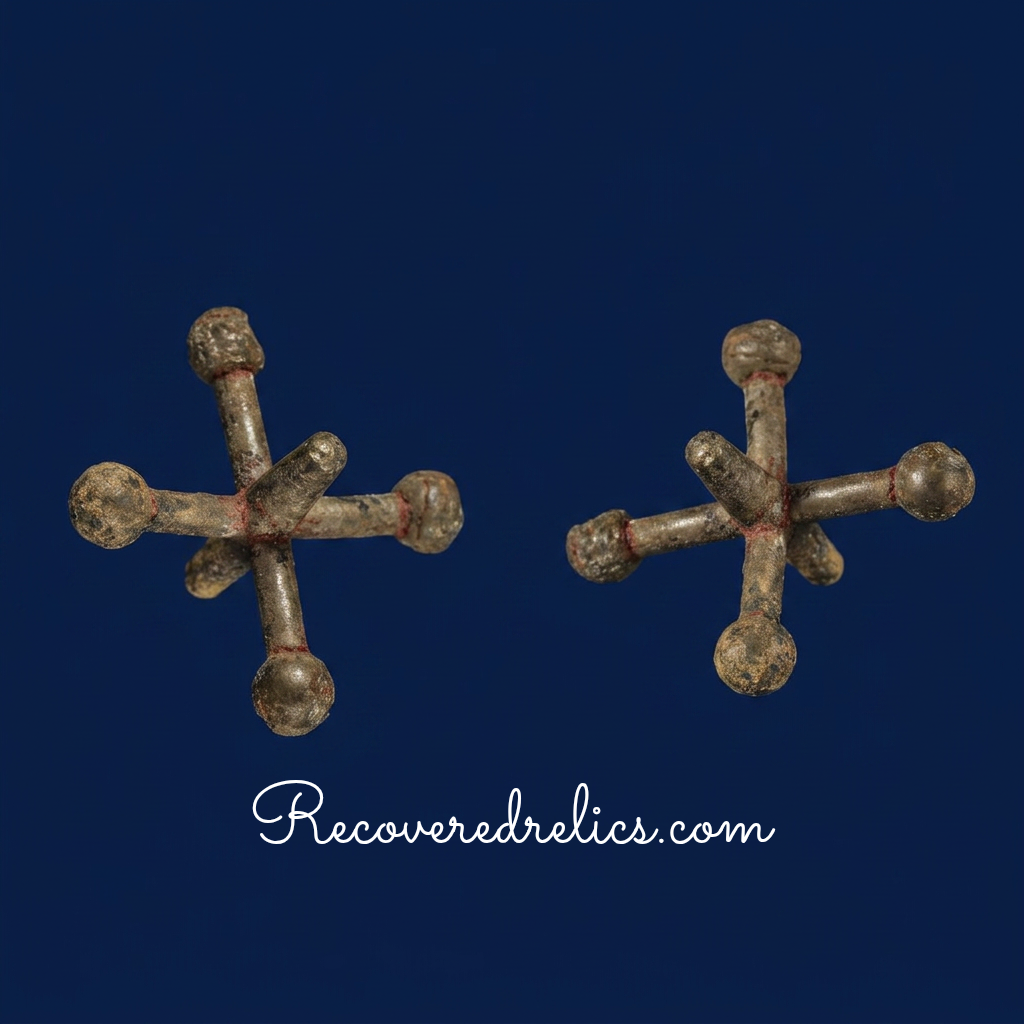
Jacks– Jacks is a classic, fast-paced dexterity game where players scatter metal jacks on a flat surface and then attempt to pick up a specific number of them with one hand while simultaneously tossing and catching a rubber ball after it bounces once. The game has ancient origins and has been played globally under many different names, including fivestones, dibbs, chackstones, cincos marias, and gonggi.
Little Orphan Annie Decoder– The Little Orphan Annie decoder was a functional cipher device released annually between the years 1935 to 1940, as a promotional toy for the Little Orphan Annie radio show, sponsored by Ovaltine. Children used the rotatable, numbered, and lettered badges to decode secret messages broadcast at the end of each episode. The badges were generally brass, featured the year, a rotatable disk, and a safety pin to wear it.


Miniature Animals– Miniature metal animal toys were popular, durable playthings, often crafted from lead, cast iron, or white metal and pewter alloys. The parrot pictured is Percy Parrot, a hand-painted hollowcast lead figurine from the Cadbury’s Cococub range, manufactured by Britains Ltd. Percy Parrot was a part of a 32 character promotional set given away with Bournville Cocoa company. The figures were produced from 1934 to 1939.
Miniature Household Items– In the 1700’s and 1800’s toys were primarily designed for practical play. They served as tools to prepare children for their future adult roles. Miniature metal household items served as both playthings for wealthy children and educational tools to prepare young girls for managing a household. Pewter was a common material for children’s tea sets and cups during the 19th century. Miniature sad irons were often made of solid cast iron.


Monopoly Game Pieces– Monopoly game pieces have evolved significantly since the game’s commercial launch in 1935. The metal Monopoly pieces were originally introduced in the year 1937. The original set included the Car, Iron, Lantern, Purse, Rocking Horse, Shoe, Thimble, and Top Hat. The Scottie Dog appeared in some earlier sets as a variation, but became a permanent fixture when it was officially added to the standard Monopoly lineup in 1952. The first pieces were made from zinc alloy. These frequently oxidized and turned black over time. To prevent oxidation, the material was shifted to a mix of lead and tin, which provided a cleaner finish but was later phased out due to health hazards. During World War II, the game pieces were made from wood. After the war, metal pieces returned, eventually settling on the familiar silver-toned pewter or zinc-based castings they have been using now for decades.

Play Money– Play money coins were primarily designed as educational tools for children. Aluminum was frequently used to make play money because it was lightweight and inexpensive. Play money is often stamped with the words “PLAY”, “TOY”, “COPY”.


Police Badges– Metal toy police badges grew to peak popularity during the 1930’s to the 1950’s in the United States. driven by the “Junior G-Man” radio show and Western films. The Junior G-Man radio show, notably hosted by former FBI agent Melvin Purvis starting in 1936, was a popular 1930s-1940s children’s program. Children who joined the “Junior G-Man” club received toy badges and secret agent items. “Sheriff’s Pals” toy badges are from the 1950’s and 1960’s.

Pooping Dog Figurine– A popular novelty from the 1930’s and 1940’s. These cast metal figures were designed to be used with “Black Snake” or “Pharaoh’s Serpent” fireworks. You would place a small firework pellet inside, underneath the dog’s behind and light it. As the firework burned, a long, ash-like snake would grow out of the dog’s rear end, creating the pooping effect.


Soldiers– Metal toy soldiers have been popular play items for centuries. Miniature soldiers became a staple of children’s play in the late 19th and early 20th centuries. Production of lead-alloy toys largely ceased by the year1966 due to health concerns.
Spinners and Put & Take Tops– Metal Put & Take tops or teetotums are small, multi-sided, spinning top that were used as a die for games. While most prevalent in the early 1900’s, these metal tops were also popular during the 1800’s serving as portable gambling games in pubs and homes. The “Put and Take” terminology peaked in popularity during the 1920’s. The game has roots that go back to Roman times.
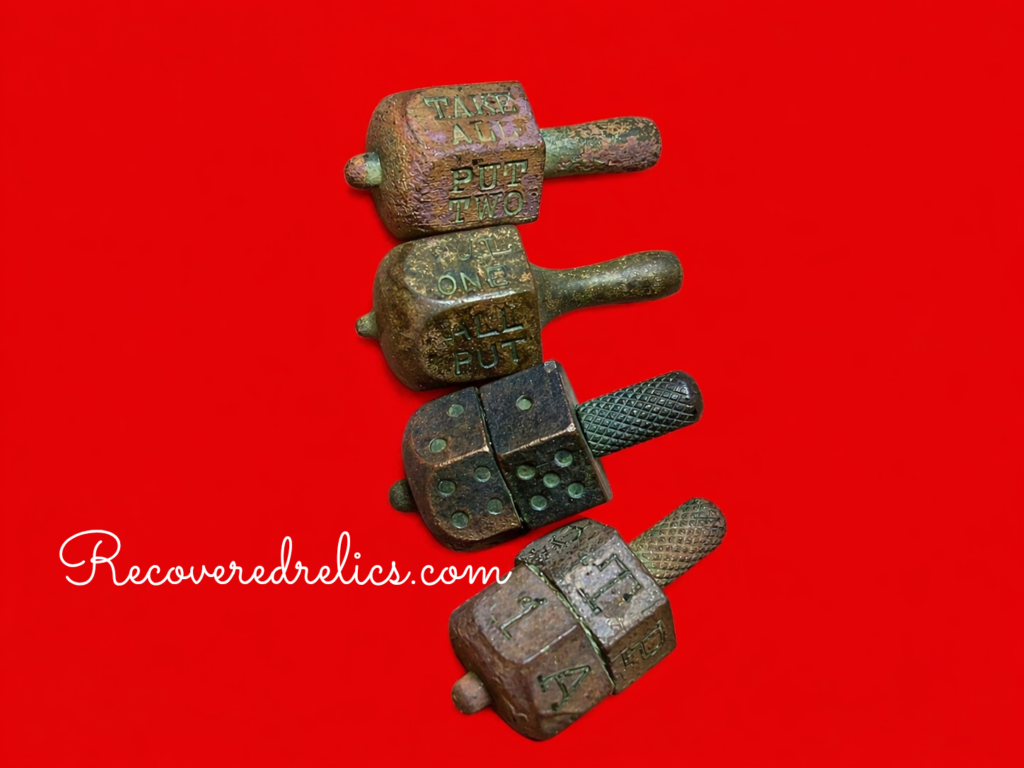


Whizzers– Whizzers, also known as whirligigs, buzzers, or buzzsaws, are simple, spinning toys. They typically consist of a flat disc with two central, parallel holes for a string. The toy was operated by feeding a string through the two holes and holding both ends. When the string was twisted and pulled taut, the disc would spin rapidly back and forth, producing a whizzing sound. They were a simple, accessible form of entertainment often made from coins, buttons, or repurposed household items.

Weaponry Parts and Tools
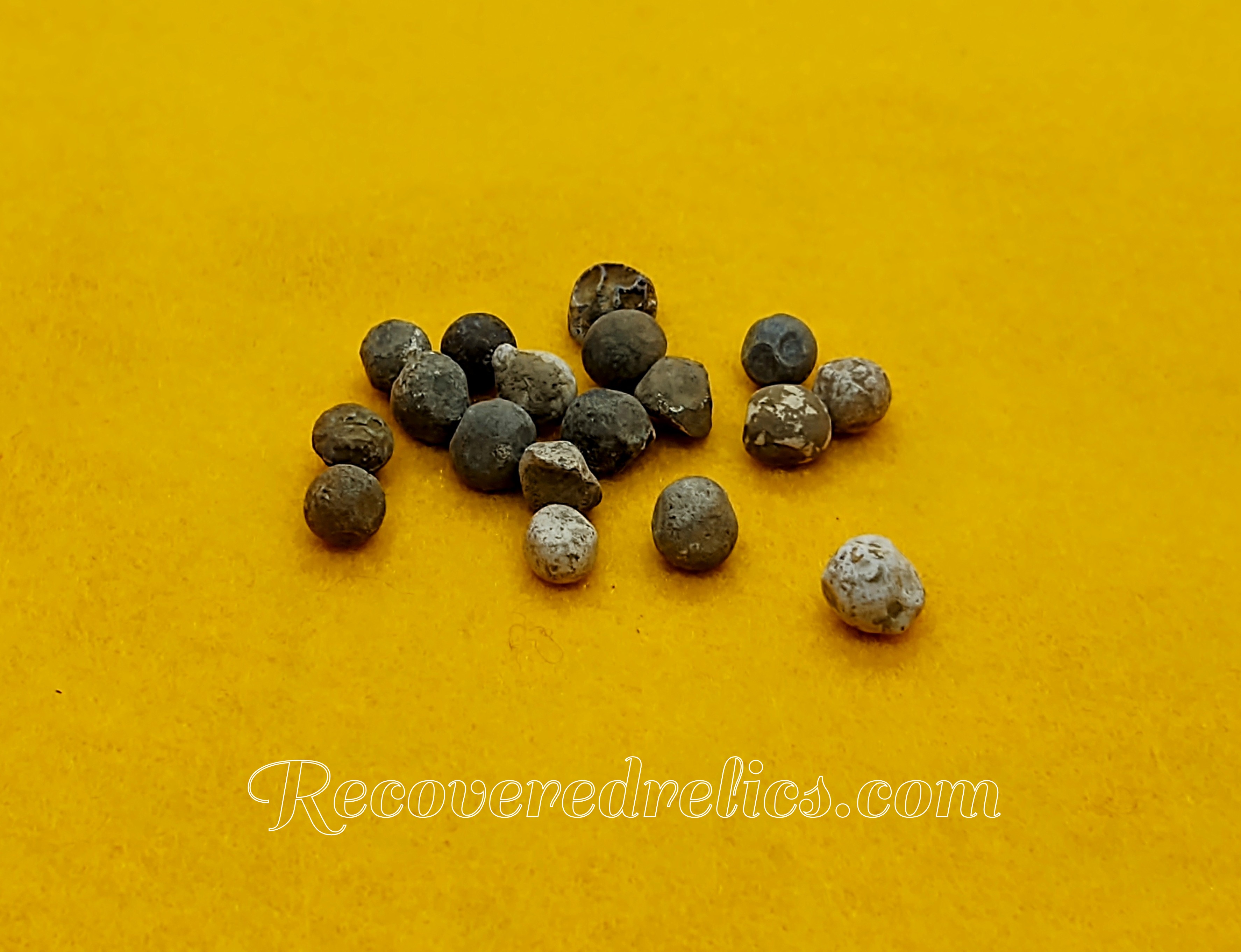
Bucky Balls/ Buck and Ball Ammunition– A type of cartridge used in smoothbore muskets during the Civil War and other conflicts. The name Buck and Ball comes from the fact that the cartridge contained a single full sized musket ball along with several smaller buckshot pellets. Detectorists refer to these bullshot sized lead pellets as bucky balls. This type of ammunition was widely used during the Civil War. The buckshot’s accuracy declined at long range but the sheer number of projectiles and the potential to inflict serious wounds made it a valuable tool in combat.
Enfield Bullet .577 Caliber– The .577 caliber Enfield bullet was carried by many Confederate Infantry troops during the Civil War. It was also carried by a large portion of the Federal Infantry. This bullet was originally designed in England and was often used with the British Pattern 1853 Enfield Rifle. The base of the bullets were often stamped with letters or numbers. These markings can help to indicate where the bullet was made and also it’s caliber.
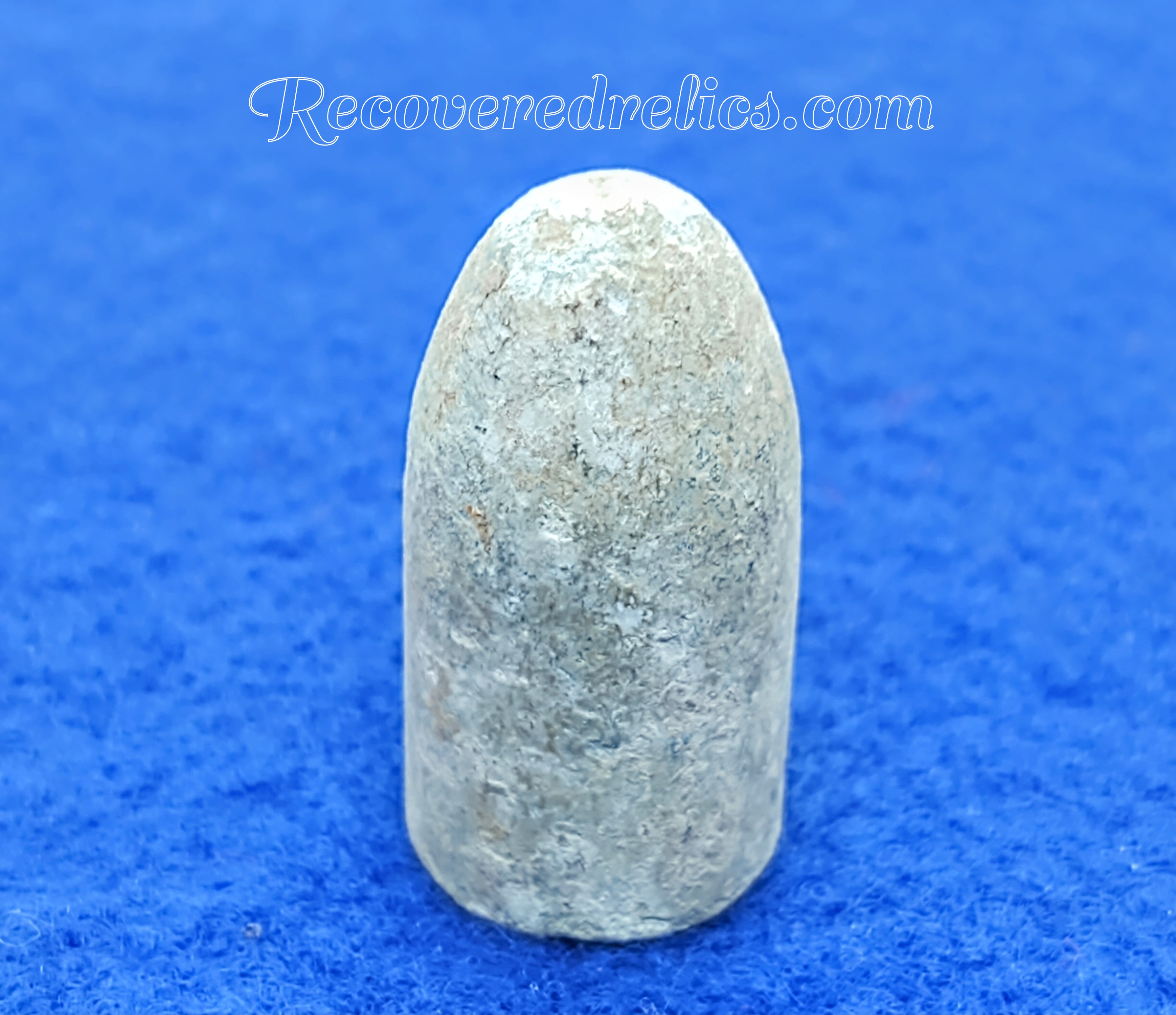
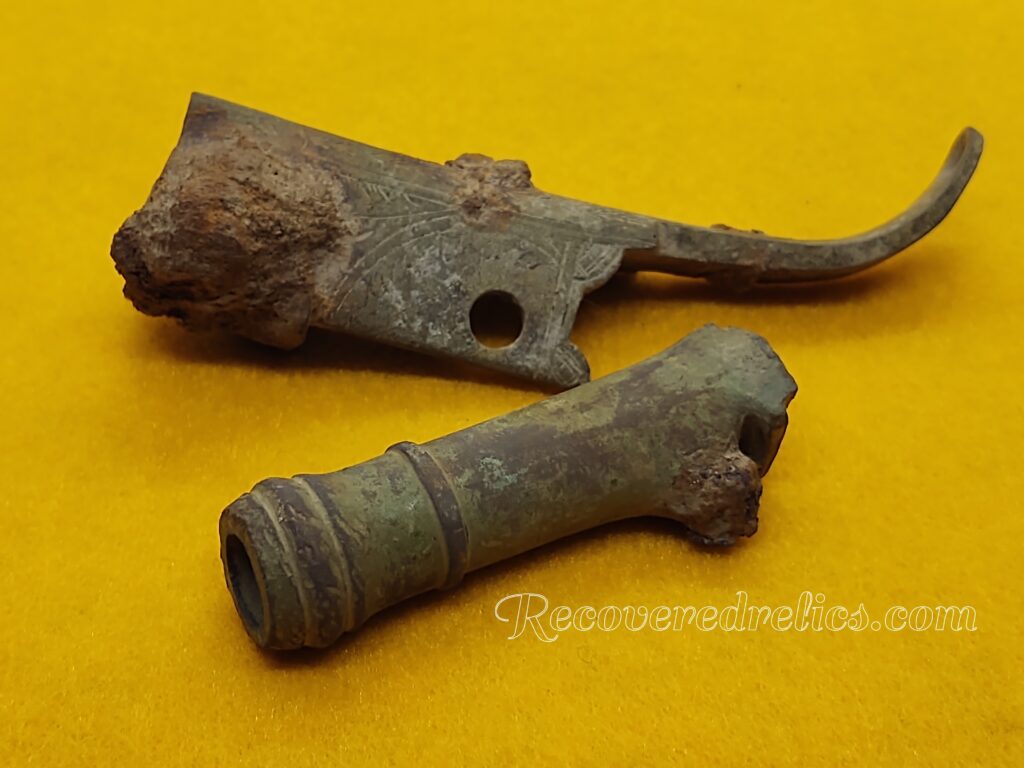
Firearm Parts– Metal detectorists sometimes find parts or pieces of old firearms. Firearms are made up of lots of individual components. Different firearms have varying parts depending on their make, size, and function. Essentially though all firearms have a few basic parts, such as the barrel, the frame, the action, and the stock.
Gardner .58 Caliber Bullet– The .58 caliber Gardner bullet was patented on August 17, 1861 by the Confederate States of America. The Gardner bullet was often used with Model 1863 Springfield Rifled Musket or the British Pattern 1853 Enfield Rifle Musket. This bullet was unique because of how the paper cartridge was attached to the bullet. Typically the paper was either wrapped or tied around the body of a bullet, but in the Gardner the paper was actually inserted into a grove in the bullet’s base. If the South had an official bullet it would have been the Gardner.
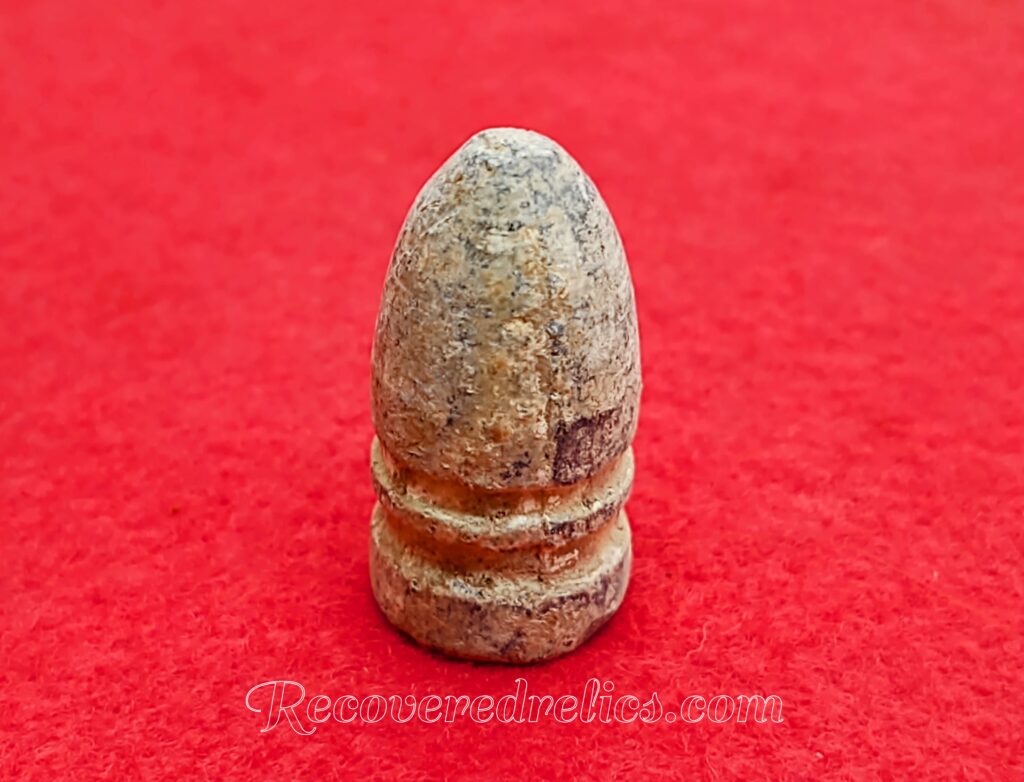
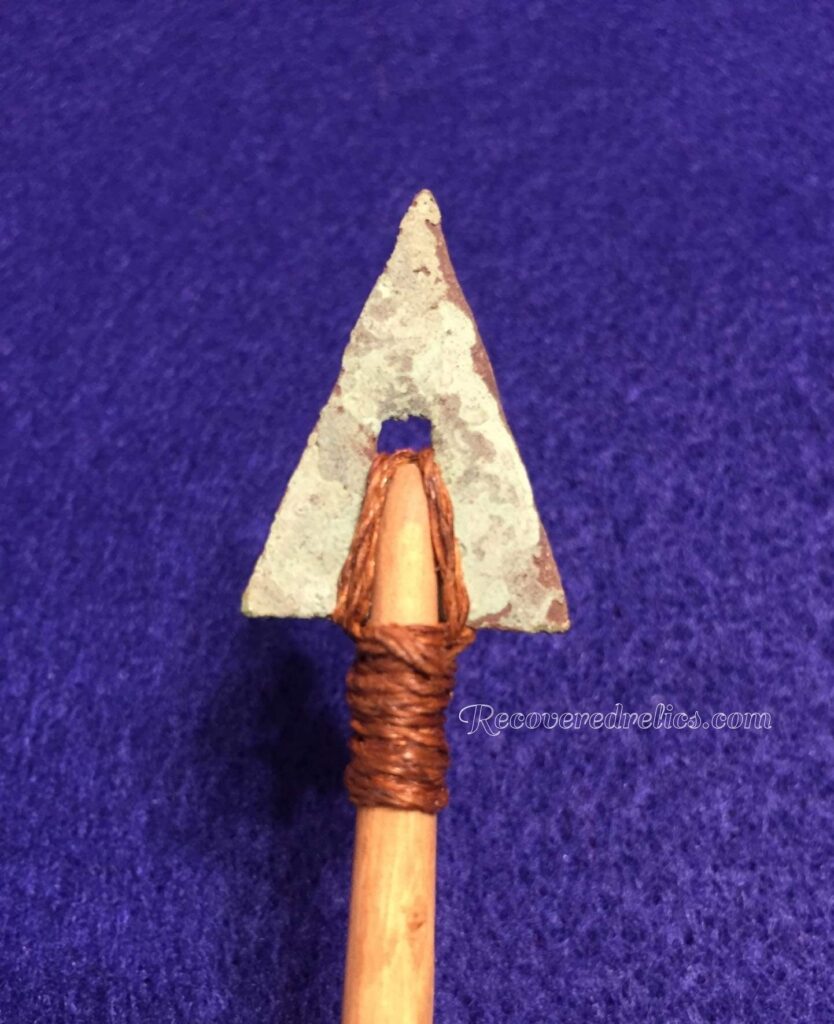
Kettle Point– A Kettle Point is a metal (brass or copper) projectile point or arrowhead. They vary slightly in size. The majority seem to be about one inch or so in length. Kettle points also vary somewhat in design. In the beginning of the 17th century there was period of experimentation with shapes. During this time period, Native Americans in the Northeast made stemmed, barbed, pentagonal and triangular metal points. There was little uniformity. By the second quarter of the 17th century, kettle points were made almost exclusively in isosceles triangular form with the exception of rolled conical points. Many of the triangular kettle points were pierced with a central hole so that the point could be easily attached to the shaft of an arrow.
Knapsack J Hook– During the Civil War, J hooks were used to secure a soldier’s knapsack to their belt for extra support. The J-hooks were attached to the leather chest cross straps of a knapsack and were designed to hook into the belt slides of a soldier waist belt. Knapsacks were used by both Union and Confederate soldiers to carry essential items such as food, blankets, clothing, tools, etc.
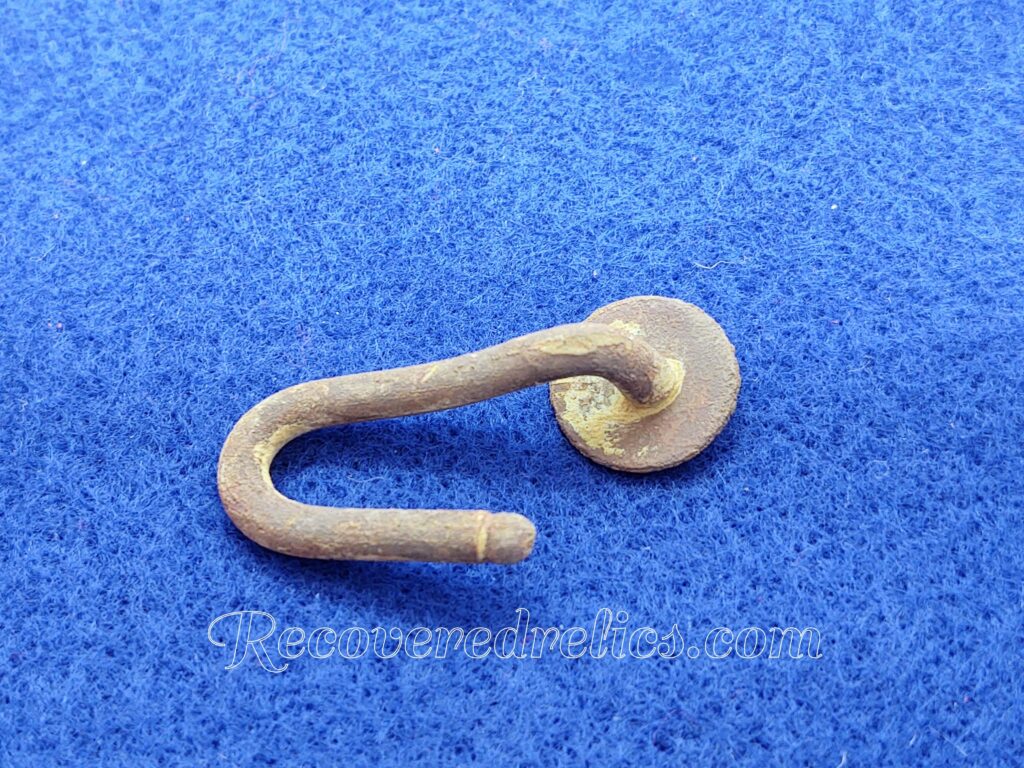
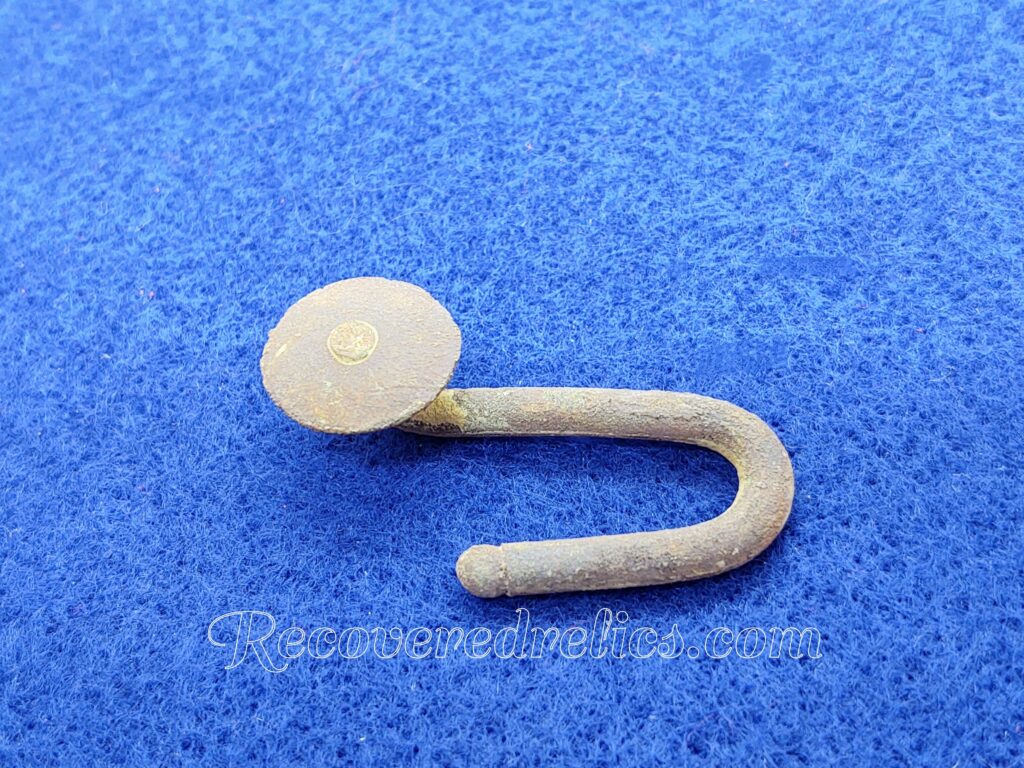
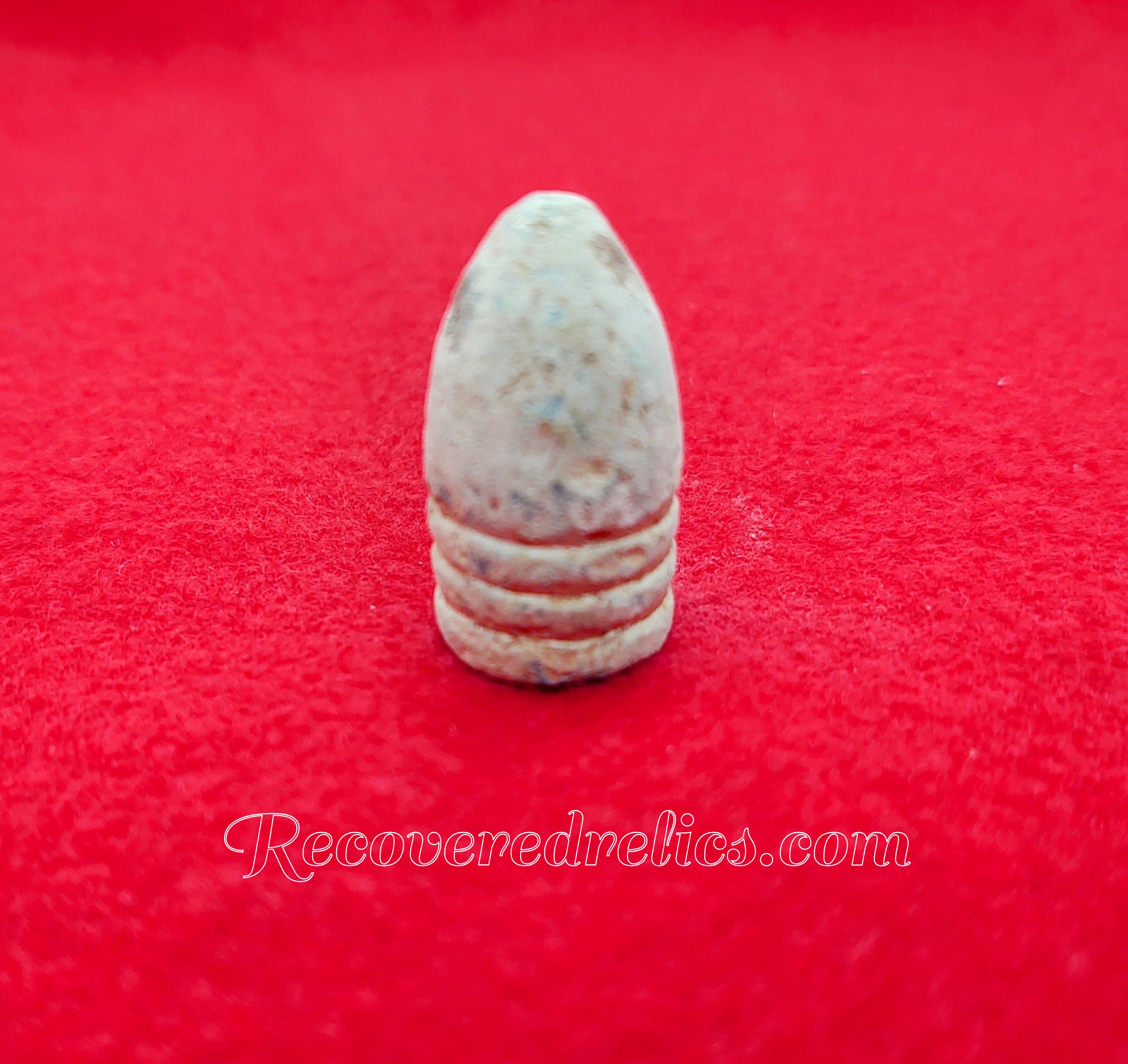
Minié Ball (Union) .58 caliber– The Union Minié Ball was the most widely used bullet in the Civil War. Minié Balls are not round as the name suggests. They are named after their creator Captain Claude Etienne Minié. The bullet was officially adopted by the US Army in 1855. Rings were added to the design by Americans. The rings held grease to help ease the bullet down the barrel and also collected powder residue when fired.
Musket Balls/ Lead Shot– A musket ball is a projectile used in early firearms. Musket balls were one of the first types of ammunition used in firearms, dating back to the 16th century. The spherical shape of a ball was selected because it provided a consistent and stable trajectory through the air which was important for accuracy and range. Musket balls were often made of lead, but not always. Stone musket balls were used in early firearms as well.
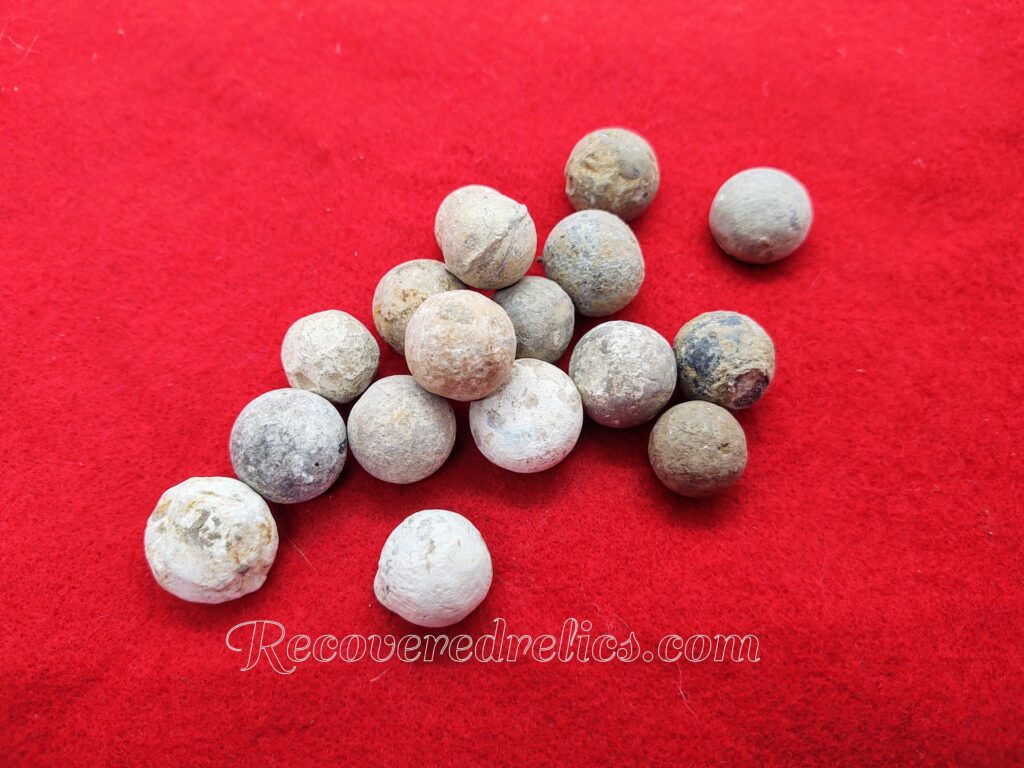
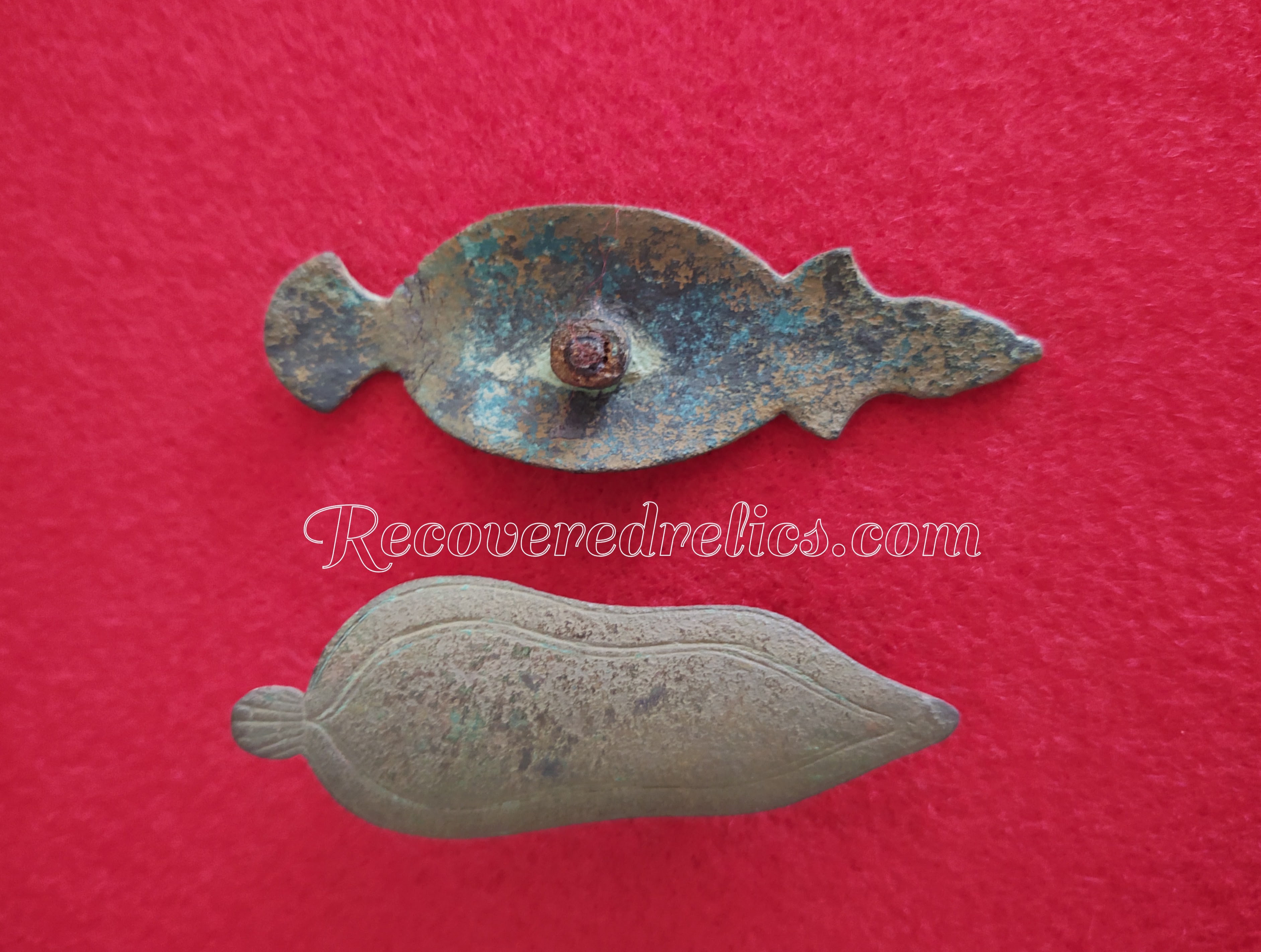
Musket Plate– These musket plates are from Brown Bess musket rifles. Brown Bess is a nickname for the British Army’s muzzle loading flintlock Land Patten Musket. The Brown Bess was the standard weapon used by the British infantry between the years 1722 and 1838. The Brown Bess was a large caliber weapon. It had two types: the Short Land Pattern and the Long Land Pattern. These muskets were also used by the Continental Army during the Revolutionary War until around the year 1777. The Long Land Pattern was most commonly used by American fighters.
Percussion Caps– A percussion cap is a small brass or copper cylinder with one closed end. A small amount of explosive powder is contained in the cap which explodes when it is struck. Percussion caps were developed in the early 1800’s as a reliable single use ignition device for muzzle loader firearm locks. They replaced flintlock mechanisms, improving both firing speed and reliability.

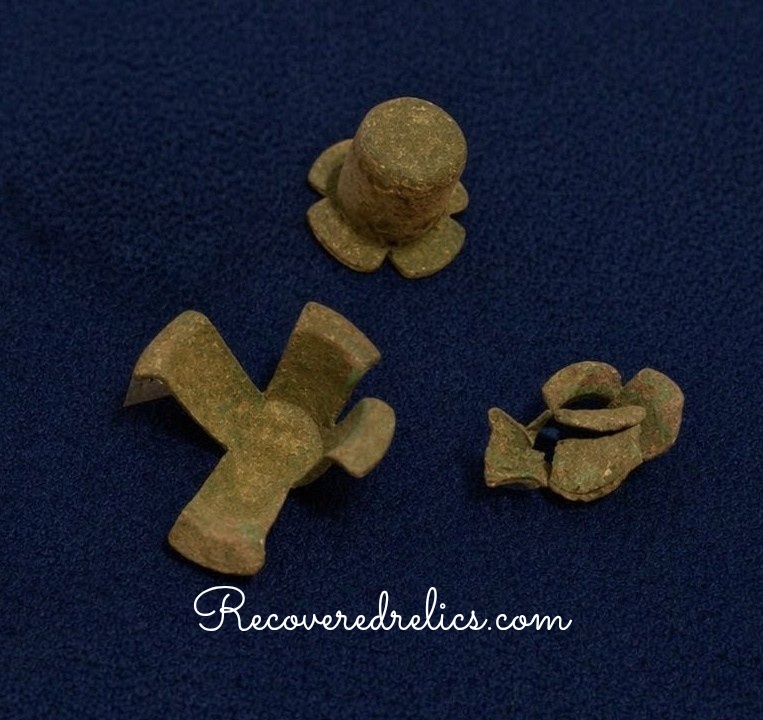
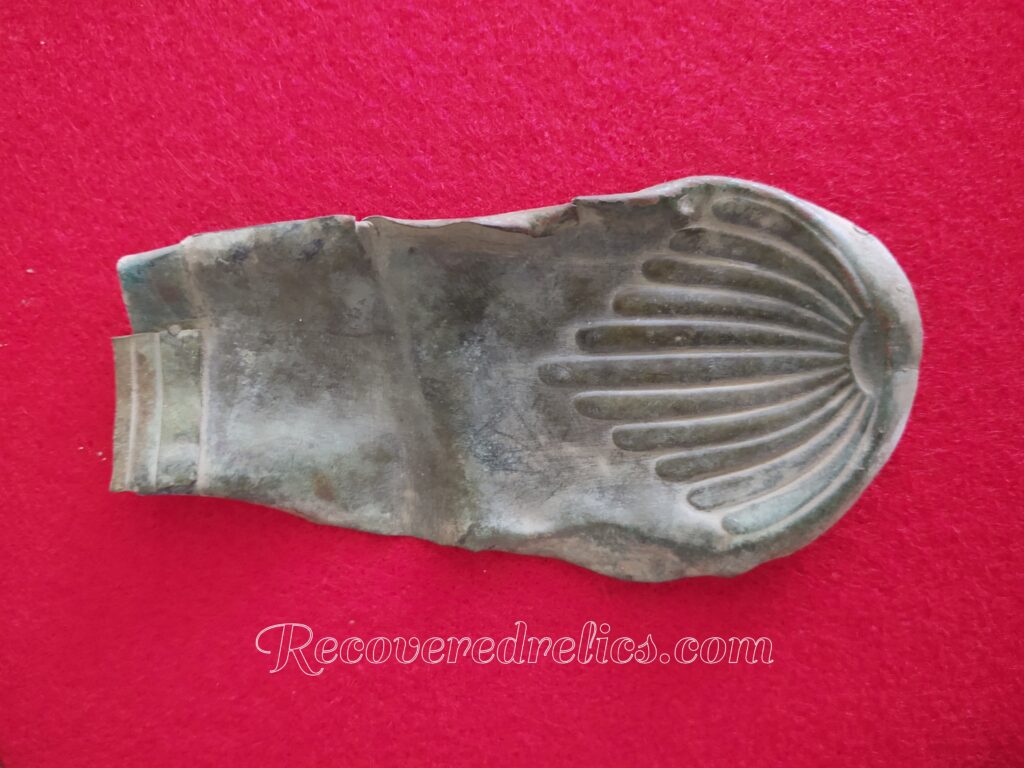
Powder Flask– A powder flask is a container for gunpowder. Gunpowder is an essential part of shooting equipment for muzzle loading guns. Powder flasks vary from very elaborately decorated works of art to more simple early forms of consumer packaging.
Sharps .52 Caliber Bullet– The .52 caliber Sharps bullets were used primarily by the Federal Calvary troops. However both Union and Confederate sharpshooters also favored this bullet due to it’s reliability and fast firing rate. This bullet was often used in Model 1859 Sharps Breechloading Carbine. The Sharps bullet was loaded in the rear of the weapons barrel. Their totally combustible cartridge would burn fast and hot when ignited. This provided the soldiers with more reliable ammunition even in damp conditions.
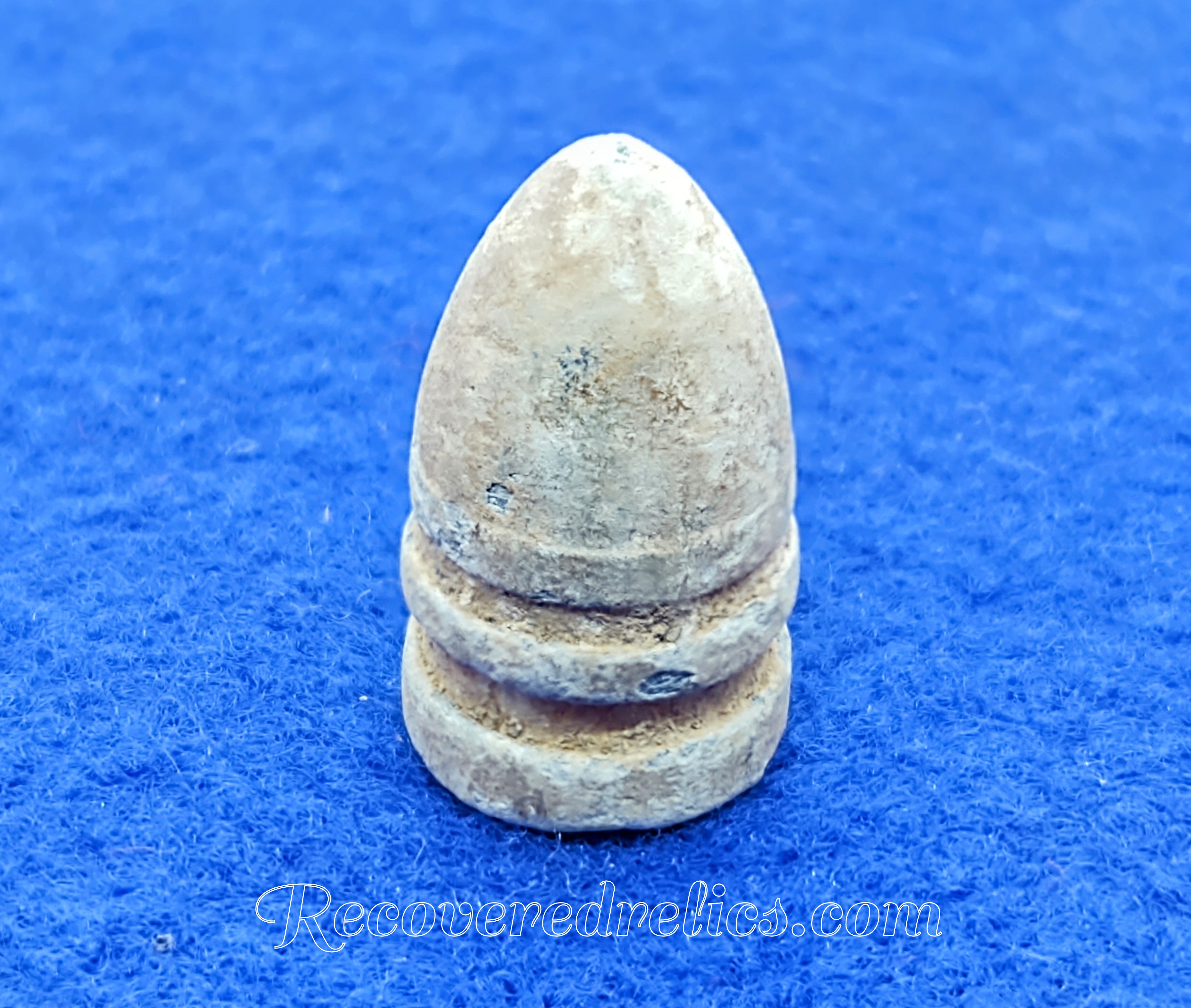
Sugar Loaf Bullet– A teardrop or conical shaped bullet with a rounded base and a point on it’s small end. It is often described as having a sugar loaf appearance. Conical bullets were introduced in the 1830’s and commonly used in rifled muskets. Conical bullets were developed as an improvement over round balls and were favored for their increased accuracy and range.
Sword/Dagger Guard– A blanket term for all the parts that protect the hand. The guard is merely whatever is between the handle and the blade. It can be as simple as a flat cross piece or much more complex and ornate.
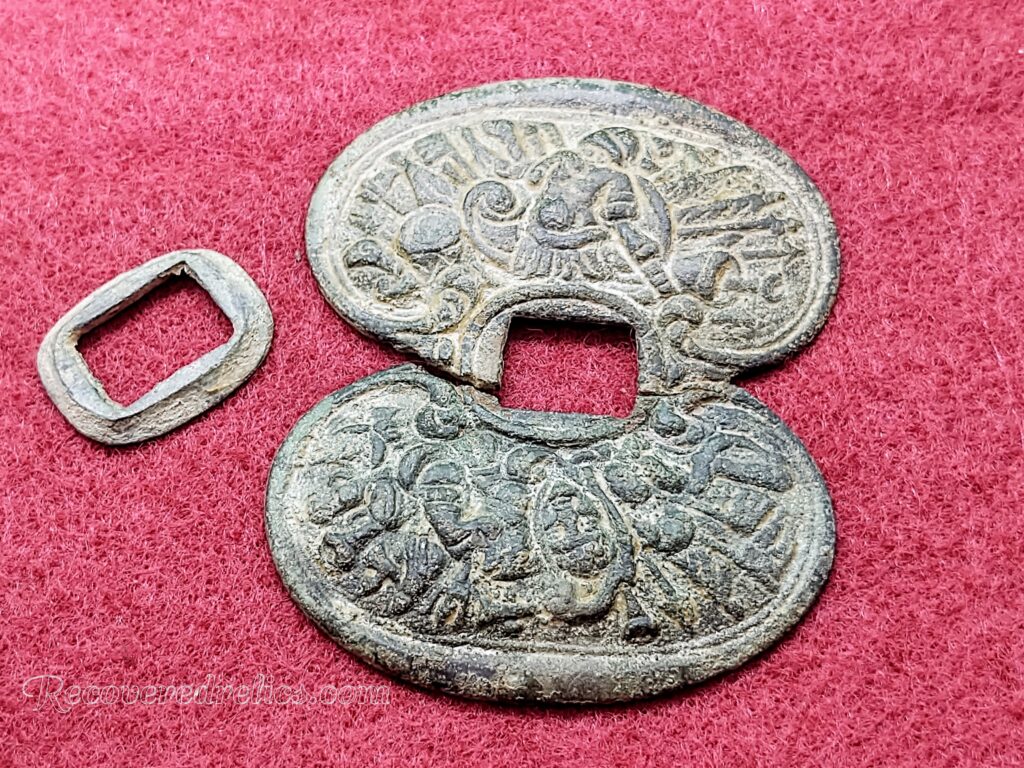
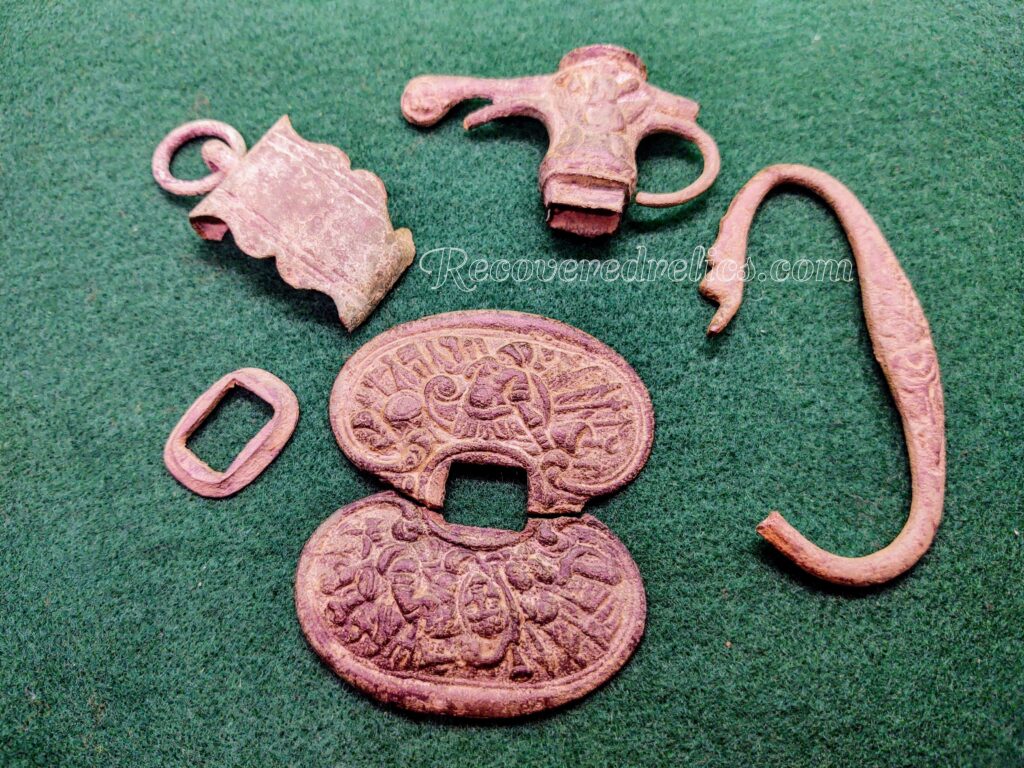
Sword Hilt– The hilt consists of the pommel, grip, and guard. It’s everything that isn’t the blade.
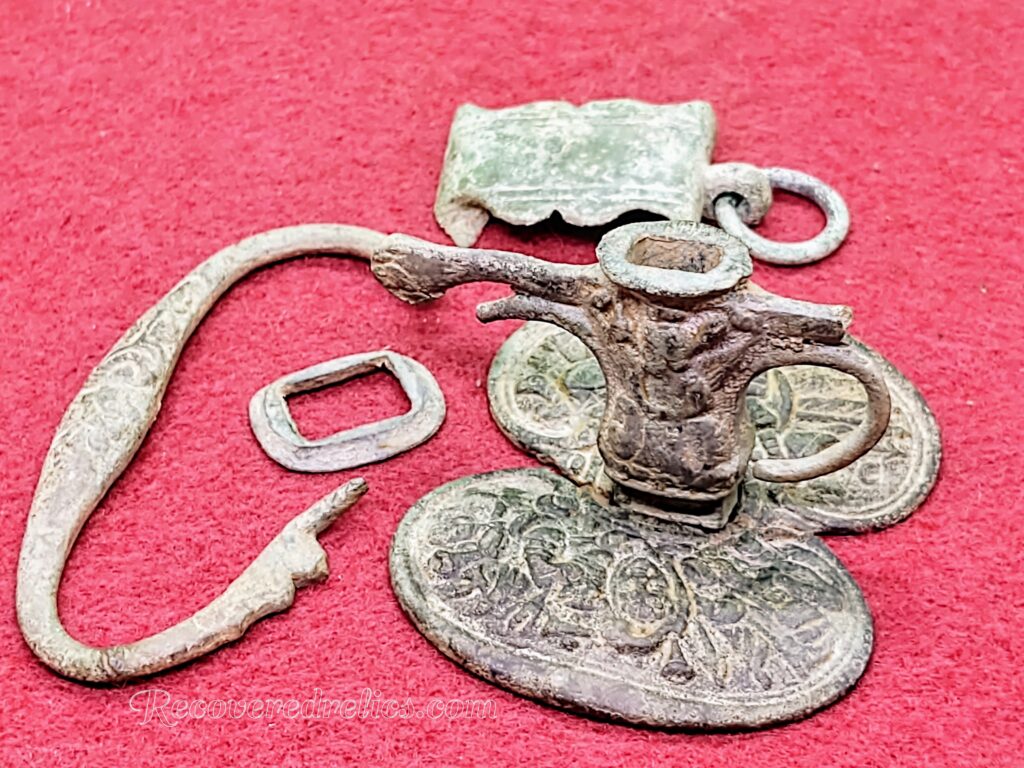
Sword Pommel– The pommel is the top piece of the handle. It’s meant to act as a counterweight to the blade, allowing for the user to have a better hold on the weapon. Pommels are often spherical, but other shapes like triangular, mushroom, and brazil-nut were also common.
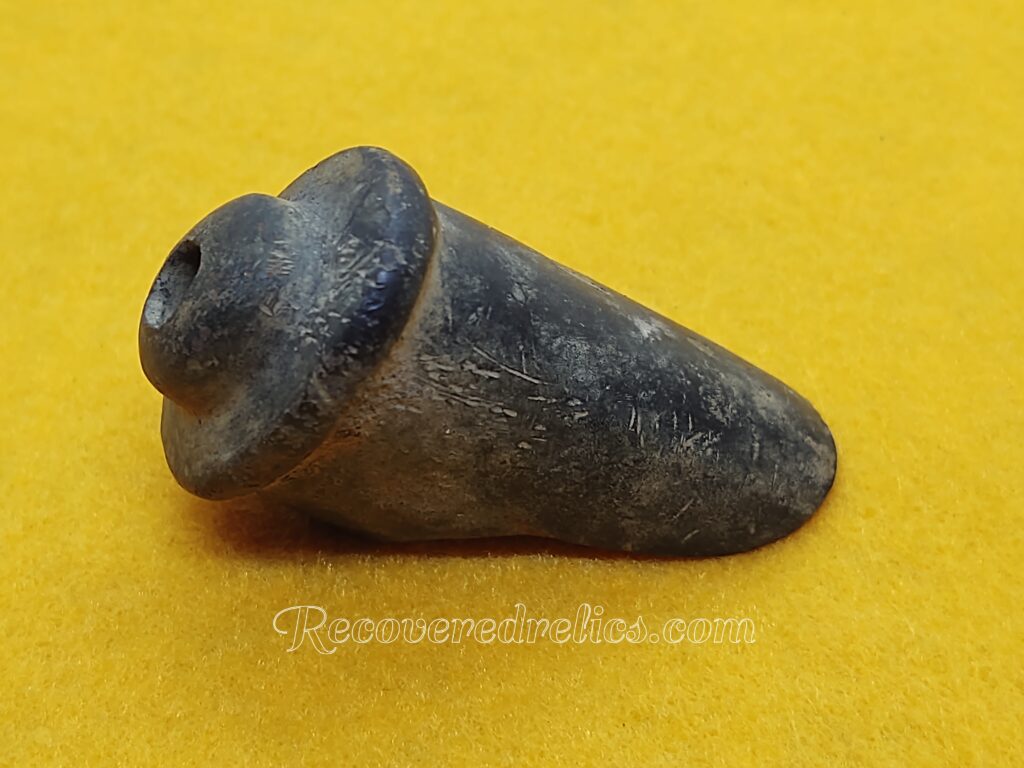
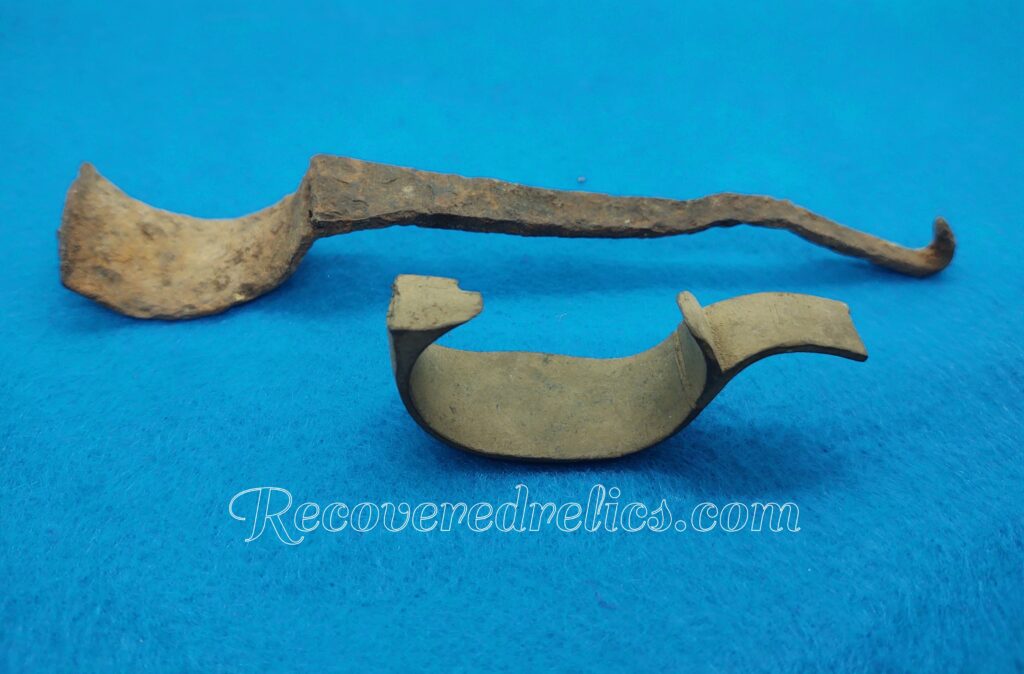
Trigger Guard– A semicircular band of metal or protective loop structure that surrounds and encloses the trigger assembly on a firearm. It serves as a protective barrier around the trigger mechanism and helps to prevent accidental discharge of the firearm.
Williams Patent Type II (.58 Caliber)/Williams Cleaner Bullet– This bullet consists of three individual pieces: a body, a zinc disc, and a pin. When fired the pin pushes into the body of the bullet which flattens the cone shaped zinc disc. Pressure would expand the diameter of the bullets body and wedge it inside the grooves of the rifling which caused the bullet to spin and as it spun through the riffle barrel the Zinc disc would scrape away some of the black powder residue left behind from prior shooting. Williams Cleaner bullets were to be fired about every 10 rounds . During the Civil War the Federal government issued Union soldiers a Williams Patent type I or II bullet with every 10 rounds of ammunition.